
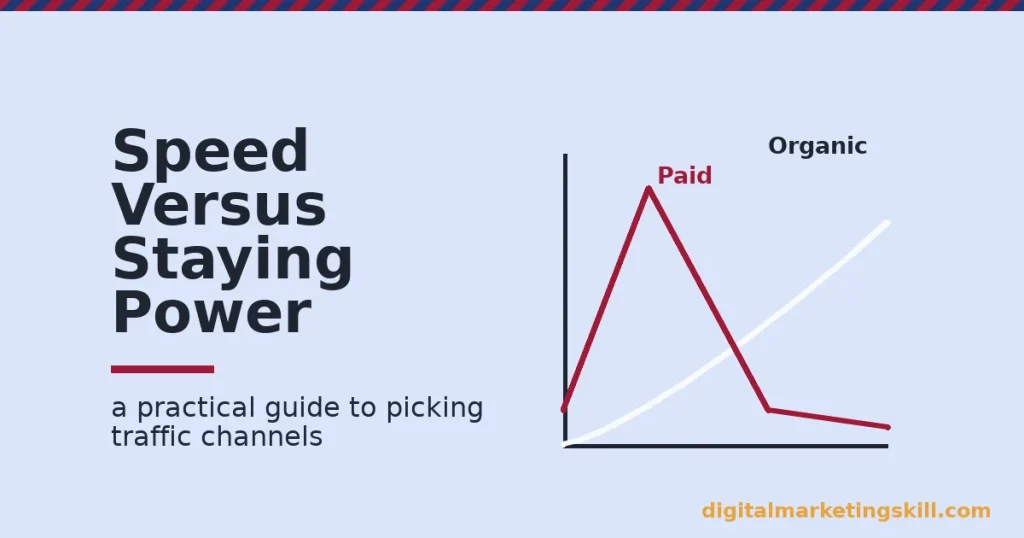
Traffic generation is the deliberate work of getting people to visit your website. It happens through organic search, paid ads, social media, or referrals. Good traffic generation matches the channel to how fast you need results. Organic channels compound slowly but keep paying off. Paid channels work fast but stop the moment you stop paying. Most businesses need a mix of both, chosen on purpose.
Key Takeaways
- BrightEdge estimates that organic search drives roughly 51% of website traffic, more than any other single channel (BrightEdge).
- StatCounter reports that mobile devices account for about 59% of global website traffic, with desktop at roughly 39% (StatCounter).
- Backlinko’s analysis of 306 million keywords found that 91.8% of Google searches are long-tail, yet those queries add up to only 3.3% of total search volume (Backlinko).
- Content Marketing Institute reports that organic search generates an estimated 44.6% of B2B revenue, the largest single channel measured (CMI).
- G2’s own published case study describes growing blog traffic from roughly 3,000-5,000 monthly sessions to 991,748 organic sessions over about two years (G2).
In this guide
- What Most Traffic Generation Advice Gets Wrong
- How Traffic Generation Actually Works
- What Differs By Traffic Generation Channel
- How To Improve Each Traffic Generation Channel
- How To Measure Whether Your Traffic Generation Is Working
- The One Rule For Choosing A Traffic Generation Channel
- A Real Case: Compounding Organic Traffic Over Two Years
- Why Link Building Still Supports Traffic Generation
- Email And Referral Traffic: The Overlooked Channels
- Common Mistakes In Traffic Generation
- How To Split A Small Budget Across Traffic Generation Channels
- Frequently Asked Questions About Traffic Generation
- Where To Go From Here
What Most Traffic Generation Advice Gets Wrong
Most traffic generation articles list channels. SEO, social, email, ads, all in one pile. That list does not say which channel to start with. It does not say how long to wait before judging one.
Different traffic generation channels run on different timelines. Confusing them is a common reason a reasonable strategy gets abandoned too early. It is also why a weak channel sometimes gets funded for too long.
This guide groups traffic generation by speed and durability. Every figure is checked against its original source. Each one is labelled by scope, such as a single company’s case or a global platform average. Treat it as a current snapshot, not a permanent ranking.
How Traffic Generation Actually Works
Every visit to your website starts with a decision made somewhere else. Someone searches a question. Someone else scrolls past an ad. A third person clicks a link a friend sent them. Traffic generation is the work of showing up reliably at that decision point.
Organic channels work by earning trust over time. A page that ranks well keeps attracting visitors with no extra spend, long after it was published. Paid channels work differently. They rent attention. An ad brings visitors the moment it runs. It stops the moment the budget runs out.
Neither approach wins in the abstract. They trade speed for durability. A new business with no search visibility yet often needs paid traffic just to get its first customers. Meanwhile, it builds the organic traffic that will matter more later.
What Differs By Traffic Generation Channel
The destination is the same: a visit. But each channel earns it differently. Here is how three common traffic generation channels differ in what they get judged on.
Organic Search: Built To Compound
BrightEdge estimates organic search drives roughly 51% of website traffic overall. That is more than any single paid or social channel. Content Marketing Institute separately reports organic search as the largest single source of B2B revenue, at an estimated 44.6%. Organic traffic generation is slow to start. It keeps paying once a page ranks.
Paid Channels: Built For Speed
A paid campaign can send traffic to a new page within hours of launching it. That speed is the entire appeal. The trade-off is durability. StatCounter’s platform data shows roughly 59% of global traffic arrives on mobile, which shapes how a paid landing page needs to load. But the traffic itself disappears the moment spend stops.
Long-Tail Content: Built For Specific Intent
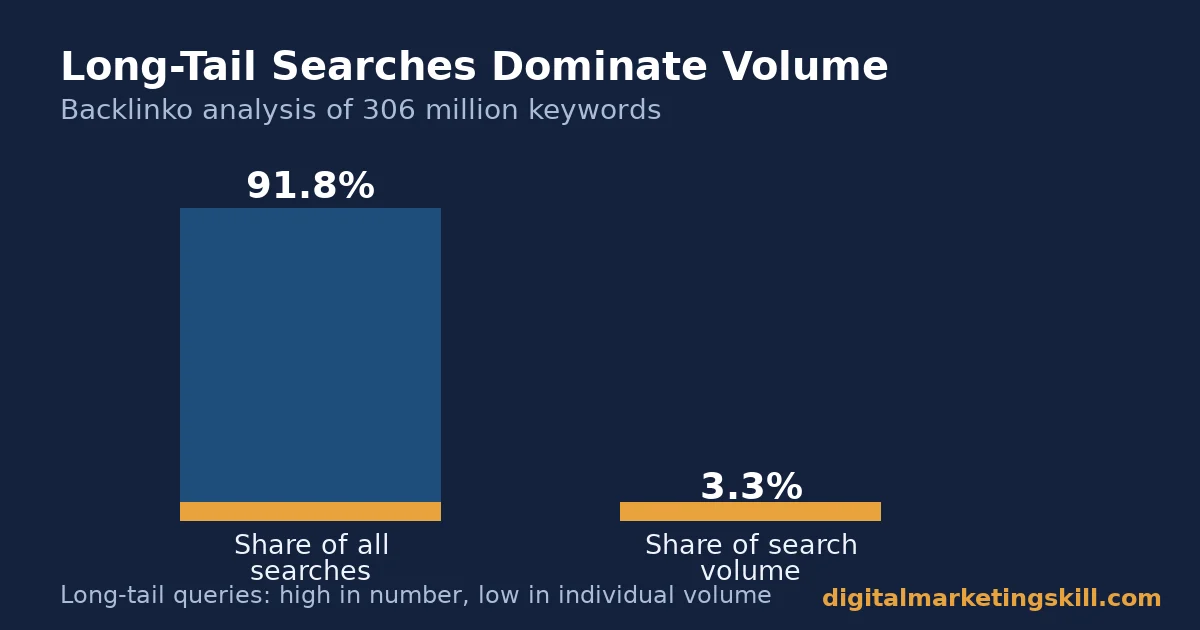
Backlinko’s analysis of 306 million keywords found that 91.8% of Google searches are long-tail, specific queries. They only add up to 3.3% of total search volume individually. Traffic generation built around many narrow questions, rather than one broad keyword, tends to compound. It competes for less contested search terms.
How To Improve Each Traffic Generation Channel
Organic Search: Publish For The Long Game
Commit to one topic area. Keep publishing inside it, rather than chasing a different subject every post. Internally link new pages to older, already-ranking pages. This passes authority forward and gives search engines a clearer picture of what your free organic traffic actually covers.
Paid Channels: Match The Page To The Ad
Send paid traffic to a page built specifically for that offer, not your general homepage. Track cost per visitor and cost per conversion separately. This way, you know whether a weak result is a traffic problem or a landing page problem.
Long-Tail Content: Answer One Question At A Time
Write one page per specific question, instead of one page trying to cover an entire broad topic. A narrower page is easier to rank. It is also easier for a reader to judge as exactly what they searched for.
How To Measure Whether Your Traffic Generation Is Working
Track these four numbers, each defined in one sentence:
- Sessions by channel is your visitor count broken out by source. It tells you which channel is actually sending people, not just which one you spent the most time on.
- Cost per visitor is your spend on a paid channel divided by the visitors it sent. It tells you whether that channel is getting more or less efficient over time.
- Time to first ranking is how long a new page takes to show up for its target keyword. It tells you how far ahead you need to plan organic content.
- Traffic decay rate is how fast a page’s visits drop once you stop promoting it. It tells you how much of your traffic is genuinely compounding, versus rented.
Reading These Numbers Together
A channel with low cost per visitor but a high decay rate is renting attention, not building an asset. A channel with a slow time to first ranking but a near-zero decay rate is building a durable one. Most healthy traffic generation strategies hold both kinds of channel at once, on purpose.
Check these numbers on a simple shared sheet, updated monthly. A dashboard is nice to have, but it is not required to start. What matters is reviewing the same four numbers at the same time each month, so you can actually compare one month to the next.
The One Rule For Choosing A Traffic Generation Channel
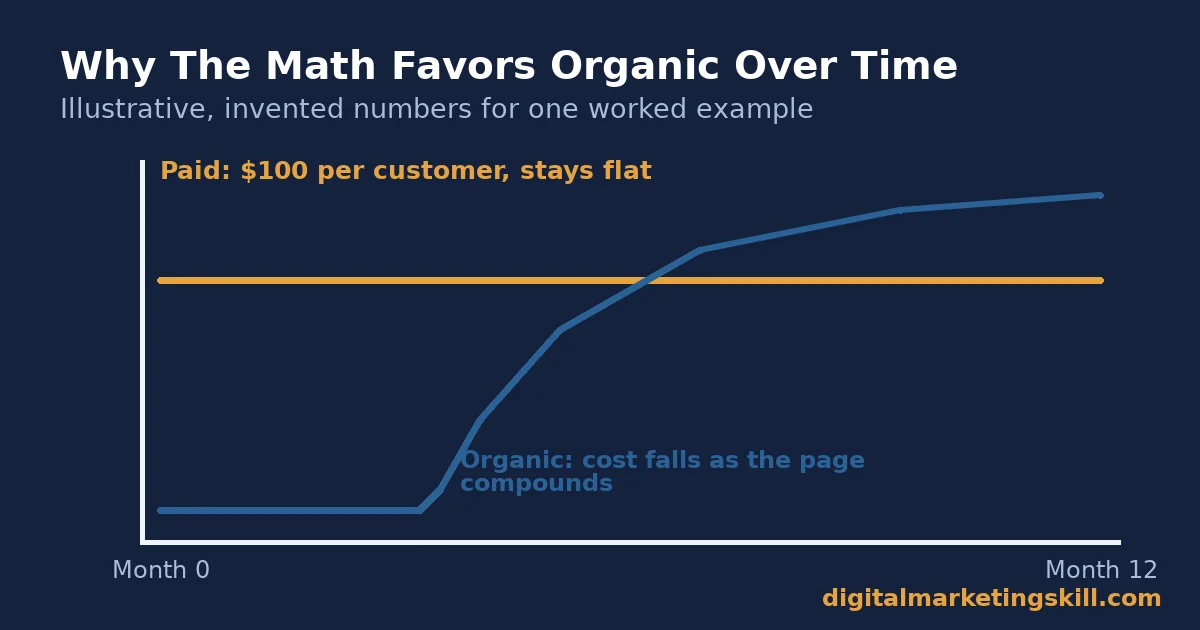
Match the channel to how much time you can wait. If you need visitors this week, budget for a paid channel. If you can wait three to six months, invest that same budget in organic content instead. The Backlinko and CMI figures above suggest the eventual return is larger.
Illustrative, invented numbers: say a paid channel costs $2 per visitor, with a 2% conversion rate, giving a $100 cost per customer. An organic page that takes four months to rank, then sends free traffic at a similar 2% conversion rate for years afterward, becomes dramatically cheaper per customer over its full lifetime. It earns nothing in month one. Replace these numbers with your own real numbers before making a real budgeting decision.
A Real Case: Compounding Organic Traffic Over Two Years
G2’s own published case study describes growing its blog’s organic traffic from roughly 3,000 to 5,000 monthly sessions to 991,748 organic sessions over about two years. The company credits keyword research, grouping related articles into topic clusters of 20 to 40 pieces each, a dedicated outreach and link-building effort, and consistently applying basic on-page SEO across every post.
The limits matter here. This is one company’s self-reported growth story, not an independently audited study. G2 also had existing brand authority and resources most small businesses will not match. Even so, the shape of the result holds a useful lesson: organic traffic generation rewards sustained, structured effort over years, not a single burst of content.
Why Link Building Still Supports Traffic Generation
Ahrefs’ own backlink growth study tracked 10,000 non-branded keywords and 200,000 ranking pages over three months. It found a positive correlation between newly-acquired referring domains and ranking position. Pages that kept earning new links kept climbing, on average, more than pages that did not.
That does not mean every link matters equally. It does not mean buying links is safe either. It means organic traffic generation strategies that include some ongoing effort to earn links, such as original research, data, or genuinely useful tools, tend to outperform strategies built on content alone.
Earning links takes longer than writing a normal blog post. But it compounds the same way organic search does. One genuinely useful page, such as an original survey or a free calculator, can keep earning new links years after you published it, with no extra effort from you.
Where Social Media Fits Into Traffic Generation
Social platforms are built to keep people on the platform, not send them elsewhere. Treat social media as a channel for awareness and engagement first, and a direct traffic source second. A social post that drives even a modest amount of referral traffic, alongside real engagement, is doing its job well.
Email And Referral Traffic: The Overlooked Channels
Search and social get most of the attention in traffic generation discussions. But an existing email list is one of the most reliable traffic sources a business already owns. Social platforms control whether your post reaches anyone. An email list puts you directly in front of people who already chose to hear from you.
DataReportal’s Global Overview Report puts the worldwide average daily time on social media at roughly 141 minutes. That shows how much competing content a single social post is up against. An email, by comparison, is delivered straight into an inbox the recipient chose to open.
Referral traffic works on a similar principle. A link inside someone else’s already-trusted content tends to convert better than a cold ad. Some of that trust transfers to you. Building relationships that earn these natural mentions is slower than running an ad. But the traffic it generates tends to be more durable.
Turning One-Time Traffic Into Repeat Traffic
A visitor who leaves without subscribing to anything is traffic you have to generate all over again next time. Give every new visitor a simple, low-commitment way to opt back in. A short email series works well for this. One visit can then turn into several, without any extra traffic generation spend.
Keep the opt-in simple. A single field, such as an email address, converts better than a long form. You can always ask for more detail later, once the visitor already trusts you a little. Treat that first opt-in as the real goal of a first visit, even above the page’s main topic.
Common Mistakes In Traffic Generation
Three mistakes show up repeatedly, and none require starting over to fix.
The first mistake is judging every channel on the same timeline. A paid ad that has not converted after three days is a fair concern. An organic page that has not ranked after three days has simply not had enough time yet.
The second mistake is sending all traffic to one generic page. A dedicated landing page, matched to the specific keywords or ad that brought the visitor, converts far better than a homepage trying to serve every visitor at once.
The third mistake is measuring traffic volume alone, without tracking where it leads. A channel that sends a large number of visitors who never convert is not actually working. The traffic number still looks impressive on its own, which is exactly why this mistake is easy to miss.
A fourth, smaller mistake is forgetting mobile visitors entirely when building a page for traffic generation. With roughly 59% of global traffic arriving on mobile, a slow or broken mobile page quietly cancels out a large share of any traffic you work hard to earn.
How To Split A Small Budget Across Traffic Generation Channels
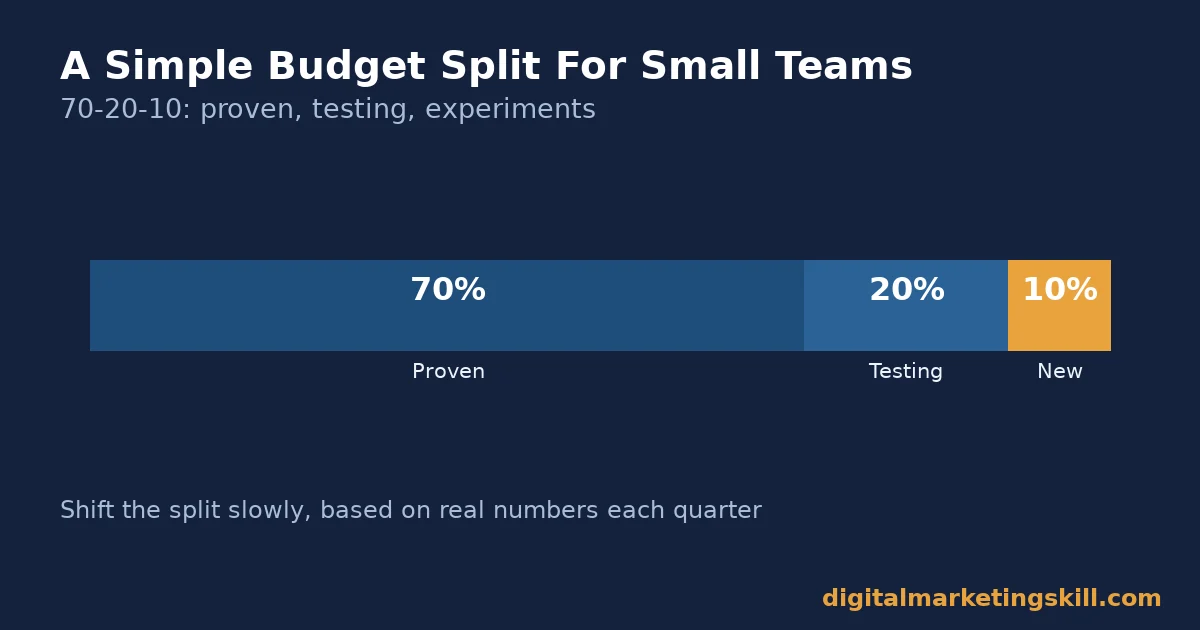
Most small businesses do not have a large budget. That makes the split matter even more. A common, simple starting point is a 70-20-10 split. Put 70% of your time or budget into the channel you already know works. Put 20% into a second channel you are actively testing. Keep the last 10% for small, cheap experiments.
Review this split every few months, not every week. Traffic generation results take time to show up, especially on the organic side. A channel that looks weak after two weeks might just need more time. Move budget only after a channel has had a fair, full test.
Write the test rules down before you start, not after you see the first results. Deciding the budget and the time window in advance stops an early good number from tempting you to overfund a channel too soon. It also stops an early weak number from tempting you to quit before the channel has had a fair chance.
As one channel proves itself, let it earn more of the budget. As another channel fades, let it earn less. The split should shift slowly, based on real numbers, not on which channel feels exciting this month.
Resist the urge to chase a new channel just because a competitor is using it. A channel that works well for one business can fail for another, depending on audience, offer, and how much time the team can realistically give it each week.
Frequently Asked Questions About Traffic Generation
What is the fastest way to generate traffic to a new website?
Paid search or social ads are generally the fastest route, since they can send visitors within hours of launching. Organic channels take longer to build but do not require ongoing spend once a page ranks.
How long does organic traffic generation take to show results?
It varies by competition and content quality, but a new page commonly takes several months to reach a stable ranking. Businesses in narrower, less competitive niches often see results faster than those in broad, heavily contested topics. A brand-new website with no existing authority typically takes longer than an established site adding a new page on a familiar topic.
Should a small business focus on one traffic generation channel or several?
Start with one channel you can measure properly, rather than spreading a small budget across many at once. Add a second channel once the first reliably sends traffic at a cost or timeline you are comfortable with. Spreading too thin too early is one of the fastest ways to make every channel look like it is failing, when the real problem is a lack of focus.
Does social media still drive meaningful website traffic?
Social media can drive traffic, but it generally performs better for brand awareness and engagement than as a primary traffic generation channel. Most platforms are designed to keep users on the platform itself, rather than send them elsewhere. Treat any direct traffic social sends as a bonus on top of its awareness value, not the main reason to post there.
Is paid traffic a waste of money if I can’t afford it long term?
Not necessarily. Paid traffic can validate an offer and generate early data quickly. You can then use that data to guide a longer-term organic traffic generation strategy, even if the paid spend itself is temporary. Many businesses use a short paid test specifically to learn which message resonates, then carry that message into free organic content afterward.
What traffic generation metric should I check first each week?
Sessions by channel is the simplest starting point. It immediately shows whether a channel you are investing time or money into is actually sending visitors, before you dig into conversion numbers.
Do backlinks still matter for traffic generation?
Yes. Published research shows a clear link between earning new referring domains and ranking position over time. A traffic generation strategy that never earns any outside links tends to plateau, even if the content itself is strong. One well-earned link from a relevant, trusted source can outweigh many weaker ones.
How often should I review my traffic generation strategy?
A quarterly review works well for most small businesses. That is long enough for organic channels to show a real trend, but short enough to catch a paid channel that has quietly stopped performing.
Can traffic generation work without any budget at all?
Yes, though it takes more time instead of money. Consistent organic content, genuine engagement on relevant platforms, and simple referral relationships can all generate traffic without ad spend. The trade-off is patience, since these channels generally take longer to build momentum than a paid campaign. Treat the time you spend as the real cost, and budget it the same way you would budget cash.
Where To Go From Here
Traffic generation works best as part of a complete marketing skill set that covers both paid and organic channels, not one tactic learned in isolation. If you want to build search, social, and paid traffic generation into one connected system, the Master Diploma in Digital & AI Marketing at Digital Marketing Skill Institute runs four AI-powered tracks: AI-Powered Social Media Management and Advertising, AI-Powered Lead Generation and Email Automation, AI-Powered Google Specialist, and AI-Powered WordPress and SEO Specialist. All four are built from ten courses in total, with a Full Stack option for completing every track.
Every track includes unlimited 1-on-1 coaching and mentoring, a U.S. Project Internship with a verified U.S. Work Reference Letter, and dual US and UK accreditation recognised in more than 100 countries. The whole program runs 100% online, so you can build a traffic generation skill set from anywhere in your country.
Browse the full program on the Master Diploma page, read real outcomes on the reviews page, or explore more guides on the digital marketing blog. Wherever you live, strong traffic generation skill travels with you, so whenever you are ready, you can apply here from anywhere via digitalmarketingskill.com.
Every figure in this guide was checked against its original source before publication. Figures marked as illustrative are invented examples, not real results.
