
Increase Instagram followers by treating growth as three separate jobs: getting discovered, earning a follow once found, and keeping people engaged afterward. Chasing shortcuts like follow-for-follow tricks fills a profile with people who never engage, which actually hurts future reach. This guide shows the three growth levers that work, what to measure, and one real case of Instagram-led growth.
Key Takeaways
- Instagram’s audience is vast. The platform has 3 billion monthly active users, reported by Meta and covered by CNBC. There is no shortage of people to reach.
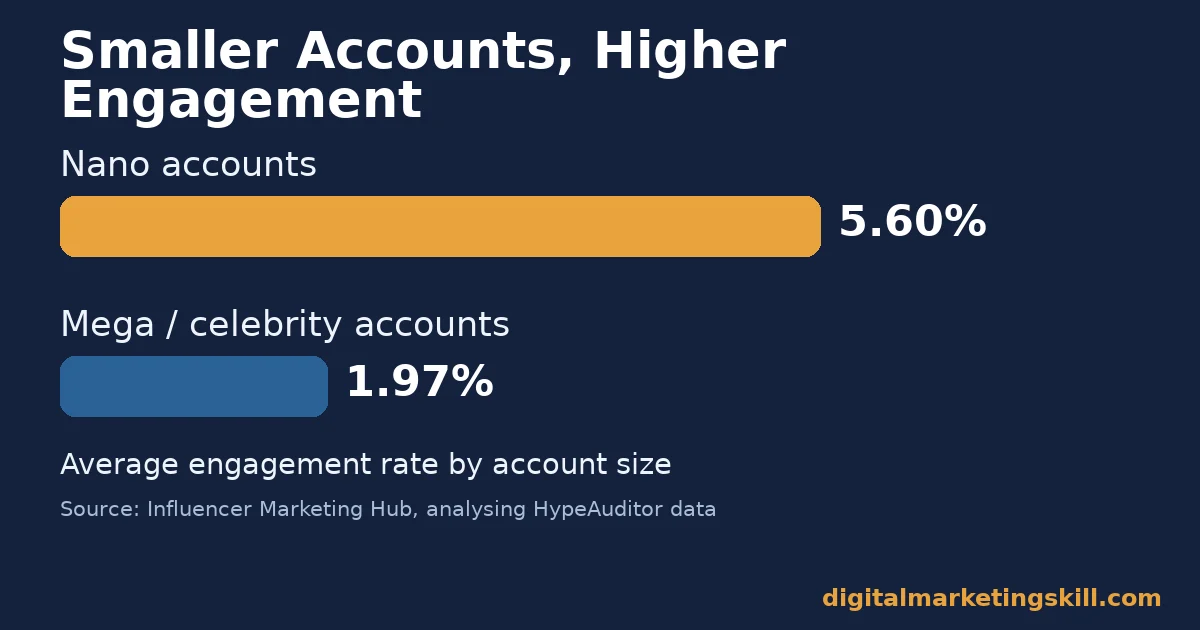
- Smaller accounts earn more engagement per follower. Influencer Marketing Hub’s analysis of HypeAuditor data found nano-accounts average about 5.60% engagement, versus about 1.97% for mega and celebrity accounts.
- Most users already follow brands. Hootsuite reports 80% of Instagram users follow at least one business account, so earning that follow is realistic, not rare.
- Influencer content changes buying behavior. Sprout Social’s survey found 49% of consumers make a purchase at least monthly because of an influencer post, in a US/UK sample.
- Reels dominate attention now. Hootsuite reports Reels account for 46% of time spent on Instagram, with an average engagement rate of 2.8%.
In this guide
- What Most Advice to Increase Instagram Followers Gets Wrong
- How Instagram Follower Growth Actually Works
- Three Ways to Increase Instagram Followers
- Why Follower-Count Tricks Backfire
- How to Run Each Growth Lever Well
- How to Measure Instagram Follower Growth
- The One Decision Rule: Fix the Weakest Step Before Posting More
- A Real Case: Gymshark’s Instagram-Led Growth
- Frequently Asked Questions About Increasing Instagram Followers
- A Quick Checklist to Increase Instagram Followers This Month
- Start With the Step That Is Actually Weak
What Most Advice to Increase Instagram Followers Gets Wrong
Most advice to increase Instagram followers lists tactics: post more, use hashtags, run a giveaway. None of that is wrong. But it skips the mechanism. A follow is a small trust decision. Someone has to notice content, judge it worth following, then keep getting enough value to stay.
This guide treats growth as that three-step decision, not a single tactic. It explains how Instagram actually surfaces content, what differs between organic, paid and influencer growth, and what to measure so you know which step is failing. Treat every statistic as a snapshot from the source named, not a permanent ranking.
How Instagram Follower Growth Actually Works
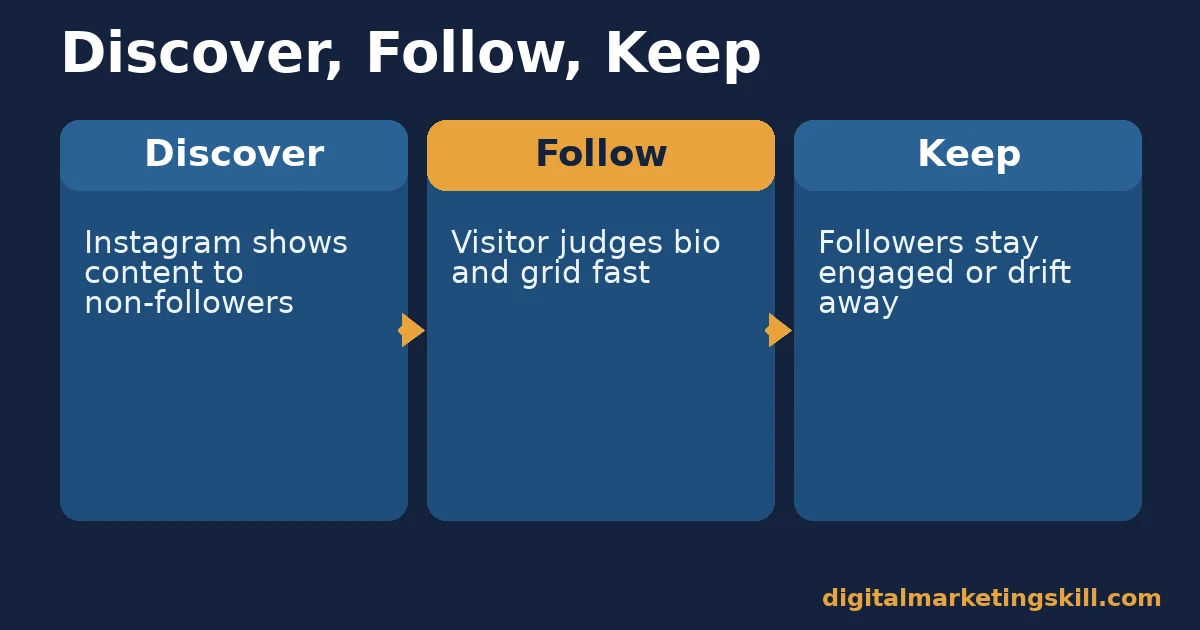
Growth happens in three steps. First, content gets shown to someone who does not follow you yet. Next, that person decides whether to follow. Finally, your existing followers decide whether to keep seeing your posts by staying engaged. Every effective plan to increase Instagram followers accounts for all three steps, not just the first one.
Discovery: Instagram Decides Who Sees You First
Discovery is the step most people associate with wanting to increase Instagram followers, and it is also the step with the least direct control. You cannot force the algorithm to show a post to more people. You can only make the content more likely to earn the engagement signals that algorithm already rewards.
Instagram’s own ranking explainer names four signals for the main feed. These are your past activity, how fast a post earns likes and comments, how often people have interacted with the creator recently, and your history with that specific creator. On the Explore page, how fast a post earns engagement matters even more than in the main feed.
None of those four signals are about follower count. A small account whose last few posts earned fast engagement can still reach new people. That is why growth tactics should target the signal, not just post more often.
The Follow Decision Happens in Seconds
Someone who finds your content through Explore or a Reel judges your profile fast: the grid, the bio and the last few posts. A profile with an unclear bio or inconsistent content loses that decision even after discovery worked.
This is the step most accounts skip entirely. They focus all their effort on the post that earned the view and none on the profile that view then led to. A visitor who lands on a profile with a vague bio, an outdated link or a mismatched grid has no reason to commit. That is true no matter how good the post that brought them there was. For the format-by-format breakdown of how reels, carousels, images and Stories each earn that first view, see our Instagram marketing strategy guide.
Three Ways to Increase Instagram Followers
Most growth comes from three sources. Each works differently and needs a different plan. A business trying to increase Instagram followers usually leans on one source by default, often paid ads. It rarely tests whether another source would cost less for the same result.
Before picking a lever, check what is already working. An account with one post that clearly outperformed the rest has a signal worth testing with paid spend. An account with no standout organic post should fix content before spending anything on ads or creators.
Organic Content: Built for Compounding Reach, Not Speed
Organic posts and Reels are free, but they compound slowly. A Reel that performs well can be shown to people who do not follow you, which is the main organic path to new followers. Hootsuite reports Reels make up 46% of time spent on Instagram, so this is where most organic discovery now happens.
Paid Promotion: Built for Speed, Not Trust
Instagram ads can put a post in front of a chosen audience immediately. The limit is trust: a paid placement does not carry the social proof of a post a friend or creator shared. Paid works best aimed at content that already performs organically, not as a first attempt at a new idea.
Influencer Partnerships: Built for Borrowed Trust, Not Ownership
Unlike organic reach or ad spend, a partnership works through a relationship a creator already built over time. That relationship cannot be rented for a single post and expected to perform the same way a long-term brand fit would.
A creator partnership borrows the trust an audience already has in that creator. Sprout Social’s survey found 49% of consumers buy at least monthly because of an influencer post, so the effect on behavior is real, not just on follows. The FTC’s disclosure guidance requires that any paid or gifted partnership be clearly disclosed with the endorsement itself, not buried in extra hashtags.
Why Follower-Count Tricks Backfire
Buying followers or joining a follow-for-follow pod looks like a shortcut. It is not. Those accounts rarely engage with your content. A low engagement rate on a large follower count signals to Instagram’s own ranking system that your content is not earning real interaction. That can quietly reduce how often real content gets shown to real people.
Hootsuite’s data on Reels makes the point clearly: an average 2.8% engagement rate applies to accounts built on real, matched audiences. An account padded with inactive followers posts into a much lower effective rate, even if the headline follower count looks impressive. The follower count becomes a vanity number that does not convert into reach, sales or trust.
This is also why Influencer Marketing Hub’s fraud research exists at all. Brands that pay influencers by follower count alone, without checking engagement quality, regularly pay for audiences that barely interact. The same logic applies to a brand’s own account. Followers only have value if a meaningful share of them actually sees and engages with new posts.
How to Run Each Growth Lever Well
Naming the three levers is the easy part. Running each one so it earns real followers, not just impressions, is where most accounts fall short.
Organic: Lead With Fast Engagement, Not Hashtag Volume
Instagram now limits every post and Reel to five hashtags, down from the uncapped era of using dozens. Spend that smaller budget on specific, relevant tags instead of broad ones with huge post counts, where new content disappears within seconds. Focus more effort on the opening seconds of a Reel, since that is what earns the fast engagement the algorithm rewards.
Paid: Lead With Your Best-Performing Organic Post
Before spending on ads, check which organic post already earned strong engagement. Put budget behind that post instead of an unproven idea. A post that already works organically has proven its hook, so paid spend just extends its reach instead of testing a new concept with real money.
Influencer: Lead With Fit, Not Follower Count
Pick creators whose audience actually matches yours, even if their follower count is small. Influencer Marketing Hub’s data shows nano-accounts average far higher engagement than mega accounts, so a smaller, well-matched creator can outperform a bigger, mismatched one.
How to Measure Instagram Follower Growth
Track the three steps separately, since a strong number in one step can hide a weak number in another.
One Metric per Step
- Discovery: reach from non-followers. Instagram’s own insights break reach down by followers versus non-followers. A healthy share from non-followers shows discovery is working.
- Follow decision: profile-to-follow rate. The share of profile visits that convert into a follow. A low rate with strong reach points to a weak bio or inconsistent grid.
- Keeping followers: engagement rate. Likes, comments, shares and saves as a share of followers. Compare your rate against Hootsuite’s 2.8% Reels benchmark as a rough guide, not a target to hit exactly.
Each of these three metrics lives in a different place. Reach by follower status sits in Instagram’s own content insights. Profile-to-follow rate takes a manual calculation from profile visits and new followers over the same window. Engagement rate is visible per post and can be averaged across a month by hand or with a third-party tool.
Reading the Three Numbers Together
Strong reach but a low profile-to-follow rate means discovery is working but the profile is not converting. Fix the bio and grid before posting more. Strong follows but falling engagement over time means new followers are not finding enough value to stay, so revisit what you post, not how often.
Check these numbers monthly rather than daily. Instagram metrics are noisy day to day, since a single Reel can distort reach or engagement for a short window. A month gives enough data to see whether a change actually moved the number, instead of reacting to normal daily swings.
The One Decision Rule: Fix the Weakest Step Before Posting More
If you remember one rule from this guide, make it this one: posting more content only helps the step that is already working. It cannot fix a weak step earlier or later in the chain.
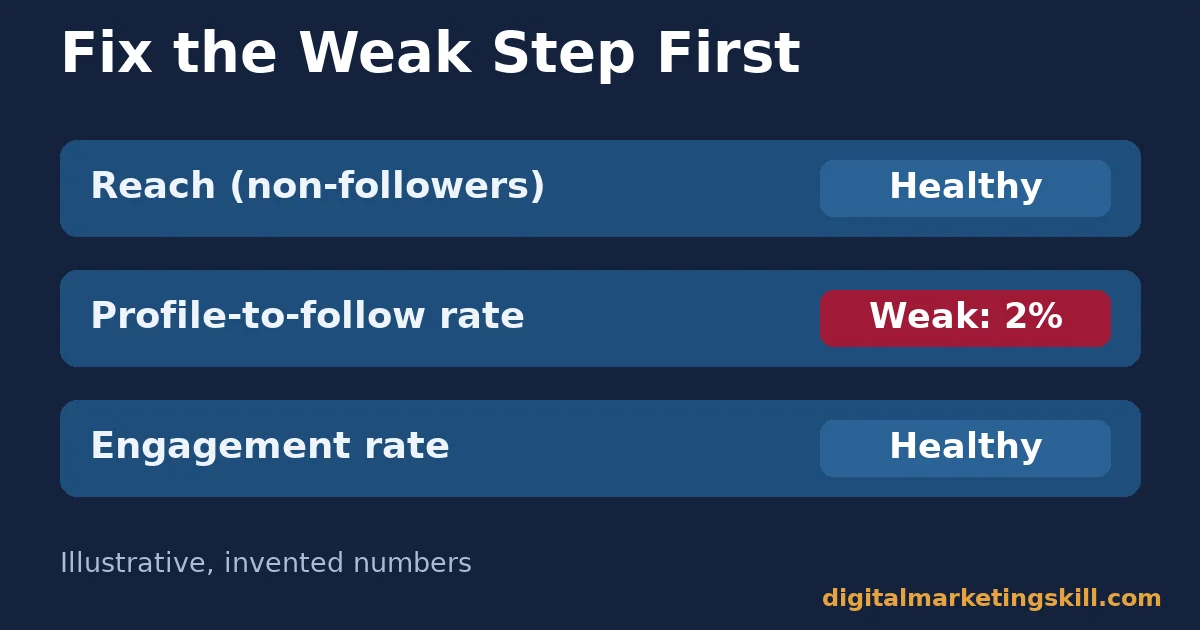
Here is an illustrative example, with invented numbers. An account posts daily and reaches 8,000 non-followers a month through Reels. Its profile-to-follow rate is only 2%, well below a healthy range.
Instead of posting even more, the owner rewrites the bio to state a clear value and redesigns the grid’s first nine posts to look consistent. The follow rate rises to 6%, roughly tripling new followers from the same reach, without any extra posting.
The lesson is about sequence. Fixing the weakest step first turns traffic that was already being earned into followers, instead of paying for more traffic to the same weak profile.
A Real Case: Gymshark’s Instagram-Led Growth
Gymshark, the fitness apparel company, built much of its early growth through Instagram rather than traditional advertising. According to an academic case study summarised by enclaverse.com, about 40% of its early sales came through Instagram, with roughly a 6.6x return on that spend. The brand grew from a small startup to a valuation of more than a billion pounds.
Treat this as one company’s documented case, not a guaranteed formula, since the summary does not disclose every variable behind those figures. It still illustrates the core idea in this guide: Gymshark’s growth came from content and creator partnerships people wanted to follow, not from follower-count tricks.
The scale is different for most accounts reading this guide, and that is fine. The mechanism still applies at any size. People who chose to engage with content, and who then chose to follow, are worth far more than a larger number padded with accounts that never interact.
Frequently Asked Questions About Increasing Instagram Followers
How can I increase Instagram followers organically?
Focus on Reels that earn fast engagement in the first seconds, since that is the signal Instagram’s own ranking system rewards most for new reach. Pair that with a clear bio and a consistent grid, so the people who find you actually follow.
How many hashtags should I use to grow on Instagram?
Instagram currently limits every post and Reel to five hashtags. Use specific, relevant tags in that smaller space rather than broad ones with huge post counts, where new content gets buried fast.
Do follow-for-follow or bot followers help my account grow?
No. Those followers rarely engage, which lowers your engagement rate and can hurt how often Instagram shows your content to new people. Real growth depends on engagement, not follower count alone.
Should I work with influencers to grow my Instagram account?
It can help, especially with a creator whose audience closely matches yours. Smaller, nano-sized creators often have notably higher engagement rates than mega accounts, so fit matters more than follower count.
How often should I post to increase Instagram followers?
Consistency matters more than raw frequency. A steady schedule of content that earns fast engagement outperforms frequent posts that get ignored, since Instagram’s ranking rewards engagement speed over volume.
What is a good Instagram engagement rate?
There is no single good figure, since it varies by account size and content type. Hootsuite’s benchmark for Reels is around 2.8%, useful as a rough comparison point rather than a universal target.
Does running Instagram ads increase organic followers too?
It can, if the ad promotes a post that already performs well organically. Paid reach extends a proven idea; it rarely fixes a profile or content that was not converting visitors in the first place.
Do I have to disclose a paid Instagram partnership?
Yes. The FTC requires that any paid or gifted partnership be disclosed clearly within the post itself, not hidden among unrelated hashtags.
A Quick Checklist to Increase Instagram Followers This Month
Use this short checklist before changing your whole content plan. It follows the same three-step order used throughout this guide.
- Check discovery first. Look at the reach from non-followers on your last ten posts. If it is consistently low, the content itself needs work before anything else.
- Check the follow decision next. Visit your own profile as a stranger would. Does the bio state what you do in one line, and does the grid look consistent?
- Check retention last. Look at engagement rate on posts from a month ago versus this week. A falling trend means current followers are losing interest, not just that new ones are hard to find.
- Pick one lever, not three. Organic content, paid promotion and influencer partnerships each take real effort to run well. Trying all three at once usually means none of them gets done properly.
Revisit this checklist monthly. An account that wants to increase Instagram followers sustainably treats growth as an ongoing check, not a one-time fix applied once and never revisited.
Share this checklist with anyone else on your team who posts content, so everyone is working from the same three-step model instead of chasing whichever metric looks most exciting that week.
Start With the Step That Is Actually Weak
To increase Instagram followers, find the weakest of the three steps, discovery, the follow decision or keeping engagement, and fix that one first. Track reach from non-followers, profile-to-follow rate and engagement rate for a month before changing your whole content plan.
Avoid the temptation to copy a competitor’s exact posting schedule or hashtag list. Your audience, your past engagement history and your content are all different, so the step that is actually weak for your account may be a different one from theirs. Diagnose your own numbers first, every time you plan to increase Instagram followers, rather than assuming someone else’s fix will transfer directly.
If you want guided, hands-on practice growing a real Instagram account, Digital Marketing Skill Institute teaches it step by step. The Master Diploma in Digital & AI Marketing includes an AI-Powered Social Media Management and Advertising track, one of four AI-powered tracks totalling ten courses, with a Full Stack option for completing all four.
It comes with unlimited 1-on-1 coaching and mentoring, plus a U.S. Project Internship with a verified U.S. Work Reference Letter. The diploma is dual US and UK accredited and recognised in more than 100 countries.
The programme is fully online, so you can build these skills from anywhere in your country. Browse more guides on the Digital Marketing Skill Institute blog, and read more stories on the reviews page. When you are ready, apply for the Master Diploma or start from the Digital Marketing Skill Institute homepage.
Every figure in this guide was checked against its original source before publication. Figures marked as illustrative are invented examples, not real results.
