
Social media marketing books teach strategy, personal branding, platform mechanics, and content craft. No single list of social media marketing books fits every reader. The right book depends on which specific skill gap is slowing you down, not on a title’s popularity. Match the book to the gap, apply one framework within a week, and measure whether your output actually changed.
Key Takeaways
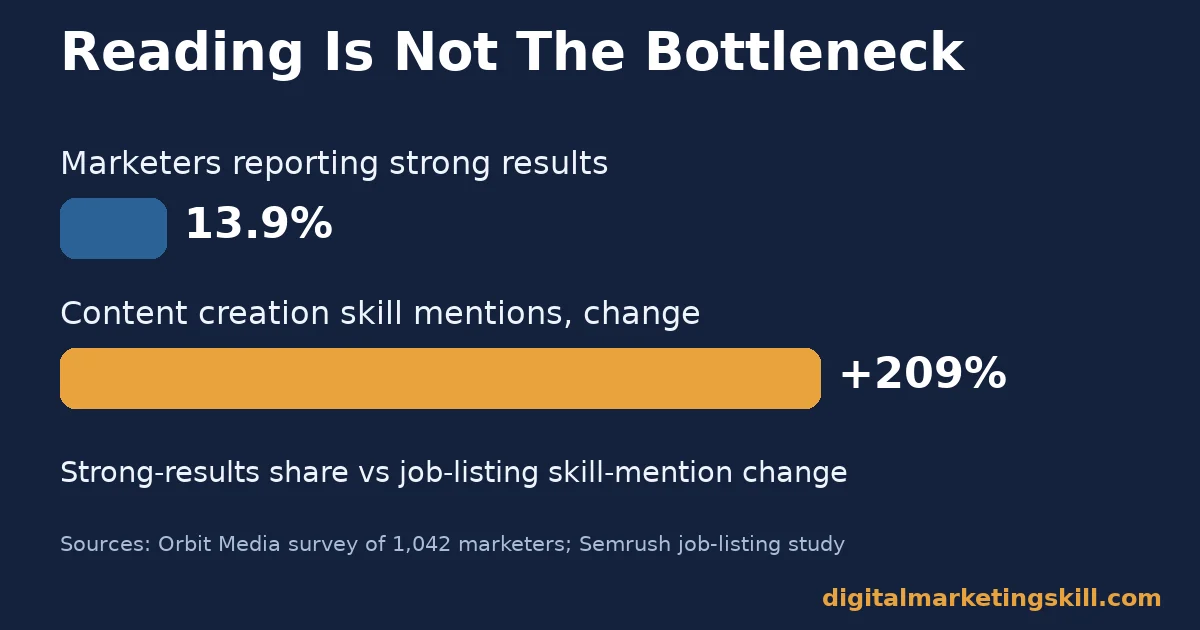
- Most reading advice skips the application step. Orbit Media’s annual survey of 1,042 content marketers found only 13.9% report strong results from their content work, an all-time low in the survey’s run. That points to an execution gap, not a knowledge gap.
- Hiring now rewards doing over reading about doing. A Semrush study of 8,000 content marketing job listings found “content creation” mentions rose 209% year over year, while plain “writing” requirements fell 28%.
- Short-form video now leads every format. HubSpot’s State of Marketing survey of over 1,500 marketers found short-form video is the single most used content format, cited by 48.6% of respondents.
- Most creators still earn very little. The Influencer Marketing Hub Creator Earnings Report, surveying over 3,000 creators, found more than half earn under $15,000 a year from their content. A book’s promise of fast growth deserves scrutiny.
- One well-documented case shows the ceiling. Gary Vaynerchuk, whose books popularized many of the tactics covered below, publicly built his family’s wine business from $3 million to $60 million in five years using early online video and direct audience engagement.
In this guide
- What Most Social Media Marketing Book Lists Leave Out
- Why Social Media Marketing Books Still Matter When Platforms Change So Fast
- Social Media Marketing Books Solve Different Problems
- How to Get Real Value From Each Category
- What the Current Data Says About Which Skills to Prioritize
- How to Measure Whether a Social Media Marketing Book Actually Helped
- The One Decision Rule: Match the Book to Your Single Biggest Bottleneck
- A Real Case: The Wine Business That Became a Marketing Playbook
- Frequently Asked Questions About Social Media Marketing Books
- Start With One Book Matched to One Gap
What Most Social Media Marketing Book Lists Leave Out
Most lists rank social media marketing books by popularity or publication buzz and stop there. That tells you what is well known. It does not tell you which book fixes the specific thing holding your results back.
This guide groups books by the gap each one closes, not by title fame. It also gives you a way to measure whether a book changed anything. Finishing a book is not the same as improving your marketing.
It also weighs an author’s real-world track record alongside their advice, since a book’s credibility rests partly on whether the author actually did the thing they are now teaching. A documented business result is worth more than a confident claim with no evidence behind it.
A few ground rules. Platform-specific tactics inside any book age fast, because algorithms change often. The lasting value is usually the underlying principle. It is rarely the specific platform feature mentioned on a given page. Treat any single author’s business result as one data point, not a guaranteed outcome. Markets, teams, and starting conditions differ too much for one story to generalize cleanly.
Why Social Media Marketing Books Still Matter When Platforms Change So Fast
A book cannot keep up with a platform’s next algorithm update. What it can do is compress years of trial and error into principles. Those principles hold steady even after specific tactics stop working.
That distinction matters more now than it used to. The job-market data above shows employers increasingly reward people who can create and adapt content, not just describe strategy in the abstract. A book that only explains theory, without a practice component, leaves that gap open. Our guide on content marketer skills that turn posts into traffic covers the practice side in more depth.
The best use of a social media marketing book is narrow, not broad. Pick one framework, apply it to one real piece of content, and compare the result with your usual output. A book read passively, cover to cover, rarely changes anything on its own.
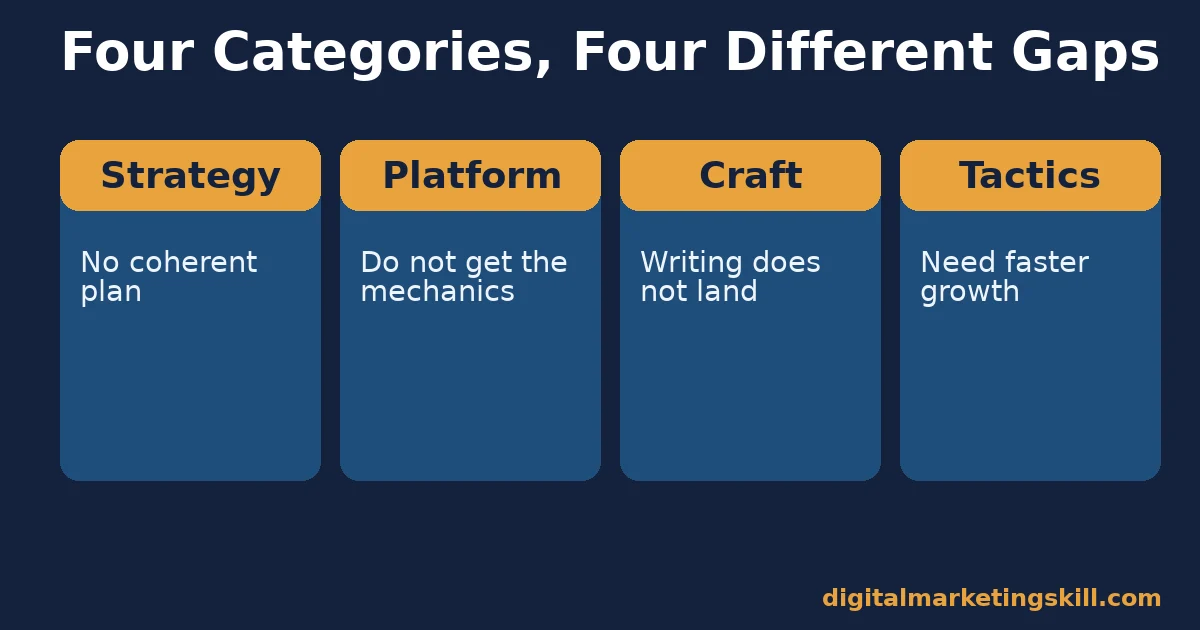
Social Media Marketing Books Solve Different Problems
Not every book on a “best of” list solves the same problem. Picking one that matches a different gap than yours wastes the read.
Strategy and Personal Branding: Built for the “What Should I Even Be Doing” Gap
Books in this category explain how to build a presence and a personal brand from nothing. They usually do this through a named author’s own story. Gary Vaynerchuk’s “Crushing It!” is the best-known example. It walks through how everyday entrepreneurs built personal brands across multiple platforms.
Erik Qualman’s “Socialnomics”, a finalist for the American Marketing Association’s Book of the Year, takes a wider view. Qualman built a long career inside the marketing arms of large, named brands before writing it, which is the kind of author background worth checking before trusting a strategy book’s claims. The book explains how social media changed business behavior as a whole, not just one entrepreneur’s path.
Read this category of social media marketing books when you lack a coherent plan, not when you already have one and need execution help. A strategy book cannot write your next post for you.
Platform-Specific Books: Built for Understanding One Platform’s Mechanics
Some books focus entirely on one platform’s history, culture, and algorithm logic. Chris Stokel-Walker’s “TikTok Boom” traces the platform’s rise as a journalistic account rather than a how-to manual.
These books age the fastest of any category, because the mechanics they describe are the first thing a platform changes. Read them for context and judgment, not for a current step-by-step playbook.
Journalistic accounts like this one still carry real value for a careful reader. They document how a platform’s culture and incentives formed in the first place, which helps explain why a platform rewards certain content types even after its specific algorithm has moved on.
Content and Copy Craft: Built for the “My Writing Does Not Land” Gap
Ann Handley’s “Everybody Writes” focuses on the actual sentences: how to write content people want to read and share, independent of any single platform. This category ages slowest, because clear writing is not platform-dependent.
Read this category when your ideas are fine but your execution falls flat. That is a different problem than not knowing what to post about. The fix is sentence-level, not strategic.
Fast-Growth Tactics: Built for Short-Term Audience Building
Books like Brendan Kane’s “One Million Followers” focus narrowly on growth mechanics: algorithm behavior, posting cadence, and engagement triggers across specific platforms.
Treat this category of social media marketing books as a toolbox, not a philosophy. Use it for ideas, not instructions. The specific tactics shift as platforms update. Revisit newer sources periodically rather than treating any one book’s tactics as permanent. Our guide on practical social media marketing skills covers the fundamentals that outlast any single tactic.
How to Get Real Value From Each Category
Reading a book is not the same as using it. Here is the matching next step for each category above.
Strategy and Personal Branding: Lead With One Written Plan
After finishing a strategy book, write a one-page plan naming your platform, your audience, and your first month of content. Do this before reading the next book. A plan on paper is worth more than a second strategy book read passively.
Our guide on building your personal brand on social media gives a structured starting template. Share the plan with one other person, even informally, since stating a plan out loud makes it harder to quietly abandon.
Platform-Specific Books: Lead With a Current Cross-Check
Verify any platform-specific claim against the platform’s own current help center before acting on it. A book’s description of an algorithm can be outdated within a year of publication. Use the book for pattern recognition, not literal instructions.
Content and Copy Craft: Lead With a Rewrite Exercise
Take one real post you already published and rewrite it using a single technique from the book, such as a specific hook structure or sentence-length rule. Compare the engagement on the rewrite with your usual baseline.
Our guide on overcoming writer’s block pairs well with this category when the craft gap is about starting, not finishing.
Fast-Growth Tactics: Lead With a Single Test, Not the Whole Playbook
Pick one tactic from the book and run it for two weeks before adopting anything else from it. Testing one variable at a time is the only way to know whether the tactic, not something else, caused a change. Our guide to becoming a social media manager covers how to build this kind of testing habit into a weekly routine.
What the Current Data Says About Which Skills to Prioritize
Book choice should follow the market, not just personal interest. Current hiring and platform data point toward specific gaps worth closing first.
The Semrush data above shows analytics as the single most requested skill in content marketing job listings. It appears in 40% of senior listings and 36% of other roles. General AI literacy appears in 34% of senior listings. Few older social media marketing books address either skill directly, since both are recent shifts.
HubSpot’s survey data shows short-form video as the top-performing content format. That makes platform-specific video books more immediately useful than general strategy books, for a reader starting from zero on video.
None of this means older books are worthless. It means you should weigh a book’s platform-specific claims against current data before trusting them, and lean on the newest available source whenever the two disagree.
Why the Author’s Own Track Record Is Worth Checking
Guy Kawasaki and Peg Fitzpatrick’s “The Art of Social Media” sits between these two needs, offering platform-by-platform tips rather than one theory. Kawasaki’s own background as a former Apple chief evangelist is a useful credential to weigh, since platform-tip books depend heavily on the author’s track record for credibility.
Treat even a well-reviewed book like this as a starting checklist. Verify each tip against the platform’s current features before relying on it. A tip list that mixes several platforms also forces you to pick the handful most relevant to where you actually publish, rather than trying to apply all of them at once.
Comparing authors matters because not every named expert has equal standing. Ann Handley, whose craft book is covered above, has also co-built large, named marketing businesses before writing, which is the same kind of verifiable background worth checking for any author on your reading list.
How to Measure Whether a Social Media Marketing Book Actually Helped
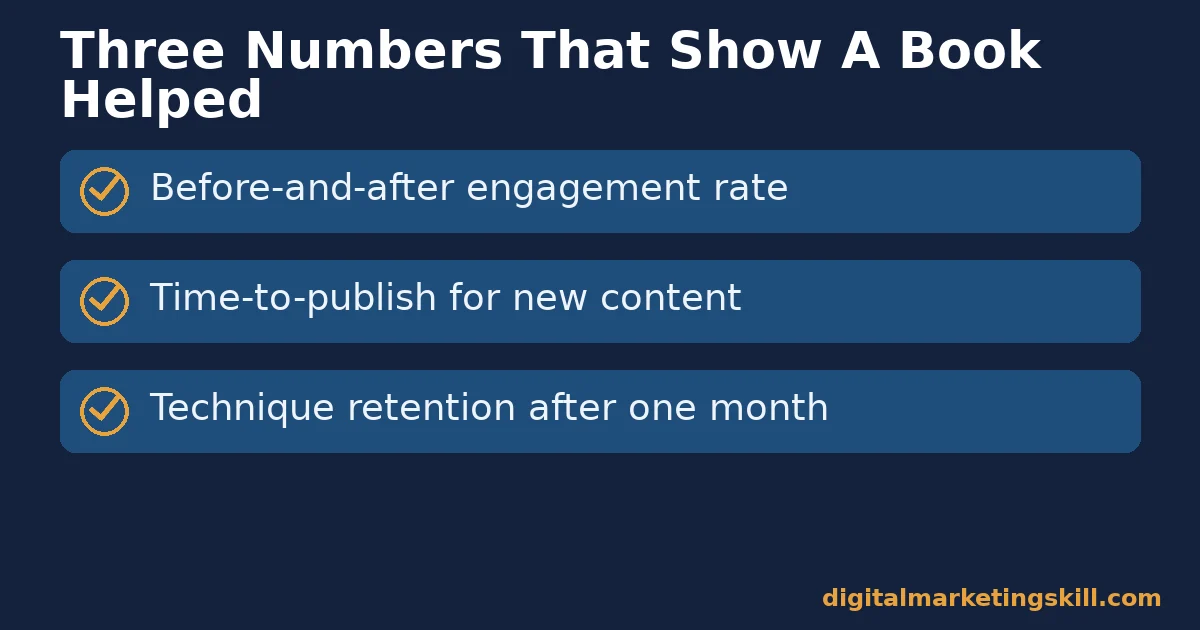
Finishing a book is not a result. Track the numbers below instead. Each one is defined in a single sentence.
Three Numbers That Show a Book Changed Something
- Before-and-after engagement rate. The engagement rate on content made using a new technique, compared with your average rate on the ten posts before it, showing whether the change actually moved the needle.
- Time-to-publish. How long a piece of content takes you to plan and produce, showing whether a book’s framework made your process faster or just different.
- Technique retention after one month. Whether you are still using the technique a month later without reminding yourself, showing whether it became a real habit or a one-time experiment.
How to Read These Numbers Together
If engagement rate does not move after a genuine test, the technique may not fit your audience. Try a different one from the same book before abandoning it entirely. If you stop using a technique within days, the problem is usually habit formation, not the technique’s quality.
Review after each book, not after a whole reading list. A single clear measurement per book teaches you more than reading five books back to back without testing any of them.
Keep a simple running log of which technique came from which book, alongside the before-and-after numbers. Over a year, that log becomes a personal record of which social media marketing books actually paid off for your specific work, rather than a vague memory of which ones you enjoyed reading.
The One Decision Rule: Match the Book to Your Single Biggest Bottleneck
If you take one decision rule from this guide, make it this one. Identify the single skill most limiting your results right now. Pick exactly one book that addresses it, instead of working through a long general reading list.
Diagnose the bottleneck before buying a book, not after. Look at your last ten posts and ask whether the problem is reach, engagement, or conversion, because each points toward a different category of social media marketing book. A reach problem usually points toward a platform-specific or fast-growth book, while a conversion problem points toward a craft book on writing clearer calls to action.
Here is an illustrative example, with invented numbers. Imagine a marketer who posts consistently but gets weak engagement on every post. Reading a growth-tactics book about posting frequency would not fix this, because frequency is not the bottleneck.
A craft-focused book on writing hooks and sentence structure targets the actual problem instead. A focused read there is far more likely to move engagement than five unrelated strategy books, because it addresses the exact skill that is failing.
The lesson is not that broad reading is worthless. One book matched to your actual bottleneck beats a long list matched to nothing in particular.
A Real Case: The Wine Business That Became a Marketing Playbook
Many of the tactics inside this category of social media marketing books were tested first, not written first. Gary Vaynerchuk, whose books “Crushing It!” and “Crush It!” popularized personal-branding tactics for entrepreneurs, built his credibility by applying those ideas to his own family’s liquor store before writing about them.
According to Vaynerchuk’s own documented history, he took over the business after college and renamed it Wine Library. He launched online sales, and in a later year started a daily wine-review webcast. He grew the business from $3 million a year to $60 million a year over five years, before leaving to build a separate marketing agency.
Treat this as one entrepreneur’s documented result in one specific market, not a guarantee that reading his books reproduces the same outcome. It illustrates that the underlying principle, consistent direct audience engagement through video, predates and outlasts any single platform’s current features.
Notice what the case does not show, too. Wikipedia’s account does not break down how much of the growth came from video specifically versus online sales and email marketing running at the same time. Treat the video tactic as one contributing factor among several, not the sole cause of the result.
Frequently Asked Questions About Social Media Marketing Books
What is the best social media marketing book for beginners?
Start with a strategy and personal-branding book if you lack a coherent plan, or a craft book if your ideas are fine but your writing is not landing. The right starting point depends on your specific gap, not a single universal answer.
Do social media marketing books go out of date?
The platform-specific tactics inside them do, often within a year or two, because algorithms change frequently. Underlying principles about audience attention and clear communication tend to hold up much longer.
How many social media marketing books should I read?
Fewer than most lists suggest. One book matched to your biggest current bottleneck, applied and measured, usually beats five books read passively back to back.
Can a book alone grow my social media following?
No. A book can give you a framework or a technique, but growth comes from applying it consistently and measuring the results, not from the act of reading.
Are social media marketing books worth the time compared to free content?
Books tend to offer a more complete, tested argument than a single free post or video, since an author has to defend the idea across an entire book. Free content is often faster for platform-specific tactical updates. Use books for depth on principles and craft, and free sources for staying current on fast-moving platform mechanics.
Should I read books about platforms I don’t use yet?
Generally no, unless you plan to launch on that platform soon. Match your reading to the platform where you are actually publishing, since platform-specific mechanics do not transfer directly.
Do social media marketing books cover AI tools?
Older titles mostly do not, since AI adoption in content work is recent. Pair an older strategy or craft book with a current source on AI tools, rather than expecting one book to cover both.
Does the author’s own track record matter when choosing a book?
Yes. A documented, verifiable business result behind an author’s advice is a stronger signal than general popularity or a confident tone. Check what the author actually built before trusting their framework.
Start With One Book Matched to One Gap
Social media marketing books are most useful as targeted tools, not as a long list to complete. Name your biggest current bottleneck, choose the one category of book that addresses it, and apply a single technique to real content within a week.
Measure the result before picking up the next book. Repeat that cycle, one book and one measurement at a time, and your reading list will stay small while your actual output keeps improving.
If you want structured practice turning frameworks like these into real skills, Digital Marketing Skill Institute teaches them hands-on. Its Master Diploma in Digital & AI Marketing includes an AI-Powered Social Media Management and Advertising track, one of four AI-powered tracks totalling ten courses, with a Full Stack option for completing all four.
It comes with unlimited 1-on-1 coaching and mentoring and a U.S. Project Internship that includes a verified U.S. Work Reference Letter. The diploma is dual US and UK accredited and recognised in more than 100 countries.
The programme is 100% online, so you can apply what you read from anywhere in your country. Browse more guides on the Digital Marketing Skill Institute blog, read real outcomes on the reviews page, and when you are ready, apply for the Master Diploma or start from the Digital Marketing Skill Institute homepage.
Every figure in this guide was checked against its original source before publication. Figures marked as illustrative are invented examples, not real results.
