
A social media influencer is someone brands pay to recommend products to an audience that trusts them. Becoming one and getting paid for it is a real, documented career path, though not an easy one. Most of the income gap between creators comes down to engagement and consistency, not luck.
Key Takeaways
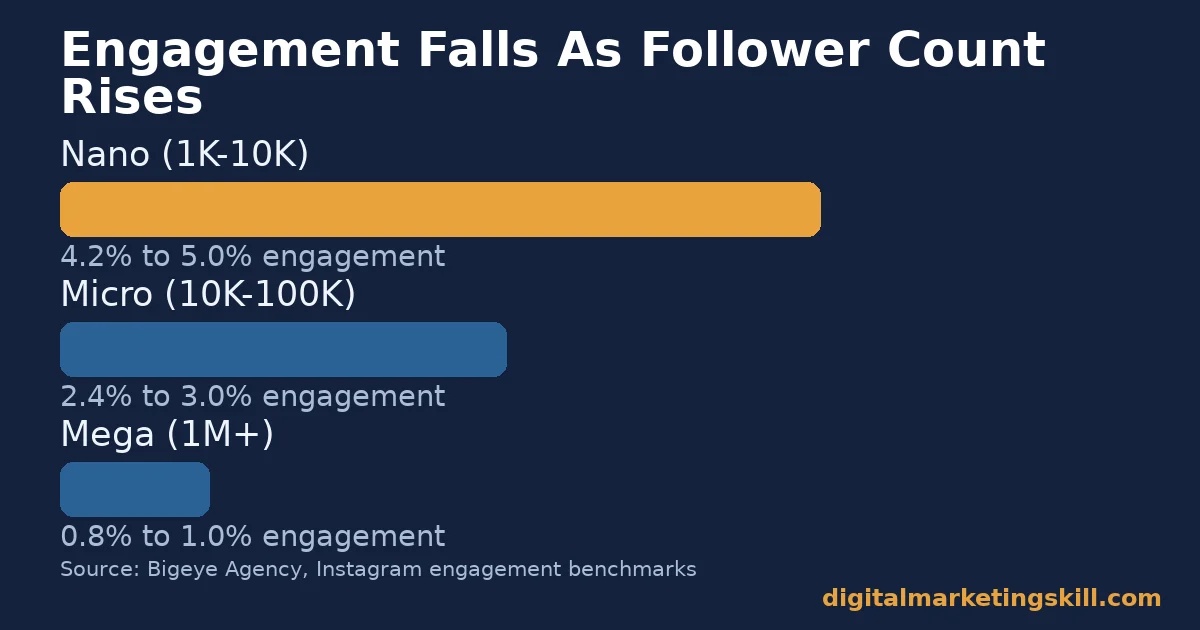
- Nano-tier creators (1,000 to 10,000 followers) average 4.2% to 5.0% engagement on Instagram, compared with just 0.8% to 1.0% for mega creators above 1 million followers (Bigeye Agency).
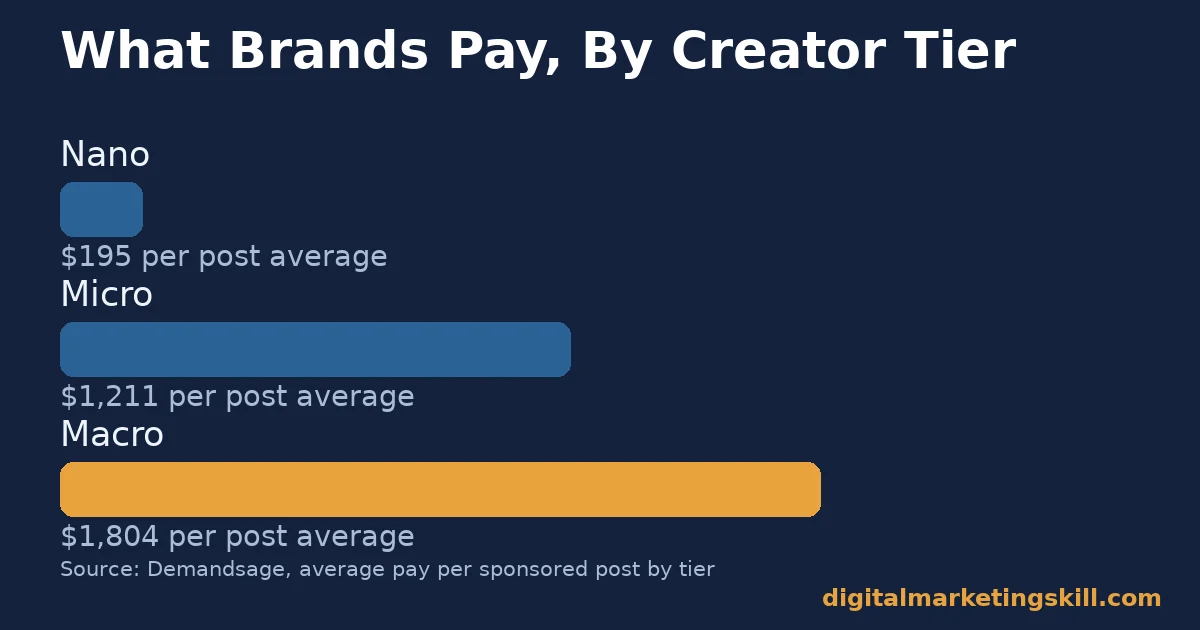
- Nano creators average $195 per post, while micro-tier creators (10,000 to 100,000 followers) average $1,211 per post (Demandsage).
- 87.49% of brands expect their influencer marketing budget to increase, and nano and micro creators are getting the largest share of that new spending (Influencer Marketing Hub).
- Fake or bot followers account for 56.5% of all reported fraud and quality issues in influencer campaigns, making audience authenticity the top risk brands screen for (Influencer Marketing Hub).
- Undisclosed sponsored posts can each draw a civil penalty of up to $53,088, adjusted annually for inflation, and the FTC has sent warning letters to hundreds of advertisers over disclosure failures (The Social Media Law Firm, citing FTC penalty guidance).
In this guide
- What Becoming A Social Media Influencer Actually Takes
- How Social Media Influencer Income Actually Works
- What Changes By Creator Tier
- How To Lead With Each Tier
- Common Mistakes That Stall A Social Media Influencer Career
- How To Measure Whether It Is Working
- The One Decision Rule: Price Yourself On Engagement Rate, Never On Follower Count Alone
- A Real Case: Niche Micro-Creators Over Broad Reach
- Frequently Asked Questions About Becoming A Social Media Influencer
- Where To Learn This Properly
What Becoming A Social Media Influencer Actually Takes
Most advice on this topic oversells the income and undersells the mechanism. A handful of creators earn millions per post. However, most do not, and the gap between them is not mystery or luck.
It is engagement. A social media influencer with 5,000 highly engaged followers often earns more per post, relative to audience size, than one with 500,000 passive followers. Brands have caught on to this. That is exactly why nano and micro creators are getting the fastest-growing share of influencer budgets.
This guide treats influencer income as a function of a few measurable things. Engagement rate, niche fit, consistency, and legal compliance. The figures here are a current snapshot, not a promise. Every one is sourced, so you can check it yourself.
None of this means reach is worthless. A campaign built purely for broad awareness still benefits from a wide audience. The point is narrower: most sponsorship deals pay for action, not just visibility.
How AI Search And Recommendation Feeds Change Discovery
Platforms increasingly surface creators through AI-driven recommendation systems, not chronological feeds alone. Consequently, a creator with a narrow, consistent niche is easier for these systems to classify and recommend to the right audience. A broad, unfocused account, by contrast, gives the algorithm less to work with, which often means fewer recommendations overall.
Why Reach Alone Is The Wrong Number To Chase
If you are new to the wider field, start with a social media marketing guide before specializing in influencer work specifically. Follower count is the easiest number to see, so it gets chased first. It is also the weakest predictor of what a brand will actually pay. Engagement rate, the share of followers who like, comment or share, predicts income far better. It is what brands are actually buying.
How Social Media Influencer Income Actually Works
Three mechanisms explain most of the gap between creators who get paid consistently and those who do not.
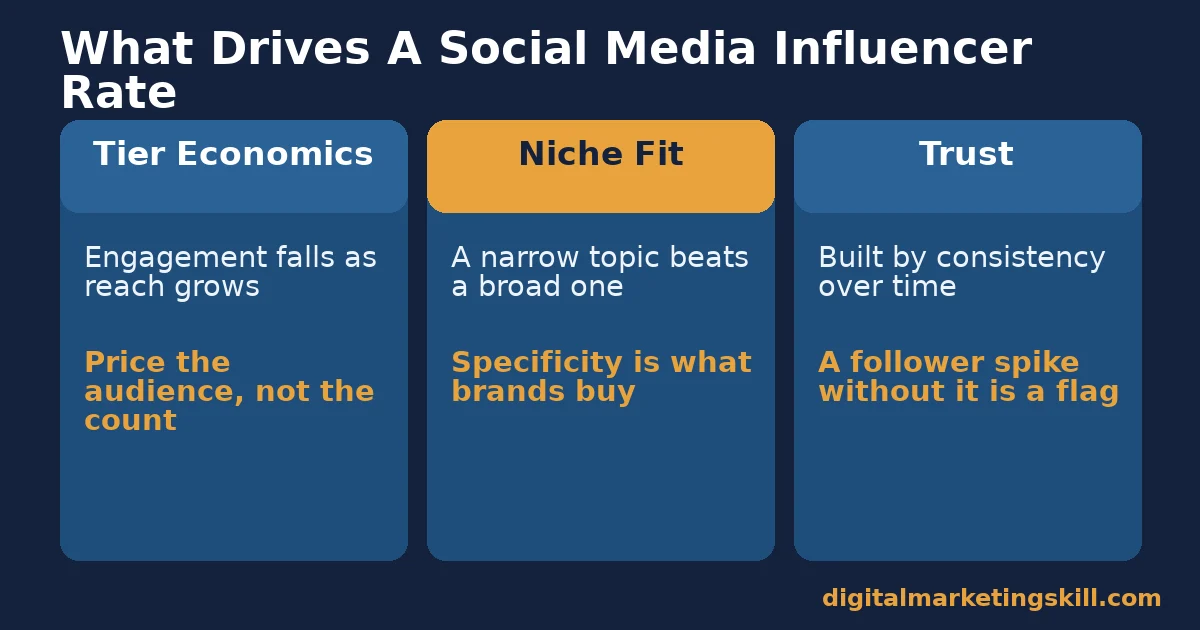
The first is tier economics. As follower count rises, engagement rate falls, almost without exception, across every major platform. Therefore, a social media influencer who understands this can price a smaller, highly engaged audience correctly, instead of undervaluing it.
The second is niche fit. A creator with 8,000 followers in a narrow, specific niche is more valuable to a brand in that niche. Compare that to a creator with 80,000 followers who posts about everything. Specificity is what a brand is actually paying for.
The third is trust, which compounds with consistency. An audience that has followed a creator for a year trusts their recommendation more than a new follower does. Consequently, a sudden spike in followers, without a matching rise in engagement, is a warning sign, not a win.
These three mechanisms do not operate in isolation. A creator with strong niche fit but weak consistency still underperforms a less-specialized creator who posts reliably, because trust needs repetition to build.
A Quick Example: Two Creators, Same Follower Count
Illustrative, invented numbers: two creators each have 50,000 followers in the same niche. One bought a portion of their followers through a growth service. The other grew organically and posts consistently three times a week.
Creator A’s engagement rate sits near 0.4%, while Creator B’s sits near 3.5%. A brand running the numbers offers Creator B nearly nine times the rate per post. Despite identical follower counts, engagement, not reach, is what the brand is buying.
What Changes By Creator Tier
Not every tier plays the same game. Treating a nano account like a mega account, or the reverse, wastes effort in both directions. Instead, match the strategy to the tier you are actually in today, not the tier you hope to reach.
Nano And Micro Creators: Built For Trust And Niche Depth
Nano and micro creators cannot compete on reach. They win on trust and specificity, and brands increasingly pay for exactly that. This is why these tiers are absorbing the fastest budget growth industry-wide, according to Influencer Marketing Hub.
Macro And Mega Creators: Built For Broad Awareness
Larger creators trade engagement rate for sheer audience size. That trade-off works for brand-awareness campaigns, where a wide, shallow reach is the goal. It works less well for a campaign built to drive one specific action.
Mid-Tier Creators: Built For The Middle Ground
Mid-tier creators, roughly 100,000 to 500,000 followers, sit between the two extremes of this market. They typically carry more engagement than mega creators but less than nano and micro accounts. As a result, they suit campaigns that need both a reasonable reach and a still-credible level of trust, a balance neither extreme tier offers as well.
This tier also tends to work across multiple platforms simultaneously, since a single platform rarely provides enough reach on its own at this stage. Cross-posting the same core idea, adapted to each platform’s format, is common practice here.
How To Lead With Each Tier
Knowing the difference matters only once you apply it to your own growth plan. The moves below map directly to the tiers described above, one for each stage of growth.
Nano And Micro Creators: Lead With A Narrow, Checkable Niche
Pick one specific, narrow niche you can post about credibly, several times a week, for months. A documented content plan keeps a small account posting consistently. A repeatable content-ideas process prevents the common problem of running out of ideas after a few weeks.
When you reach out to brands, lead with your engagement rate, not your follower count. A brand running real numbers will notice. Include a short, specific breakdown of your niche and audience, since that specificity is exactly what makes a nano or micro account worth a brand’s attention in the first place.
Macro And Mega Creators: Lead With Segmented Content And Proof Of Reach
At larger scale, segmenting an audience by platform and content type protects engagement from drifting too low. Lean on a documented content marketing strategy to decide which formats to keep. Track engagement by content type, not just overall, and drop formats that consistently underperform, even if they still pull views.
Mid-Tier Creators: Lead With Case Studies From Past Campaigns
At this stage, a short portfolio of past campaign results does more to win new sponsors than a pitch about reach alone. Show which past posts drove real engagement, and let that evidence carry the conversation.
Common Mistakes That Stall A Social Media Influencer Career
Three mistakes explain most accounts that stay stuck well below what their niche and effort should earn.
Buying Followers Or Engagement
Illustrative, invented numbers: an account jumps from 4,000 to 40,000 followers in a week through a growth service, but engagement stays flat at roughly the same raw number of likes and comments. A brand reviewing the account’s history sees the mismatch immediately, and that mismatch is often enough to end the conversation before it starts.
Fake and bot followers now account for 56.5% of all reported fraud and quality issues brands flag in influencer campaigns. A bought-follower spike is usually easy for a brand to spot. It also permanently damages the trust a real campaign depends on.
Posting About Everything Instead Of One Niche
Switching topics every week feels like it keeps a social media influencer’s content fresh. In practice, it usually does the opposite. An audience that followed for fitness content and now sees finance tips has less reason to stay engaged, and engagement is exactly the number brands check first.
A broad, unfocused account is harder for any single brand to picture their product inside. Covering one clear niche instead makes a creator easier to match with the right sponsor. It also makes the creator easier for an audience to trust as credible on that topic.
Promising Results A Creator Cannot Control
A creator cannot guarantee a brand’s sales will rise by a specific amount from one sponsored post. Promising that anyway sets up a relationship to fail from the start. A more honest pitch focuses on what a creator can actually control: reach within a defined niche, and a documented engagement rate.
Brands that work with creators regularly can usually tell the difference between an honest pitch and an inflated one. An honest, measurable pitch tends to win more repeat bookings over time, even when the first offer looks smaller on paper.
Skipping Sponsorship Disclosure
Undisclosed sponsored content can draw a civil penalty of up to $53,088 per post, and the FTC has already sent warning letters to hundreds of advertisers and creators over this exact failure. Disclosure is not optional. It is also not complicated. A plain “paid partnership” label, placed where it cannot be missed, satisfies the requirement. Disclosure rules apply across every platform a creator monetises, including Instagram; our guide to how to make money on Instagram breaks down the income paths this applies to.
How To Measure Whether It Is Working
Four numbers tell a social media influencer most of what matters. Follower count, on its own, is not one of them. It measures audience size, not whether that audience actually responds.
Engagement rate is the share of followers who like, comment, share or save a post, divided by total followers. Track it per post and as a rolling average, since a single viral post can distort a single data point.
Rate per thousand followers is what you charge, divided by follower count, in thousands. It lets you compare your own pricing against published tier benchmarks, rather than guessing.
Repeat-brand rate is the share of sponsors who book a second campaign with you. A high repeat rate signals real performance, far more reliably than any single campaign’s reported reach. A brand that returns is effectively vouching for results it already measured on its own side.
Niche consistency is a simple check: what share of your last 20 posts fit your stated niche? A falling number usually predicts falling engagement a few months later.
Review all four numbers monthly rather than after every single post, and treat them as the real scoreboard for a social media influencer’s growth. A single post, good or bad, is usually noise. A monthly pattern across dozens of posts is signal, and signal is what actually guides a pricing or strategy decision.
The One Decision Rule: Price Yourself On Engagement Rate, Never On Follower Count Alone
Before accepting or pitching a rate, calculate your engagement rate for the last 10 posts. Compare it against your tier’s published benchmark. If you are above it, price above the average for your tier. If you are below it, fix engagement before chasing more followers.
Illustrative, invented numbers: a creator with 20,000 followers and a 4% engagement rate is outperforming the typical micro-tier benchmark. Pricing based on follower count alone would undervalue that account by a wide margin.
The reverse also holds. A creator with 200,000 followers but a 0.5% engagement rate is underperforming for that tier, and should expect offers closer to a smaller account’s rate until engagement recovers. Fixing that usually means narrowing the content focus and posting more consistently, the same two levers that built the account in the first place.
A Real Case: Niche Micro-Creators Over Broad Reach
Glossier, the beauty brand, built much of its early growth on a documented strategy. It worked with a large number of smaller, niche beauty creators instead of a handful of celebrities. The approach is widely cited in marketing case studies as a driver of the brand’s rapid early growth and loyal customer base.
The limits of this case matter. It describes one brand’s strategy, reported through secondary marketing analysis rather than the company’s own released campaign-level numbers. Results from any single brand’s approach do not guarantee the same outcome elsewhere, and the beauty category in particular tends to have unusually high organic engagement compared with other niches.
At Digital Marketing Skill Institute, several graduates have described building a social media presence and content system for the first time during the program’s social media coursework. It is a small, checkable example of the same underlying pattern. A consistent, niche-specific presence performs differently than scattered, inconsistent posting.
Frequently Asked Questions About Becoming A Social Media Influencer
How many followers do I need to become a paid social media influencer?
Fewer than most people assume. Nano creators with as few as 1,000 highly engaged followers already earn sponsored posts, averaging around $195 per post. Engagement rate matters more than clearing any specific follower number.
What is a good engagement rate for a social media influencer?
It depends heavily on tier and platform. On Instagram, a nano creator should aim for 4% or higher. A mega creator above 1 million followers typically sees closer to 1%. Compare your own rate against your tier’s benchmark, not against a single fixed target, since the right number shifts as an account grows.
Do I have to disclose paid posts?
Yes, always. A clear, hard-to-miss label such as “paid partnership” satisfies most disclosure rules. Skipping it risks a real financial penalty, not just a warning.
Should I buy followers to look more established?
No. Fake followers are one of the most common reasons brands flag and reject creators during vetting. The damage to trust and future deals usually costs far more than any short-term appearance of popularity is worth.
How long does it take to become a paid social media influencer?
There is no fixed timeline, but consistency matters more than speed. A focused niche, posted to several times a week for months, builds a real engagement history. Brands check that history before they ever look at follower count.
Which platform is best for a new social media influencer?
Whichever platform your specific niche audience already uses most. Engagement benchmarks differ by platform. Check where your own content already performs best before committing most of your effort to one channel.
Do I need professional equipment to start?
No. A smartphone camera is enough for most niches, at least in the beginning. Consistency and niche fit matter more for early engagement than production quality, and equipment can be upgraded later once a real audience and real revenue exist to justify the cost.
What is the biggest difference between nano and mega creators?
Engagement rate, by a wide margin. Nano creators routinely see four to five times the engagement rate of mega creators, even though mega creators reach far more people overall. Brands running real numbers price for that difference.
Where To Learn This Properly
Becoming a social media influencer is one visible outcome of a broader skill set: content strategy, platform mechanics, and audience growth working together. The underlying skills overlap heavily with how people make money from blogging, since both depend on a consistent, niche-specific audience. Digital Marketing Skill Institute’s Master Diploma in Digital & AI Marketing runs four AI-powered tracks totalling ten courses.
How The Tracks Apply Here
The AI-Powered Social Media Management and Advertising track covers the content and growth mechanics this guide describes. The AI-Powered Lead Generation and Email Automation track covers turning an audience into income. It goes beyond single sponsored posts, into a more sustainable stream. A Full Stack option lets you complete all four tracks.
The program includes unlimited 1-on-1 coaching and mentoring, a U.S. Project Internship with a verified U.S. Work Reference Letter, and dual US and UK accreditation recognised in more than 100 countries. It runs 100% online, so you can study and build a niche audience from anywhere in your country.
See the full program structure on the Master Diploma in Digital & AI Marketing page. For the brand side of this topic, see this guide to influencer marketing campaigns and costs, or browse more guides on the digital marketing blog.
Read real outcomes on the student reviews page. Wherever you live, you can apply to the program here. Learn more at digitalmarketingskill.com, and come back to digitalmarketingskill.com any time you have a follow-up question.
Every figure in this guide was checked against its original source before publication. Figures marked as illustrative are invented examples, not real results.
![9 Amazing Digital Marketing Skills to Make Money Online [With Proof]](https://digitalmarketingskill.com/wp-content/uploads/2019/07/9-Amazing-Digital-Marketing-Skills-to-Make-Money-Online-With-Proof-17.png)






