
Video marketing is the use of video to promote a brand, explain a product or persuade people to take action, on channels such as YouTube, social media, websites and email. It covers everything from short social clips and ads to product demos, tutorials and customer stories. It matters because people increasingly expect to learn about products by watching, and video can explain, show and build trust faster than text alone.
Key Takeaways
- In Wyzowl’s survey, 91% of businesses say they use video as a marketing tool.
- The same research found that 85% of people have been convinced to buy by watching a video.
- Short-form video is central. YouTube Shorts, for instance, can be up to three minutes long.
- Videos can appear in Google’s main results, Video mode, Images and Discover if Google can find and index them.
- Every video should have one goal, such as awareness, education or sales, and one main call to action.
What Is Video Marketing?
At its simplest, video marketing means using moving pictures and sound to reach customers. A brand might post a 30-second tip on Instagram, run a YouTube ad, add a demo to a product page or send a welcome video by email.
The format works because it combines several things at once. It shows the product, explains how it works and puts a human face or voice to the brand. As a result, it can answer questions that a photo or a paragraph cannot.
Wyzowl, a video production company, surveys marketers and consumers about video. Its research found that 96% of people have watched an explainer video to learn about a product or service. It also found that 63% of people would most like to learn about a product by watching a short video.
How Video Marketing Works
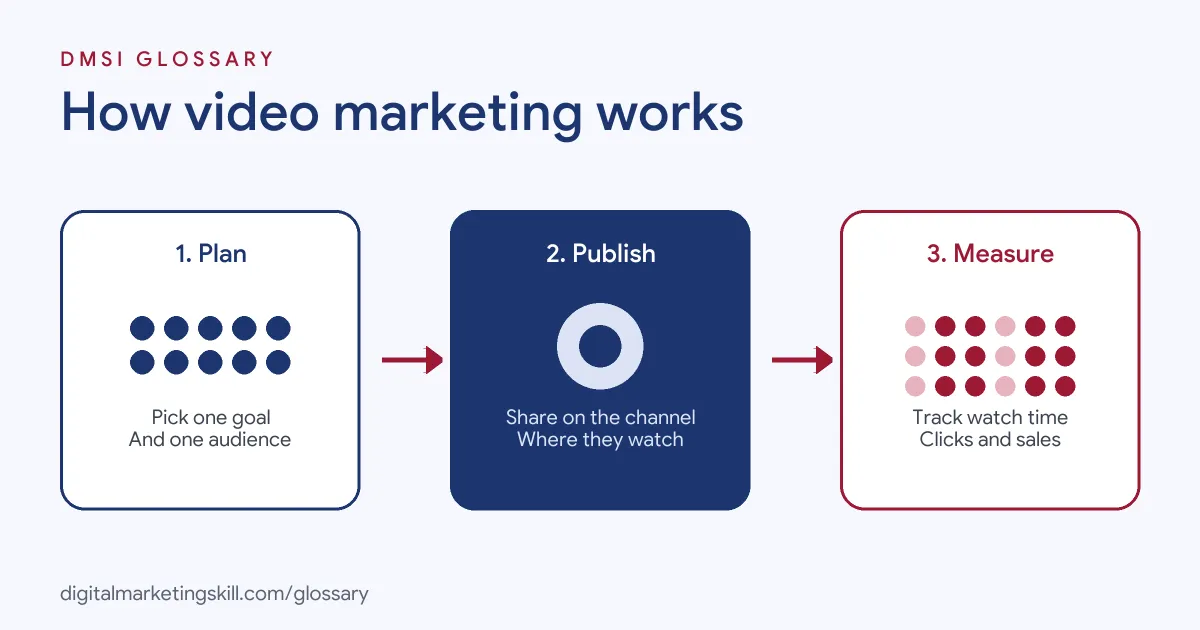
Most campaigns follow three steps. First, you plan the video around one goal and one audience. Next, you create and publish it on the right channel. Finally, you measure the results and use what you learn in the next video.
Planning the Video
Start with the job the video needs to do. A video for new audiences might focus on a hook and a simple message. A video for people close to buying might show the product in detail or answer common doubts. Either way, decide on the call to action before you write the script.
Publishing on the Right Channel
Each channel suits different formats. YouTube’s help centre says its Shorts tools let you create “short-form videos that are up to three minutes long”. Longer tutorials and reviews suit standard YouTube videos or your own website. Meanwhile, short vertical clips suit Instagram Reels and TikTok.
Getting Found in Search
Videos can also bring search traffic. Google says videos can appear “in several different places on Google, including the main search results page, Video mode, Google Images, and Discover”. To help, embed videos with standard HTML elements, make sure the watch page is indexed and add metadata such as structured data or a video sitemap.
Video Marketing Examples
Here are three made-up examples of video marketing for different goals:
- Awareness: A skincare brand posts daily 20-second Reels showing quick routines. The aim is reach, so it tracks views and follows.
- Education: A software company makes a three-minute explainer for its pricing page. It answers the top five questions that the sales team hears.
- Conversion: An online course runs YouTube ads with student stories. Each ad ends with one clear call to action: book a free call.
In each case, the format, length and channel follow from the goal. That is what turns a nice video into a marketing tool.
Types of Video Marketing
Here are common video types and where they work best:
| Type | Typical length | Best for |
|---|---|---|
| Short-form social clip | Under a minute, up to three on Shorts | Reach and awareness |
| Explainer video | One to three minutes | Showing how a product works |
| Tutorial or how-to | Several minutes or longer | Education and search traffic |
| Customer story | One to three minutes | Trust and social proof |
| Video ad | Seconds to a minute | Clicks, leads and sales |
Lengths here are typical starting points, not rules. Always test what works for your audience.
How to Start Video Marketing
Follow these steps to plan your first videos:
- Pick one goal. First, choose awareness, education or sales for each video.
- Know your audience. Write down who the video is for and what they need to hear.
- Choose the channel. Match the format to where your audience watches.
- Write a short script. Hook people in the first seconds, then deliver one clear message.
- Film simply. A phone, good light and clear sound are enough to start.
- Add captions. They help people who watch without sound, and they make your video more accessible.
- Publish and promote. Share the video on social, email and your website.
- Measure and repeat. Check watch time, clicks and conversions, then improve the next video.
How to Measure Video Marketing
Views alone do not tell the whole story. YouTube, for example, counts a Shorts view each time a Short “starts to play or replay”. It also keeps an “Engaged views” metric, which shows how many viewers chose to keep watching. So look at deeper measures too, such as average watch time, click-through rate and conversions. Wyzowl’s survey found that 82% of marketers say video has given them a good return on investment. Your own numbers, however, are the ones that count.
Technical Tips for Videos on Your Website
If you host videos on your own site, a few technical details decide whether Google can find them. Google’s video guidance includes these points:
- Use standard embed elements. For instance, Google can find videos placed with a video, embed, iframe or object element.
- Do not hide videos behind actions. Google advises against relying on swiping, clicking or typing to load the video.
- Check JavaScript videos. If a script adds the video, confirm it appears in the rendered page in the URL Inspection tool.
- Keep the watch page indexed. Otherwise, a video cannot appear in video features if its page is not indexed.
These checks take minutes, yet they can decide whether a video earns search traffic or stays invisible.
Best Practices for Video Marketing
- Hook fast. Show the benefit or problem in the opening seconds.
- Make one point per video. Several short videos often beat one long, crowded one.
- Use real people. Customers, staff and founders often build more trust than actors.
- Repurpose wisely. Cut a long video into short clips for social channels.
- Use AI with care. Wyzowl found that 63% of video marketers have used AI to create or edit video. Even so, a human should check every final cut.
Common Mistakes to Avoid
A common mistake is making a video with no clear goal or call to action. Another is posting the same horizontal video everywhere, even where vertical clips work better. Some brands also spend heavily on polish but ignore the script, which matters more. Finally, many teams judge success on views alone. Instead, link each video to a business result, such as sign-ups or sales.
Where You’ll Use Video Marketing at Work
Video skills appear in many marketing job ads. For example, remote listings ask candidates to:
- “produce high volumes of ads for Meta, TikTok and YouTube that are built to convert” (Video Editor and Producer, AI and Performance Ads).
- Transform “existing and future content into polished, engaging short-form and long-form videos” (Video Content Producer).
So whether you aim to be a Digital Marketing Manager, a Growth Marketer or a Freelance Digital Marketer, you will plan, brief or make videos and report on what they achieve.
Learn It in the Full Stack Programme
Video touches every channel, so it fits the Full Stack (all four tracks) programme. It covers all ten courses, including content creation with graphics and video, and gives you one portfolio project from each track. In addition, you get unlimited 1-on-1 mentoring and a U.S. Project Internship from day one.
For practical ideas, read our guides to video marketing for beginners and YouTube marketing. You can also learn about short-form video.
Frequently Asked Questions
What is video marketing in simple terms?
It is using video to promote a brand or product and get people to act, on channels such as YouTube, social media, websites and email.
Why is video marketing important?
Many people prefer to learn by watching. In Wyzowl’s research, 85% of people said they had been convinced to buy by watching a video.
How long should a marketing video be?
It depends on the goal and channel. Social clips are often short, while YouTube Shorts can be up to three minutes. Tutorials can run longer.
Do I need expensive equipment to start?
No. A smartphone, good light and clear sound are enough for many social and website videos.
How do I get my videos found on Google?
Embed them with standard HTML elements, make sure the watch page is indexed and add metadata such as structured data or a video sitemap.
Sources: Wyzowl: Video marketing statistics; YouTube Help: Get started creating YouTube Shorts; Google Search Central: Video SEO best practices; remote job listings on Himalayas.