What is YouTube marketing? It means using video, search optimization, and paid ads on YouTube to grow an audience and drive sales. YouTube marketing works because the platform is both a video site and a search engine. Brands that treat it as a real channel, not a side project, see steady gains in traffic and leads.
Key Takeaways
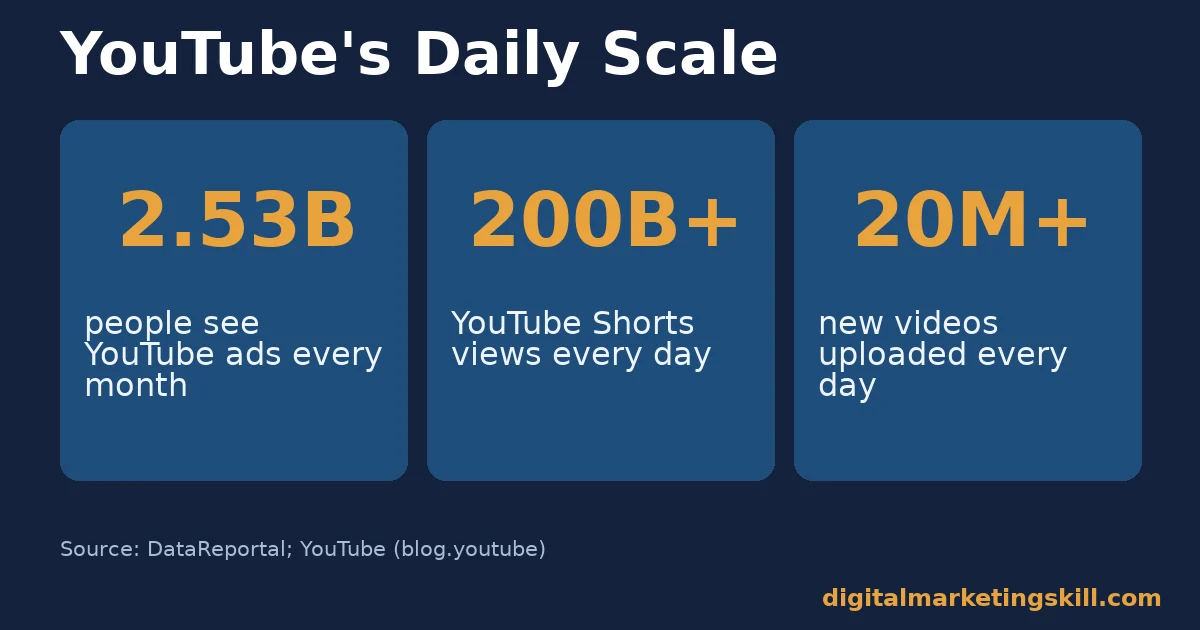
- 2.53 billion people see YouTube ads each month. That is 45.5% of all internet users worldwide (DataReportal).
- YouTube Shorts now pass 200 billion daily views (YouTube).
- 91% of businesses use video as a marketing tool. 82% say it delivers a positive return (Wyzowl).
- YouTube is the top platform among video marketers at 82% use. That is 12 points ahead of LinkedIn (Wyzowl).
- The YouTube Partner Program needs 1,000 subscribers plus 4,000 watch hours in 12 months. That bar is rising for new applicants (YouTube Help).
In this guide
- Why Most YouTube Marketing Advice Falls Short
- How YouTube Marketing Actually Works
- The Three Tool Categories Every Channel Needs
- What Differs By Marketing Goal
- How To Lead With Each Goal
- How To Measure YouTube Marketing
- The One Decision Rule That Matters Most
- A Real Case Worth Studying
- Frequently Asked Questions About YouTube Marketing
- Your Next Step
Why Most YouTube Marketing Advice Falls Short
Search for YouTube marketing tips and you get long lists. Few posts tell you which tip fits your goal. Fewer still tell you what to measure or when to change course.
This guide is different. It groups YouTube marketing by goal, then by what to measure, then by one clear rule to follow. Think of it as an informed guide based on public platform data and verified surveys, not a guaranteed revenue formula. YouTube does not publish exact earnings data, so any CPM or RPM figure you see online is an estimate. Treat every benchmark here as a starting point, and test it against your own channel’s numbers before you trust it.
How YouTube Marketing Actually Works
YouTube ranks and recommends video using three factors. YouTube Help names them directly. The first is relevance: how well your title, description, and content match a search query. The second is engagement: watch time and satisfaction compared with similar videos. Quality is the third factor, covering how authoritative and trustworthy your channel looks over time. YouTube layers personalization on top, based on each viewer’s own watch history (YouTube Help).
In practice, one upload rarely goes far by itself. Growth needs three layers working together. First, build a channel around a clear niche with consistent branding. Second, optimize each video so the algorithm can match it to the right search and recommendation queries. Third, build a distribution layer: community posts, Shorts, cross-promotion, and paid reach. This layer gets early viewers to a new upload fast. Fast early views help trigger wider recommendation.
YouTube’s own press page reports more than 20 million videos go live every day (YouTube). So the real question in YouTube marketing is not “can I get views.” The real question is “can I reach the right 100 viewers fast enough for YouTube to test my video on a wider audience.”
That single shift in thinking changes how you plan every upload. You stop chasing broad reach on day one. You start chasing a fast, specific signal from the right small audience first.
Which Format To Use When
Content format matters inside that shift. Long-form video still carries the most watch time and the clearest path to ad revenue. Shorts carry the most new-viewer discovery, because YouTube pushes Shorts hard into a dedicated feed of non-subscribers. Live video sits in the middle: it builds community fast, but it rarely ranks in search the way an evergreen upload does. Most channels that grow steadily use all three formats on purpose, not by accident. They use Shorts to find new viewers, long-form video to earn watch time and ad revenue, and the occasional livestream to turn casual viewers into a real community.
One more mechanism point matters here. YouTube tests a new video on a small slice of your existing audience first, then expands distribution if early signals look strong. That is why your first hour of performance carries outsized weight. A weak first hour, caused by a bad title or a slow hook, can cap a video’s reach even if the content inside is strong.
This is also why YouTube marketing rewards channels, not just individual videos. A channel with a consistent topic and a loyal returning audience gives every new upload a stronger starting signal than a brand-new channel gets with its very first video. If you are starting from zero, expect your first ten to twenty uploads to build that signal before growth speeds up, rather than expecting any single early video to carry the whole channel.
The Three Tool Categories Every Channel Needs
You do not need ten different apps to run solid YouTube marketing. You need three categories covered, and YouTube’s own free tools handle a surprising amount of this on their own.
Keyword And Search Tools
Use a keyword tool to check search volume and competition before you script a video, not after you film it. Start with YouTube’s own search bar: type your topic and read the autocomplete suggestions, since those come directly from real searches. Add a dedicated keyword tool only once you are publishing consistently and want to compare several title options at scale.
Scheduling And Community Tools
Use a scheduling tool to plan uploads around your content calendar and to manage comments across a growing channel. This matters most once you run more than one or two channels, or once comment volume gets too high to handle inside the native YouTube interface alone.
Analytics And Competitor Tools
Use YouTube Studio’s own analytics first. It already shows CTR, average view duration, and traffic source for every video, which covers most of what a channel needs. Add a third-party competitor-tracking tool only when you need to benchmark your numbers against other channels in your niche, since YouTube Studio only shows your own data.
What Differs By Marketing Goal
A YouTube marketing plan built for brand awareness looks different from one built for search traffic. It looks different again from one built for direct revenue. Many channels plateau because they run one generic plan for all three goals at once.
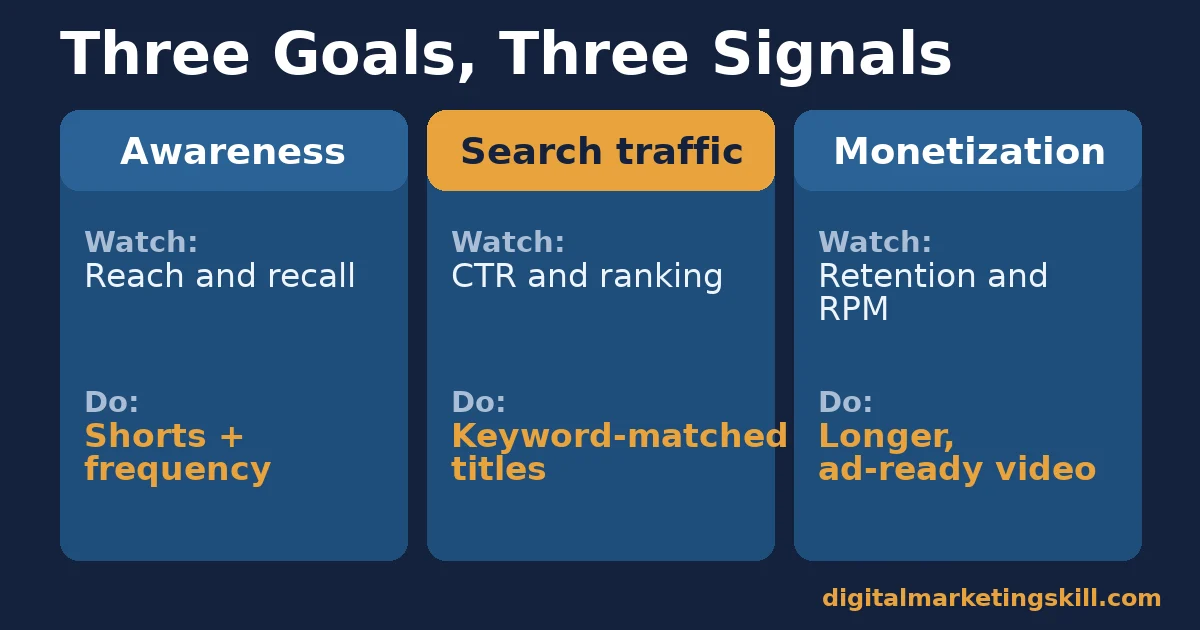
Pick one primary goal before you script your next ten videos. You can serve a second goal as a side benefit, but a channel that chases all three equally in every single video usually serves none of them well. A clear goal shapes your title, your length, your call to action, and even which numbers you check the next morning.
Write the goal at the top of your script or outline before you film. It sounds basic, but this single habit is one of the most reliable ways to stop a video from drifting into a generic, goal-less upload halfway through the edit.
Brand Awareness: Built For Reach And Recall
Judge awareness content by reach, watch-through, and recall. Do not judge it by clicks. This type of YouTube marketing works best as short, clear videos and Shorts, pushed out widely. Pair it with paid social amplification so you reach people beyond your current subscribers.
Search Traffic: Built For Long-Term SEO Value
Judge traffic-focused content by search impressions, click-through rate, and ranking position for a target query. This type of YouTube marketing works best as evergreen, question-based videos. Match the content tightly to real search demand through on-page video SEO: your title, description, and chapters.
Monetization: Built For Direct Revenue
Judge revenue-focused content by watch time, retention, and conversion into a sale, lead, or ad view. This type of YouTube marketing works best as longer videos. Length needs to justify mid-roll ads. Keep one clear call to action per video.
How To Lead With Each Goal
Brand Awareness: Lead With Story, Shorts, And Frequency
Post more often, in a shorter format, instead of fewer long videos. A steady weekly mix of Shorts, plus one long anchor video, builds recall faster than a single polished upload. YouTube’s algorithm favors channels it can predict. Give it a predictable schedule. Budget matters less here than consistency. A simple phone camera, decent lighting, and a clean audio setup are enough to start, and you can reinvest in better production once a format proves it holds attention.
Search Traffic: Lead With Keyword-Matched Titles And Chaptered Content
Write your title around the exact phrase people type into search. Add timestamped chapters so YouTube can surface the right segment of your video. Use a keyword research tool before you film, not after you edit. Your content should fully answer the query, not just mention it. Fill out every tag and the full description field too, since both feed directly into the relevance signal YouTube uses to match your video to a search.
Monetization: Lead With Retention And Multiple Revenue Lines
Protect average view duration first. Ad placement, recommendations, and most ways to make money on YouTube all depend on it. Do not rely on ad revenue alone. Layer it with sponsorships and affiliate links so one slow month does not sink your whole channel.
If you also run paid YouTube ads, match the ad format to the same goal. Skippable in-stream ads work well for awareness, since viewers who do not skip are showing real interest. Non-skippable and bumper ads suit short, memorable brand messages. Discovery ads, shown alongside search results and related videos, tend to suit traffic and lead-generation goals best, since they reach people already browsing with intent.
How To Measure YouTube Marketing
Four numbers tell you most of what you need to know.
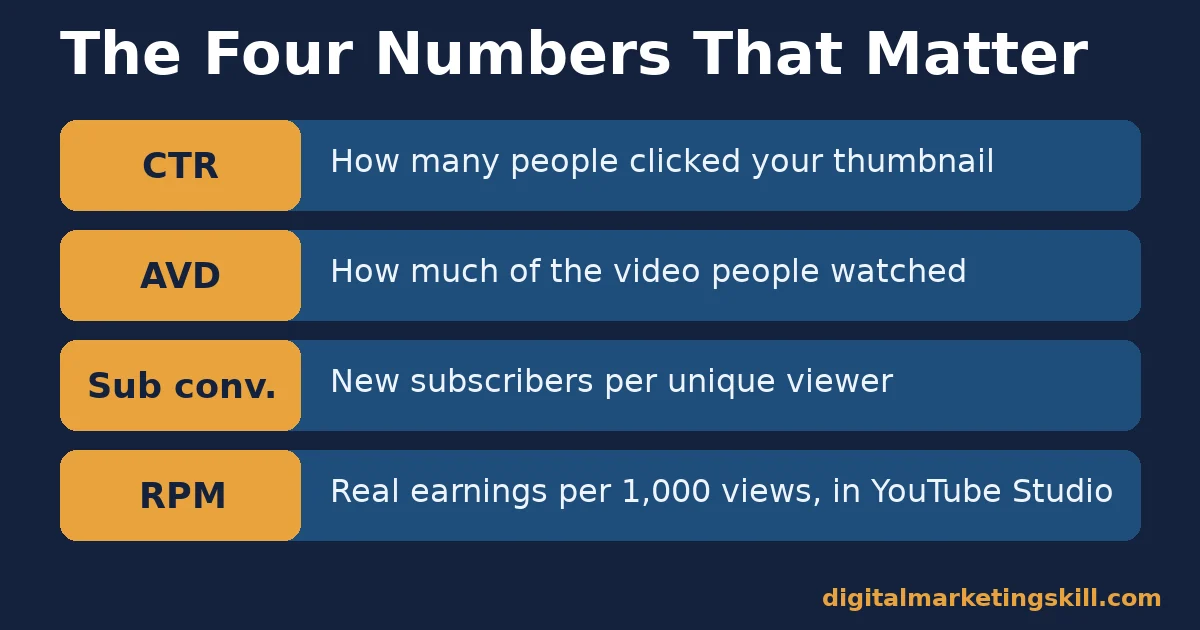
Click-through rate, or CTR, is the share of people who saw your thumbnail and clicked it. A CTR above roughly 4-6% on recommendations is generally healthy.
Average view duration is the share of a video’s total length that an average viewer watches. If viewers drop off before 50% of the video’s length in the first 30 seconds, you likely have a hook problem.
Subscriber conversion rate is new subscribers divided by unique viewers on a video. This number shows whether a video pulls in the right audience, not just a large one.
RPM, or revenue per thousand views, is your real earnings per 1,000 views after YouTube’s cut. Track RPM in YouTube Studio. It is the only earnings number worth trusting, since the “CPM” ranges you see online are unverified industry guesses, not YouTube figures.
Reading The Four Numbers Together
Check these four numbers together, not one at a time. A high CTR with a low average view duration points to a misleading thumbnail. A low CTR with a high average view duration points to a weak thumbnail hiding a genuinely good video. Reading them side by side, every week, tells you faster than any single metric where to spend your next hour of editing time.
Set a simple weekly review, even just fifteen minutes, where you pull these four numbers for your three most recent uploads. Write down one change to test on the next video, based on whichever number looks weakest. This small habit compounds faster than any single viral hit, because it fixes the same mistake before it repeats across ten more videos.
The One Decision Rule That Matters Most
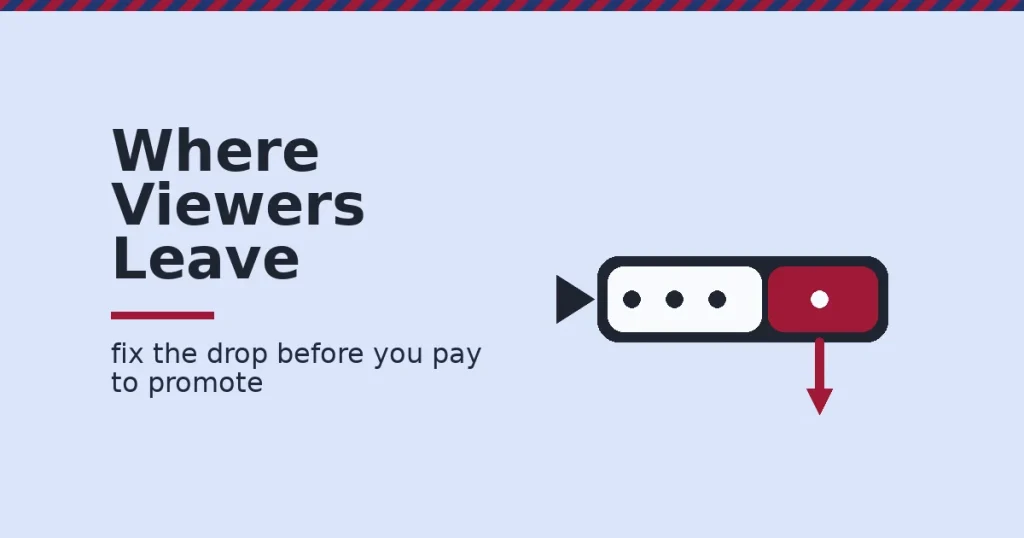
If average view duration on a new video falls below 50% of its total length within the first 30 days, fix retention first. Start with the hook in the first 15 seconds. Then tighten the pacing in the middle. Then trim any slow edit that gives viewers a reason to leave. Do this before you spend one dollar on promotion or ads.
Why? Promoting a video with a retention problem only proves the problem to a bigger audience. It can also suppress future recommendations for that video and, over time, for your channel.
Illustrative, invented numbers: picture a 10-minute video that holds viewers to only 3 minutes. That is a 30% average view duration. It needs a stronger first 15 seconds and tighter pacing before it earns a promotion budget. Now picture a video that holds viewers to 6 minutes, or 60%. That video is a strong candidate for a paid push.
A Real Case Worth Studying
Dove’s “Real Beauty Sketches” campaign is one of the most studied examples of YouTube marketing built on a single insight, not a product pitch. Women described themselves to a sketch artist who could not see them. Strangers then described the same women to the same artist. The strangers’ sketches were consistently kinder and more accurate. Reports widely cited the video passing 170 million views, making it one of the most-watched branded videos of its era.
Limits: this was one exceptionally well-funded global campaign from more than a decade ago, run under a very different YouTube algorithm. A small channel cannot replicate it at the same scale. But the underlying lesson still transfers to channels of any size: an emotionally specific insight beats a generic pitch. It also supports the Wyzowl survey finding that 83% of marketers who use video say it has directly increased sales: the channel’s job is rarely to go viral by accident, it is to repeatedly connect a real insight about the audience to a concrete action.
Frequently Asked Questions About YouTube Marketing
What is YouTube marketing used for?
Brands use YouTube marketing to build awareness, drive search and referral traffic to a website, generate leads, and build a direct revenue stream through ads, sponsorships, and affiliate deals. Most brands use it as one channel inside a wider content strategy. A single channel can serve more than one of these goals over time, as long as each individual video still has one clear primary purpose.
How is YouTube marketing different from YouTube SEO?
YouTube marketing covers the full strategy: planning, publishing cadence, community engagement, and paid promotion. YouTube SEO is one part of that strategy. It focuses only on optimizing titles, descriptions, tags, and chapters so your videos rank for relevant searches. Good YouTube SEO makes a video easier to find. Good YouTube marketing makes sure that video serves a real business goal once it is found.
How many subscribers do you need to make money on YouTube?
You need at least 1,000 subscribers. You also need either 4,000 public watch hours in the past 12 months, or 10 million valid public Shorts views in the past 90 days. Meet either combination and you can apply to the YouTube Partner Program. That watch-hour bar is set to rise for new applicants, so check YouTube’s current eligibility page before you plan around it.
How much does YouTube pay per view?
YouTube does not publish an official per-view rate. Independent estimates vary widely by niche and audience location. Treat any number you see online as a rough guess, not a guaranteed figure. Judge your own channel by its actual RPM inside YouTube Studio instead.
Is YouTube Shorts worth it for marketing?
Yes, for awareness and discovery. Shorts now make up a large share of total viewing on the platform. Shorts also reach non-subscribers more easily than long-form uploads. But Shorts rarely convert on their own. Pair every Short with a long-form video or a landing page where the actual conversion happens.
How long should a YouTube marketing video be?
Length should match your goal, not a fixed rule. Awareness content and Shorts work best under a minute. Search-traffic content usually needs enough length to fully answer a query, often several minutes. Monetization-focused content needs enough length to support real ad breaks while it still holds attention.
Can small businesses do YouTube marketing without a big production budget?
Yes. Clear audio, steady framing, and a video that directly answers a real question will reliably beat a high-budget video that has no search or retention strategy behind it. Consistency and a clear goal per video matter more than production value. Start with whatever camera you already own, publish on a schedule you can sustain for several months, and only add paid tools or equipment once a specific weak number, such as a low CTR or a short average view duration, tells you exactly what to fix. Spending on gear before you have that data usually just moves the same mistake to a more expensive camera.
Do you need to post every day to grow on YouTube?
No. A predictable, sustainable schedule beats a daily schedule you cannot keep up. One strong, well-optimized video per week often outperforms seven rushed uploads, because retention and watch time matter more to the algorithm than raw upload frequency.
Should a business run YouTube ads, organic videos, or both?
Most businesses get the best result from both, used for different jobs. Organic videos build long-term search traffic and trust at low ongoing cost, but they take months to compound. Paid ads can reach a specific audience immediately, but that reach stops the moment you stop paying. Many channels start with ads to validate which topics and formats their audience responds to, then double down on organic content for the formats that already work.
Your Next Step
YouTube marketing works best as part of a connected skill set, rather than as an isolated tactic learned on its own. Content strategy, SEO, analytics, and paid media all feed each other, wherever you live. The Master Diploma in Digital & AI Marketing at Digital Marketing Skill Institute builds that full skill set. It is organized into four AI-powered tracks, drawn from ten execution-first courses in total. The AI-Powered Social Media Management and Advertising track covers video and channel growth directly, and a Full Stack option lets you complete all four tracks.
Every track includes unlimited 1-on-1 coaching and mentoring, a U.S. Project Internship with a verified U.S. Work Reference Letter, and dual US and UK accreditation recognized in more than 100 countries. The program runs 100% online, so you can build these skills anywhere in your country. See the full program on the Master Diploma page, read real outcomes on the reviews page, browse more guides on the blog, or go straight to the application page to get started at digitalmarketingskill.com.
Every figure in this guide was checked against its original source before publication. Figures marked as illustrative are invented examples, not real results.