
Guerrilla Marketing is a low-cost, high-surprise style of promotion that uses unexpected ideas in public places or online to grab attention and get people talking about a brand. Instead of buying lots of ad space, you rely on creativity. So a clever stunt, a bold street display or a surprising video can travel far. As a result, small businesses can compete for attention with much bigger brands.
Key Takeaways
- Guerrilla marketing uses surprise and creativity rather than a big media budget.
- Common forms include street, ambient, ambush and viral marketing.
- The goal is to spark talk, shares and press coverage.
- Stunts in public spaces may need permission from the site owner and the council.
- Hidden or fake promotion can break advertising rules and damage trust.
What Is Guerrilla Marketing?
The name comes from guerrilla warfare, where small groups use surprise against larger forces. In the same way, a small brand uses surprise to win attention. The term was made popular by Jay Conrad Levinson in his book Guerrilla Marketing.
Wikipedia opens its entry by saying, “Guerrilla marketing is an advertisement strategy in which a company uses surprise and/or unconventional interactions” to promote a product or service. In other words, the idea is to do something people don’t expect. Then they remember it, talk about it and share it.
Here is an everyday example. Imagine a local dentist who puts a giant toothbrush on a park bench. Passers-by stop, smile and take photos. Some post them online. So the dentist gets attention for the cost of one prop and a little planning.
Guerrilla marketing is closely linked to word-of-mouth marketing. The stunt itself reaches only a few people. However, the talk and shares that follow can reach many more.
Why It Matters
Why do marketers still use guerrilla tactics? First, people see so many ads that they often tune them out. A surprise breaks through that noise. Second, it can be cheap, which suits small budgets. Third, a strong idea can earn free press and social shares. In addition, it can build brand awareness fast in one local area. However, results are hard to predict, so it works best alongside steady marketing.
How Guerrilla Marketing Works
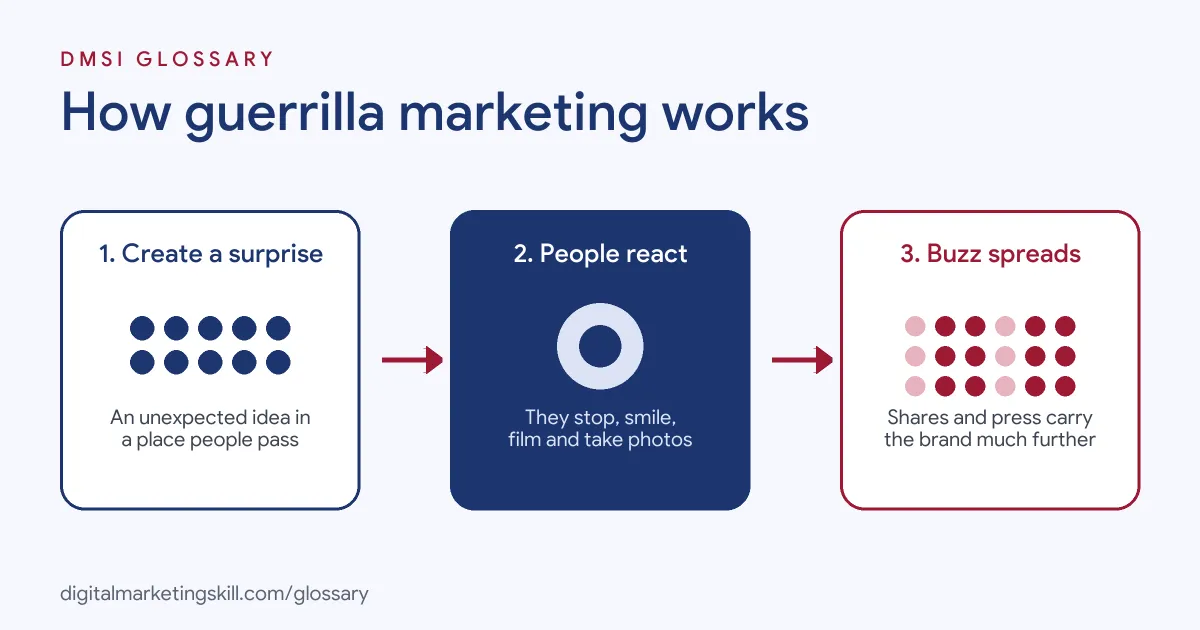
Guerrilla marketing works in three stages. First, you create a surprising idea in a place your audience will see it. Then people notice and react. Finally, they share it, and the buzz spreads further online and in the press.
The Main Types
There are several common forms. Wikipedia lists these among them:
- Street marketing: unusual promotion in public spaces, such as brand ambassadors or flash mobs.
- Ambient marketing: adverts placed on everyday surfaces and objects, like stairs or benches.
- Ambush marketing: linking a brand to an event it does not officially sponsor.
- Viral marketing: ideas built to be passed on, often online.
- Experiential stunts: pop-ups or live moments that people can join in.
The Surprise
Next, the heart of any guerrilla idea is surprise. For example, it might turn something ordinary into something funny. Or it might put a product in a place where nobody expects it. Also, the best ideas link clearly to what the brand does. So people remember not just the stunt but the brand behind it.
The Spread
Then the idea needs to travel. Usually, that happens through photos, videos and posts. That is why many stunts are designed to be filmed. For instance, a team might plan a moment that works as short-form video. In addition, people’s own photos act as user-generated content, which feels more trusted than an advert.
Guerrilla Ideas Online
Guerrilla marketing is not only for the street. For example, a brand might reply to trending posts with a quick, witty video. Or it might hide a small game or joke on its website for fans to find. Also, a surprising filter or challenge can spread quickly on social apps. However, the same test applies. The idea must surprise people, link to the brand and feel worth sharing.
Low Budget, High Effort
Guerrilla marketing often costs little money. Still, it takes a lot of time and thought. First, you need a strong idea, which may take many rounds of brainstorming. Then you need to plan the location, timing, permissions and filming. In addition, someone has to watch the reaction and reply to comments. So treat it as a real project, with a small team, a plan and a clear owner.
The Rules
Finally, creative does not mean lawless. In England, the Planning Portal says outdoor adverts must “have the permission of the owner of the site on which they are displayed.” Larger adverts may also need consent from the local planning authority. Likewise, online stunts must follow advertising rules. For example, the ASA says paid affiliate content must be “obviously identifiable.” So always check the rules before you launch.
The Risks
Guerrilla ideas can backfire. For instance, Wikipedia records a city stunt where light-up devices were mistaken for a security threat, which led to closures. Also, once a message spreads by word of mouth, you can’t control how people retell it. So test your idea with a few people first. Then ask a simple question: could anyone find this scary, rude or unsafe?
Examples of Guerrilla Marketing
- A small coffee shop. The owner paints coffee-cup “steam” on a manhole cover outside, with permission from the council. Then passers-by photograph it and tag the shop.
- A fitness app. The team turns a set of public stairs into a temporary piano-key design with the site owner’s approval. As a result, people film themselves climbing, and the videos spread online.
- A local bookshop. Staff leave free short stories in bus shelters, each with the shop’s name and a discount code. So readers get a gift, and the shop can track visits through the code.
Guerrilla Marketing vs Traditional Advertising vs Event Marketing
| Point | Guerrilla Marketing | Traditional Advertising | Event Marketing |
|---|---|---|---|
| Main tool | Surprise and creativity | Paid media space | A planned event |
| Budget | Often low | Often high | Medium to high |
| Reach | Small at first, then spreads through shares | Wide and predictable | People who attend, plus coverage |
| Main risk | Backlash or breaking local rules | Being ignored | Low turnout |
In practice, these can work together. For example, a guerrilla stunt can tease a launch that you then support with ads and event marketing.
How to Plan a Guerrilla Marketing Campaign
- Know your audience. Find out where they spend time, both online and in real life.
- Set one clear goal. Decide if you want sign-ups, visits, shares or press coverage.
- Brainstorm surprising ideas. Look for ways to link an everyday place or object to your product.
- Check the rules. Get permission from site owners and the council, and follow advertising codes.
- Test the idea. Show it to a few people and ask if anything could offend or worry them.
- Plan the sharing. Add a hashtag, a short link or a code, and film the moment yourself.
- Launch and measure. Track mentions, visits, code use and sign-ups, then learn for next time.
Best Practices for Guerrilla Marketing
- Keep it on brand. The stunt should make people think of your product, not just laugh.
- Make it safe. Never block paths, scare people or damage property.
- Ask first. Get permission for public spaces and private property.
- Be honest. Show clearly that a brand is behind it, rather than hiding the advertising.
- Build in a next step. Give people a reason to visit, sign up or follow you afterwards.
- Tell a story. Ideas with a simple story, like those in storytelling marketing, are easier to share.
Common Mistakes to Avoid
- Skipping permission. Unapproved posters or stunts can lead to fines and bad press.
- Going too far. A stunt that frightens or offends people can hurt your brand.
- Hiding who is behind it. Fake reviews or secret paid posts can break rules and destroy trust.
- Forgetting the brand. If people remember the stunt but not your name, it has failed.
- No way to measure. Without a code, link or hashtag, you can’t tell if it worked.
Where You’ll Use Guerrilla Marketing at Work
Guerrilla marketing appears in brand, community and field marketing roles. For example, one real remote job listing asks for a person who has:
- “Successfully managed campaigns using grassroots, guerrilla, and viral marketing as well as community management” (Marketing Director).
Also, field marketers, event teams and social media marketing specialists often plan and film these stunts.
Learn It in the Social Media and Paid Social Track
You can learn how to plan shareable campaigns and turn buzz into followers in the AI-Powered Social Media Management and Advertising track. Every track includes a U.S. Project Internship from day one, with unlimited 1-on-1 mentoring.
Frequently Asked Questions
What is guerrilla marketing in simple terms?
It is creative, low-cost promotion that surprises people so they notice and talk about a brand.
Who came up with guerrilla marketing?
The term was made popular by Jay Conrad Levinson in his book Guerrilla Marketing.
Is guerrilla marketing legal?
It can be, as long as you follow the rules. For example, you need the site owner’s permission for outdoor adverts and may need council consent too.
Does guerrilla marketing work for small businesses?
Yes. Because it relies on ideas rather than budget, it suits small and local businesses well.
How do you measure guerrilla marketing?
Use a unique code, link or hashtag. Then track mentions, visits, sign-ups and sales linked to the stunt.
Sources: Wikipedia: Guerrilla marketing; Planning Portal: Adverts and signs; ASA | CAP: Online Affiliate Marketing; remote job listings on Himalayas.