
Social media marketing is the use of platforms such as Instagram, TikTok, Facebook and LinkedIn to reach people, build a brand and drive sales. It mixes free posts that build an audience with paid ads that reach new people at scale. It matters because it is where many customers now discover products, ask questions and decide what to buy.
Key Takeaways
- There are two sides: organic posts you publish for free and paid ads you run to reach more people.
- Social is a two-way channel. Replying to comments and messages is part of the job, not an extra.
- Every campaign should start with a clear goal, such as awareness, traffic, leads or sales.
- Follower counts alone don’t prove success. Instead, track clicks, conversions and engagement rate.
- In the UK, brands and influencers must label paid posts clearly as ads.
What Is Social Media Marketing?
Hootsuite describes social media marketing as the use of platforms like Instagram, TikTok, Facebook and LinkedIn to market a business. It also stresses that social works best as a two-way conversation rather than one-way promotion.
In practice, that means a brand does three things. First, it shares content its audience finds useful or fun. Next, it talks with people in comments and direct messages. Finally, it pays to put the best content in front of new people.
For example, a small bakery might post short videos of its morning bake. Then it answers questions about opening times in the comments. When it launches a new cake, it runs a paid ad to people who live nearby. Together, these steps turn followers into customers.
How Social Media Marketing Works
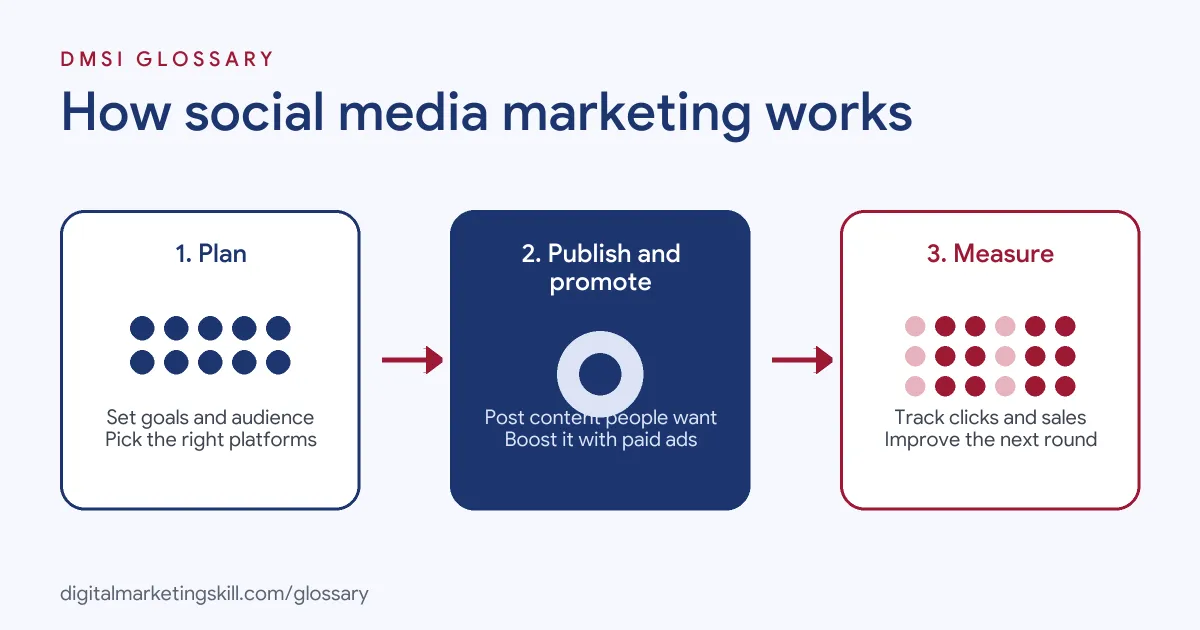
Most plans follow the same loop: plan, publish, promote, measure and improve. Hootsuite sets out seven steps. You set goals, learn about your audience, check your competitors, audit your own accounts, find ideas, create content, then measure and refine.
Organic Social
Organic social is everything you post without paying for reach. This covers posts, short videos, stories, live streams and replies. It builds trust over time. However, only a share of your followers will see each post, so organic reach alone is often slow.
Paid Social
Paid social means running ads on social platforms. You choose a goal, an audience, a budget and an ad. The platform then shows your ad to the people most likely to take that action.
Each platform groups its goals in a similar way. For instance, TikTok Ads Manager splits its objectives into awareness, consideration and conversion. Its Reach objective aims to “show your ad to the maximum number of people,” while its Lead generation objective helps you “collect leads for your business.”
Community Management
Community management is the daily work of replying, thanking, helping and fixing problems in public. It may sound small. Yet it is often what makes people trust a brand enough to buy from it.
Measuring Results
The last part of the loop is measurement. Each platform has its own analytics, which show reach, views, clicks and engagement. However, those numbers only tell half the story. To see what happens after the click, add UTM tags to your links. Then your web analytics tool can show which posts brought visitors who signed up or bought.
Once you have the data, look for patterns. Which topics get saved and shared? Do videos lead to more clicks than images? And which ads bring the cheapest leads? Use the answers to plan the next round of content. Over time, this habit turns guesswork into a repeatable system.
Social Media Marketing Examples
Here are three common ways businesses use social channels:
- Online store: A clothing brand posts styling videos on TikTok and Instagram. It then runs sales ads to people who watched most of those videos.
- B2B service: An accounting firm shares short tips on LinkedIn each week. As a result, it builds trust with business owners and gets more enquiries.
- Training provider: A school runs a lead ad that offers a free guide. Next, it follows up by email with people who download it.
In each case, the content suits the platform. Just as importantly, the brand sets a clear goal before it spends any money.
Organic vs Paid Social Compared
Most brands need both. Here is how they differ:
| Feature | Organic social | Paid social |
|---|---|---|
| Cost to reach people | Free to post, but takes time | You pay for reach and results |
| Who sees it | Mostly current followers | Audiences you choose, including new people |
| Speed | Slow to build | Fast once the ad goes live |
| Best for | Trust, community and brand voice | Traffic, leads and sales at scale |
| Key metrics | Engagement rate, shares, follower growth | Cost per result, conversions, return on ad spend |
In short, organic social builds the relationship, while paid social speeds up the results.
How to Plan Social Media Marketing
You can use these steps for a brand new account or a full reset:
- Set one main goal. Pick awareness, traffic, leads or sales, then add a number to aim for.
- Define your audience. Write down who they are, what they care about and which platforms they use.
- Check your competitors. Note which posts get the most comments and shares.
- Choose two or three platforms. It is better to do a few channels well than many badly.
- Build a content calendar. Plan a mix of helpful, fun and sales posts for the next few weeks.
- Add paid support. Boost your best posts or run ads tied to your main goal.
- Track and improve. Use UTM tags on links, so you can see which posts drive visits and sales.
Best Practices
- Write for each platform. A LinkedIn post and a TikTok video need very different styles.
- Avoid too much selling. Hootsuite warns that overly self-promotional content turns people off. So mix sales posts with helpful ones.
- Reply quickly. Fast, friendly replies show people a real team is listening.
- Focus on business metrics. Hootsuite advises against vanity metrics like follower count. Track conversion rate and clicks instead.
- Label paid posts. The UK Advertising Standards Authority (ASA) expects “a prominent ‘ad’ label upfront” on influencer ads.
Common Mistakes to Avoid
Beginners tend to repeat a few errors. First, they post on every platform at once and burn out. Second, they copy the same post everywhere without changing the format. Third, they ignore comments, which makes the brand look absent. Another mistake is hiding an ad label in a long list of hashtags. The ASA says the audience should know “immediately” that content is advertising, without having to click. Finally, many people judge success on likes rather than sales or leads.
Where You’ll Use Social Media Marketing at Work
Social skills appear in many job listings, from entry level to senior roles. For example, recent remote listings ask candidates to:
- “Support social media promotions, marketing campaigns, and lead-generation initiatives” (Social Media and Customer Engagement Executive).
- “Support daily organic content execution across social media platforms (e.g. TikTok, Instagram)” (Digital Marketing Executive).
- “Assist the marketing team in setting up and launching social media advertisements across various platforms” (Admin Executive, Ads Operations).
So if you want to work as a Social Media Manager, Paid Social Specialist or Content Creator, expect to plan content, run ads and report on results. Employers will also want to see proof, such as a campaign you ran and the numbers it produced.
Learn It in the Social Media Track
You can learn this skill in the AI-Powered Social Media Management and Advertising track. It covers AI fundamentals, content creation for graphics and video, social media marketing and analytics, and social media advertising. For your portfolio, you plan, create and run a paid social campaign for a real brand. You also join a U.S. Project Internship from day one, with unlimited 1-on-1 mentoring.
Want to go deeper? Read our social media marketing guide and our list of the skills social teams need.
Frequently Asked Questions
What is social media marketing in simple terms?
It means using social platforms to reach people, build a brand and sell. You post content, talk with your audience and run ads.
What is the difference between organic and paid social?
Organic social is what you post for free to your followers. Paid social is ads you pay for, so you can reach new people quickly.
Which platform is best for social media marketing?
It depends on your audience. B2B brands often do well on LinkedIn, while many consumer brands focus on Instagram and TikTok. So start where your customers already spend time.
How do you measure social media marketing?
Track the numbers tied to your goal, such as clicks, leads, sales and engagement rate. Add UTM tags to links, so you can see results in your analytics tool.
Do influencer posts need an ad label?
In the UK, yes. The ASA says paid content must be obviously identifiable, ideally with a clear “Ad” label at the start.
Sources: Hootsuite: Social media marketing strategy guide; TikTok Ads Help: How to choose the right objective; ASA: Recognising ads on social media; remote job listings on Himalayas.