
Brand identity is the set of visible and audible parts a business uses to present itself, such as its name, logo, colours, fonts and tone of voice. It is how the brand chooses to look, sound and feel every time someone meets it. It matters because a clear, consistent identity makes a brand easier to recognise, remember and trust.
Key Takeaways
- Identity is what the business creates. Brand image is what customers actually think.
- Core elements include the name, logo, tagline, colours, typography, shapes and voice.
- Some brands also use sounds, such as a short jingle, as part of who they are.
- Brand guidelines keep the identity consistent across every channel and team.
- A strong identity supports your positioning, but it cannot replace a good product.
What Is Brand Identity?
Wikipedia puts it this way: “The expression of a brand – including its name, trademark, communications, and visual appearance – is brand identity.” The brand expert David Aaker describes it as “a unique set of brand associations that the brand strategist aspires to create or maintain.”
In plain terms, it is everything you control about how your brand shows up. That includes the logo on your website, the colours in your Instagram posts, the font in your emails and the way your customer service team writes. Each piece sends a signal. Together, those signals tell people who you are.
It helps to separate identity from image. The owner builds the identity. Brand image, on the other hand, is “a customer’s mental picture of a brand.” The two do not always match. So good marketers research how customers see the brand, then work to close the gap.
Online, this matters even more. A customer might see your ad on TikTok, visit your website, read a welcome email and then message your support team, all in one afternoon. If each step looks and sounds different, the brand feels like four separate companies. By contrast, when every step shares the same colours, fonts and voice, people feel they know you. Over time, that familiarity builds trust, and trust makes people more willing to buy.
How Brand Identity Works
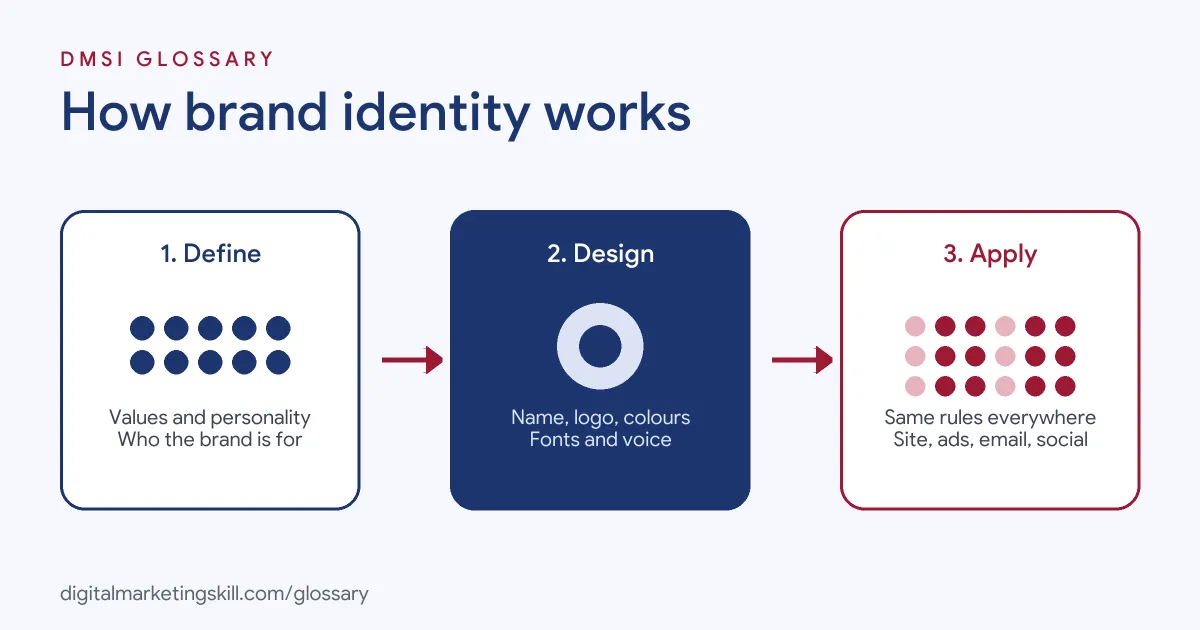
Building an identity follows three broad steps. First, you define what the brand stands for: its values, personality and audience. Next, you design the parts that express it, such as the logo, colours and voice. Finally, you apply those parts the same way everywhere, so people start to link them with you.
The Core Elements
Wikipedia lists several parts that make up an identity:
- Name: The word or words that identify the company or product.
- Logo: The visual mark people recognise.
- Tagline: A short phrase linked to the brand’s advertising.
- Shapes and graphics: For example, the shape of the Coca-Cola bottle.
- Colours: For instance, Tiffany’s robin’s egg blue.
- Typography: A particular font used across materials.
- Sounds: Such as NBC’s chimes.
- Voice: The personality that comes through in words, from web copy to emails.
The Brand Identity Prism
The marketing scholar Jean-Noël Kapferer created a well-known model called the brand identity prism. It has six facets. Physique covers physical traits, such as the Nike swoosh. Personality covers tone of voice and design. Culture covers the values behind the brand. Reflection is the typical customer the brand shows. Relationship is the bond with customers. Finally, self-image is how customers want to see themselves when they use the brand.
Brand Guidelines
Most companies write their rules down in a brand guide or style guide. According to Wikipedia, style guides aim to “improve communication by ensuring consistency within and across documents.” A typical brand guide shows how to use the logo, which colours and fonts to choose and how the brand should sound. As a result, every designer, writer and agency can stay on brand.
Brand Identity Examples
Here are three made-up businesses that show how identity works in practice:
- Organic juice brand: It uses bright greens, hand-drawn fruit and a playful voice. So its social posts, labels and emails all feel fresh and friendly.
- Law firm: It uses navy, a classic serif font and calm, formal language. As a result, clients see it as steady and serious before they read a word of advice.
- Tech start-up: It uses one bold accent colour, a simple sans-serif font and short, direct sentences. Its app, website and ads all follow the same rules.
In each case, the choices match the audience. Each brand looks and sounds the way its customers expect a trusted option to look and sound. Notice, too, that none of them needed a big budget. Clear, simple rules, applied the same way every time, did most of the work.
Brand Identity vs Brand Image vs Brand Positioning
These three terms are closely linked, so here is a quick comparison:
| Term | What it is | Who shapes it |
|---|---|---|
| Brand identity | The name, logo, colours, fonts, voice and other signals a brand uses | The business |
| Brand image | The picture of the brand that customers actually hold | Customers, based on every experience |
| Brand positioning | The place the brand aims to own in the customer’s mind | The business, as a strategy |
In short, positioning is the plan, identity is how you express it, and image is the result in people’s heads.
How to Build a Brand Identity
Use these steps to create or refresh an identity:
- Define your audience, your values and the personality you want to show.
- Study your competitors, so you can stand apart rather than blend in.
- Choose a name and design a simple logo that works at small sizes.
- Pick a small colour palette and one or two fonts.
- Describe your voice in three or four words, such as “warm, clear and confident”.
- Write a short brand guide with examples of what to do and what to avoid.
- Apply it everywhere, from your website and ads to invoices and email signatures.
After launch, ask customers how they would describe your brand. Their answers show whether your image matches your identity.
Best Practices
A few habits keep an identity strong:
- Keep it simple. A small set of clear rules is easier to follow than a long list.
- Be consistent. Similarly, use the same logo, colours and voice on every channel.
- Design for screens first. Most people meet your brand on a phone, so test how it looks there.
- Share the guide widely. Give it to every team member, freelancer and agency.
- Match the experience. A friendly voice means little if customer service is cold.
Common Mistakes to Avoid
Many small brands make the same errors. First, they treat the logo as the whole identity and forget voice and colour. Second, they change their look too often, so people never learn to recognise it. Third, they copy a bigger competitor and end up forgettable. Finally, they skip the brand guide, so every designer makes different choices. Each of these weakens recognition, which is the main reason to have an identity at all.
Where You’ll Use Brand Identity at Work
This skill appears in design, content and marketing roles. For example, current remote job listings ask candidates to:
- “Develop and maintain consistent brand identity across physical and promotional materials” (Brand and Print Production Designer).
- “Translate brand identity into a cohesive and distinctive digital experience” (Web Designer).
- “Create content that aligns with our brand identity and marketing objectives” (Multimedia Content Specialist).
So whether you aim to become a Digital Marketing Manager, Freelance Digital Marketer or Agency Owner, you will work within a brand’s identity every day. Clients will expect your ads, posts, pages and emails to look and sound like them.
Learn It in the Full Stack Programme
Brand identity shapes every channel, so it fits best in the Full Stack programme, which covers all four tracks and all ten courses. You complete one portfolio project from each track, from a paid social campaign to a WordPress site. You also work on a U.S. Project Internship from day one, with unlimited 1-on-1 mentoring.
Want to keep reading? See our guide to a brand identity strategy, or learn how to build a strong online brand presence.
Frequently Asked Questions
What is brand identity in simple terms?
It is how a brand presents itself: its name, logo, colours, fonts and voice. In short, it is everything the business controls about how it looks and sounds.
What is the difference between brand identity and brand image?
The business creates the identity. Brand image is what customers actually think and feel about the brand.
What are the main elements of a brand identity?
The main elements are the name, logo, tagline, colours, typography, shapes and voice. Some brands also use sounds.
What is a brand guide?
It is a document that sets the rules for using the logo, colours, fonts and voice. It keeps everyone consistent.
How often should a brand change its identity?
Rarely. Small updates are fine, but frequent big changes make a brand harder to recognise.
Sources: Wikipedia: Brand identity; Wikipedia: Style guide; remote job listings on Himalayas and Himalayas.