
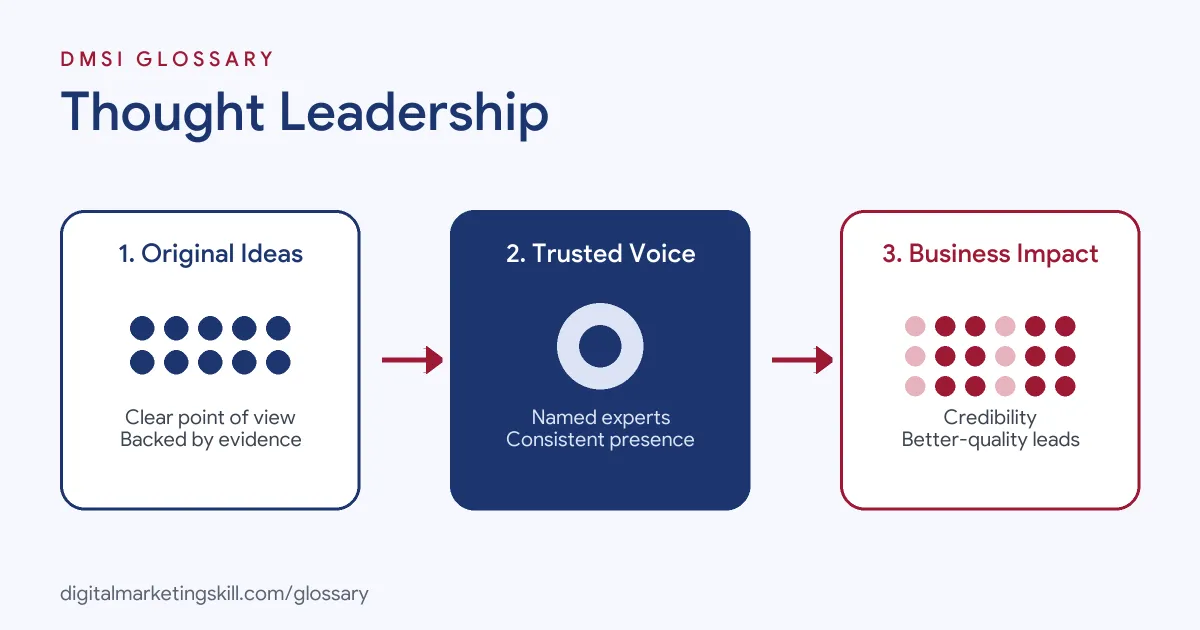
Thought leadership is the practice of sharing original ideas, expert insight and well-supported opinions that help an audience understand a topic, solve a problem or see what is coming next. A thought leader is a person or organisation that people trust to say something new and useful about their field. In marketing, thought leadership builds credibility and trust, which makes buyers more likely to listen, remember and choose you. It is different from ordinary content marketing because it aims to shape how people think, not only to answer a search query.
Key Takeaways
- Thought leadership shares original insight, expertise and a clear point of view, not recycled advice.
- It can come from individuals, such as founders and specialists, or from companies, through research and reports.
- LinkedIn’s guide to thought leadership highlights original research, a clear target audience and a recognisable “face” for the ideas.
- Good thought leadership is backed by evidence and experience; opinion without substance damages credibility.
- Results show up in trust, reputation, media coverage, speaking invitations and better-quality leads, often over months rather than weeks.
What Is Thought Leadership?
The term describes both a role and a type of content. As a role, a thought leader is someone recognised as an authority whose views are worth hearing. As content, thought leadership is material such as articles, reports, talks, podcasts and posts that offers a fresh perspective backed by knowledge.
The key word is original. Explaining what a marketing funnel is counts as useful education. Arguing, with evidence from your own work, that most funnels in your industry are built backwards and showing a better approach is thought leadership. It takes a position, explains why and gives people something they can use.
Thought leadership is common in business-to-business markets, where purchases are larger and buyers want to trust a supplier’s expertise before talking to sales. But it works in consumer markets too, for example a nutrition brand whose founder shares research-based views on healthy eating.
Why Thought Leadership Matters
Buyers face a flood of content and advertising, and most of it says the same things. Thought leadership cuts through because it offers something they cannot easily find elsewhere: a clear, credible view from someone who knows the subject. Over time, this builds familiarity and trust, so when people are ready to buy, your name is already on their list.
It also opens doors that ads cannot. Journalists look for expert sources, event organisers look for speakers, podcasts look for guests and partners look for credible collaborators. Each of these brings earned attention that reinforces your reputation. Inside a company, visible expertise can attract talented employees who want to work with people they respect.
In an age of AI-generated content, genuine expertise and first-hand experience are becoming more valuable, not less. Search engines and AI tools increasingly favour sources that show real knowledge, and audiences are quicker to spot generic writing.
Types of Thought Leadership
Industry thought leadership
Commentary on trends, challenges and the future of an industry. This might include predictions, analysis of news and views on where the market is heading.
Product thought leadership
Insight into how a category of products or services should work, solving problems in new ways and educating buyers on what good looks like. It should focus on ideas, not just features.
Organisational thought leadership
Sharing how a company works, such as its culture, values, processes or leadership lessons. This can attract talent as well as customers.
Research-led thought leadership
Original surveys, data studies and reports that reveal something new. Original research is one of the strongest forms because it gives others something to cite.
Thought Leadership vs Content Marketing
Content marketing is the wider practice of creating useful content to attract and engage an audience. Much of it answers common questions, explains how to do things and supports search visibility. Thought leadership is a subset of content that adds a distinctive point of view and expertise. A good content strategy usually includes both: practical content that brings people in, and thought leadership that makes them trust and remember you. Our glossary entry on content marketing explains the wider discipline.
How to Build a Thought Leadership Strategy
1. Set clear goals
Decide what you want to achieve: credibility with a specific audience, press coverage, speaking invitations, better leads or attracting talent. Goals shape topics, channels and measures.
2. Know your audience
Identify who you want to influence, what they care about and where they spend time. Thought leadership only works if it addresses real problems for a specific group.
3. Find your distinctive angle
List the topics where you or your organisation have real experience, data or results that others lack. Look for common beliefs you can challenge with evidence, or gaps in the current conversation.
4. Choose the face
Decide who will lead: a founder, senior leader, in-house expert or several voices. People often trust individuals more than brands, so named experts tend to work well.
5. Create substantial content
Produce content with depth: long-form articles, reports, case studies, talks, webinars and podcasts. Support claims with data, examples and experience. Repurpose core ideas into shorter posts and clips.
6. Distribute and engage
Share ideas where your audience is, such as LinkedIn, industry publications, events, podcasts and newsletters. Respond to comments, join discussions and collaborate with other respected voices.
7. Measure and refine
Track engagement, follower growth among your target audience, media mentions, speaking invitations, inbound enquiries and lead quality. Use feedback to sharpen topics and formats.
Thought Leadership on LinkedIn
LinkedIn is the main platform for professional thought leadership. Personal profiles often reach more people than company pages, so many organisations encourage experts and leaders to post under their own names. Effective posts usually share a specific lesson, opinion or piece of data, explain why it matters and invite discussion. Newsletters, long-form articles and short videos add depth. LinkedIn also offers Thought Leader Ads, which let a company promote posts from individual members, helping strong ideas reach a targeted audience. The fundamentals still apply: consistent, honest, useful content beats occasional self-promotion.
How Long Thought Leadership Takes
Thought leadership is a long-term investment. A single article rarely changes how people see an expert or a company. Reputation builds through consistent, high-quality contributions over many months, as the same audience sees useful ideas again and again. Many organisations plan a regular rhythm, such as one substantial piece each month supported by weekly short posts, and review progress every quarter. Early signs of progress include more meaningful comments and shares from the right people, invitations to contribute elsewhere and prospects mentioning your content in sales conversations. Patience and consistency matter more than any single viral post.
Examples of Thought Leadership Content
- An annual industry report based on a survey of customers or professionals.
- A founder’s article explaining why a common practice is outdated, with evidence.
- A keynote talk sharing lessons from a difficult project.
- A podcast where a specialist interviews other experts about emerging challenges.
- A detailed guide sharing a framework the company developed through client work.
- A regular LinkedIn newsletter analysing news in the sector.
Common Thought Leadership Mistakes
- Repeating what everyone says. Without an original angle, it is just content.
- Selling instead of informing. Heavy promotion undermines trust.
- Opinions without evidence. Bold claims need data, examples or experience behind them.
- Inconsistency. Occasional posts rarely build a reputation.
- Ghostwritten content that does not reflect real views. Readers notice when the expertise is not genuine.
- Relying on AI-generated generic text. AI can help with drafts, but the insight must be real.
Thought Leadership as a Career Skill
Marketers often help leaders build their profiles, by interviewing experts, shaping ideas into articles, planning LinkedIn content and pitching speaking opportunities. Building your own thought leadership in a niche, by sharing what you learn and test, can also help your career. If you are building marketing skills in your country or anywhere else, start by writing short posts about practical lessons from your own projects. If you want structured training in content, social media and personal branding, you can join our programme.
Frequently Asked Questions
What is thought leadership in simple terms?
Sharing original, expert ideas that help people understand a topic or solve problems, so they see you as a trusted authority.
What is a thought leader?
A person or organisation recognised for valuable, original insight in their field, whose views others seek out.
What is the difference between thought leadership and content marketing?
Content marketing includes all useful content. Thought leadership is content with a distinctive point of view backed by expertise or research.
What type of content works best for thought leadership?
Original research, in-depth articles, talks, podcasts and case studies tend to work best, supported by shorter social posts.
How do you measure thought leadership?
Through engagement from your target audience, media mentions, speaking invitations, follower growth, inbound enquiries and lead quality.
Are LinkedIn thought leader ads worth it?
They can help amplify strong content from real experts, but results depend on the quality of the ideas and the targeting.
Can a small business do thought leadership?
Yes. A founder or specialist sharing real experience in a niche can build strong credibility without a large budget.
Sources: LinkedIn: What is thought leadership?; Wikipedia: Thought leader; Influencer Marketing Hub: Thought Leadership; The Speaker Lab: What is thought leadership?.