
Inbound marketing is a way of attracting customers by creating content and experiences that help them, so they come to you instead of you chasing them. It relies on things like blog posts, search, social media and email to earn attention over time. It matters because people who find you while solving a problem are often more ready to listen than people you interrupt.
Key Takeaways
- HubSpot describes inbound as a methodology that “attracts customers by creating valuable content and experiences tailored to them”.
- Its three stages are attract, engage and delight.
- Together, those stages form a flywheel, where happy customers help bring in new ones.
- Search is central, so content should be helpful first and optimised second.
- Inbound takes longer to build than paid ads, but content can keep bringing visitors long after you publish it.
What Is Inbound Marketing?
Think about the last time you searched for “how to fix a dripping tap”. You probably clicked a guide, read it and maybe watched a video. If that guide came from a plumbing firm, you met that business without any advert at all. That is the basic idea.
HubSpot puts it this way: instead of pushing messages out through cold calls, display ads or purchased email lists, inbound “pulls people in with content that solves their problems and answers their questions”. In other words, you earn attention rather than buy it.
Inbound is often set against outbound marketing, where you reach out first. Most businesses use a mix of both. However, inbound tends to build an asset you own, such as a library of useful pages or an email list.
How Inbound Marketing Works
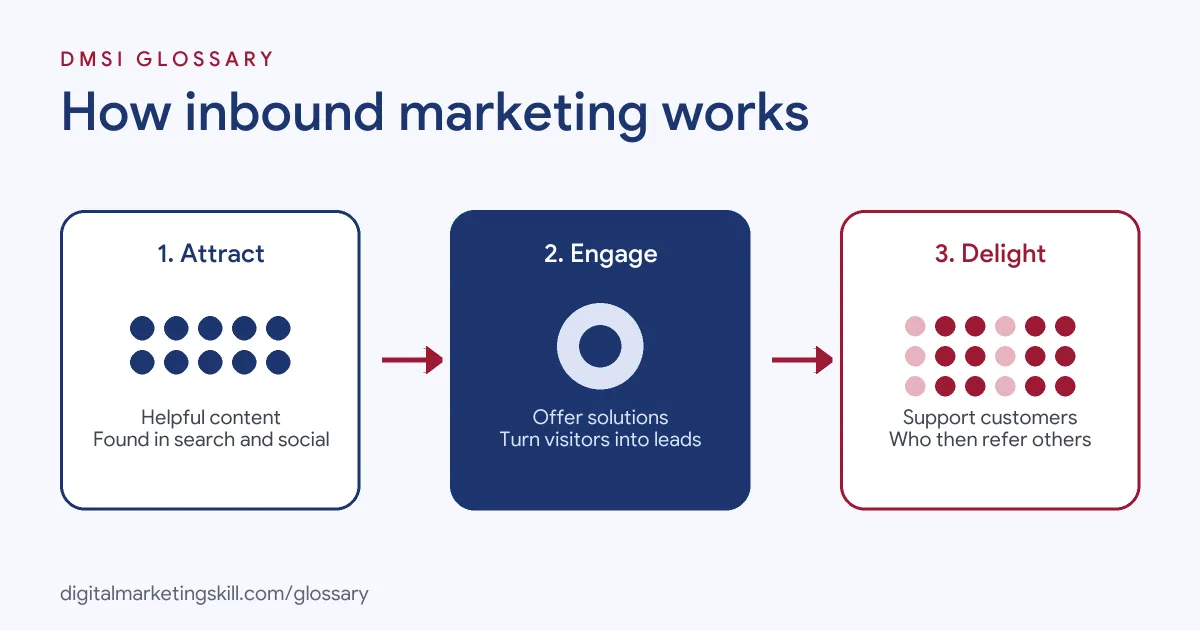
HubSpot’s inbound methodology has three stages. Each one has a clear job, and together they keep growth moving.
Attract
This stage draws in the right people. HubSpot describes it as “drawing in the right people with valuable content and conversations”. In practice, that means blog posts, guides, videos and social posts that answer real questions. HubSpot adds that all content “should be optimized with an SEO strategy”, so people can find it in search.
Engage
Next, you present solutions that fit each person’s problem and goals. This is where a visitor becomes a lead. For example, they might download a checklist, join a webinar or book a call. The goal, according to HubSpot, is to build long-term relationships rather than push for a quick sale.
Delight
Finally, you keep customers happy after they buy. HubSpot suggests well-timed chatbots, surveys and social media listening. A delighted customer, it says, “becomes a brand advocate and promoter”. As a result, their reviews and referrals attract the next round of people.
The Flywheel
When these stages work together, HubSpot says they create “a flywheel — a self-sustaining loop of growth”. Unlike a funnel, which ends at the sale, a flywheel treats customers as a source of new momentum.
Where Automation Fits
Inbound does not mean doing everything by hand. HubSpot describes inbound marketing automation as combining the methodology with automation tools “to deliver the right content to the right person at the right time”. For example, a new subscriber can get a welcome email straight away, then a useful guide a few days later. In HubSpot’s words, “inbound marketing is the strategy”. Automation, meanwhile, is a tool that helps you run it at scale.
Inbound Marketing Examples
Here are three made-up examples of inbound in action:
- Accounting firm: It publishes a plain-English guide to self-assessment tax returns. Freelancers find it on Google, then sign up for a deadline reminder email. A few weeks later, some book the firm to file for them.
- Online plant shop: It posts short videos on keeping houseplants alive. Viewers follow the account, join the newsletter and buy when a care kit goes on sale.
- Software company: It offers a free template for planning social media posts. Users who download it get a short email series, and some start a free trial.
In each case, the business helps first. Then it gives people an easy next step.
Inbound vs Outbound Marketing
Here is how the two approaches compare:
| Factor | Inbound marketing | Outbound marketing |
|---|---|---|
| Who starts contact | The customer finds you | You reach out first |
| Typical channels | SEO, blogs, social content, email to subscribers | Cold email, cold calls, display ads, events |
| Speed | Slower to build | Faster to start |
| Cost over time | Content keeps working after you publish it | Results usually stop when spending stops |
| Main risk | Content nobody searches for | Annoying people or breaking contact rules |
In short, inbound is a long game that builds an asset. Outbound, by contrast, buys speed.
How to Start With Inbound Marketing
You can start small. Follow these steps:
- Define your buyer. Write down who they are, what problems they have and what they search for.
- Research questions. Use search tools and customer conversations to list the questions people ask before they buy.
- Create one helpful piece at a time. Answer one question well, with original detail and examples.
- Add a next step. Offer a checklist, template or short course in return for an email address, with clear consent.
- Nurture the leads. Send a short email series that helps them decide.
- Delight customers. Ask for feedback, answer questions fast and invite reviews.
- Measure and improve. Track visits, sign-ups and sales from each piece of content.
How to Measure Results
Because inbound works slowly, you need numbers that show progress before sales arrive. Track these at each stage:
- Attract: organic visits, search impressions and new followers.
- Engage: sign-ups, downloads, booked calls and the conversion rate from visit to lead.
- Delight: repeat purchases, reviews, referrals and survey scores.
Then tie them together. For instance, tag each sign-up form so you know which article produced the lead. Over time, you will see which topics bring buyers, not just readers. As a result, you can write more of what works and stop what doesn’t.
Inbound Marketing Best Practices
- Write for people first. Google says its systems prioritise “helpful, reliable information that’s created to benefit people”, not content made to manipulate rankings.
- Add something original. Google asks whether content provides “original information, reporting, research, or analysis”. Your own data and experience help here.
- Respect consent. In the UK, the ICO says you must not send marketing emails to individuals without specific consent, except under the limited soft opt-in.
- Connect your channels. Social posts, search content and email should point to the same next step.
- Be patient. New content needs time to be found, so plan for steady output rather than quick wins.
Common Inbound Marketing Mistakes
A common mistake is writing about what the business wants to say, rather than what customers search for. Another is publishing without a next step, so readers leave and never return. Some teams also chase volume with thin, rewritten content. Yet Google’s guidance warns against copying or rewriting other sources without adding “substantial additional value”. Finally, many businesses stop after a few posts because results feel slow.
Where You’ll Use Inbound Marketing at Work
Inbound skills show up in content, SEO and growth roles. For example, recent remote job listings ask for:
- “2+ years of hands-on experience in B2B content marketing or inbound marketing (SaaS/Software experience is a strong advantage)” (Inbound Marketer).
- “Proven, daily proficiency using AI tools to accelerate research, copywriting, and content ideation” (Inbound Marketer).
Some senior roles also list inbound marketing beside outbound sales and paid acquisition as areas to lead. So whether you aim to be a Digital Marketing Manager, Growth Marketer or freelancer, you will plan and measure inbound work.
Learn It in the Full Stack Programme
Inbound draws on every channel, so it fits the Full Stack (all four tracks) programme. You take all ten courses, from SEO and content to email automation and paid ads, and build one portfolio project from each track. You also get unlimited 1-on-1 mentoring and a U.S. Project Internship from day one.
To go deeper, read our guide to an inbound marketing strategy that actually generates leads, or compare channels in our post on B2B lead generation.
Frequently Asked Questions
What is inbound marketing in simple terms?
It means attracting customers with useful content, so they find you. You then guide them towards buying with helpful next steps.
What are the three stages of inbound?
HubSpot names them attract, engage and delight. Together, they form a flywheel where happy customers help attract new ones.
Is SEO part of inbound marketing?
Yes. Search is one of the main ways people find inbound content, so HubSpot says content should be optimised with an SEO strategy.
Is inbound better than outbound?
Neither is always better. Inbound builds a lasting asset but takes time. Outbound is faster to start but usually stops when spending stops.
How long does inbound take to work?
There is no fixed timeline. Because content needs time to be found and to rank, plan for steady output rather than quick wins.
Sources: HubSpot: What is inbound marketing?; Google Search Central: Creating helpful, reliable, people-first content; ICO: Electronic mail marketing; remote job listings on Himalayas.