
Paid social is advertising you pay to show on social media platforms such as Facebook, Instagram, LinkedIn and TikTok. Instead of hoping your posts reach people for free, you pay the platform to put your ads in front of the audience you choose. It matters because it lets you reach new people quickly and measure exactly what each pound or dollar brings back.
Key Takeaways
- This means ads you pay for on social platforms, as opposed to free, organic posts.
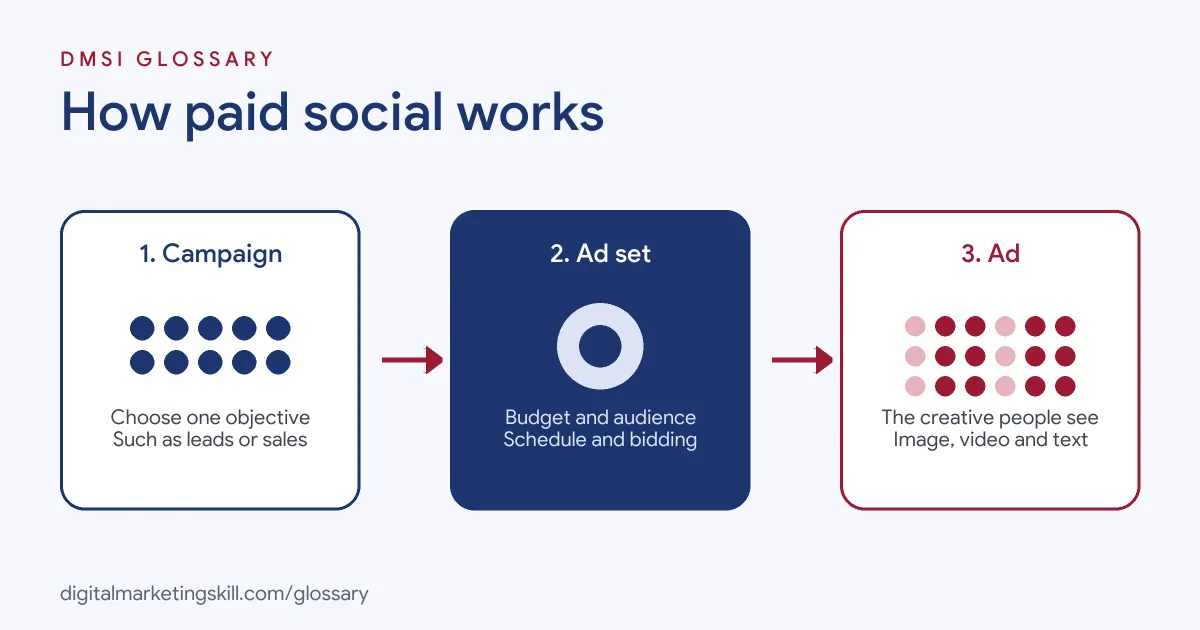
- Most platforms use the same three levels: campaign, ad set (or ad group) and ad.
- On Meta, every campaign has one objective, such as awareness, traffic, leads or sales.
- You set the budget, schedule and audience at the ad set level, then add creative at the ad level.
- Results are tracked with metrics such as reach, clicks, cost per result and conversions.
What Is Paid Social?
Social media has two sides. On the organic side, you post content and hope your followers see it. On the paid side, you pay the platform to show your content to a chosen audience, whether or not they follow you. That second side is paid social.
For example, a yoga studio might post a class timetable on Instagram. Only some followers will see it. However, if the studio pays to run that post as an ad, it can reach people nearby who are interested in fitness, even if they have never heard of the studio.
This kind of advertising covers many platforms. Meta runs ads across Facebook and Instagram. LinkedIn, by contrast, is built for business audiences. According to LinkedIn, more than 1 billion professionals use it, and advertisers can target by job title, function, industry and more. TikTok, Pinterest and Snapchat also sell ads. Each one has its own audience, formats and tools, but the core idea is the same.
How Paid Social Works
Almost every platform organises ads in three layers. First, the campaign sets your goal. Next, the ad set decides who sees the ads, when and for how much. Finally, the ad itself is the image, video and text people see in their feed.
The Campaign Level
Meta’s developer guide says a campaign “should represent a single objective.” In other words, you decide what you want first. Meta’s current objectives cover awareness, traffic, engagement, leads, app promotion and sales. The platform then uses that goal to decide who to show your ads to. For instance, a sales campaign looks for people likely to buy, while an awareness campaign looks for people likely to remember the ad.
The Ad Set Level
Next comes the ad set. According to Meta, “the budget, billing, and duration are set at the ad set level and apply to all ads in the set.” This is also where you choose your audience. You can target by location, age and interests, or upload your own customer list. Similarly, LinkedIn lets you target by job title, function and industry, with more than 20 types of audience attribute to choose from.
The Ad Level
Finally, the ad holds your creative. That means the image or video, the headline, the main text and the button. Meta notes that you can run several ads in one ad set to test different images, links, videos or text. So you can compare versions and keep the one that performs best.
Paid Social Examples
Here are three common ways businesses use social ads:
- Online shop: A skincare brand runs a sales campaign on Instagram. It shows short product videos to women aged 25 to 40 who like beauty content. Then it tracks purchases on its website to see which video sells most.
- B2B software firm: A payroll company runs a lead campaign on LinkedIn. It targets finance managers at firms of a certain size. As a result, its ads reach decision-makers, not students or job seekers.
- Local business: A dentist runs an awareness campaign on Facebook for people within a few miles of the clinic. Later, it retargets people who watched most of the video with a booking offer.
In each case, the business picked one clear goal first. After that, it chose the platform and the audience that fit that goal.
Paid Social Platforms Compared
Each platform suits different goals. Here is a simple overview:
| Platform | Strengths | Common ad formats | Often used for |
|---|---|---|---|
| Meta (Facebook and Instagram) | Huge reach and detailed interest targeting | Image, video, carousel and Stories ads | Online sales, leads and local awareness |
| Targeting by job title, function and industry | Sponsored Content, Message Ads, Dynamic Ads and Text Ads | B2B leads and recruitment | |
| TikTok | Short, full-screen video | Video ads in the feed | Awareness and product launches |
In short, pick the platform where your audience already spends time. Then match the format to what they expect to see there.
How to Run a Paid Social Campaign
These steps work on most platforms, though menu names differ:
- Set one clear goal, such as leads or sales, and decide how you will measure it.
- Install tracking first. For example, add the Meta Pixel or the LinkedIn Insight Tag to your website.
- Create a campaign and choose the objective that matches your goal.
- Build the ad set. Then pick your audience, budget, schedule and placements.
- Create two to four ads with different images, videos or headlines.
- Launch, then wait until each ad has enough data before you judge it.
- Review the results. Turn off weak ads and move budget to the strongest ones.
One more rule matters on Meta. If your ads relate to jobs, housing, credit, financial services or politics, Meta requires you to declare a special ad category. So check this before you build the campaign.
Best Practices for Paid Social
A few habits make a big difference:
- Design for the feed. People scroll fast, so hook them in the first second of a video.
- Test one thing at a time. For instance, change only the image, so you know what made the difference.
- Use your own data. Customer lists and website visitors often make the strongest audiences, including lookalike audiences.
- Judge on business results. Likes are nice, but leads and sales pay the bills.
- Refresh creative often. Otherwise, the same people see the same ad too many times and stop responding.
Common Mistakes to Avoid
Beginners tend to repeat a handful of errors. First, they choose the wrong objective, such as traffic when they really want sales. Second, they launch without tracking, so they cannot tell what worked. Third, they target too broadly or too narrowly at the start. Finally, they change settings every day, which stops the platform from learning. Each of these is easy to avoid with a simple plan and a little patience.
Where You’ll Use Paid Social at Work
Social advertising skills appear in social media, growth and agency roles. For example, current remote job listings include lines such as:
- “Manage paid social campaigns across Meta, TikTok, and LinkedIn” (Social Media Manager).
- “Own paid social (LinkedIn), paid search, content syndication, and digital programs day-to-day” (Sr. Demand Generation Manager).
- “Experience developing creative and UGC assets for paid social channels” (Senior Paid Marketing Strategist).
So if you want to work as a Paid Social Specialist, Social Media Manager or Content Creator, employers will expect you to plan, launch and report on ad campaigns. They will also want to see results from a campaign you ran yourself.
Learn It in the Social Media Track
You can learn social advertising step by step in the AI-Powered Social Media Management and Advertising track. There, you plan, create and run a paid social campaign for a real brand, so you finish with results you can show an employer. You also work on a U.S. Project Internship from day one, with unlimited 1-on-1 mentoring.
Want a practical next step? Read our walkthrough of Facebook Ads Manager, or see how paid and organic work together in our glossary entry on social media marketing.
Frequently Asked Questions
What is paid social in simple terms?
It is advertising on social media that you pay for. You choose who sees your ads, and you pay the platform to show them.
What is the difference between paid social and organic social?
Organic social is free posting to your followers. Paid social uses ads to reach chosen audiences, including people who do not follow you.
Which platform is best for paid social?
It depends on your audience. Meta suits many consumer brands, while LinkedIn suits business audiences. TikTok works well for short video.
How do you measure paid social results?
Track the metric that matches your goal. For example, use cost per lead for lead campaigns and return on ad spend for sales.
Do I need a big budget to start?
No. Most platforms let you set a small daily budget. Start small, learn what works, then increase spend on the ads that perform.
Sources: Meta for Developers: Ad campaign structure; Meta for Developers: Ad campaign reference; LinkedIn Marketing Solutions: Ads; remote job listings on Himalayas.