
Instagram Marketing is the use of Instagram to promote a brand, product or service through posts, Reels, Stories, messages and paid ads. It covers both free (organic) content and paid campaigns. So it helps you reach new people, build trust and turn followers into customers. Because Instagram is so visual, it suits brands that can show what they do, from cafés to software companies.
Key Takeaways
- Instagram marketing mixes organic content with paid ads to reach and win customers.
- The main formats are Feed posts, Stories, Reels and Direct messages.
- Instagram has no single algorithm; each part of the app ranks content in its own way.
- A professional account gives you tools such as insights to track what works.
- Success comes from a clear goal, a steady posting plan and testing what your audience likes.
What Is Instagram Marketing?
Instagram is a photo and video app owned by Meta. Mostly, people use it to follow friends, creators and brands. So Instagram marketing is the work of using the app on purpose to grow a business. It sits inside wider social media marketing, next to platforms such as TikTok, Facebook and LinkedIn.
Instagram’s own business site invites you to “learn how to use Instagram to reach new customers, grow your audience and engage with existing customers.” In other words, it supports the full journey, from first view to repeat purchase.
Here is an everyday example. First, a small bakery posts a short video of fresh croissants coming out of the oven. Then a local person sees it, follows the account and later visits the shop. After that, the bakery shares a Story about a weekend offer. As a result, the customer comes back again.
Why It Matters
Often, people discover brands while scrolling, not searching. So Instagram lets you reach them before they even know they need you. Also, the app supports the whole path to purchase. For example, people can watch a Reel, tap through to a product and send you a message, all in one place. Finally, the insights tools show you what works. That means you can improve each month based on real data, not guesses.
Organic and Paid Working Together
Most brands use both organic posts and paid ads. First, organic content builds your profile and shows people what you stand for. Then ads push your best posts to new audiences who match your customers. Also, people who see an ad often check your profile before they buy. So a strong, active profile makes your ads work harder. In short, organic content builds trust, while ads add speed and reach.
How Instagram Marketing Works
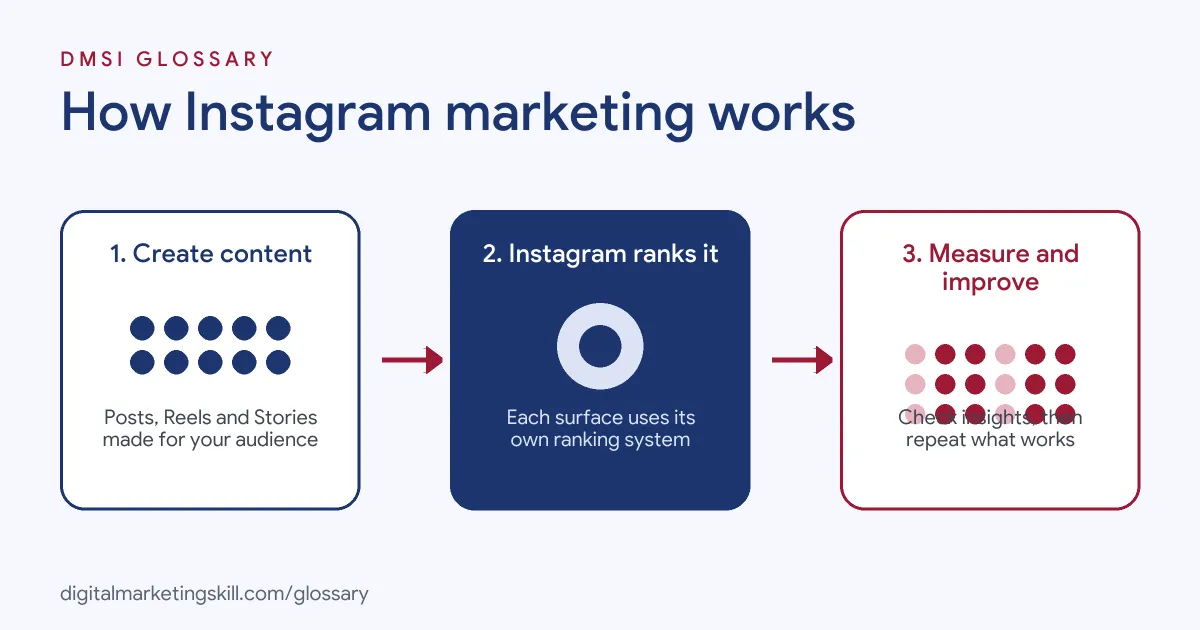
Instagram marketing works in a simple cycle. First, you create content for your audience. Then Instagram’s systems decide who sees it. Finally, you measure the results and improve your next posts.
Content Formats
Instagram lists Feed, Stories, Reels and Instagram Direct as its main products for businesses. First, Feed posts are photos, videos or carousels that stay on your profile. By contrast, Stories are short updates that disappear after a day. Reels are short vertical videos, and they often reach people who don’t follow you yet. Then Direct messages let you talk with customers one to one.
How Instagram Ranks Content
Many people talk about “the algorithm”. However, Instagram says it “doesn’t have a singular algorithm that oversees what people do and don’t see on the app.” Instead, Feed, Stories, Explore and Reels each use their own system. For Reels, Instagram says, “The most important predictions we make are how likely you are to reshare a reel.” So content people want to share has a strong chance to spread.
Professional Accounts
To market properly, you switch to a professional account. Instagram offers two types: business and creator. Both give you extra tools, such as contact buttons and insights. For example, insights show how many people saw your content and what they did next. As a result, you can see which posts bring followers, visits or messages.
Paid Ads and Shopping
However, organic reach has limits, so many brands add paid ads. You can boost a post from the app or build campaigns in Meta Ads Manager. Also, Instagram lists shopping tools for businesses. For instance, Instagram Shopping helps you set up a shop, so people can browse your products inside the app.
Building a Community
Instagram marketing is not only about posting. In fact, much of the value comes from conversations. For example, you reply to comments, answer messages and share posts from happy customers. Also, you can run polls and question stickers in Stories to learn what people want. As a result, followers feel like part of something, not just an audience. Over time, that trust makes them more likely to buy and to recommend you.
Examples of Instagram Marketing
- A local hair salon. The salon posts before-and-after Reels each week. Then it adds a “Book now” button to its profile. As a result, new clients can book straight from the app.
- An online clothing brand. The brand tags products in its Feed posts. It also runs ads to people who visited its website. So shoppers see the items they viewed and can buy them in a few taps.
- A B2B software company. The team shares short tips in carousels and behind-the-scenes Stories. Then it invites viewers to a free webinar. In this way, it builds trust before the sales conversation starts.
Instagram Marketing vs Instagram Ads vs Influencer Marketing
| Point | Instagram Marketing | Instagram Ads | Influencer Marketing |
|---|---|---|---|
| What it is | All your activity on Instagram | Paid placements on Instagram | Working with creators to reach their followers |
| Cost | Free and paid | Paid | Often paid or gifted |
| Who posts | Your brand account | Your brand, as ads | The creator’s account |
| Main strength | Long-term audience and trust | Fast, targeted reach | Borrowed trust from a known voice |
How to Do Instagram Marketing
- Set a clear goal. Decide if you want awareness, website visits, messages or sales.
- Switch to a professional account. Choose business or creator, then fill in your bio, contact details and link.
- Know your audience. Write down who you want to reach and what they care about.
- Pick your content pillars. Choose three or four themes, such as tips, products and behind the scenes.
- Plan a calendar. Use a content calendar to post on a steady schedule.
- Lead with Reels. Hook viewers in the first seconds, because Reels can reach people who don’t follow you.
- Reply and engage. Answer comments and messages quickly, so people feel heard.
- Review insights monthly. Keep what works, drop what doesn’t and test one new idea each month.
Best Practices for Instagram Marketing
- Make shareable content. Instagram says reshares are a key signal for Reels, so create posts people want to send to friends.
- Post original video. Instagram’s ranking page says it tries to make low-quality or watermarked reels less visible.
- Write clear captions. In each caption, tell people what to do next, such as “Save this” or “Send us a message”.
- Stay consistent. In general, a steady rhythm beats a burst of posts followed by silence.
- Use your profile well. A clear bio, a link and contact buttons turn interest into action.
- Repurpose your best ideas. If a Reel does well, turn it into a carousel or a Story series. In this way, one strong idea works across several formats.
- Track the right numbers. Watch reach, shares, saves and messages, not just likes.
Common Mistakes to Avoid
- Posting without a goal. Pretty posts with no purpose rarely bring customers.
- Only selling. If every post is an ad, people stop paying attention.
- Ignoring comments and messages. Slow replies can lose ready buyers.
- Reposting watermarked videos. Content marked from other apps may get less reach.
- Chasing follower counts. A smaller, engaged audience is worth more than a large, silent one.
- Never checking insights. Without data, you repeat what doesn’t work.
- Copying trends that don’t fit. A trend only helps if it suits your brand and your audience, so adapt it rather than copy it.
Where You’ll Use Instagram Marketing at Work
Instagram skills show up in social media, content and creator roles. For example, real remote job listings ask for people who can:
- “Run our X, Facebook, and Instagram accounts day to day, covering all four of our SaaS products.” (Social Media Specialist).
- “Run Instagram Trial Reels to try new hooks on non-followers.” (Social Media Specialist).
- “You’ll create TikTok and Instagram Reels that feel authentic, build trust, and highlight product benefits in a natural way.” (Social Content Influencer).
Learn It in the Social Media and Paid Social Track
You can learn to plan content, grow accounts and run Instagram ads in the AI-Powered Social Media Management and Advertising track. Every track includes a U.S. Project Internship from day one, with unlimited 1-on-1 mentoring.
Frequently Asked Questions
Is Instagram marketing free?
Yes, organic posting is free. However, many brands also pay for ads to reach more people faster.
Do I need a business account?
You need a professional account, which can be a business or creator account. It gives you tools like insights and contact buttons.
Does Instagram have one algorithm?
No. Instagram says Feed, Stories, Explore and Reels each use their own ranking system.
What content works best on Instagram?
It depends on your audience. Still, short Reels that people want to share often reach the most new viewers.
How do I measure Instagram marketing?
Use Instagram insights to track reach, shares, saves, profile visits and messages. Then link those numbers to your business goal.
Sources: Instagram for Business: Marketing on Instagram; About Instagram: Instagram Ranking Explained; Instagram Help Centre: About Business and Creator Accounts; remote job listings on Himalayas and Himalayas.