
Multimodal AI is artificial intelligence that can take in and combine more than one type of data, such as text, images, audio and video. It can, for example, read a photo and describe it in words, or turn a written brief into an image. It matters for marketers because so much content is visual, and multimodal tools can help you plan, create and check images and video as well as text.
Key Takeaways
- A “modality” is a type of data, such as text, image, audio or video. These tools work with several at once.
- Older AI models usually handled one type of data. Multimodal models combine them for a fuller picture.
- Google says its Gemini models are “built to be multimodal from the ground up”.
- You can give images to tools such as Gemini or Claude by upload, by link or through their APIs.
- For marketers, common uses include image descriptions, caption ideas, creative feedback and video summaries. A person should still check every output.
What Is Multimodal AI?
IBM defines multimodal AI as “machine learning models capable of processing and integrating information from multiple modalities or types of data.” It adds that these modalities “can include text, images, audio, video and other forms of sensory input.”
The key word is “integrating”. A multimodal model doesn’t just accept different files. Instead, it links them together. IBM explains that, unlike traditional AI models designed for a single type of data, this kind of AI combines different inputs to reach a fuller understanding.
For example, IBM describes a model that receives a photo of a landscape and writes a summary of that place. The same kind of model could also work the other way, turning a written description into an image.
How Multimodal AI Works
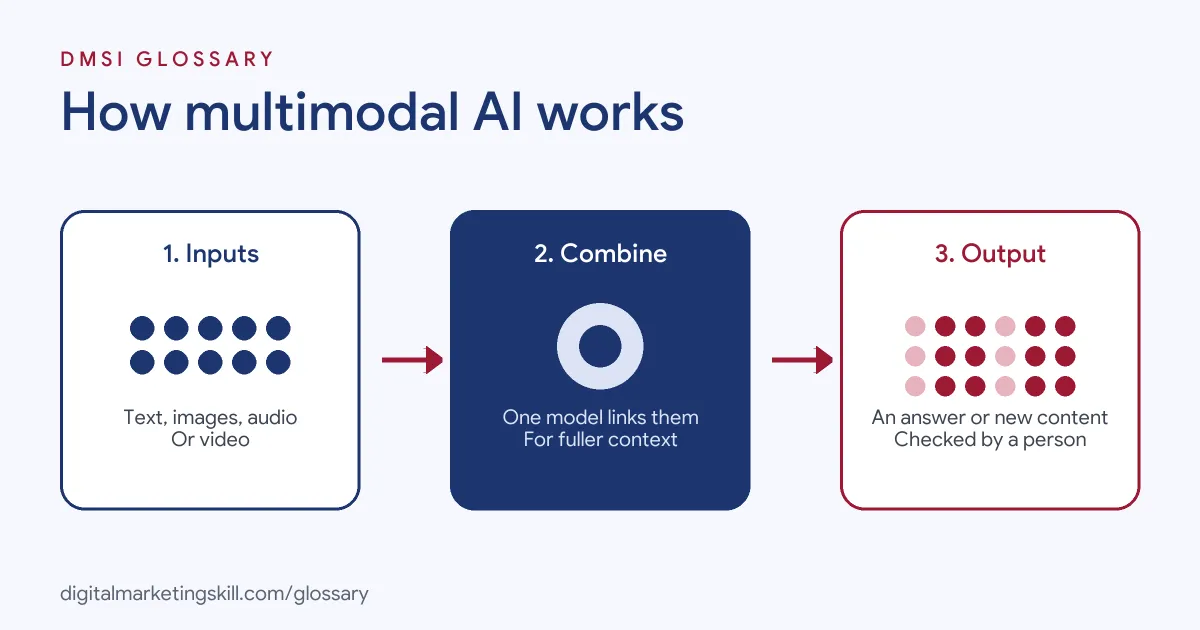
At a high level, a multimodal system goes through three stages. First, it takes in different kinds of input. Next, it connects the information across those inputs. Finally, it produces an output, which may be text, an image or another format.
Inputs and Modalities
Each type of data has its own structure. A sentence, a photo and a sound clip look nothing alike to a computer. IBM points to research from Carnegie Mellon that describes three features of these systems: heterogeneity, connections and interactions. In plain English, the data types are different, they share related information, and they affect each other when combined.
Combining Information
The hard part is joining these inputs well. IBM calls this “the core engineering challenge” in the field. When it works, the model can use one type of data to fill gaps in another. In fact, IBM notes that multimodal systems are “more resilient to noise and missing data”, because they can rely on other inputs when one is unclear.
Outputs
Some tools take in many types of data but reply only in text. Others can also create images, audio or video. Google’s Gemini documentation, for instance, lists image tasks such as “image captioning, classification, and visual question answering without having to train specialized ML models.” So you can ask a question about a picture and get a written answer.
Multimodal AI Examples
IBM gives two everyday examples: a chatbot that suggests glasses sizes from a photo you share, and a bird app that checks a photo against an audio clip of the bird’s song. Here are three made-up marketing examples:
- Ad feedback: A social media manager uploads three ad images and asks which one shows the product most clearly. The model explains its view, and the manager tests the top two.
- Alt text: An online shop gives product photos to a multimodal model and asks for short, accurate alt text. A team member reviews each line before publishing.
- Video notes: A content creator shares a recorded webinar and asks for a summary and five clip ideas for short videos.
Unimodal AI vs Multimodal AI
Here is a quick comparison, based on IBM’s description:
| Feature | Unimodal AI | Multimodal AI |
|---|---|---|
| Types of input | One, such as text only | Several, such as text, images and audio |
| Understanding | Limited to one kind of signal | Combines signals for more context |
| Missing data | Struggles if that one input is poor | Can lean on other inputs |
| Marketing use | Writing copy from a text brief | Reviewing a visual ad, then writing copy that fits it |
Many popular AI assistants accept images as well as text. To understand the wider family these tools belong to, see our entry on generative AI.
How to Use Multimodal AI for Marketing
You can start with the chat tools you may already use. Follow these steps:
- Pick a tool that accepts files. For example, Anthropic says you can upload or drag an image straight into a chat with Claude.
- Add the image first. Anthropic notes that Claude “works best when images come before text”, so put the picture before your question.
- Ask a clear question. For instance, “Describe this product photo for a visually impaired reader in under 125 characters.”
- Give context. Explain the brand, the audience and where the content will appear.
- Check the result. Compare the answer against the real image and correct anything wrong.
- Save good prompts. Reuse them across campaigns, so your team gets consistent results. Our guide on how to write ChatGPT prompts can help.
Multimodal AI for Social Media Content
Social media is full of pictures and video. That’s why these tools fit social work so well. Here are a few simple jobs you can hand to them:
- Caption ideas: share a photo and ask for five short captions in your brand voice.
- Quick checks: ask whether your logo and offer are easy to see on a small phone screen.
- Repurposing: give it a long video and ask for the best moments to cut into short clips.
- Accessibility: ask for alt text, so people who use screen readers can follow your posts.
Each task saves time. But you still pick the final words, check the facts and press publish.
Best Practices
- Check facts and details. A model may misread small text, logos or numbers in an image.
- Respect rights and privacy. Only upload images and recordings you are allowed to share.
- Keep a human in charge. Use the output as a starting point, not the final version.
- Be specific. Tell the model what to look for, such as colours, layout or the call to action.
- Test with real audiences. AI feedback on creative is a guess. Ad results are the real answer.
Common Mistakes to Avoid
Beginners often make the same few errors. First, they trust image descriptions without looking again at the image. Second, they upload customer photos or private documents without permission. Third, they give a picture with no instructions and get a vague answer. Finally, they assume every tool supports audio and video, when some only accept images and text. A quick check of each tool’s documentation avoids that last problem.
Where You’ll Use Multimodal AI at Work
The term appears in technical and sales job listings. For example, recent remote listings mention:
- Projects “using multimodal generative AI to address fundamental challenges associated with AI adoption in a global multimedia company” (Research Engineer Intern).
- Applications “that create business value through Generative AI, multimodal AI, intelligent automation, and advanced analytics” (AI Engineer).
- A platform that “detects events from many different types of data (images, video, sensor data, audio, and text in over 150 languages)” (Account Executive).
Marketing roles use multimodal tools in a more practical way. A Social Media Manager or Content Creator may use them to review creative, draft captions from images or turn long videos into short clips. Employers will want to see that you can do this quickly while keeping quality high.
Learn It in the Social Media Track
AI fundamentals are part of every DMSI track. In the AI-Powered Social Media Management and Advertising track, you also study content creation for graphics and video. You then plan, create and run a paid social campaign for a real brand. Along the way, you get unlimited 1-on-1 mentoring and a U.S. Project Internship from day one.
Frequently Asked Questions
What is multimodal AI in simple terms?
It is AI that can understand and combine more than one kind of data, such as text, images, sound and video, instead of just one.
What is an example of multimodal AI?
Uploading a photo to a chat assistant and asking it to describe the image is a simple example. The tool reads the image and answers in text.
Is ChatGPT multimodal?
IBM notes that the original ChatGPT was text-only, and that OpenAI later added multimodal features to it. So ChatGPT can work with images as well as text.
How can marketers use it?
Common uses include writing alt text, getting feedback on ad images, drafting captions from photos and summarising videos. Always review the output before you publish.
Is it always accurate?
No. It can misread images or details. That’s why a person should check anything that customers will see.
Sources: IBM: What is multimodal AI?; Google AI for Developers: Image understanding with Gemini; Anthropic: Vision; remote job listings on Himalayas.