
Media buying is the process of purchasing advertising space and time, such as social media placements, search ads, banners or video slots, to reach a target audience at the best possible price. A media buyer chooses where ads run, how they are bought and how much to pay, then adjusts spend as results come in. It matters because paid media is usually the largest part of a marketing budget, so how it is bought shapes both cost and results.
Key Takeaways
- Media buying covers choosing channels, buying methods and prices, then optimising spend.
- Much digital media is bought in auctions, but some is bought in advance at a fixed price.
- Google Ad Manager splits sales into guaranteed campaigns, such as Programmatic Guaranteed, and non-guaranteed ones, such as Open Auction.
- In Gartner’s CMO Spend Survey, paid media made up 30.6% of marketing budgets.
- Good buyers judge success on results such as cost per sale, not just on cheap impressions or high reach.
What Is Media Buying?
Every paid ad needs a place to appear. Media buying is the work of securing those places. It includes deciding which platforms to use, what to pay and when to run the ads.
It is closely linked to media planning, and in smaller teams one person often does both. In simple terms, planning decides the strategy: who to reach, on which channels and with what budget. Buying then turns that plan into live placements and manages them day to day.
Today, much of this happens through self-serve ad platforms. For example, a media buyer might run paid social on Meta and TikTok, search ads on Google and video on YouTube, all from their own ad accounts.
How Media Buying Works
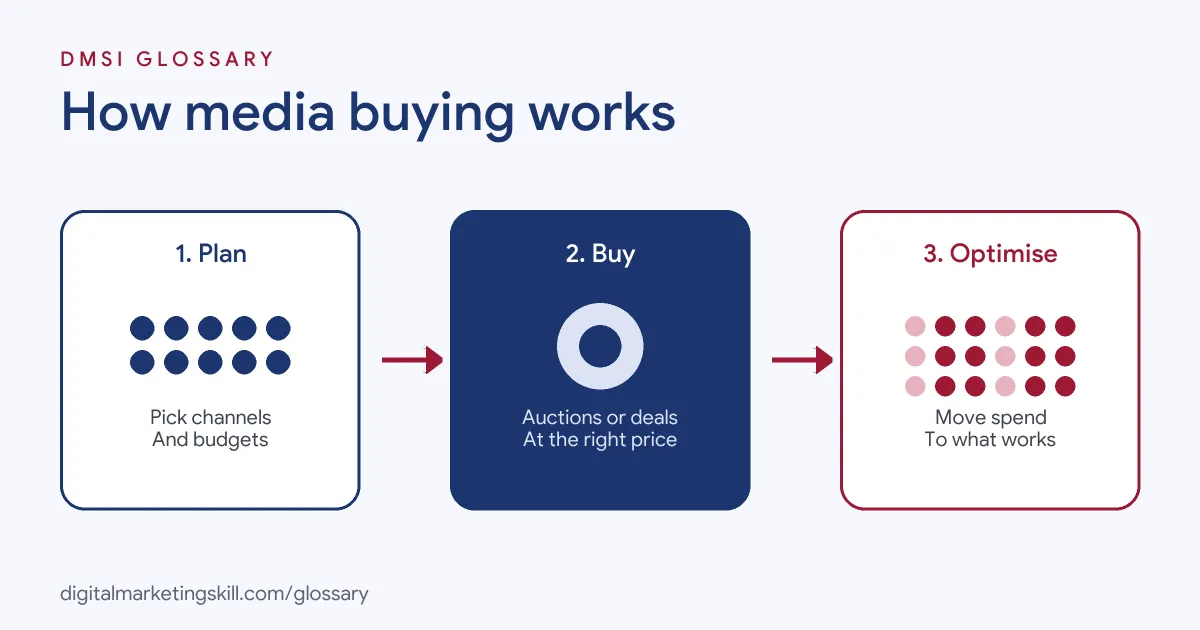
The process follows three stages. First, the buyer plans where to spend, based on the audience and goal. Next, they buy the media, either in real-time auctions or through deals agreed in advance. Finally, they monitor results and move budget towards what works.
Auction Buying
Most social and search ads are bought in auctions. Each time an ad slot is available, advertisers compete and the platform decides who wins. For instance, TikTok explains that its auction buying type is “delivered through dynamic auction bidding.” Prices change with demand, so costs such as cost per mille move up and down.
Reserved and Guaranteed Buying
Some media is bought in advance. TikTok’s Reach & Frequency option lets advertisers “plan and reserve campaigns in advance” at “a fixed CPM.” Similarly, in programmatic advertising, Google’s Authorized Buyers help explains that “a Programmatic Guaranteed (PG) deal is a fixed number of impressions the buyer has committed to purchasing,” with the “CPM, ad sizes, and start / end date for the deal” all fixed.
Programmatic Deal Types
Google Ad Manager groups the ways publishers sell inventory into two families. Guaranteed campaigns use reserved inventory, including Programmatic Guaranteed. Non-guaranteed campaigns include Preferred Deals, Private Auctions and Open Auctions. Google says that with Preferred Deals, specific advertisers can show ads at an agreed price. If the buyer does not take the inventory at that price, it “may become available on the Private Auctions or Open Auction.”
Media Buying Examples
Here are three made-up examples of buying decisions:
- E-commerce brand: A buyer runs auction-based ads on Meta and Google. Each week, they move budget from the weakest campaign to the one with the lowest cost per sale.
- Product launch: A drinks company reserves a Reach & Frequency campaign on TikTok, so it knows its reach and CPM before launch day.
- Publisher deal: A car brand agrees a Programmatic Guaranteed deal with a motoring website. As a result, it secures a set number of impressions at a fixed price.
Reading the Results
Buying is only half the job. The other half is reading the numbers and acting on them. Most buyers watch a short list of metrics:
- Spend and pacing: is each channel spending its budget on time?
- CPM and reach: how much does it cost to be seen, and by how many people?
- Click-through rate: do people find the ads interesting enough to click?
- Cost per result: what does each lead or sale cost?
- Return on ad spend: how much revenue comes back for each unit spent?
Here is a made-up weekly review. A skincare brand spends $2,000 across two channels. Channel A brings 40 sales at $25 each. Channel B brings 20 sales at $50 each. So the buyer moves some of next week’s budget from B to A, while keeping B running at a lower level to test new creative. Then, a week later, they check again. This steady loop of review and adjust is where most of the value in buying comes from.
Media Buying Methods Compared
This table compares common ways to buy digital media:
| Method | Price | Guaranteed? |
|---|---|---|
| Auction (self-serve platforms) | Set by live bidding | No |
| Open Auction (programmatic) | Set by live bidding | No |
| Preferred Deal | Agreed fixed price | No, the buyer can choose to pass |
| Programmatic Guaranteed | Fixed CPM | Yes, a fixed number of impressions |
| Reserved buying, such as TikTok Reach & Frequency | Fixed CPM | Planned reach and frequency |
How to Plan and Buy Media
Follow these steps for a simple campaign:
- Set the goal. Decide whether you want awareness, traffic, leads or sales.
- Define the audience. Describe who you need to reach and where they spend time.
- Choose channels. Pick the platforms that reach that audience at a sensible cost.
- Pick the buying method. Use auctions for flexibility, or reserved deals when you need certainty.
- Set budgets and bids. Give each channel enough money to gather useful data.
- Launch and monitor. Check delivery, costs and results daily in the early stages.
- Optimise. After that, shift budget towards the best-performing channels, audiences and creative.
Best Practices for Media Buying
- Buy for outcomes. Judge each channel on cost per result, not just on reach or CPM.
- Keep tracking tight. Accurate conversion data is what makes good buying decisions possible.
- Test before you scale. Start with smaller budgets, then increase spend on what works.
- Work closely with creative teams. Fresh, relevant ads often lower costs more than bid changes.
- Document everything. Keep notes on tests, changes and results, so the team can learn from them.
Common Media Buying Mistakes
A few habits waste budget. First, buyers spread money across too many channels at once. Second, they chase the cheapest impressions without checking quality. Third, they change bids and budgets so often that the platforms never settle. Finally, they report on clicks and reach when the client cares about sales. Each of these is easy to avoid with a clear goal, solid tracking and a regular weekly review.
Where You’ll Use Media Buying at Work
Media buying is a job title in its own right, and a skill in many other roles. For example, recent remote job listings include:
- “2+ years of hands-on experience in performance marketing or media buying, preferably with Meta Ads and/or Google Ads” (Media Buyer).
- “Maintain and improve campaign documentation, QA standards, and onboarding resources for the media buying team” (Senior Meta Media Buyer).
- “Collaborate with media buyers, designers, and the creative team to turn campaign objectives into compelling video ads” (Video Editor, Ads Campaign Creative).
So whether you aim to be a Digital Marketing Manager, Growth Marketer or Freelance Digital Marketer, you will plan spend across channels, buy media and report on what it delivered.
Learn It in the Full Stack Programme
You can learn to plan and buy media across social and Google in the Full Stack programme, which covers all four tracks and all ten courses. Along the way, you complete one portfolio project from each track, including a paid social campaign and a Google Ads campaign. You also join a U.S. Project Internship from day one, with unlimited 1-on-1 mentoring.
For an overview of paid channels, read our guide to paid media.
Frequently Asked Questions
What is media buying in simple terms?
It is buying ad space and time, such as social, search or video placements, so your ads reach the right people at a good price.
What is the difference between media planning and media buying?
Planning sets the strategy, such as audience, channels and budget. Buying puts that plan into action and manages the placements.
What is programmatic media buying?
It is buying digital ad space through automated systems. Deals range from open auctions to Programmatic Guaranteed deals with fixed prices and volumes.
What does a media buyer do every day?
They check campaign delivery and costs, adjust budgets and bids, work with creative teams on new ads and report on results.
How much of a marketing budget goes on paid media?
In Gartner’s CMO Spend Survey, paid media accounted for 30.6% of marketing budgets.
Sources: Google Ad Manager Help: Programmatic; Google Ad Manager Help: Preferred Deals overview; Authorized Buyers Help: Programmatic Guaranteed deals; TikTok Ads Help: About Reach & Frequency; Gartner: CMO Spend Survey press release; remote job listings on Himalayas.