
A Statement of Work (SOW) is a document that sets out exactly what work a supplier will do for a client, including the scope, deliverables, timeline, price and how the work will be accepted. In marketing, agencies and freelancers use one before a project starts, so both sides agree on what “done” looks like. As a result, a clear SOW prevents arguments about extra tasks, missed dates and unpaid invoices. It also gives you a simple checklist to manage the project against.
Key Takeaways
- A statement of work describes one project’s tasks, deliverables, timeline and fees.
- It usually sits under a wider contract, such as a master services agreement, which holds the legal terms.
- Acceptance criteria explain how the client decides the work is complete.
- A change control section stops scope creep turning into unpaid work.
- Agencies, freelancers and in-house teams all use SOWs to agree expectations up front.
What Is a Statement of Work (SOW)?
A statement of work is a written plan of a project that both sides sign. Wikipedia sums it up as “a narrative description of a project’s work requirement.” In simple terms, it answers what you will do, when, for how much and how the client will judge it.
For example, imagine you hire a builder to fit a new kitchen. Before they start, you agree the units, the worktop, the start date and the price. Then, if you later ask for a new floor, you both know that is extra. A SOW does the same for a marketing project, such as a website build or a paid ads launch.
A SOW is often one part of a bigger agreement. UK law firm Sprintlaw explains that it “usually sits under a wider agreement,” such as a master services agreement or consultancy agreement. That wider contract covers things like liability, confidentiality and data protection. Meanwhile, the SOW covers the details of one specific job.
You may also see it next to a marketing proposal. However, the two do different jobs. A proposal sells the idea, while a SOW turns the agreed idea into firm commitments.
Why It Matters
Why should a marketer care about paperwork? Because unclear work is the most common source of client friction. For instance, a client may expect four blog posts a month while you planned two. Without a SOW, you can only argue about memories. With one, you both check the same page. In short, a good SOW protects your time, your margin and the client relationship.
Also, a SOW makes you think the project through before you start. You list every task, so you can spot missing steps early. Then you can price the work properly, rather than guessing.
How a Statement of Work Works
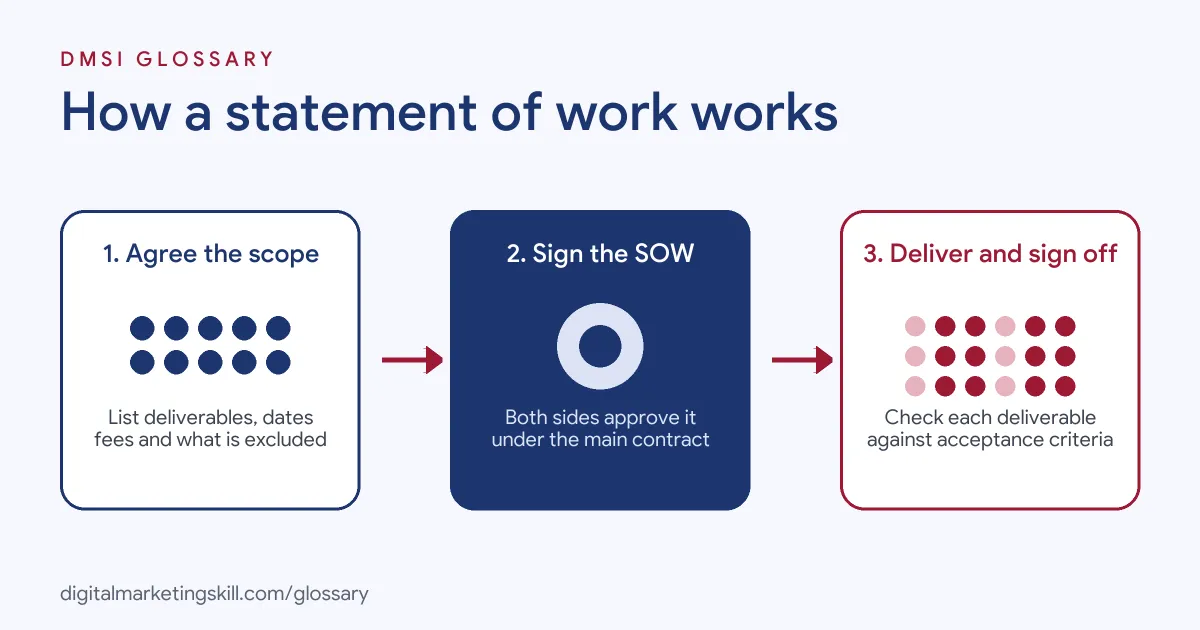
A SOW moves through three stages. First, both sides agree the scope and deliverables. Next, they sign it, often under a wider contract. Finally, the team delivers the work and the client signs off each deliverable against the agreed criteria.
The core sections
Most SOWs follow a similar outline. According to Wikipedia, typical areas include purpose, scope of work, location, period of performance, deliverables schedule, applicable standards, acceptance criteria, special requirements and payment schedule. So a marketing SOW might list “purpose: grow qualified leads” and “deliverables: three landing pages and one email sequence”.
Deliverables and acceptance
Deliverables are the things the client receives, such as a report, a set of ads or a live website. In addition, acceptance criteria explain how the client decides each one is complete. For example, “the landing page loads on mobile and passes the agreed brand checks”. Clear criteria mean sign-off is a check, not a debate.
Timeline, fees and change control
Next, the SOW sets milestones and links payments to them. For instance, you might invoice a third at kick-off, a third at first draft and a third at launch. Then a change control section explains how either side asks for new work. As Sprintlaw notes, “Projects rarely stay identical from start to finish.” So you agree the process for changes before they happen.
Results-based SOWs
Some SOWs focus on results rather than tasks. US federal rules, for example, ask agencies to describe work “in terms of required results” where practical. In marketing, that might mean agreeing outcomes and KPIs while leaving the methods to the agency.
Examples of a Statement of Work
- An agency launching paid social ads. The SOW lists the audit, two campaigns, ten ad creatives and weekly reports for three months. It also states that the ad budget is paid by the client and is not part of the fee.
- A freelancer redesigning a website. The SOW covers five page templates, two rounds of changes and a launch date. Also, it says that copywriting is out of scope, so the client supplies the text.
- An in-house team hiring an SEO consultant. The SOW sets out a technical audit, a keyword plan and a final workshop. Then payment is split into two milestones, with sign-off after each.
Statement of Work vs Proposal vs Master Services Agreement
| Point | Proposal | Statement of work | Master services agreement |
|---|---|---|---|
| Main job | Win the work | Define one project in detail | Set the legal terms for all work |
| Typical content | Ideas, approach, rough price | Scope, deliverables, dates, fees, sign-off | Liability, confidentiality, IP, termination |
| Legally binding? | Usually not on its own | Yes, once signed | Yes, once signed |
| How many? | One per pitch | One per project or phase | Usually one per client |
How to Write a Statement of Work
- Name the parties and contract. State who the client and supplier are, and which wider agreement the SOW falls under.
- Write the purpose. In one or two sentences, explain why the project exists and what it should achieve.
- List the deliverables. Describe each item, its format and how many there are.
- Say what is out of scope. For example, list ad spend, stock images or translation if you are not providing them.
- Set milestones and dates. Add target dates and note what you need from the client, such as logins or approvals.
- Add fees and payment terms. Show the price, what triggers each invoice and how expenses work.
- Define acceptance. Explain how and when the client signs off each deliverable.
- Agree change control. Describe how changes are requested, priced and approved.
- Review and sign. Finally, read it together with the client and get it signed before work starts.
Best Practices for a Statement of Work
- Use plain words. Write so a busy client can understand every line without help.
- Be specific with numbers. “Eight social posts a month” is clearer than “regular social content”.
- Link pay to milestones. This keeps cash flowing and gives both sides natural check-ins.
- Limit revision rounds. State how many rounds of changes are included in the fee.
- Keep it consistent. Make sure the SOW does not clash with the main contract.
- Get legal advice for big deals. For large or high-risk projects, ask a qualified lawyer to review the terms.
Common Mistakes to Avoid
- Vague deliverables. Words like “support” or “ongoing optimisation” invite very different expectations.
- No out-of-scope list. If you don’t say what’s excluded, clients may assume it is included.
- Missing client duties. Delays often come from late approvals, so list what the client must supply.
- Skipping change control. Small extra requests add up, and you end up working for free.
- Starting before signing. Work done before sign-off is hard to bill if plans change.
Where You’ll Use a Statement of Work at Work
SOWs appear in agency, project management and client services roles. For example, real remote job listings ask you to:
- “Own the SOW process end-to-end: scope engagements, draft SOWs, price services, and sell them to enterprise customers.” (Engagement Manager (Professional Services Sales)).
- “Shape SOWs and change requests, protect scope and margin, and make trade-offs explicit to clients and teams.” (Program Manager).
- “Gather required data from customers and evaluate objectives and goals to create the project plan and develop the statement of work.” (Account Integration Specialist 2).
Also, if you work as a freelance digital marketer or in a digital marketing agency, you will likely write SOWs yourself. They often sit alongside a retainer for ongoing work.
Learn It in the Full Stack Track
You can learn to scope, price and deliver client projects across every channel in the Full Stack programme, which covers all four tracks. Every track includes a U.S. Project Internship from day one, with unlimited 1-on-1 mentoring.
Frequently Asked Questions
Is a statement of work legally binding?
Usually, yes, once both sides sign it. However, it often relies on a wider contract for its legal terms, so check how the two documents link.
What is the difference between a SOW and a contract?
The contract holds general legal terms, such as liability and confidentiality. By contrast, the SOW holds the details of one project.
Who writes the statement of work?
Often the supplier drafts it, because they know the work best. Then the client reviews and agrees it before signing.
How long should a SOW be?
Long enough to be clear. A small project may need two pages, while a complex one may need many more.
What happens if the client wants extra work?
Follow the change control section. Agree the new scope, cost and dates in writing before you start.
Sources: Wikipedia: Statement of work; Sprintlaw UK: Statement of Work Sample: Drafting Clear SOW Contracts; Acquisition.GOV: FAR 37.602 Performance work statement; remote job listings on Himalayas, Himalayas and Himalayas.