
Outbound marketing is any marketing where the business reaches out to people first, rather than waiting for them to find it. Common examples include cold email, cold calls, direct mail, display ads and trade shows. It matters because it can put your offer in front of the right buyers quickly, as long as you target well and follow the contact rules.
Key Takeaways
- With outbound, you start the conversation. With inbound, the customer finds you.
- B2B teams often run it as multi-step sequences of email, calls and LinkedIn messages.
- In the UK, you generally need specific consent to send marketing emails or texts to individuals.
- You can email corporate bodies without consent, but you should still offer an opt-out and keep a “do not email” list.
- Before calling, UK businesses must screen numbers against the TPS and CTPS registers.
- Good outbound is narrow and personal, not mass and generic.
What Is Outbound Marketing?
Imagine a small web design agency. It doesn’t have many blog readers yet, so it builds a list of 50 local restaurants with slow, outdated websites. Then it sends each owner a short, personal email with one specific idea for their site. That is outbound in action.
HubSpot, which champions the inbound approach, describes the alternative as “pushing messages out through cold calls, display ads, or purchased email lists”. That list is a fair summary of the classic outbound toolkit. However, modern outbound is usually more targeted than those words suggest.
Many businesses rely on it when they need results fast. For example, a new B2B software firm can’t wait months for content to rank, so it contacts likely buyers directly. Over time, most teams blend outbound with inbound marketing.
How Outbound Marketing Works
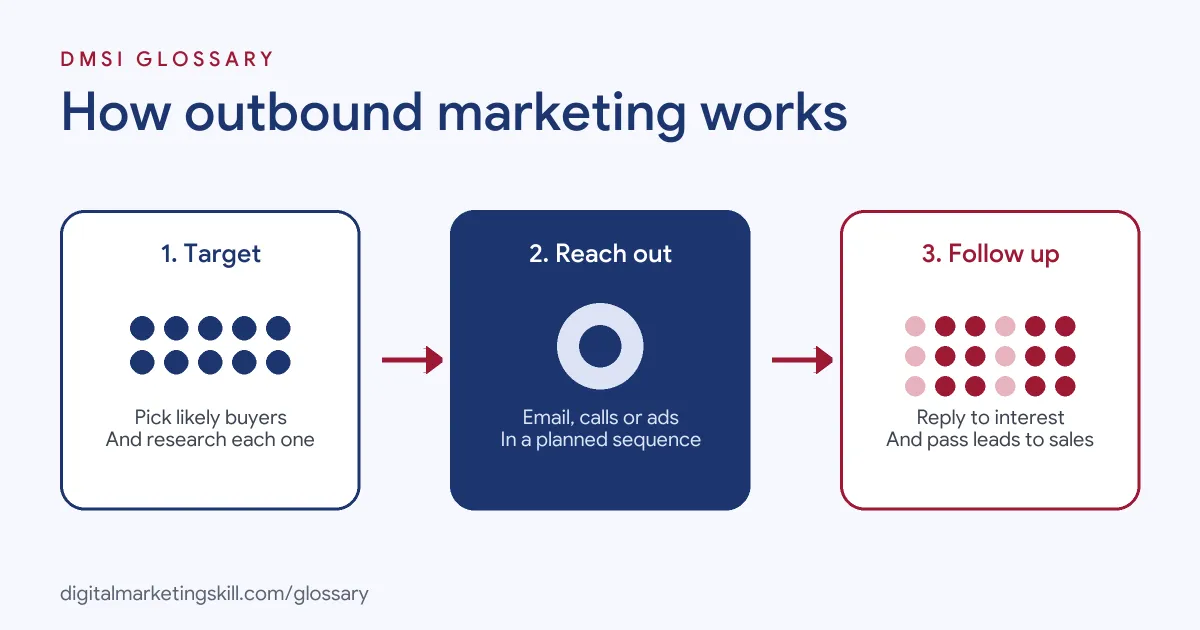
Most outbound campaigns follow three steps. First, you choose who to contact. Next, you reach them through one or more channels. Finally, you follow up and pass interested people to sales.
Targeting
Good outbound starts with a tight list. You define your ideal customer by industry, company size, job title or location. Then you research each contact, so your message is relevant to them. The narrower the list, the more personal the message can be.
Channels and Sequences
Next, you pick channels. In B2B, teams often build a sequence, such as an email, a LinkedIn connection request, a follow-up email and then a call. One remote job listing describes this mix as “persona-drive outbound targeting, multi-channel sequencing, and some hands-on campaign execution”. In consumer markets, outbound is more likely to mean direct mail, display ads or sponsorships.
The Rules
Outbound is where privacy law bites hardest. In the UK, the ICO says “you must not send marketing emails or texts to individuals without specific consent”, apart from a limited soft opt-in for existing customers. However, you can email corporate bodies, such as companies and government bodies, without consent. Sole traders and some partnerships count as individuals.
Calls have their own rules. The ICO says you must not make marketing calls to numbers on the Telephone Preference Service (TPS) or Corporate TPS (CTPS) unless the person has specifically consented. Automated recorded calls are stricter still and need specific consent.
In the US, the FTC’s CAN-SPAM guide sets rules for commercial email. For instance, you must include a valid physical postal address, tell people how to opt out and honour opt-out requests within 10 business days.
Outbound Marketing Examples
Here are three made-up examples of outbound done well:
- Recruitment agency: It emails hiring managers at 30 fast-growing tech firms with a short note about two candidates who match their open roles.
- Office supplies wholesaler: It calls businesses that are not on the CTPS and offers a free sample box. Then it sends a follow-up email with a price list.
- Accounting software firm: It runs display ads to small business owners and books a stand at a trade show for bookkeepers.
Each example picks a clear audience and a clear offer. That is what separates outbound from spam.
Outbound Channels Compared
Here is how the main outbound channels compare:
| Channel | Best for | Key rule to check |
|---|---|---|
| Cold email | B2B prospecting at scale | UK: consent needed for individuals; US: CAN-SPAM opt-out and address rules |
| Cold calling | High-value B2B deals | UK: screen against TPS and CTPS |
| LinkedIn outreach | Reaching decision-makers by job title | The platform’s own messaging limits and terms |
| Display ads | Brand awareness at scale | Ad platform policies |
| Direct mail and events | Local or niche audiences | Data protection rules for postal lists |
How to Run an Outbound Campaign
Use these steps for a simple cold email campaign:
- Define your ideal customer. Pick one industry, one company size and one job title to start.
- Build a small list. Start with 50 to 100 contacts you can research properly.
- Check the rules. Confirm whether each contact counts as an individual or a corporate body in the UK, and screen phone numbers against the TPS and CTPS.
- Write a short first message. Lead with their problem, give one specific idea and ask one easy question.
- Plan two or three follow-ups. Space them out, and add value each time rather than just “bumping” the thread.
- Protect your domain. Google asks all senders to set up SPF or DKIM and to keep spam rates in Postmaster Tools below 0.3%.
- Track replies, meetings and opt-outs. Then improve the list and message before you scale.
Our step-by-step guide to cold email marketing covers this process in more detail.
How to Measure Outbound Marketing
Outbound is easy to measure, because you know exactly who you contacted. Track four numbers for each campaign: reply rate, positive reply rate, meetings booked and opt-outs. Here is a made-up example. An agency emails 100 contacts. Twelve reply, five are interested and three book a call. So the reply rate is 12%, and the meeting rate is 3%.
Next, compare versions. For instance, test two subject lines or two opening lines on similar lists, then keep the winner. Also watch spam complaints closely, since Google asks senders to stay below 0.3% in Postmaster Tools.
Outbound Marketing Best Practices
- Personalise for real. Mention something specific about the person or company, not just their first name.
- Keep a suppression list. The ICO recommends a “do not email or text” list of businesses that object, and screening new lists against it.
- Be clear who you are. The ICO says you must not disguise or conceal your identity.
- Make opting out easy. Every message should explain how to stop future emails.
- Measure meetings, not sends. A high send count means little if nobody replies.
Common Outbound Marketing Mistakes
The biggest mistake is buying a huge list and blasting it. The ICO says the soft opt-in does not apply to new contacts from bought-in lists. Another mistake is a long, generic first email that talks only about the sender. Some teams also forget to screen call lists against the TPS. Finally, many give up after one message, even though a polite follow-up gives busy people a second chance to reply.
Where You’ll Use Outbound Marketing at Work
Outbound skills appear in growth, sales and marketing roles. For example, remote job listings ask for:
- “Experience developing outbound marketing and growth strategies for B2B services” (Growth Marketing Consultant – B2B Strategy).
- The ability to “Execute targeted outbound campaigns aligned with sales objectives” (Sales Development Representative).
- The ability to “Execute outbound calls, emails, and campaign activity against the established cadence, in-house.” (Business Development Associate).
So as a Growth Marketer, Freelance Digital Marketer or Agency Owner, you will often use outbound to win your first clients or test a new market.
Learn It in the Full Stack Programme
Outbound draws on lead generation, email, ads and analytics, so it fits the Full Stack (all four tracks) programme. You take all ten courses and build one portfolio project from each track. You also get unlimited 1-on-1 mentoring and a U.S. Project Internship from day one.
For a wider view, read our guide to B2B lead generation, inbound and outbound.
Frequently Asked Questions
What is outbound marketing in simple terms?
It is marketing where you contact people first, for example with a cold email, a call or an ad, instead of waiting for them to find you.
Is cold email legal in the UK?
It depends on who you email. The ICO says you need specific consent to email individuals, but you can email corporate bodies without it, as long as you identify yourself and offer an opt-out.
What is the difference between inbound and outbound?
With inbound, people find you through helpful content. With outbound, you reach out to them first.
Is outbound marketing still effective?
It can be, when it is targeted and personal. Mass, generic outreach tends to annoy people and can break contact rules.
Do I need to check the TPS before cold calling?
Yes, in the UK. The ICO says you must screen call lists against the TPS and CTPS, plus your own “do not call” list.
Sources: ICO: Electronic mail marketing; ICO: Telephone marketing; FTC: CAN-SPAM Act compliance guide; Google: Email sender guidelines; HubSpot: Inbound marketing; remote job listings on Himalayas.