
SMS marketing is the sending of promotional or useful text messages to people who have agreed to receive them, such as offers, reminders, order updates and abandoned basket nudges. Messages land straight on the phone, so they are short, direct and usually read quickly. It matters because texts can drive fast action, but only if you follow strict consent rules and send messages people actually want.
Key Takeaways
- You need clear consent. In the UK, the ICO says you must not send marketing texts to individuals without specific consent, apart from a limited existing-customer exception.
- An email sign-up is not SMS consent. Klaviyo warns that having someone’s number from a form “does not mean they consent” to texts.
- Every message must make opting out easy. Common keywords include STOP and UNSUBSCRIBE.
- In the US, breaking the TCPA can lead to private lawsuits seeking $500 per violation, according to Klaviyo.
- Short, timely and personal messages work best, such as offers, reminders and order updates.
What Is SMS Marketing?
SMS stands for short message service, the standard text message on any phone. Businesses use texts to share offers, confirm bookings, remind customers about appointments and recover abandoned baskets.
Texts feel personal, because they arrive alongside messages from friends and family. That is their strength and their risk. A useful text can prompt a quick purchase, while an unwanted one can annoy people and break the law.
For example, an online clothing shop might text subscribers about a 24-hour sale. Another text could remind a customer that items are still in their basket. Both work well, but only if those customers agreed to receive marketing texts.
How SMS Marketing Works
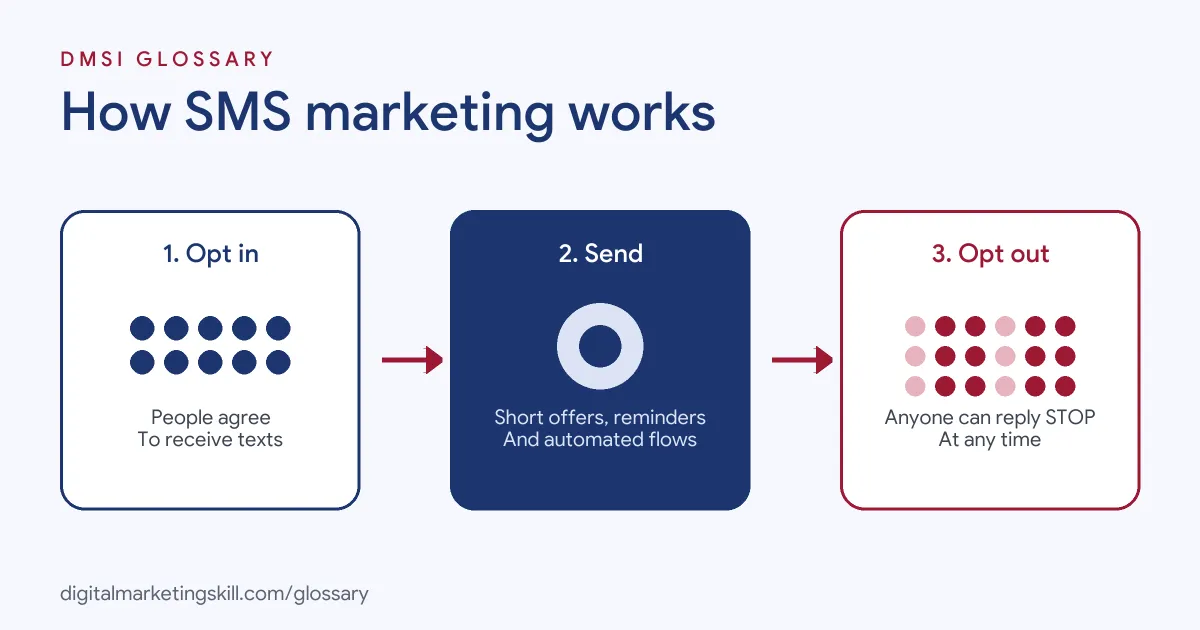
SMS campaigns follow three steps. First, people opt in, for example through a sign-up form or a keyword. Next, you send targeted messages, either as one-off campaigns or automated flows. Finally, people can reply with a keyword such as STOP to opt out at any time.
Consent Rules in the UK
The UK ICO explains that its rules on electronic mail cover texts too. You must not send marketing to individuals unless “they have specifically consented” or they are existing customers covered by the “soft opt-in”. That exception needs a past purchase of a similar product and a simple way to opt out, both when you collected their details and in every message. In addition, you “must not disguise or conceal your identity”.
Consent Rules in the US
In the US, texting falls under the Telephone Consumer Protection Act, or TCPA. Klaviyo advises that you “always obtain express consent before texting anybody”. It says consent must include clear language that the person agrees to receive recurring marketing messages, and that consent “is not a condition of any purchase”. It can be collected through a signed agreement, a digital agreement or an SMS opt-in, such as a form or keyword.
Opt-Out Keywords
People must be able to stop messages easily. For example, Twilio says it handles standard English replies by default for long code numbers. These are “STOP, UNSUBSCRIBE, END, QUIT, STOPALL, REVOKE, OPTOUT, and CANCEL”. So if someone replies with one of these, they should not receive further marketing texts.
What a Clear Marketing Text Looks Like
Here is a made-up example of a short, clear text: “Bloom Beauty: Your 20% off code SPRING20 ends tonight. Shop now: example.com/sale. Reply STOP to opt out.” It names the brand first, so the reader knows who is writing. It gives one offer and one link. It also ends with a simple way to stop. In short, the reader can understand and act on it in a few seconds, and nothing about the sender is hidden.
SMS Marketing Examples
Here are three made-up examples of SMS marketing done well:
- Flash sale: A beauty brand texts subscribers who opted in: a short message about a one-day offer with a link and “Reply STOP to opt out”.
- Abandoned basket: An online shop sends one reminder text an hour after a subscriber leaves items in their basket.
- Appointment reminder: A dental clinic texts patients the day before a visit, with an option to reschedule.
In each case, the message is short, timely and expected. That is what keeps opt-out rates low and trust high over the long run.
SMS Marketing vs Email Marketing
Both channels work well together. Here is how they compare:
| Feature | SMS | |
|---|---|---|
| Length | Very short | Short to long |
| Best for | Urgent offers, reminders and updates | Stories, newsletters and detailed offers |
| Consent in the UK | Specific consent, or the soft opt-in | The same rule, under the same regulation |
| Risk of annoyance | Higher, as it feels personal | Lower, as inboxes are expected to hold marketing |
Many brands use email for most messages and save texts for moments that really matter.
How to Start SMS Marketing
Follow these steps to launch a compliant programme:
- Choose an SMS platform. Many email tools, such as Klaviyo, also send texts.
- Collect consent properly. Use a separate tick box or keyword for texts, with clear wording.
- Consider double opt-in. Klaviyo describes a double opt-in where the subscriber confirms their sign-up.
- Write short, clear messages. Say who you are, what the offer is and how to opt out.
- Set up key flows. Start with a welcome text, an abandoned basket reminder and order updates.
- Respect timing. Avoid texting late at night or too often.
- Get legal advice. Klaviyo recommends that an attorney reviews your texting policy and process.
After that, track clicks, sales and opt-outs for each message. Rising opt-outs are a clear signal to send less often or make messages more useful.
Best Practices for SMS Marketing
- Identify yourself. Start each text with your brand name.
- Include an opt-out. Make “Reply STOP” or a similar instruction easy to see.
- Segment your list. Send offers based on what people bought or browsed.
- Keep a do-not-text list. The ICO suggests keeping one even for business contacts who object.
- Value every message. If a text would not help the reader, send an email instead.
Common Mistakes to Avoid
The biggest mistake is texting people who never agreed to it, such as contacts from a bought list. The ICO says the soft opt-in “does not apply to prospective customers or new contacts”. Another mistake is assuming that an email subscriber has agreed to texts. Some brands also send too many messages, which drives opt-outs. Finally, many forget to honour opt-out replies quickly, which can break both the rules and customer trust.
How to Measure SMS Marketing
Track a few simple numbers for every campaign and flow. Start with clicks on the link in the message, then the sales or bookings that follow. Next, watch the opt-out rate, which shows how welcome your texts are. Compare revenue with what each campaign costs to send. Over time, these figures show which messages earn their place and which ones you should drop.
Where You’ll Use SMS Marketing at Work
SMS skills appear in many email and lifecycle marketing job ads. For example, remote listings mention:
- “Hands-on experience with customer segmentation, SMS marketing, email deliverability, and list health” (Email and Lifecycle Marketing Specialist).
- “Familiarity with SMS marketing platforms such as Postscript or Attentive” (Email Marketing Specialist).
- Writing “email and SMS marketing copy” and building “email and SMS flows and campaigns” (Email Marketing Associate).
So whether you aim to be a Growth Marketer, Digital Marketing Manager or Freelance Digital Marketer, knowing how to run compliant text campaigns adds real value.
Learn It in the Full Stack Programme
SMS sits alongside email, social and paid ads, so it fits the Full Stack (all four tracks) programme. It covers all ten courses, including lead generation and email automation, with one portfolio project from each track. In addition, you get unlimited 1-on-1 mentoring and a U.S. Project Internship from day one.
For related reading, see our guides to mobile marketing and mobile marketing tools. You can also learn how an opt-in works.
Frequently Asked Questions
What is SMS marketing in simple terms?
It is sending marketing or useful text messages to people who agreed to receive them, such as offers, reminders and updates.
Do I need consent for SMS marketing?
Yes. In the UK, the ICO requires specific consent, with a limited exception for existing customers. In the US, Klaviyo advises express written consent under the TCPA.
Can I text people who gave me their number for email?
No. Klaviyo says having someone’s number from an email sign-up does not mean they agreed to texts.
How do people opt out of texts?
Usually by replying with a keyword such as STOP. Twilio handles STOP, UNSUBSCRIBE and several others by default for long code numbers.
How often should I send marketing texts?
There is no fixed rule. Send only when a message is genuinely useful, and watch your opt-out rate closely.
Sources: UK ICO: Electronic mail marketing; Klaviyo Help: SMS compliance; Twilio Docs: Advanced opt-out; remote job listings on Himalayas.