
The right dropshipping tools do three jobs: find products worth selling, automate the order once a customer pays, and keep your store running without you touching every shipment. This guide covers nine current, working options, what each one actually does, the margins you should realistically expect, and one simple rule for picking a stack that fits your platform.
Key Takeaways
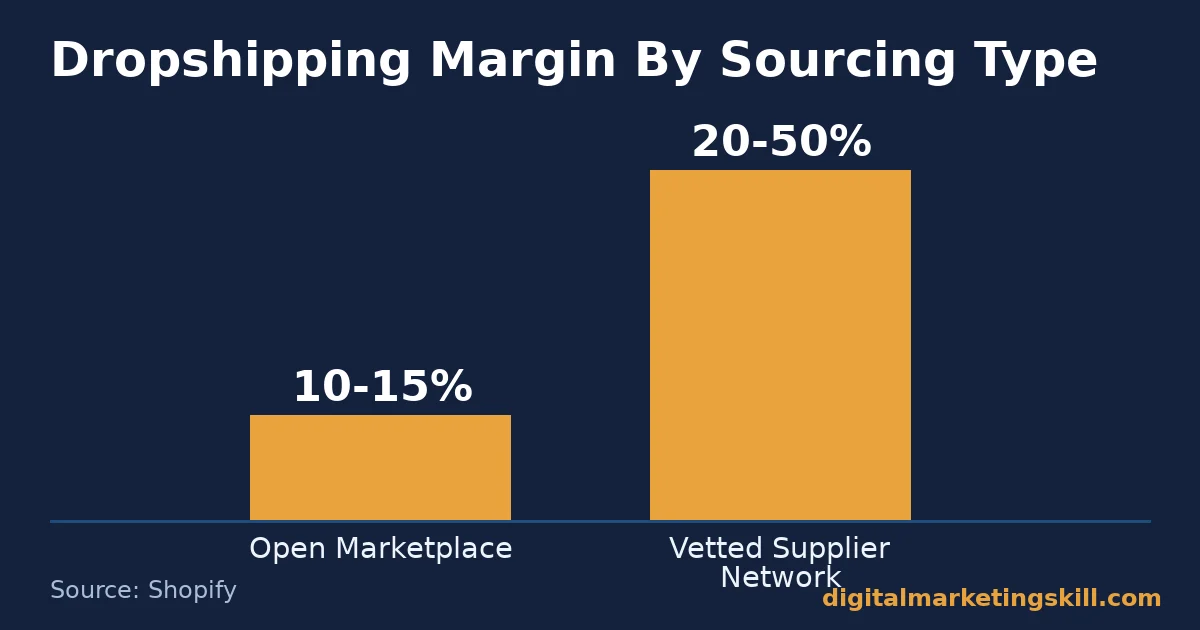
- Dropshipping from open marketplaces typically earns a 10-15% margin. Vetted supplier networks typically earn 20-50% (Shopify).
- Ecommerce now makes up roughly one-fifth of all global retail sales, worth several trillion dollars a year (eMarketer).
- More than 6 billion people are online worldwide (DataReportal), which is exactly why a dropshipping store built around one country’s suppliers and shipping zones quietly loses customers everywhere else.
- Oberlo, once one of the most recommended dropshipping tools, shut down for good. Shopify’s own replacement is DSers, a detail many “best tools” lists still get wrong.
- Tools that automate order fulfilment do not fix a weak product choice. The research step still decides most of your margin before any tool gets involved.
In this guide
- The Gap: Why Most Dropshipping Tools Lists Go Stale Fast
- What Dropshipping Tools Actually Do
- Dropshipping Tools By Job: What Differs
- How To Lead With Each Job
- The Dropshipping Tools, One By One
- Dropshipping Tools In Practice
- Common Mistakes That Sink A Dropshipping Tools Stack
- Measuring Whether Your Dropshipping Tools Stack Is Working
- The One Decision Rule For Choosing A Stack
- A Real Case: Turning Automation Into A Scalable Service
- Frequently Asked Questions About Dropshipping Tools
- Learn To Build And Automate A Store With Expert Guidance
The Gap: Why Most Dropshipping Tools Lists Go Stale Fast
Most round-ups of dropshipping tools get copied and lightly reworded year after year. Nobody checks whether the tools still exist. Oberlo is the clearest example. It shut down, yet it still shows up on lists as a top pick, because the list was never actually rechecked.
The more useful gap to name is this: a tool list alone does not explain what job each tool is doing. Sourcing, automation, and store building are three different jobs, and a single tool rarely does all three well. A reader who skips this distinction often ends up paying for two tools that overlap, while the one job nobody covered, like checking supplier reliability, goes undone.
Two ground rules before the list. First, pricing and feature sets on third-party tools change often, so treat any specific number here as a snapshot, not a permanent fact. Second, no tool fixes a bad product choice. The tools below speed up execution. They do not replace research. Keep both rules in mind as you read the rest of this guide.
What Dropshipping Tools Actually Do
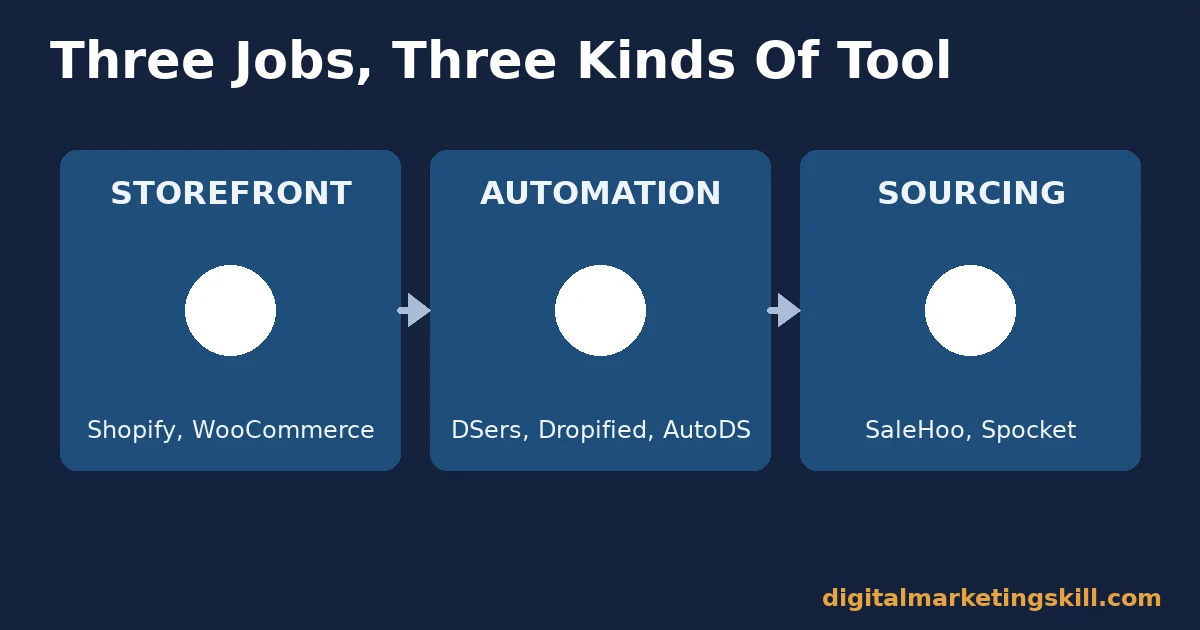
Every dropshipping tool on a real stack handles one of three jobs. Sourcing tools help you find products and suppliers worth listing. Automation tools push an order from your store to the supplier without you copying details by hand. Store-building tools give you the actual storefront a customer buys from.
Confusing these jobs is the most common beginner mistake. A sourcing tool without automation means you are manually placing every order. Automation without a decent store means nobody trusts the page enough to buy in the first place.
What Makes A Supplier Worth Using
A trustworthy supplier answers questions quickly, ships close to the time it promises, and keeps stock levels accurate. None of the nine tools below can fix a supplier that fails on these three points. They can only make it faster to discover the problem, or faster to switch away from it. Treat a supplier’s first reply time as a small test. A slow first reply rarely improves later.
Dropshipping Tools By Job: What Differs
Not every dropshipping tool is solving the same problem. The strongest stacks combine tools from more than one job.
Storefront Platforms: Built For Where Customers Buy
Shopify is the most widely used dedicated ecommerce platform, with a large ecosystem of dropshipping-specific apps. WooCommerce is the alternative for anyone who already runs a WordPress site, since it adds ecommerce as a plugin rather than a separate platform. Neither one sources products or places orders by itself.
Both platforms handle payments, taxes, and the actual checkout a customer completes. That part of the job rarely changes once it is set up correctly, which is why the bigger ongoing decision is which automation tool sits behind the storefront. Most dropshipping tools built for automation only work with one of these two storefronts, not both, so the platform choice comes first.
Automation And Sourcing Tools: Built For The Order Itself
Tools like DSers, Dropified, Spocket, AliDrop, and AutoDS connect your store to suppliers, import product listings, and push orders through automatically once a customer pays. Each one specialises in a different supplier network or platform combination, which is why picking one usually depends on your storefront choice first.
How To Lead With Each Job
Once you know which job you are solving for, the shortlist below narrows fast.
Storefront Platforms: Lead With Your Existing Setup
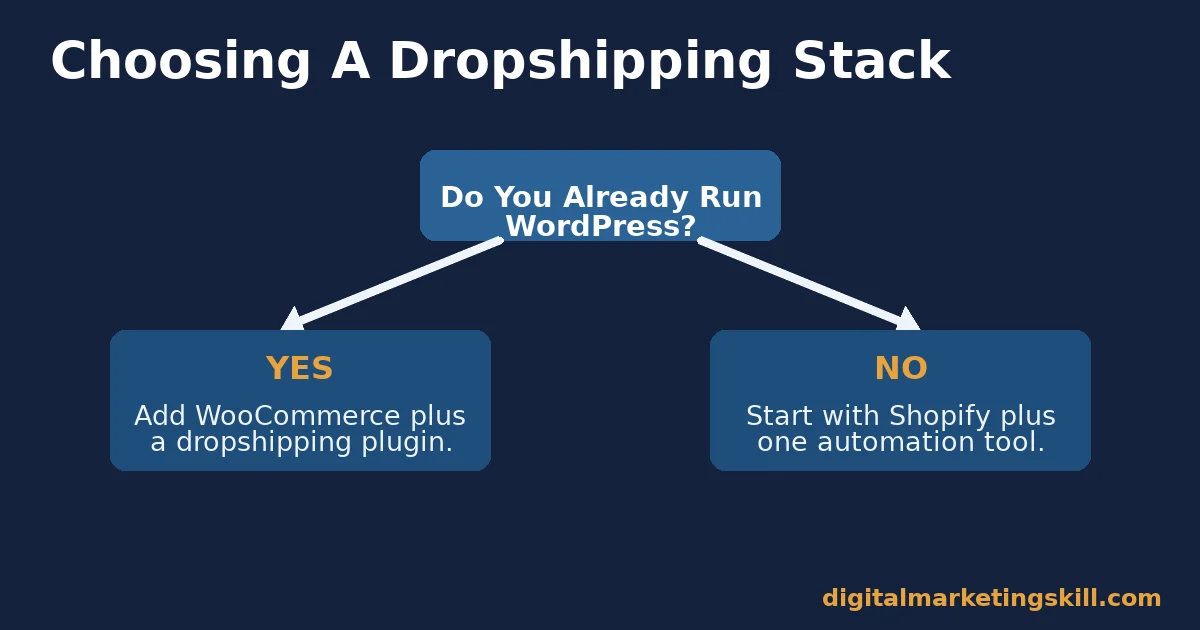
If you already run a WordPress site, WooCommerce plus a plugin like WooDropship keeps you on infrastructure you already understand. If you are starting from nothing, Shopify’s dropshipping-specific app ecosystem is usually faster to launch with.
Automation Tools: Lead With Your Supplier Region
DSers and AliDrop both specialise in AliExpress sourcing, with broad product selection and typically slower shipping from Asia-based suppliers. Spocket leans toward US and EU suppliers, with shorter shipping times at a usually higher product cost. Dropified and AutoDS both work across several supplier networks rather than locking you into one.
The Dropshipping Tools, One By One
1. Shopify
Shopify is the storefront most dropshipping businesses are built on. It is not itself a sourcing tool, but its app store carries most of the automation tools on this list, so most dropshipping stacks start here. Setup takes a few hours for someone who has never built a store before, since the platform walks you through products, payments, and a basic theme in order.
Visit Shopify’s own site directly for current plans, since pricing and trial length change from time to time. A short free trial is usually enough to test the basic setup before committing.
2. DSers
DSers is Shopify’s own recommended replacement for the discontinued Oberlo app. It connects your store to AliExpress, automates order placement, and lets you bulk-process orders instead of handling them one at a time. Check DSers directly for its current plans before committing to a workflow built around it.
3. WooCommerce
WooCommerce turns a WordPress site into a storefront. It is free to install, and plugins such as WooDropship add dropshipping-specific order automation on top of it. This path suits anyone who already manages a WordPress site for other content and does not want a second, separate platform to maintain.
4. Dropified
Dropified automates the repetitive parts of running a dropshipping business: pulling in product details, pushing orders to suppliers, and tracking fulfilment, so you can spend more time on marketing and less on data entry. It works across more than one supplier network, rather than locking you into a single source.
5. SaleHoo
SaleHoo is a supplier directory. It helps you find vetted, high-margin products and suppliers instead of searching blind, which matters because supplier quality is one of the biggest swing factors in your actual margin. A directory does not place orders for you, so pair it with an automation tool once you have chosen suppliers.
6. Zapier
Zapier is not dropshipping-specific. It connects apps that otherwise do not talk to each other, such as linking a new order to an automatic email, a spreadsheet row, or a notification, which saves time once your stack has more than one or two tools in it. Most stores do not need it until they have outgrown manual tracking in a spreadsheet.
7. AliDrop
AliDrop builds a dropshipping store around AliExpress sourcing, either with you building the store yourself or with a pre-built store set up for you, aimed at entrepreneurs who want to skip the setup phase. A pre-built store trades a higher upfront cost for a faster launch.
8. Spocket
Spocket focuses on suppliers based in the US and EU, which usually means shorter delivery times than AliExpress-based sourcing, at a trade-off of typically higher product cost. This fits a store whose customers expect fast delivery more than the lowest possible price.
9. AutoDS
AutoDS automates order fulfilment and product research across several supplier networks at once, rather than locking you into a single source, which suits a store selling from more than one supplier. It also tracks price and stock changes on existing listings automatically, which catches problems before a customer orders something that is no longer in stock.
Dropshipping Tools In Practice
Naming each tool’s job is useful. Seeing the combinations applied is more useful. Three patterns show up again and again in stores that run smoothly.
Pattern One: One Storefront, One Automation Tool, Nothing Extra
Strong stores resist the urge to add every tool on this list at once. A storefront and one automation tool cover the two essential jobs. Extra tools get added only once a specific, named problem shows up, not before.
Pattern Two: The Supplier Region Matches The Promise On The Page
A store that promises “fast shipping” sources from US or EU suppliers through a tool like Spocket. A store built around low prices sources from AliExpress through DSers or AliDrop instead. Matching the promise to the supplier avoids most refund disputes before they start.
Pattern Three: Margin Gets Checked Before The Product Goes Live
Before publishing a new product, strong sellers check supplier cost against a realistic retail price. If the gap does not clear the 10-15% open-marketplace benchmark, the product gets dropped or re-priced before it ever reaches a customer, not after the first disappointing month of sales.
Common Mistakes That Sink A Dropshipping Tools Stack
Beyond picking stale or wrong-fit tools, five smaller mistakes show up again and again. Each one is easy to fix once you know to look for it.
Mistake One: Expecting One Tool To Do All Three Jobs
A storefront platform is not an automation tool, and an automation tool is not a storefront. Pairing one of each, deliberately, avoids the gap where orders sit unprocessed because nothing was actually automating them. Write down which tool does which job. If a job has no owner, that is the gap to fix first.
Mistake Two: Ignoring Margin Until After Launch
Since open-marketplace sourcing typically earns a 10-15% margin, a store built on thin margins can look busy while barely earning anything. Checking supplier cost against a realistic retail price, before launch, avoids this trap.
Mistake Three: Promising Shipping Times The Supplier Cannot Hit
A storefront that promises fast delivery, while sourcing from a slow overseas supplier, creates refund requests and complaints. Matching the promise on the page to the supplier’s real shipping time avoids most of this friction. Test an order yourself first. Time it. Then write the shipping estimate from that real number, not a guess.
Mistake Four: Trusting An Outdated Tool List
The Oberlo shutdown is the clearest recent example. Before committing to any dropshipping tool, check its own website directly for current status and pricing, rather than trusting a list that may not have been rechecked recently.
Mistake Five: Never Testing A Backup Supplier
A store with exactly one supplier has exactly one point of failure. If that supplier runs out of stock or raises prices overnight, the whole product line is stuck. Testing a second supplier for your best-selling product, even before you need it, avoids a scramble later. One backup is enough. It does not need to be a second full catalogue.
Measuring Whether Your Dropshipping Tools Stack Is Working
Three numbers tell you most of what you need to know.
- Gross margin: retail price minus supplier cost, divided by retail price. Compare this against the 10-15% and 20-50% benchmarks above to see which category your sourcing falls into.
- Fulfilment time: days between a customer’s order and the shipping confirmation. A slow number here usually points to a supplier problem, not a marketing problem.
- Return and refund rate: a rising rate often means a mismatch between what the store promises and what the supplier actually delivers.
Check these three together. A store with healthy margin but a high return rate is usually a supplier-quality problem, not a pricing problem. Fix the supplier first. A new tool will not fix a bad one.
Give A New Stack At Least A Few Weeks
Give any one of these numbers a few weeks of real orders before judging it. A new store can look weak in the first days simply because the first batch of orders came from an unusually slow supplier or an unusually small sample size. Treat the first week as a check for broken checkout flows and missing tracking numbers, not as a final verdict on the whole stack.
The One Decision Rule For Choosing A Stack
If you are starting from nothing, choose Shopify plus one AliExpress-focused automation tool like DSers. If you already run WordPress, choose WooCommerce plus a dropshipping plugin instead of migrating platforms just to dropship.
Migrating platforms adds weeks of setup time that a plugin on your existing site avoids entirely. Pick the automation tool around your existing storefront, not the other way around.
This rule holds even when a competitor’s tool list insists one platform is objectively better. The real cost of switching platforms is rarely the subscription fee. It is the weeks spent rebuilding content, redirects, and search rankings that your existing site already earned.
A Worked Example Of The Decision Rule
Illustrative, invented numbers: a WordPress site owner who migrates to Shopify to dropship might lose two to three weeks to setup and theme work. The same owner, adding WooCommerce and a dropshipping plugin to the site they already run, could plausibly launch in days instead, because the storefront decision is already made.
Those two to three weeks are not a one-time cost either. Every week spent rebuilding is a week without sales, which compounds against a new store far more than a slightly higher plugin fee ever would.
A Real Case: Turning Automation Into A Scalable Service
Olajire Jacob, a student at the Digital Marketing Skill Institute, reported charging an average of $500 to set up email marketing flows for clients, then scaling that work to $5,000 a month, as published on the Institute’s student reviews page. The jump depended on treating a manual, one-off service as a repeatable, partly automated process, the same shift that separates a struggling dropshipping store from one that scales.
A few limits are worth stating plainly. This is one self-reported figure from one person’s client work, not a typical or guaranteed income, and results vary by niche, effort, and client base. Read the Institute’s earnings disclaimer for the full context.
Frequently Asked Questions About Dropshipping Tools
What are the most important dropshipping tools to start with?
A storefront platform and one automation tool. Everything else, like a supplier directory or a workflow connector, is useful but optional once the core two are working.
Is Oberlo still a usable dropshipping tool?
No. Oberlo shut down for good, and Shopify removed it from its app store. Shopify’s own recommended replacement is DSers.
Do dropshipping tools guarantee a profit?
No. Tools automate execution. They do not fix a weak product choice or a thin margin. Margin depends mostly on supplier selection and pricing, not on which automation tool you use.
Should I choose Shopify or WooCommerce for dropshipping?
Choose based on what you already run. An existing WordPress site usually fits WooCommerce better. Starting from nothing usually favours Shopify’s larger dropshipping app ecosystem and its gentler learning curve.
What margin should I expect from dropshipping?
Open-marketplace sourcing typically earns 10-15%. Vetted supplier networks typically earn 20-50%, according to Shopify’s own guidance. Your actual number depends heavily on supplier choice and pricing.
Can I use more than one automation tool at once?
Yes, though it adds complexity. Most stores do better picking one automation tool that matches their main supplier network, rather than running several overlapping tools in parallel.
How do I check if a dropshipping tool still exists before using it?
Visit the tool’s own website directly and check its pricing and status pages. Do not rely solely on a “best tools” list, since lists like this one can go stale if a tool shuts down.
Does a faster-shipping supplier always cost more?
Usually, yes. US and EU-based suppliers generally charge more per unit than AliExpress-style sourcing, but they also cut delivery time significantly, which can reduce refund requests.
How many dropshipping tools does a new store actually need?
Two, to start: a storefront and one automation tool. Add a supplier directory or a workflow connector only once a specific problem appears, such as struggling to find reliable suppliers or spending too much time on manual tracking by hand.
Why did this guide drop Oberlo instead of keeping it on the list?
Because it no longer exists. Keeping a shut-down tool on a “best dropshipping tools” list wastes a reader’s time and signals that the list has not been checked recently. DSers is the direct, current replacement, and this guide points to it instead.
Learn To Build And Automate A Store With Expert Guidance
Do you want to build, automate, and grow an online store instead of only reading about the tools involved? The Master Diploma in Digital & AI Marketing covers this inside its AI-Powered WordPress and SEO Specialist track. That track is one of four AI-powered tracks built from ten courses in total, with a Full Stack option for completing all four.
Every track includes unlimited one-on-one coaching and mentoring, plus a U.S. Project Internship with a verified U.S. Work Reference Letter. The diploma carries dual US and UK accreditation, recognised in more than 100 countries. The whole programme runs 100% online, so you can study from anywhere in your country.
Explore the full digital marketing blog for more practical breakdowns like this one. Read real outcomes on the reviews page, or go straight to the application page to start. Wherever you live, the programme is built so you can follow it online from day one. Learn more at https://digitalmarketingskill.com/.
Every figure in this guide was checked against its original source before publication. Figures marked as illustrative are invented examples, not real results.
![9 Amazing Digital Marketing Skills to Make Money Online [With Proof]](https://digitalmarketingskill.com/wp-content/uploads/2019/07/9-Amazing-Digital-Marketing-Skills-to-Make-Money-Online-With-Proof-17.png)






