
Sponsored content is content that a brand pays for but that looks and reads like the normal articles, videos or posts around it, such as a paid article on a news site or a paid post by a creator. The brand gets its message in front of an audience in a format people already enjoy. It matters because done well, it can build trust and reach, but if it is not clearly labelled, it can mislead people and break advertising rules.
Key Takeaways
- Sponsored content is paid content made to fit the style of the place where it appears.
- The US Federal Trade Commission (FTC) says an ad “shouldn’t suggest or imply to consumers that it’s anything other than an ad.”
- Clear labels include “Ad”, “Advertisement”, “Paid Advertisement” and “Sponsored Advertising Content”.
- The FTC calls “Promoted” and “Promoted Stories” “at best ambiguous”. Influencers should avoid vague tags such as “sp” or “spon”.
- Paid links inside sponsored articles should carry rel=”sponsored”, which Google uses to identify paid placements.
What Is Sponsored Content?
Think of sponsored content as an advert dressed in the clothes of its surroundings. On a news site, it looks like an article. On Instagram or TikTok, it looks like a creator’s normal post. In a podcast, it sounds like part of the show.
The FTC uses the term “native advertising” for this kind of content. It describes it as content that “bears a similarity to the news, feature articles, product reviews” and other material around it. Sponsored content is one common form of native advertising.
For example, a travel insurer might pay a travel website to publish a guide called “What to pack for a gap year”. The guide is genuinely useful, but the insurer paid for it, so the site must label it clearly as sponsored or paid.
How Sponsored Content Works
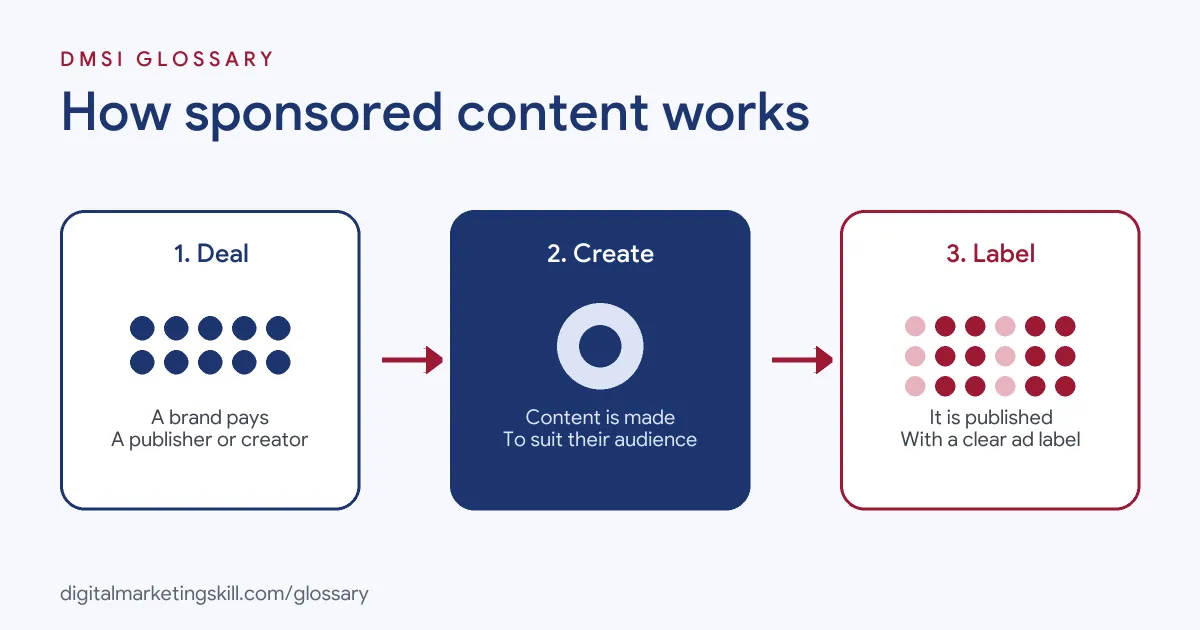
Most deals follow three steps. First, a brand agrees a deal with a publisher or creator. Next, the content is planned and made to suit that audience. Finally, it is published with a clear label, so people know a brand paid for it.
Who Creates It
Sometimes the publisher’s own team writes the piece, and sometimes the brand supplies it. With creators, the creator usually makes the content in their own style. The FTC notes that labels such as “Presented by [X]” or “Sponsored by [X]” may suggest a sponsor funded the content but did not create it. So if the brand wrote or shaped the piece, the label needs to make that clear.
How Labels Work
The FTC’s core rule is simple: “The watchword is transparency.” It lists terms that people are likely to understand, such as “Ad”, “Advertisement”, “Paid Advertisement” and “Sponsored Advertising Content”. By contrast, it says “Promoted” and “Promoted Stories” are “at best ambiguous” and could suggest a publisher endorses the content.
Placement matters as much as wording. The FTC advises putting disclosures “in front of or above the headline of the native ad.” It also says disclosures “must be clear and prominent on all devices and platforms” that people may use.
Creator and Influencer Posts
For social media, the FTC’s guide for influencers says terms such as “advertisement”, “ad” and “sponsored” work. It adds that a hashtag such as #ad or #sponsored is fine but not necessary. However, it warns, “Don’t mix your disclosure into a group of hashtags or links.” For video, the disclosure “should be in the video and not just in the description.” In live streams, it should be repeated, so people who join late still see it.
Sponsored Content Examples
Here are three made-up examples of sponsored content:
- Publisher article (example): A finance website runs a paid guide to saving for a first home, labelled “Paid Advertisement” above the headline.
- Creator video (example): A fitness creator reviews a protein brand that paid for the video, says “This video is an ad” at the start and shows a label on screen.
- Newsletter slot (example): A tech newsletter includes a short section from a software company, marked “Sponsored” in bold before the text.
In each case, the content is useful to the audience, and the label makes the payment clear.
Sponsored Content vs Display Ads vs Influencer Posts
These three are often confused. Here is a quick comparison:
| Format | What it looks like | Who usually creates it |
|---|---|---|
| Sponsored content | Like the articles or posts around it | The publisher, the brand or both |
| Display ads | Clearly an advert, such as a banner | The brand or its agency |
| Influencer post | Like the creator’s normal posts | The creator, in their own voice |
In short, display ads look like ads, while sponsored content and influencer posts blend in. That’s exactly why they need clear labels. For the banner side, see our entry on display ads.
How to Run a Sponsored Content Campaign
- Set a clear goal. Decide whether you want awareness, traffic or leads.
- Choose the right partner. Pick a publisher or creator whose audience matches your buyers.
- Agree the brief. Cover the topic, key messages, deadlines, approval rights and how results will be shared.
- Agree the label. Write the disclosure wording and placement into the contract.
- Make it genuinely useful. Give the audience something they would value even without the brand.
- Tag your links. Use UTM parameters on links to your site, and ask the publisher to use rel=”sponsored” on them.
- Measure results. Compare reach, engagement, visits and conversions with what you paid.
Here is a made-up example. A brand pays £2,000 for a sponsored article that brings 1,600 visits and 40 sign-ups. That works out at £50 per sign-up, which the brand can then compare with its other channels.
Best Practices for Sponsored Content
- Put the audience first. Content that only sells rarely performs well in a format built for reading or watching.
- Label it upfront. People should know it is paid before they start reading or watching.
- Respect the partner’s voice. Creators know their audience, so give them room to speak naturally.
- Use the right link tags. Google asks you to mark paid links with rel=”sponsored”; it says rel=”nofollow” is still acceptable.
- Check local rules. Advertising rules differ between countries, so check each market you target.
Common Mistakes to Avoid
The biggest mistake is a hidden or vague label, such as “Promoted” in small grey text at the bottom. Another is putting the disclosure only in a video description, where many viewers never look. Some brands also bury it among a long list of hashtags. Others pick partners for their follower count rather than their audience fit. Finally, many forget to tag links, so they can’t tell whether the content brought in any visits or sales.
Where You’ll Use Sponsored Content at Work
Sponsored and branded content appear in content, social and media sales roles. For example, real remote job listings mention it like this:
- “You know how trade publications work: pitching editorial angles, sponsored content, co-authorship, and when each is the right call” (Senior Editorial Writer and Content Strategist).
- Experience with “branded content (video, articles, social, influencer) and digital media execution” (Senior Manager, Integrated Marketing).
- “Drive advertising revenue through direct sales, programmatic partnerships, sponsorships, and branded content.” (Ad Sales Specialist).
So if you want to work as a Social Media Manager, Content Creator or Paid Social Specialist, employers will expect you to plan sponsored posts and label them correctly.
Learn It in the Social Media Track
You can learn to plan paid and organic social content in the AI-Powered Social Media Management and Advertising track. It covers AI fundamentals, content creation, social media marketing and analytics, and social media advertising. Your portfolio project is a paid social campaign that you plan, create and run for a real brand. You also get unlimited 1-on-1 mentoring and a U.S. Project Internship from day one.
Next, read our guide to influencer marketing, where sponsored posts are a core tool.
Frequently Asked Questions
What is sponsored content in simple terms?
It is paid content that looks like the normal content around it, such as a paid article or a paid creator post. It should always carry a clear label.
Is sponsored content the same as native advertising?
Yes, it is one type of native advertising. Native ads are any paid content made to match the look of the place where it appears.
How should sponsored content be labelled?
Use clear words such as “Ad” or “Advertisement”, placed before or above the content. The FTC says vague labels like “Promoted” can mislead.
Is #sponsored enough on Instagram?
The FTC says “sponsored” and #ad work, as long as people can see them. Don’t hide them in a block of hashtags or only at the end.
Should links in sponsored articles be nofollow?
Google prefers rel=”sponsored” for paid links. It says rel=”nofollow” is still an acceptable way to flag them.
Sources: FTC: Native Advertising, A Guide for Businesses; FTC: Disclosures 101 for Social Media Influencers; Google Search Central: Qualify your outbound links; remote job listings on Himalayas.