
The Skilled Worker visa is a UK work visa that lets you come to or stay in the UK to do an eligible job for an employer approved by the Home Office. You need a job offer and a certificate of sponsorship from that employer before you can apply. So it matters to anyone in digital marketing who hopes to work for a UK company in person. However, the rules are detailed and they change, so always check the official GOV.UK Skilled Worker visa guidance before you plan anything.
Key Takeaways
- The Skilled Worker visa is for an eligible job with a UK employer approved by the Home Office.
- Your employer must give you a certificate of sponsorship before you apply.
- The job must match an eligible occupation code and meet a minimum salary set by the rules.
- You must show you can speak, read, write and understand English.
- This page is general information, not legal advice. GOV.UK is the official source.
What Is the Skilled Worker Visa?
GOV.UK describes it plainly: “A Skilled Worker visa allows you to come to or stay in the UK to do an eligible job with an approved employer.” In other words, the visa is tied to a specific job and a specific employer.
Think of it like a ticket with your name and seat printed on it. The ticket only works for that seat. In the same way, the visa works for the job your sponsor described. So if you want to change jobs or employer, GOV.UK says you must apply to update your visa.
The employer is called your sponsor. Before they can hire you on this route, they need a sponsor licence from the Home Office. Also, the government publishes a “List of organisations licensed to sponsor workers on the Worker and Temporary Worker immigration routes.” You can search that register to see whether a company holds a licence.
This visa is very different from remote work. For example, if you work for a UK company from your home country, you usually don’t need a UK visa at all. The Skilled Worker visa is about living and working in the UK itself.
Why It Matters for Marketers
Many marketers dream of working in London or another UK city. However, a job offer from a licensed sponsor comes first, and the job must meet the rules. So the visa is not something you can apply for on your own. Instead, it follows from a real job offer. That is why building strong, provable skills matters. Also, knowing the basics helps you ask employers the right questions early. For instance, you can ask whether they hold a sponsor licence and whether the role is eligible. As a result, you avoid wasting time on roles that can’t lead to sponsorship.
What Employers Weigh Up
Sponsoring a worker takes time and money for the employer. So most companies only sponsor when they can’t easily fill a role locally. In practice, they look for clear, proven skills. For example, a digital marketing candidate might show past campaigns, reports and results. Also, they want people who can start contributing quickly. In addition, they check that the role, pay and code fit the rules before they offer anything. Meanwhile, many marketers build experience first through remote roles or as a freelance digital marketer. Either way, no one can promise you a sponsored job. Instead, your best move is to become a strong candidate and apply widely.
How the Skilled Worker Visa Works
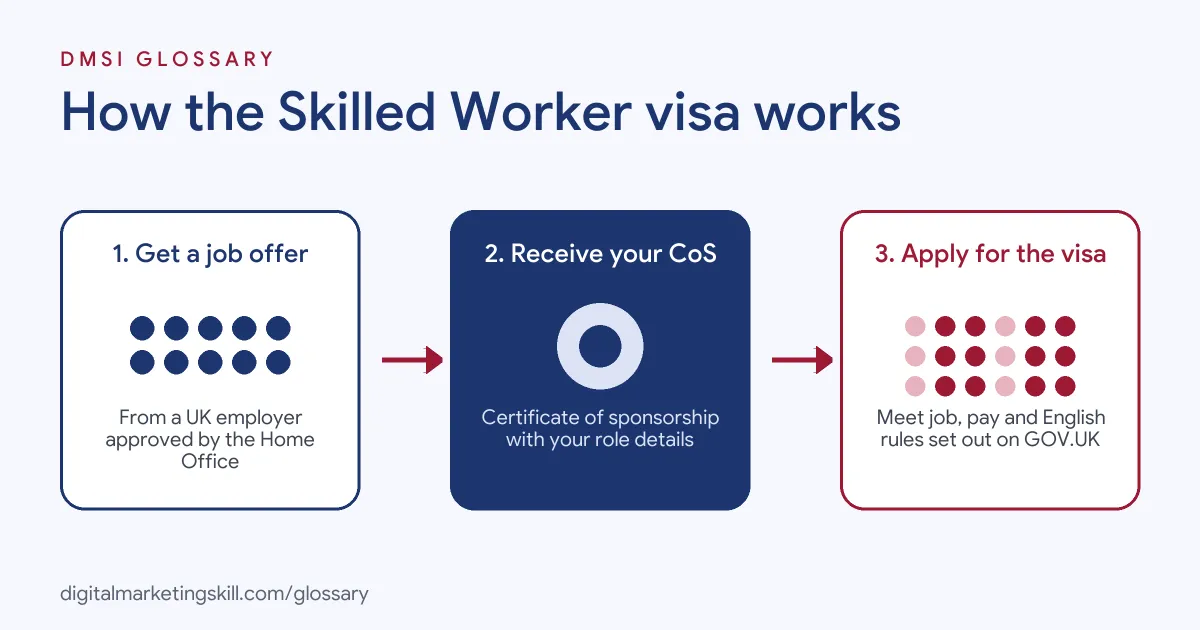
The process follows a clear order. First, you get a job offer from an approved employer. Then the employer assigns you a certificate of sponsorship. Finally, you apply for the visa yourself and wait for a decision.
The Job Offer and Sponsor
You need to “work for a UK employer that’s been approved by the Home Office,” according to GOV.UK. Not every UK company is approved. So check the register of licensed sponsors and ask the employer directly.
The Certificate of Sponsorship
Next, your employer gives you a certificate of sponsorship, often shortened to CoS. GOV.UK explains that it is “an electronic record, not a physical document.” It holds details about the role you’ve been offered. Also, it has a reference number that you use in your visa application.
The Job, Salary and English
Then the job itself must qualify. GOV.UK says you need to do “a job that’s on the list of eligible occupations.” To check, “you need to know its 4-digit occupation code.” In addition, you must be paid at least a minimum salary, which depends on the type of work. You also need to prove your English. Because these rules change, always read the latest figures on GOV.UK rather than relying on any blog or forum.
Length and Conditions
Finally, GOV.UK states that “Your visa can last for up to 5 years before you need to extend it.” While you hold it, you can work in an eligible job, study and travel abroad. However, you can’t apply for most benefits.
Examples of How It Applies
- A marketing analyst abroad. A UK agency with a sponsor licence offers them a role. First, the agency confirms the occupation code and salary meet the rules. Then it assigns a certificate of sponsorship, and the analyst applies.
- A content marketer already in the UK on another visa. They get an offer from a licensed employer. Next, they check GOV.UK to see whether they can switch to the Skilled Worker visa from inside the UK.
- A freelancer with UK clients. They work remotely from their home country for UK businesses. In this case, they don’t use the Skilled Worker visa, because they are not living or working in the UK.
Skilled Worker Visa vs Other Ways to Work for UK Companies
| Point | Skilled Worker visa | Remote work from abroad | Digital nomad visas (other countries) |
|---|---|---|---|
| Where you live | In the UK | Your home country | The country issuing the visa |
| Needs a UK sponsor | Yes | No | No |
| Tied to one employer | Yes, unless you update it | No | Depends on that country’s rules |
| Official source | GOV.UK | Your own country’s tax and work rules | That country’s government website |
Read more about remote work and the digital nomad visa to compare your options.
How to Prepare for a Skilled Worker Visa Route
- Read GOV.UK first. Start with the official Skilled Worker visa guide and its sub-pages.
- Check job eligibility. Find the occupation code for the role you want, then check it against the eligible list.
- Look for licensed sponsors. Search the register of licensed sponsors before you apply to a company.
- Build provable skills. Create a portfolio with real projects and honest results.
- Ask employers early. In the first call, ask politely whether the company can sponsor the role.
- Prepare your documents. GOV.UK lists the documents you’ll need, including proof of English.
- Get qualified advice if unsure. For complex cases, speak to a regulated immigration adviser.
Best Practices
- Trust official sources only. Use GOV.UK for rules, fees and salary figures.
- Check dates and versions. Rules change, so re-read the guidance before each step.
- Be honest in applications. False information can lead to refusal and future problems.
- Keep records. Save copies of your offer, certificate details and documents.
- Focus on skills first. A strong personal brand and portfolio help you win offers, which come before any visa.
Common Mistakes to Avoid
- Applying without a sponsor. You can’t apply for this visa without a certificate of sponsorship.
- Trusting job ads that promise visas. Be wary of anyone who guarantees a visa or charges you for a job.
- Relying on old figures. Salary thresholds and fees change, so check GOV.UK each time.
- Changing jobs without updating. GOV.UK says you can’t change jobs or employer unless you apply to update your visa.
- Mixing up remote work and visas. Working remotely from abroad is a different situation with different rules.
Where You’ll Use the Skilled Worker Visa at Work
This term comes up when you apply for in-person or hybrid roles at UK companies. For example, job listings may say whether the employer offers visa sponsorship. It also matters to HR and hiring managers who recruit from abroad. Marketing roles such as digital marketing manager or data analyst may or may not qualify, depending on the occupation code and salary. So always check each role against GOV.UK. In addition, recruiters often ask about your right to work in the first call. Therefore, it helps to know your own situation clearly. You can then answer honestly and quickly, which saves time for both sides.
Learn It in the Full Stack Programme
You can build the marketing skills UK and global employers look for in the Full Stack programme, which covers all four tracks. Every track includes a U.S. Project Internship from day one, with unlimited 1-on-1 mentoring. A course does not guarantee a job offer or a visa.
Frequently Asked Questions
Can I apply for a Skilled Worker visa without a job offer?
No. You need a job offer from an approved UK employer and a certificate of sponsorship first.
Do marketing jobs qualify for the Skilled Worker visa?
Some may, but it depends on the occupation code and salary. Check the eligible occupations list on GOV.UK for each role.
How long does a Skilled Worker visa last?
GOV.UK says it can last for up to 5 years before you need to extend it.
Can I change employer on a Skilled Worker visa?
Only if you apply to update your visa. The new employer must also be an approved sponsor.
Where can I find the official rules?
The official guidance is on GOV.UK. Also, for complex cases, speak to a regulated immigration adviser.
Sources: GOV.UK: Skilled Worker visa; GOV.UK: Skilled Worker visa, your job; GOV.UK: Register of licensed sponsors: workers.