Corporate social responsibility (CSR) means a business takes responsibility for its impact on people, communities and the planet, not just its profits, and the best CSR examples are programmes that are built into how the company works rather than bolted on for publicity. Well-known examples include Salesforce giving away a share of its equity, product and employee time, Patagonia directing its profits to environmental causes, and Starbucks running ethical sourcing standards for coffee farmers. This guide explains what CSR is, the main types, 12 real corporate social responsibility examples and what makes each work, ideas small businesses can use, how to communicate CSR without greenwashing and how to measure its impact.
Key Takeaways
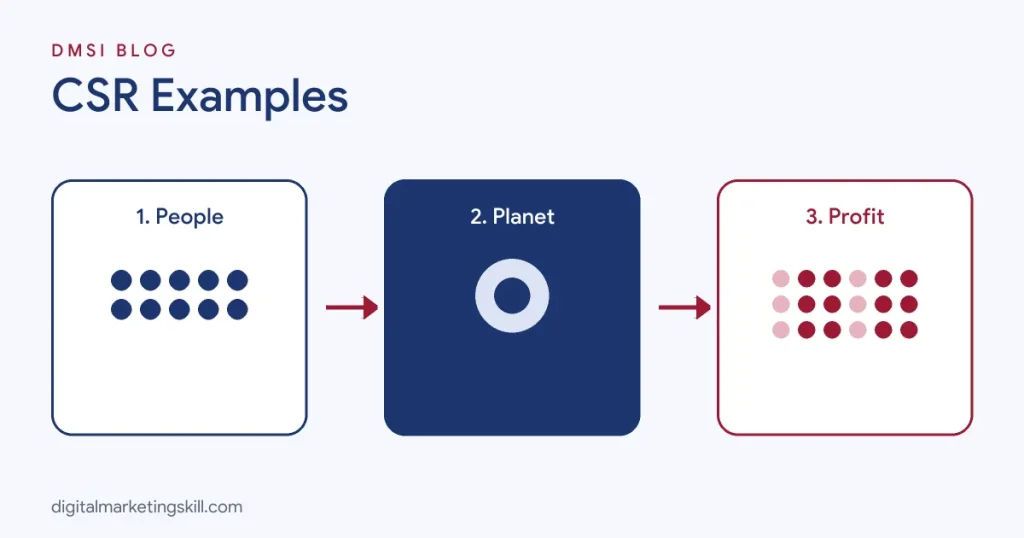
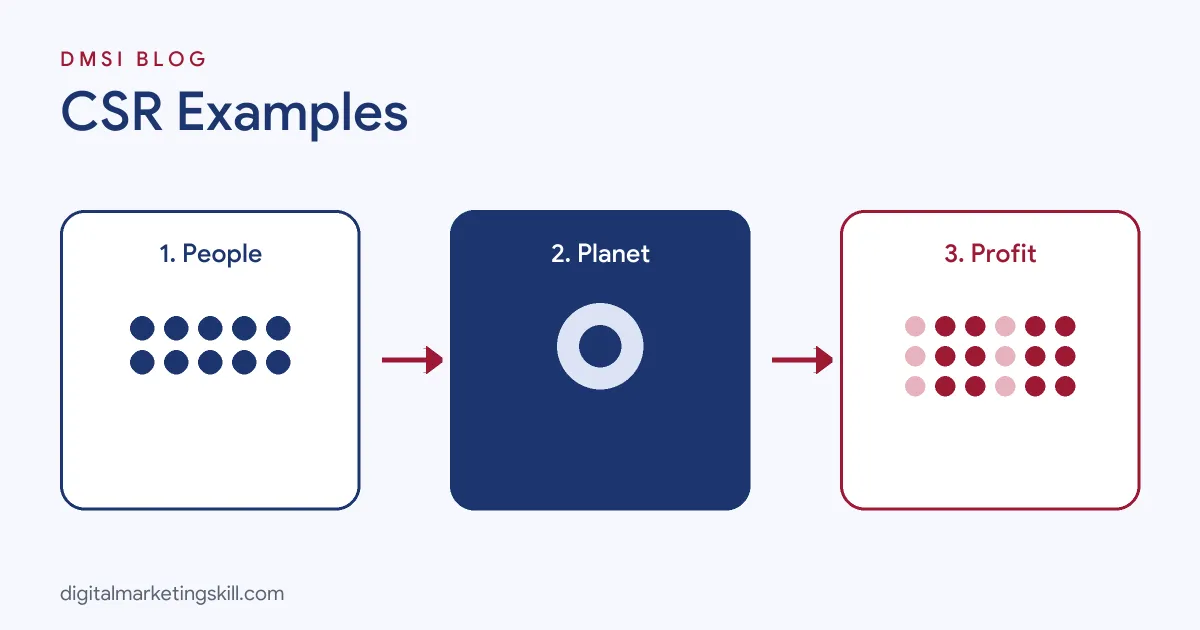
- CSR is a business approach that balances profit with social and environmental responsibility, often summarised as people, planet and profit.
- Common types include environmental, ethical, philanthropic and economic responsibility; Archie Carroll’s well-known CSR pyramid describes economic, legal, ethical and philanthropic responsibilities.
- Harvard Business School Online highlights examples such as LEGO, Salesforce, Ben & Jerry’s, Levi Strauss, Starbucks and New Belgium Brewing.
- The most credible CSR programmes connect to the company’s core business, are measured and are reported honestly.
- Exaggerated or vague claims can be treated as greenwashing, which damages trust and can break advertising rules.
- What Is Corporate Social Responsibility?
- Types of CSR
- 12 Corporate Social Responsibility Examples
- What the Best Examples Have in Common
- CSR Ideas for Small Businesses
- How to Communicate CSR
- Avoiding Greenwashing
- Measuring CSR
- FAQ
What Is Corporate Social Responsibility?
Corporate social responsibility describes the ways a company manages its social, environmental and ethical impact. It covers how a business treats its employees, suppliers, customers and communities, how it uses resources and how it contributes to society beyond making money.
CSR is sometimes called corporate citizenship, social impact or sustainability. Related ideas include ESG (environmental, social and governance), which investors use to assess companies, and the triple bottom line, which measures success by people, planet and profit rather than profit alone.
CSR matters for marketing because customers, employees and investors increasingly care about how companies behave. A credible CSR programme can build trust, strengthen brand reputation, attract talent and create loyalty. But it only works if it is genuine. Audiences are quick to spot promises that are not backed by action.
What Most CSR Example Lists Miss
Most lists simply name famous companies and their initiatives. Three points are often overlooked:
- The best CSR is connected to the core business. A software company donating software, or a clothing brand repairing clothes, is more credible than a random donation unrelated to what the company does.
- CSR is judged on the whole business, not one campaign. A brand that runs a charity campaign while facing criticism over working conditions or pollution will struggle to be believed.
- Even admired companies face criticism. Many famous CSR programmes have been questioned or changed over time. Honest reporting of progress and setbacks builds more trust than perfect-sounding claims.
Types of Corporate Social Responsibility
Environmental responsibility
Reducing a company’s environmental impact: cutting emissions, using renewable energy, reducing waste and packaging, conserving water, designing products to last or be recycled, and protecting nature.
Ethical responsibility
Running the business fairly and honestly: fair pay and safe working conditions, ethical sourcing, respecting human rights in the supply chain, honest marketing and good governance.
Philanthropic responsibility
Giving back to society through donations of money, products or services, employee volunteering, grants and partnerships with charities and community organisations.
Economic responsibility
Making business decisions that are financially sound while considering wider impact, for example supporting local suppliers, creating good jobs or investing in communities where the company operates.
Archie Carroll’s widely taught CSR pyramid places these in layers: economic responsibilities at the base, then legal, ethical and finally philanthropic responsibilities at the top. The idea is that companies must first be profitable and law-abiding, then go further by acting ethically and contributing to society.
12 Corporate Social Responsibility Examples
The examples below are based on what each company has published or what has been widely reported. Programmes change over time, so check each company’s latest reports for current details. We have no connection with these companies.
1. Salesforce: the 1-1-1 model
Salesforce built philanthropy into its business from the start with its 1-1-1 model: dedicating 1 per cent of equity, 1 per cent of product and 1 per cent of employee time to charitable causes. Employees receive paid volunteer time, and nonprofits can access the company’s software at reduced or no cost. The model has been adopted by many other companies through the Pledge 1% movement.
Why it works: it is simple to understand, built into company structure and uses what the business does best, its software and people.
2. Patagonia: profits for the planet
Outdoor clothing brand Patagonia is known for environmental activism. Its founder co-founded the 1% for the Planet movement, encouraging businesses to give 1 per cent of sales to environmental causes. The company also runs a repair and resale programme for used gear, and its founder transferred ownership of the company to a trust and a nonprofit so that profits not reinvested in the business go to fighting the environmental crisis.
Why it works: environmental responsibility is part of the brand’s identity and products, not a side campaign.
3. LEGO: sustainable materials and play
LEGO has invested in finding more sustainable materials for its bricks and packaging, including plant-based plastics for some elements and replacing single-use plastic bags inside boxes with paper alternatives. The LEGO Foundation also supports learning through play for children around the world.
Why it works: it addresses the company’s biggest environmental impact, plastic, while also supporting children, its core audience.
4. Ben & Jerry’s: a social mission
Ice cream maker Ben & Jerry’s is a certified B Corporation with a stated social mission alongside its product and economic missions. It sources ingredients such as Fairtrade cocoa and sugar, supports causes through its foundation and publicly campaigns on social issues.
Why it works: a clear, long-standing mission gives the brand a consistent voice, though its outspoken stance also attracts criticism from some audiences.
5. Starbucks: ethical sourcing
Starbucks developed its Coffee and Farmer Equity (C.A.F.E.) Practices with Conservation International, setting economic, social and environmental standards for the coffee it buys. It also supports farmers through training and farmer support centres.
Why it works: it tackles responsibility in the company’s core supply chain, where its impact is greatest.
6. Levi Strauss: worker well-being and water
Levi Strauss runs a Worker Well-being initiative with suppliers to improve conditions for factory workers, and its Water<Less techniques aim to reduce the water used in finishing jeans.
Why it works: it focuses on the people and resources most affected by making its products.
7. Microsoft: climate commitments
Microsoft has publicly committed to becoming carbon negative, water positive and zero waste, and to removing its historical carbon emissions over time. It also runs programmes to expand digital skills and access.
Why it works: ambitious, specific and measurable goals with public progress reports.
8. IKEA: circular economy
IKEA has introduced buy-back and resale schemes for used furniture in many markets, offers spare parts to extend product life and invests in renewable energy.
Why it works: it makes sustainability practical and accessible for customers, linked directly to its products.
9. TOMS: giving through business
TOMS became famous for its One for One model, donating a pair of shoes for each pair sold. Facing criticism that donated goods could harm local businesses, the company later changed its approach to giving a share of profits to grassroots organisations.
Why it matters: it shows that CSR models should evolve in response to evidence about real impact.
10. Unilever: purpose-led brands
Unilever made sustainability central to its strategy through its Sustainable Living Plan, with targets on health, environmental impact and livelihoods across its brands. Brands such as Dove became known for campaigns on self-esteem.
Why it matters: it shows how CSR can be applied across a large portfolio, while also illustrating the challenge of balancing purpose with shareholder expectations.
11. Google: renewable energy and AI for good
Google has been a major corporate buyer of renewable energy and has set goals to run on carbon-free energy around the clock. Its philanthropic arm supports nonprofits using technology and AI to address social challenges.
Why it works: it applies the company’s technical strengths and purchasing power to environmental and social goals, though rising energy demand from AI makes these targets harder. Our guide to AI’s environmental impact explains why.
12. New Belgium Brewing: sustainable operations
Highlighted by Harvard Business School Online, New Belgium Brewing invested in energy efficiency, renewable energy and water conservation in its breweries, and was employee-owned for many years before being sold to a larger drinks group.
Why it works: it shows that mid-sized companies can make CSR part of daily operations.
What the Best CSR Examples Have in Common
They are linked to the core business. Salesforce gives software and time; Starbucks improves coffee sourcing; Patagonia repairs clothing. The connection makes the commitment credible and sustainable.
They are long-term. Effective CSR programmes run for years, not just during a campaign. Consistency builds trust.
They are measurable. Clear goals and public reports let people judge progress and hold companies to account.
They involve employees. Volunteering, giving schemes and employee-led initiatives make CSR part of company culture, which also helps recruitment and retention.
They adapt. The TOMS example shows that good intentions are not enough. Companies that listen to criticism and change their approach build more lasting credibility.
CSR Ideas for Small Businesses
CSR is not just for large corporations. Small businesses can make a real difference, often with more authenticity because they are part of their local community.
- Support local causes: sponsor a youth team, donate products to a food bank or offer services to a local charity.
- Give employee time: offer paid volunteering days.
- Reduce waste: cut packaging, recycle properly and choose reusable materials.
- Buy locally and fairly: choose suppliers with good labour and environmental practices.
- Treat staff well: fair pay, flexible working and development opportunities are core responsibilities.
- Share skills: mentor students, run free workshops or help a nonprofit with your expertise.
- Make it easy for customers to help: round-up donations, refill schemes or repair services.
Start with one or two commitments that match your values and business, do them well and share progress honestly. Our guide to community marketing shows how local involvement can also strengthen customer relationships.
How to Communicate CSR in Your Marketing
Lead with action, not claims. Show what you have actually done, with specifics: how many volunteer hours, how much waste reduced, which partners supported. Concrete facts are more persuasive than broad statements.
Tell real stories. Share stories of the people and communities involved, with their consent. Employee and partner voices are often more credible than brand messages. Our guide to brand storytelling covers how to structure these stories.
Be honest about progress. Report what is still to be done, not just successes. Admitting challenges builds trust.
Choose the right channels. Use an impact page on your website, annual reports, social media updates, email newsletters and packaging. Keep messages consistent across them.
Avoid making it all about you. Focus on the cause and the people helped, rather than how good the brand looks.
Invite participation. Give customers and employees ways to get involved, such as volunteering, donating or using recycling schemes.
Avoiding Greenwashing and Purpose-Washing
Greenwashing means making environmental claims that are misleading, vague or unsupported. Purpose-washing or social-washing applies the same idea to social causes. Examples include calling a product “eco-friendly” without evidence, highlighting a small green initiative while ignoring major harmful practices, or using nature imagery to imply benefits that do not exist.
Regulators in several countries have published guidance on environmental claims, and some have tightened the law. In the UK, the Competition and Markets Authority’s Green Claims Code sets out principles such as claims being truthful, clear, not omitting important information and backed by evidence. Similar rules exist or are developing elsewhere.
To stay on the right side of these rules and of public trust: make specific claims you can prove, explain what a claim covers and what it does not, avoid absolute terms such as “sustainable” or “carbon neutral” unless you can fully back them up, keep evidence on file and make sure your wider business practices match your messages. This guidance is general information, not legal advice.
How to Measure CSR
Measuring CSR helps you improve, report credibly and show value. Useful measures depend on your programmes but often include: environmental metrics such as emissions, energy use, waste and water; social metrics such as volunteer hours, donations, beneficiaries reached and supplier standards met; employee metrics such as engagement, retention and participation in programmes; and brand metrics such as reputation, trust and customer sentiment.
Larger companies often use reporting frameworks such as the Global Reporting Initiative, and many follow emerging sustainability disclosure standards. Smaller businesses can keep it simple: set two or three goals, track progress and share an annual update.
Also measure outcomes, not just activity. Ten volunteer days are an input; the number of people helped or skills gained is an outcome. Wherever possible, work with partners to understand real impact.
Benefits of Corporate Social Responsibility
CSR can strengthen a business in several ways when it is genuine and well run. It can build trust and loyalty, because many customers prefer to buy from companies whose values they share. It helps attract and keep employees, especially those who want their work to have purpose. It can reduce risk, for example by improving supply chain standards before problems become scandals, or by reducing energy and waste costs. It can open doors to partnerships, investors and public sector contracts that require responsible practices. And it can make marketing more meaningful, because real stories of positive impact are more engaging than generic advertising.
The benefits are not guaranteed. CSR that feels opportunistic or inconsistent can backfire, damaging reputation more than doing nothing. The key is to treat CSR as part of how the business operates, not as a marketing tactic.
Common Mistakes
- Choosing causes unrelated to the business. Random giving feels less credible.
- Making vague claims. Words like “green” or “responsible” need evidence.
- Running one-off campaigns. Short bursts of activity look like publicity stunts.
- Ignoring the basics. Fair pay and safe conditions matter more than charity campaigns.
- Over-promoting. Shouting about small actions invites scepticism.
- Not measuring. Without data, you cannot show impact or improve.
- Using people’s stories without consent. Always ask permission.
One Rule to Remember
Do the work first, then talk about it honestly. CSR earns trust through action and transparency, not slogans.
An Illustrative Example
This example is illustrative and not a real business. A small coffee roaster wanted to show it cared about its community and supply chain. Instead of a one-off charity post, it made three commitments: buying from a cooperative with fair pricing, giving employees two paid volunteer days a year at a local food bank, and introducing a discount for customers who bring their own cups. It published a simple impact page with the cooperative’s details, volunteer hours and the number of reusable cups used each month, plus what it still wanted to improve. Customers responded warmly, local press covered the food bank partnership and staff said they felt prouder of where they worked.
The lesson: a few specific, honest commitments connected to the business are more powerful than big claims.
CSR as a Career Skill
Communicating CSR and sustainability is a growing area of marketing, PR and communications, with roles in impact reporting, purpose-led branding and internal engagement. If you are building marketing skills in your country or anywhere else, practise by reviewing a company’s CSR or impact report and drafting a social media campaign that shares one initiative honestly and specifically, with evidence. Understanding how to avoid greenwashing is a valuable skill for any marketer.
Frequently Asked Questions
What is corporate social responsibility?
A business approach in which a company takes responsibility for its impact on people, communities and the environment, as well as making a profit.
What are some examples of corporate social responsibility?
Salesforce’s 1-1-1 model, Patagonia’s environmental giving, Starbucks’s ethical coffee sourcing, LEGO’s work on sustainable materials and Ben & Jerry’s social mission.
What are the four types of CSR?
Environmental, ethical, philanthropic and economic responsibility. Carroll’s pyramid describes economic, legal, ethical and philanthropic responsibilities.
What is a good example of CSR?
One that is linked to the core business, long-term, measured and honestly reported, such as Salesforce donating its software and employee time.
Why is CSR important?
It builds trust, attracts employees, reduces risk and helps businesses contribute positively to society.
How can small businesses do CSR?
By supporting local causes, offering volunteering, reducing waste, buying responsibly, treating staff well and sharing skills.
What is the difference between CSR and ESG?
CSR describes a company’s own responsible practices. ESG is a framework investors use to assess environmental, social and governance performance.
What is greenwashing?
Making misleading or unsupported environmental claims to appear more sustainable than you are.
How do you measure CSR?
Track environmental, social, employee and brand metrics, and focus on real outcomes, not just activity.
Should companies talk about CSR in marketing?
Yes, if it is genuine, specific and backed by evidence. Focus on the impact and the people involved.
Your Next Step
Want to learn how to build brands and campaigns that people trust? The Master Diploma in Digital & AI Marketing at Digital Marketing Skill Institute covers AI-powered Social Media Management and Advertising, Lead Generation and Email Automation, Google, and a WordPress and SEO track where you build and rank a real website.
From day one, you work on a real U.S. company’s project through the U.S. Project Internship, so you finish with real results and a verified U.S. work reference letter. You also get unlimited one-on-one coaching. The program carries dual US and UK accreditation, is recognised in more than 100 countries, and runs 100% online over three months.
You can build those skills wherever you live, anywhere in your country. Read student reviews, then apply for the 65% partial scholarship to see if you qualify.
Sources checked November 2026: Harvard Business School Online, “6 Examples of Corporate Social Responsibility”; Investopedia, “Corporate Social Responsibility”; UK Competition and Markets Authority Green Claims Code; public CSR and impact reports from the companies named (no connection with these companies). Top-ranking pages from Charity Miles and OnHand read for coverage only.