
A hashtag is a word or phrase written after the # symbol, with no spaces, that tags a social media post with a topic so people can find it. Clicking or searching a tag such as #SmallBusiness shows other public posts that use it. It matters because the right tags help platforms understand your content and help interested people discover it.
Key Takeaways
- A hashtag must have no spaces or punctuation, or it will not work properly.
- Instagram now limits posts and reels to five tags and recommends fewer, more targeted ones.
- X recommends no more than two per post as best practice.
- TikTok lists hashtags, captions and sounds among the video details its recommendation system uses.
- Specific tags usually beat generic ones, because they reach people with a clear interest.
What Is a Hashtag?
X’s help centre explains that a hashtag, written with a # symbol, “is used to index keywords or topics.” In other words, it works like a label. When many people add the same label, the platform can group their posts together.
For example, a coffee shop in Leeds might post a photo with #LeedsCoffee. Anyone who taps that tag can then see other public posts about coffee in the city. As a result, the shop’s post can reach people who do not follow it yet.
Hashtags help with organic reach, but they are only one signal. Today, most discovery comes from recommendation systems that look at many things, not just your tags.
How a Hashtag Works
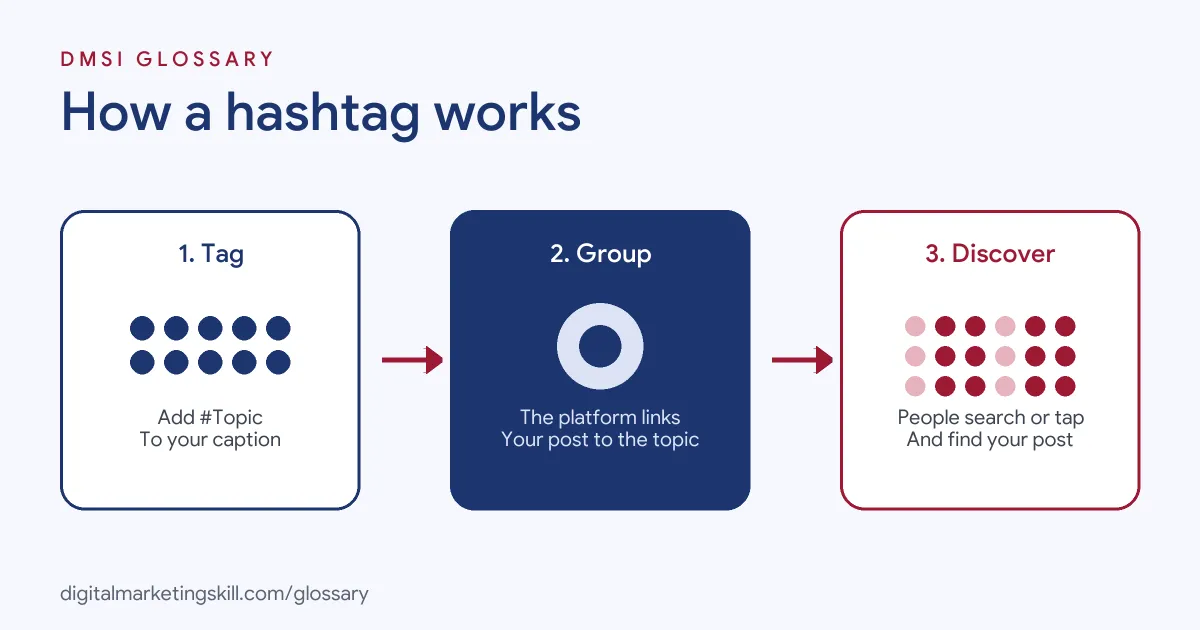
The process has three steps. First, you add a tag to your caption. Next, the platform links your post to that topic. Then people who search, tap or follow the topic may see your post alongside others.
The Basic Rules
The format is simple, but it is strict. X says: “You cannot add spaces or punctuation in a hashtag, or it will not work properly.” So #DigitalMarketing works, while #Digital Marketing only tags the word “Digital.”
Visibility also matters. X notes that if you use a tag in a post from a public account, anyone who searches for that tag may see your post.
How Many to Use
Platforms now push for fewer, better tags. Instagram said it “will gradually update the number of hashtags that you can include in a caption for a reel or post to five.” It also said that “using fewer (up to 5) more targeted hashtags, rather than many generic ones” can improve both performance and people’s experience.
Similarly, X recommends “no more than 2 hashtags per post as best practice,” although you may use more if you wish.
Hashtags and Recommendations
On TikTok, tags feed into the For You feed. TikTok lists “video information, which might include details like captions, sounds, and hashtags” among the factors its system uses. However, it also weighs user interactions, such as likes, shares and follows. So a tag helps the system understand a video, but it cannot make a weak video popular.
Types of Hashtag
Most tags fall into one of five groups. Knowing them makes it easier to build a balanced set for each post:
- Topic tags describe the subject, such as #VeganBaking.
- Community tags connect people with a shared interest, such as #BookTok.
- Location tags name a place, such as #BristolFood, which helps local businesses.
- Branded tags belong to one business or campaign.
- Event tags link posts about a launch, conference or live show.
For example, a small bakery might combine one topic tag, one location tag and its own branded tag. That set stays well inside Instagram’s limit of five.
How to Measure Hashtag Results
You should judge tags by what they bring, not by how popular they look. So use your platform’s insights to check the reach of each post regularly. Then compare posts that used different tags but similar content. If one set brings more reach from non-followers, keep it. If another brings nothing, drop it. Over time, this simple test gives you a short list of proven tags for each topic.
Hashtag Examples
Here are three examples of tags chosen with a clear purpose:
- Local business: A hair salon uses #ManchesterHair and #BalayageManchester. These reach people nearby who want that service.
- Branded campaign: A fitness brand creates #MoveWithMara for a customer challenge. As a result, it can find and share posts from people who join in.
- Event: A conference sets one official tag and shows it on every slide. Then attendees post with it, and the team can track the conversation.
The brand names in these examples are made up. Even so, the pattern is real: each tag is specific, relevant and easy to read.
Hashtag Rules by Platform
Each platform treats tags a little differently. This table sums up what their own guidance says:
| Platform | Guidance on number | Key detail |
|---|---|---|
| Up to five per post or reel | Recommends targeted tags over generic ones | |
| X | No more than two as best practice | No spaces or punctuation inside a tag |
| TikTok | No fixed number in its recommendation guide | Tags are one piece of video information the system reads |
Rules change, so check each platform’s latest guidance before you plan a campaign.
How to Choose the Right Hashtag
Use these steps to pick tags for any post:
- Start with the topic. Write down what the post is really about in two or three words.
- Search the tag first. Look at the posts already using it, and check they match your content.
- Mix broad and specific. Pair one wider tag with one or two niche or local ones.
- Add a branded tag if you have one. This helps you collect posts from customers.
- Stay within the limits. On Instagram, five is the maximum, and fewer is often better.
- Use capital letters. For instance, #PlantBasedRecipes is easier to read than #plantbasedrecipes.
- Review the results. After that, check which tags bring reach and keep the best ones.
Best Practices for Using a Hashtag
- Be specific. A niche tag reaches fewer people, but they care more about the topic.
- Avoid generic tags. Instagram’s guidance names #reels and #explore as examples of tags to skip.
- Keep captions readable. A long block of tags makes posts harder to read.
- Plan tags in advance. Add them to your content calendar, so the team stays consistent.
- Focus on the content first. Tags help people find a post, but the post itself decides whether they engage.
Common Mistakes to Avoid
Several errors show up again and again. First, people add spaces or symbols, which breaks the tag. Second, they stuff in as many tags as possible, even where the platform now limits them. Third, they use popular tags that have nothing to do with the post. Finally, they never check results, so they keep using tags that bring no reach. Fixing these takes only a few minutes per post.
Where You’ll Use a Hashtag at Work
Hashtag skills appear in many social media job listings. For example, recent remote roles include tasks such as:
- “Monitor comments, tags, mentions, hashtags and direct messages” (Social Media Manager).
- “Research trending sounds, hashtags, and content ideas to keep our feeds fresh” (Social Media Manager Intern).
- “Captions and hashtags: writing engaging text and making content easier to discover” (Social Media Tutor).
So if you want to work as a Social Media Manager or Content Creator, you will choose tags, track them and report on which ones help. Employers also look for a portfolio that shows this in action.
Learn It in the Social Media Track
You can learn to plan content, captions and tags in the AI-Powered Social Media Management and Advertising track. There, you plan, create and run a paid social campaign for a real brand, so you have results to show. You also work on a U.S. Project Internship from day one, with unlimited 1-on-1 mentoring.
For more ideas, read our guide to Instagram hashtags.
Frequently Asked Questions
What is a hashtag in simple terms?
It is a topic label that starts with the # symbol. It groups posts on the same subject, so people can find them by searching or tapping the tag.
How many hashtags should I use on Instagram?
Instagram now allows up to five on a post or reel. It recommends fewer, more targeted tags rather than many generic ones.
Can a hashtag include spaces?
It cannot include spaces or punctuation. X warns that a tag with either “will not work properly.” Join words together instead.
Do hashtags still help reach?
They still help platforms understand a post. However, recommendation systems also weigh how people interact with your content, so tags alone will not guarantee reach.
What is a branded hashtag?
It is a tag a business creates for its own campaign or community. Customers use it, and the business can then find and share their posts.
Sources: X Help Center: How to use hashtags; Social Samosa: Instagram limits number of hashtags to five per post; TikTok Newsroom: How TikTok recommends videos #ForYou; remote job listings on Himalayas.