
QR Code Marketing is the use of scannable QR codes on printed or digital materials to send people straight to a web page, offer, app or action from their phone. It links the offline world, such as posters, packaging and menus, to your online channels in a single scan. As a result, you can turn a passing glance into a visit you can track. It also removes the need for people to type a long web address.
Key Takeaways
- A QR code is a square, two-dimensional code that a phone camera can read.
- QR code marketing connects print, packaging, events and screens to online pages.
- Dynamic codes let you change the destination and track scans after printing.
- Adding UTM parameters to the link shows which code drove each visit.
- Clear instructions, a mobile-friendly page and safety checks make codes work well.
What Is QR Code Marketing?
A QR code is a pattern of black and white squares that stores information. DENSO WAVE, the company that created it, describes it as “a two-dimensional code developed by DENSO WAVE.” Unlike a normal barcode, it stores data both across and down. So it can hold more information in a small space.
QR code marketing puts these codes to work for your brand. For example, a café might add a code to its table cards that opens the menu. Similarly, a clothing label might link to care tips or a loyalty sign-up. In each case, one scan takes the person to a useful next step.
Think of a QR code as a door between a physical object and a web page. The poster gets attention. Then the code lets people act on that interest straight away, while they still care.
QR codes are also hard to break. DENSO WAVE notes that the format has “an error correction function,” so a code with small marks or damage can often still be read. However, heavy damage can stop it working.
Why It Matters
Why use QR codes at all? Because offline marketing is often hard to measure. For instance, you may not know how many people saw a poster and then visited your site. A tracked QR code changes that. In addition, it cuts friction, since nobody needs to type a web address. As a result, QR codes are a simple bridge for mobile marketing and for events, retail and print campaigns.
How QR Code Marketing Works
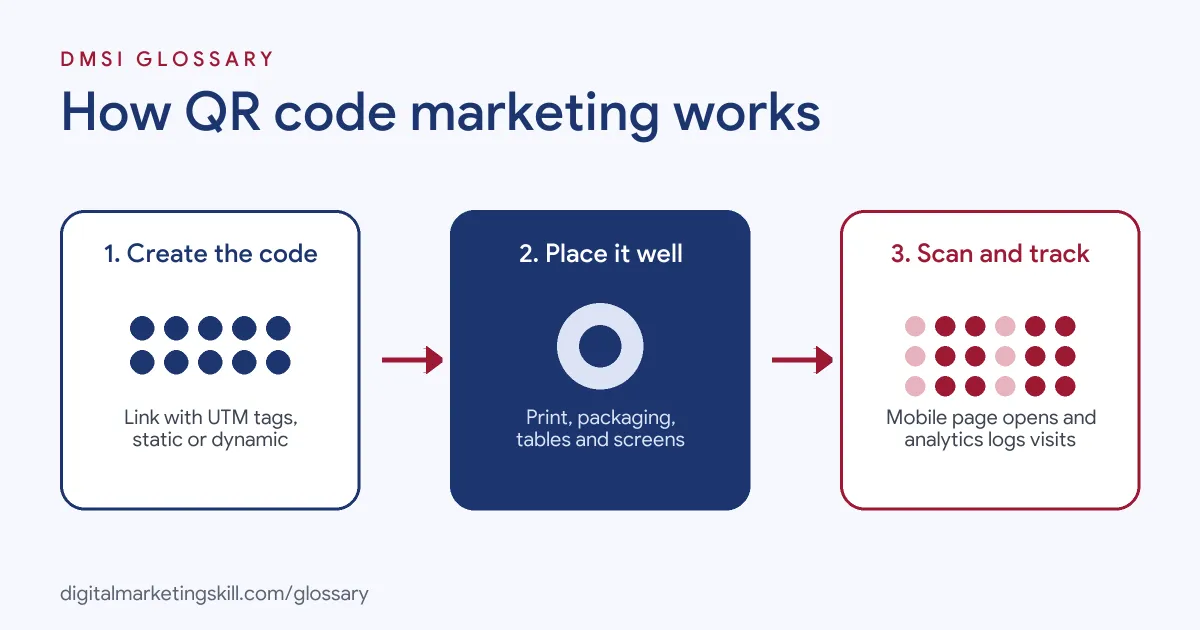
QR code marketing works in three simple stages. First, you create a code that holds a link or action. Next, you place it where your audience will see it. Finally, people scan it and land on your page, where you track what they do.
Static and Dynamic Codes
There are two main types of code. A static code stores the final web address inside the pattern itself. So once you print it, you can’t change where it goes. By contrast, a dynamic code stores a short link that points to your final page. As a result, you can update the destination later and often see scan counts. Dynamic codes usually need a QR code platform, and some are paid services.
Tracking With UTM Parameters
Next, you make each scan measurable. You do this by adding UTM parameters to the link inside the code. Google explains that by adding these tags to your links, “you can view which campaigns refer traffic.” For example, you can give your shop window code and your flyer code different tags. Then Google Analytics 4 shows which one brought more visitors.
The Scan and the Landing Page
Then the person scans with their phone camera. Most phones open the link straight from the camera app. So the page they land on must load quickly and work well on a small screen. In other words, the code only starts the journey. The landing page has to finish it.
Safety and Trust
Finally, think about trust. Scammers sometimes stick fake codes over real ones, which is known as “quishing”. Consumer group Which? advises people to “Look for tampering” and to “Preview the website address before following it.” So show your brand clearly near the code, and use a web address people recognise.
Where QR Codes Work Best
Placement makes a big difference. For example, codes work well where people stand still, such as tables, counters, bus stops and queues. Also, packaging is strong, because people hold the product in their hands. In addition, codes on TV or event screens can work if they stay on screen long enough to scan. However, codes on fast-moving vehicles or high billboards rarely get scanned. Similarly, a code in an email makes little sense, since the reader is already on a device. So always ask one question first: can someone comfortably point a phone at this? If the answer is no, use a short web address instead. Then you can still track visits with UTM tags.
Examples of QR Code Marketing
- A restaurant menu. Table cards carry a code that opens the menu and a short feedback form. As a result, the owner collects reviews without handing out paper.
- Product packaging. A food brand prints a code on the box that links to recipes. Then the brand invites shoppers to join its email list for more ideas.
- An event stand. A software company shows a code on a banner that books a demo. Each event uses its own UTM tags, so the team can compare results later.
QR Codes vs Short Links and NFC Tags
| Point | QR code | Short link | NFC tag |
|---|---|---|---|
| How people use it | Scan with a phone camera | Type or tap the address | Tap the phone on the tag |
| Best for | Print, packaging, signs and screens | Social posts, audio and spoken ads | Products, displays and cards |
| Cost | Low, often free to create | Free or low | Needs a physical chip |
| Tracking | UTM tags or dynamic codes | UTM tags and link tools | Analytics on the linked page |
How to Set Up QR Code Marketing
- Pick one goal. Decide what the scan should do, such as open a menu, collect a lead or show a video.
- Prepare the page. Build a fast, mobile-friendly page that matches the promise on your print.
- Tag your link. Add UTM parameters, so each placement shows up separately in your reports.
- Choose static or dynamic. Use a dynamic code if you may need to change the link after printing.
- Design the code. Keep strong contrast, leave a clear border around it and make it big enough to scan.
- Add a clear call to action. Tell people what they get, for example “Scan for 10% off your first order”.
- Test it everywhere. Scan with several phones, at different distances and in different light.
- Track and improve. Then check visits and conversions, and adjust placement or wording.
Best Practices for QR Code Marketing
- Give a reason to scan. A strong call to action beats a bare code every time.
- Think mobile first. Every scan happens on a phone, so the page must work on one.
- Place codes where people pause. Tables, queues and packaging work better than fast-moving billboards.
- Use one code per placement. Separate codes make it easy to see which spot performs.
- Show a short web address too. Some people prefer to type, and it builds trust.
- Check codes in the wild. Inspect public codes now and then for stickers or damage.
Common Mistakes to Avoid
- Linking to your home page. Send people to a page that matches the offer, not a generic one.
- Printing codes too small. A tiny code is hard to scan, especially from a distance.
- Skipping tracking. Without UTM tags, you can’t tell which code worked.
- Using low contrast. Light codes on busy backgrounds often fail to scan.
- Letting a dynamic code expire. If your QR platform plan lapses, printed codes may stop working.
Where You’ll Use QR Code Marketing at Work
QR code skills show up in marketing, events, analytics and admin roles. They often sit next to tracking and attribution work. For example, real remote job listings ask for:
- “Build and manage campaign tracking assets, including custom UTM parameters, short links, and QR codes, to support multi-channel attribution and analytics.” (Marketing Specialist).
- “Maintain and update websites, QR codes and marketing cards for all locations.” (Marketing Admin).
- “Maintain clean, reliable tracking across GA4, Firebase, Google Tag Manager, deep links, QR codes, and campaign taxonomy.” (Marketing Technology & Mobile Measurement Freelance Consultant).
Learn It in the Full Stack Track
You can learn to plan, tag and track QR code campaigns alongside ads, analytics and email in the Full Stack programme, which covers all four tracks. Every track includes a U.S. Project Internship from day one, with unlimited 1-on-1 mentoring.
Frequently Asked Questions
Are QR codes free to make?
Static codes are often free to create. However, dynamic codes with editing and scan stats usually come from paid platforms.
Can I change a QR code after printing it?
Only if it is a dynamic code. A static code always points to the same address.
How do I track QR code scans?
Add UTM parameters to the link inside the code. Then check your analytics tool for visits from that campaign.
How big should a QR code be?
It depends on scanning distance. So test it at the size and distance people will actually use.
Are QR codes safe?
Most are. Still, fake codes exist, so make yours easy to trust with clear branding and a recognisable web address.
Sources: DENSO WAVE: What is a QR Code?; Google Analytics Help: URL builders: Collect campaign data with custom URLs; Which?: Quishing scams warning: how to spot and avoid dodgy QR codes; remote job listings on Himalayas, Himalayas and Himalayas.