
A Digital Marketing Manager is a professional who plans, runs and improves a company’s online marketing across channels such as search, social media, email and the website. They set goals, manage budgets and lead the people or agencies who do the daily work. So they connect marketing activity to real business results, such as leads and sales. As a result, the role is one of the most common next steps for experienced digital marketers.
Key Takeaways
- A digital marketing manager owns the online marketing plan and its results.
- The role covers many channels, including SEO, paid ads, social media, email and analytics.
- Managers set goals, control budgets and lead teams, freelancers or agencies.
- Most people reach the role after a few years in junior digital marketing jobs.
- Key skills include strategy, data analysis, communication and clear decision-making.
What Is a Digital Marketing Manager?
Every business that sells online needs someone to steer its marketing. Often, that person is the manager. In short, they decide where to focus, what to spend and how to measure success. Then they make sure the work actually happens.
The job sits on top of hands-on digital marketing work. For example, a UK government apprenticeship standard, since replaced, described the digital marketer role as using “online and social media platforms to design, build and implement campaigns and drive customer sales.” A manager does that too, but also plans and leads it.
Think of a football coach. The coach doesn’t score the goals. However, they pick the team, set the tactics and change the plan at half-time. In the same way, the manager picks the channels, sets the plan and adjusts it when results change.
The careers site Prospects says junior marketers can move up to more experienced roles, such as digital marketing manager. So the role usually comes after some years of practical experience.
Why It Matters
Without a clear owner, online marketing often becomes scattered. For instance, the social team posts one message while the email team sends another. Also, money can drift into channels that don’t bring results. So a good manager fixes this. First, they link every activity to a business goal. Then they track the numbers and move budget to what works. Finally, they keep everyone working towards the same plan.
A Typical Week
So what does the job look like day to day? On Monday, you might check last week’s numbers. Then you meet the team to agree on the week’s tasks. Midweek, you could review new ad ideas or a draft email. You may also join a call with sales to hear how leads are going. By Friday, you write a short update for your boss. In between, you answer lots of questions and make lots of small calls. No two weeks look quite the same, and that is part of the fun.
How the Digital Marketing Manager Role Works
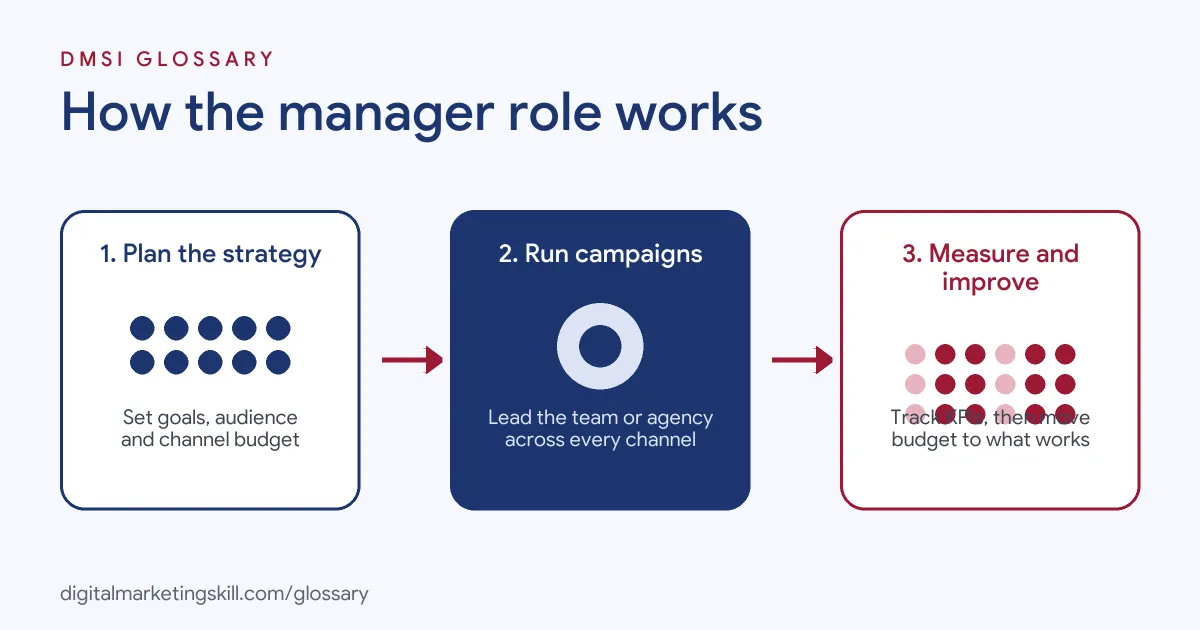
The role follows a repeating cycle. First, the manager plans the strategy and budget. Then the team runs campaigns across channels. Finally, the manager measures results and improves the plan.
Planning the Strategy
At first, everything starts with a marketing strategy. The manager studies the market, the audience and competitors. In the words of the US Bureau of Labor Statistics, marketing managers “estimate demand and identify potential markets for products and services.” Then they choose goals, such as more leads, more sales or more sign-ups.
Managing Budgets and Channels
Next, the manager splits the marketing budget across channels. For example, some money may go to search ads, some to social ads and some to content. Also, they decide which work stays in-house and which goes to a digital marketing agency. Because budgets are limited, every choice involves trade-offs.
Leading People
Then comes leadership. For example, a manager might lead a team of specialists, a few freelancers or an outside agency. So they write briefs, give feedback and remove blockers. In addition, they work with sales, product and leadership teams. The BLS notes that managers must “evaluate industry trends and determine the best strategies” for their organisation, so clear communication matters a lot.
Measuring Results
Finally, the manager tracks performance. To start, they choose a few key performance indicators, such as cost per lead or conversion rate. Then they report results, often with a dashboard. After that, they cut what isn’t working and invest more in what is.
Working With Other Teams
The manager rarely works alone. For instance, sales wants good leads, and product wants feedback from users. Also, finance wants to know where the money went. So the manager acts as a link between these teams. They share results, listen to needs and agree on shared goals. In this way, marketing stays part of the wider business plan.
Examples of a Digital Marketing Manager at Work
- An online furniture shop. The manager sees that paid social brings cheap clicks but few sales. So she moves part of the budget to search ads and email. Then she checks sales each week to confirm the change works.
- A B2B software company. The manager works with sales to agree what a good lead looks like. After that, he sets up reports that show which campaigns bring those leads. As a result, both teams use the same numbers.
- A charity. The manager plans a fundraising campaign across email, social media and the website. She briefs a small agency on the ads. Then she tracks donations from each channel.
Digital Marketing Manager vs Related Roles
| Point | Digital Marketing Manager | Digital Marketing Executive | Marketing Manager |
|---|---|---|---|
| Main focus | Online channels and their results | Hands-on campaign tasks | All marketing, online and offline |
| Typical tasks | Strategy, budget, team, reporting | Posting, building emails, setting up ads | Brand, pricing, positioning, campaigns |
| Decision power | Sets the digital plan | Follows the plan and gives input | Sets the wider marketing plan |
| Usual experience | Several years in digital roles | Entry level to a few years | Varies, often several years |
How to Become a Digital Marketing Manager
- Learn the core channels. Get a working grasp of SEO, paid ads, social media, email and analytics.
- Start in a hands-on role. Junior jobs, such as assistant or executive roles, build real skills.
- Build a portfolio. Keep short case studies of campaigns you ran, with goals, actions and lessons.
- Get comfortable with data. Learn to read reports, spot trends and explain them in plain words.
- Take on small leadership tasks. Offer to brief a freelancer, run a project or train a new colleague.
- Learn budgeting. Ask to help plan spend, so you understand how money decisions are made.
- Develop a specialism and breadth. Go deep in one channel, but keep learning how the others work.
- Apply for step-up roles. Look for “senior executive” or “manager” jobs that match your experience.
Best Practices for Digital Marketing Managers
- Tie every task to a goal. If an activity doesn’t support a business target, question it.
- Keep reports simple. Show a few clear numbers that leaders can act on.
- Test before you scale. Try new ideas with a small budget first.
- Write clear briefs. Good briefs save time for your team and your agencies.
- Stay close to customers. Read reviews, listen to sales calls and look at real feedback.
- Keep learning. Platforms and tools change often, so set time aside to stay up to date.
Common Mistakes to Avoid
- Chasing vanity metrics. Likes and clicks matter less than leads and sales.
- Spreading the budget too thin. Doing a little in every channel often means doing none of them well.
- Micromanaging the team. Give people clear goals, then trust them to do the work.
- Ignoring sales feedback. Sales teams know which leads are good, so ask them.
- Skipping tracking. Without good data, every decision becomes a guess.
- Doing all the hands-on work yourself. However tempting, it leaves no time for planning.
Where You’ll Use Digital Marketing Manager Skills at Work
Digital marketing manager roles appear across retail, finance, health, B2B and non-profit sectors. For example, real remote job listings describe the work like this:
- “The Digital Marketing Manager will own Fuku’s growth marketing engine with deep responsibility for digital and performance marketing” (Senior Manager, Digital Marketing).
- “lead strategic, multi-channel digital marketing campaigns for some of the nation’s leading professional associations and B2B organizations” (Senior Digital Marketing Manager, Associations).
- “We’re looking for a Senior Digital Marketing Manager to lead Form3’s digital growth and demand generation strategy, helping drive pipeline growth and brand development across our priority markets.” (Senior Digital Marketing Manager).
Learn It in the Full Stack Track
A digital marketing manager needs to understand every channel, which is what DMSI’s Full Stack option covers across all four tracks. Every track includes a U.S. Project Internship from day one, with unlimited 1-on-1 mentoring.
Frequently Asked Questions
What does a digital marketing manager do?
In short, they plan and lead a company’s online marketing. This includes strategy, budgets, team management and reporting on results.
What skills does a digital marketing manager need?
First, they need channel knowledge, data skills, clear communication and good organisation. Also, they need to make decisions between competing ideas.
Do I need a degree to become one?
Not always. Many employers care more about proven experience and results, although some ask for a degree or a professional qualification.
How long does it take to become a digital marketing manager?
It varies. For example, Prospects suggests graduates often move into more senior roles within two to five years.
Can a digital marketing manager work remotely?
Yes, many do. Much of the work happens in online tools, so remote work is common in this field, though it depends on the employer.
Sources: U.S. Bureau of Labor Statistics: Advertising, Promotions, and Marketing Managers; Skills England: Digital marketer standard (retired); Prospects: Digital marketer job profile; remote job listings on Himalayas, Himalayas and Himalayas.