Website audit tools promise a health check, but most teams run one and stop at the checklist. A real audit tells you which specific pages to fix first, not just how many issues exist. This guide groups website audit tools by what they actually measure. It shows where each type misses the point, and gives you one rule for deciding which pages to fix first.
Key Takeaways
- Google’s own documentation scores Core Web Vitals at the 75th percentile of real visits, not the average. A page only counts as “good” when at least 75% of visits meet the threshold on every metric at once.
- 90.2% of all websites now default to HTTPS, according to W3Techs’ own usage survey. A site still on plain HTTP is now a visible outlier, not the norm.
- Ahrefs’ analysis of more than 2 million websites found 66.5% of links pointing to them had gone dead over roughly nine years. Link rot is not an edge case; it is the default outcome of doing nothing.
- Vodafone Italy improved its Largest Contentful Paint score by 31% and saw an 8% increase in sales as a result, according to a published web.dev case study on Core Web Vitals business impact.
- A Stanford study of 2,684 participants found “design look” was the single most cited reason people judge a website credible. That means layout, typography and visual polish. It appeared in 46.1% of coded comments.
In this guide
- Most Website Audit Advice Skips The Baseline
- How Website Audit Tools Actually Work
- Website Audit Tools Differ By What They Check
- Fix The Blind Spot In Each Audit Category
- How To Measure Whether A Website Audit Actually Worked
- The One Decision Rule: Audit Your Highest-Traffic Pages First
- Frequently Asked Questions About Website Audit Tools
- Turn Audit Findings Into A Fix Schedule
Most Website Audit Advice Skips The Baseline
Search for website audit tools, and you get a list of software ranked by popularity. That list skips the only question that matters: what is this audit actually checking? Website audit tools are not one product category; a crawl tool, a speed tool and a backlink tool each look at a completely different layer of your site. Running all three and lumping the results into one report tells you that something is wrong, but not where to start fixing it. That gap matters more than it looks. A team that spends a week fixing low-impact warnings, because the report listed them first, gets the same business result as a team that did nothing at all.
What This Guide Covers
This guide groups website audit tools by what they measure, not by brand. The tools named here are examples of each category, not a ranked “best of” list. Standards change, and this is a snapshot of current practice, not a permanent ranking. How we checked this: every statistic cited about website audit tools, Core Web Vitals or link behavior below was opened at its original source before publication, not taken from a summary page. Each one carries the limits the source itself states, such as sample size or scope.
How Website Audit Tools Actually Work
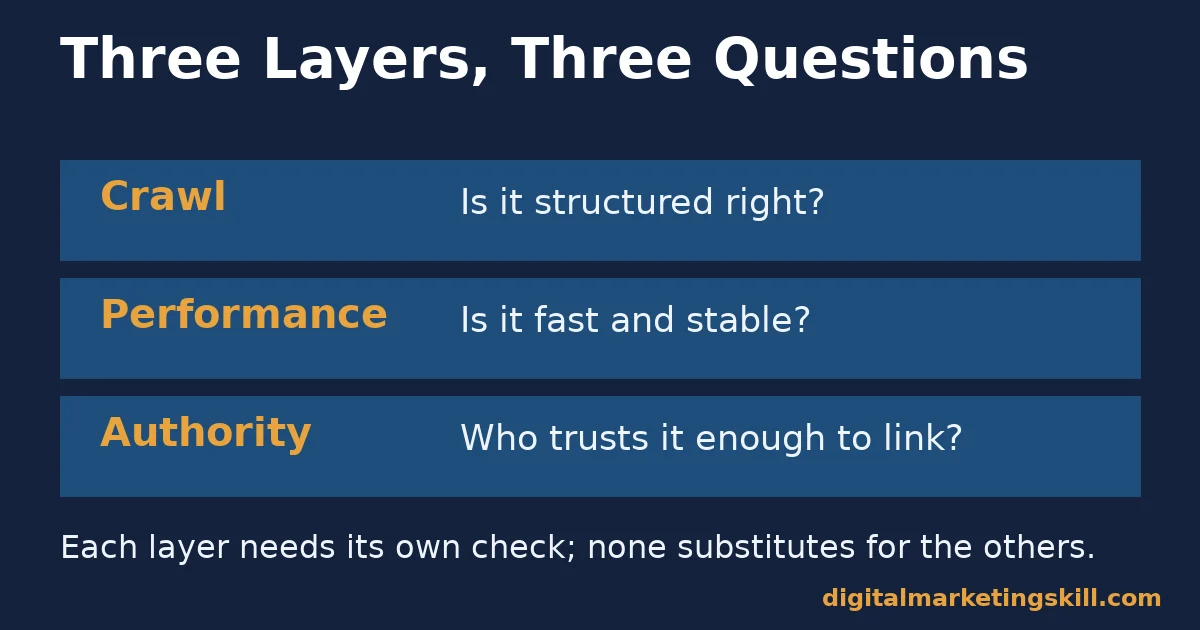
Every website audit tool does one of three jobs: crawl, measure or trace. Crawl tools walk every page on your site the way a search engine does. They find broken links, missing metadata and orphan pages that nothing else links to. Measurement tools time how fast a page loads and how stable it feels while loading, which is what Core Web Vitals actually track. Trace tools follow links and mentions across the wider web, showing which other sites point back to yours and whether those links still work. Most teams only ever run one of these three, usually the crawl tool, because it is the one bundled into the SEO plugin they already have installed. That leaves two entire layers of the site unchecked.
Why A Checklist Alone Misses The Point
Most website audit tools generate long reports: hundreds of flagged issues, sorted by severity label. This is where most audits lose their value. A report with 200 “warnings” overwhelms a small team before they fix anything. The real skill is not running the audit. It is deciding which five issues on that list would move the needle if fixed this week, and ignoring the rest for now. That triage step rarely shows up in the tool’s own interface, because no vendor wants to tell you most of their findings do not matter yet.
Website Audit Tools Differ By What They Check
Three categories cover most of the website audit tools on the market. Each one answers a different question about your site’s health. Confusing one category for another is the single most common mistake teams make when they buy their first website audit tool, because marketing pages rarely spell out which layer a given product actually checks.
Crawl Tools: Built For Structure And Indexability
Crawl tools follow every internal link on your site, the way Googlebot does. They are usually the first website audit tools a site owner installs, often bundled free with an SEO plugin. They flag broken links, duplicate titles, missing alt text and pages with no internal links pointing to them at all. Their strength is completeness: nothing on your site escapes a full crawl. Their weakness is volume. A crawl of a large site can return thousands of findings. Most are minor, a few are critical, and the tool gives you no built-in way to tell which is which. A small site with 50 pages might generate a manageable report. A site with 5,000 pages can generate a report nobody ever finishes reading, let alone acting on.
Performance Tools: Built For Speed And Core Web Vitals
Performance tools measure three things: how fast a page paints its main content, how quickly it responds to a click or tap, and how much it visually shifts while loading. These map directly to Google’s Core Web Vitals: Largest Contentful Paint, Interaction to Next Paint and Cumulative Layout Shift. Their strength is that these numbers correlate with real business outcomes. Their weakness is that a lab test on one device, run once, rarely matches what real visitors on real networks actually experience. A page that scores perfectly on a fast office connection can still feel slow to a visitor on a crowded mobile network. That gap is exactly what field data, not lab data, is built to reveal.
Authority Tools: Built For Links And Trust
Authority and backlink tools trace which other sites link to yours, and whether those links are still live. Of the three categories, these are the website audit tools most teams skip entirely, usually because the value is harder to see at a glance than a speed score or a broken-link count. They surface broken inbound links, which is lost credit you are no longer receiving, and toxic or spammy links, which can actively work against you. Their strength is visibility into a layer of your site you cannot see from the inside. Their weakness is that raw link counts say little on their own. A handful of relevant, live links usually matters more than a long list of dead or irrelevant ones.
Which Category Should You Run First?
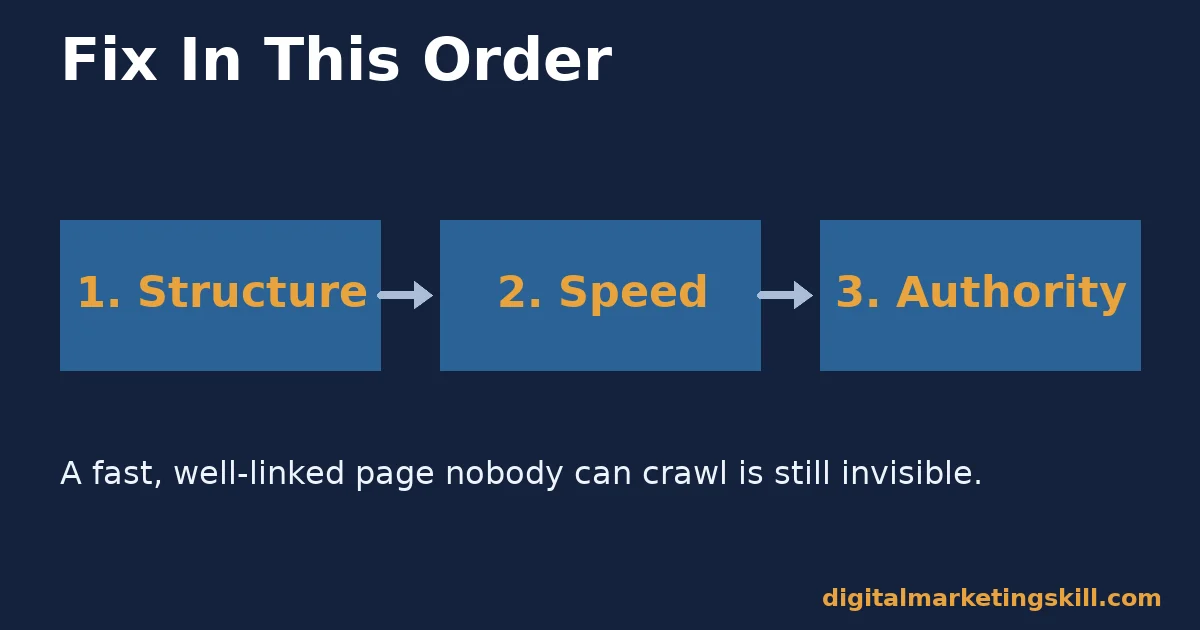
If you can only run one category this month, start with the crawl. Structural problems, such as broken links or orphan pages, block search engines before performance or authority even get a chance to matter. A beautifully fast page nobody can find is still invisible. Once the structure is sound, move to performance, then authority. That order reflects how search engines themselves process a site: find it, render it, then weigh it.
Fix The Blind Spot In Each Audit Category
Each category above has a specific fix. None of them require new software. They require reading the existing report differently.
Crawl Tools: Lead With Orphan And Broken Pages First
Start with the structural basics in any on-page SEO checklist. Before you touch metadata or alt text, fix orphan pages, pages nothing links to, and broken internal links. Both directly block a visitor or a search engine from reaching content that may already rank or convert. A missing alt tag costs you a little. A broken link to your pricing page can cost you a sale outright.
Performance Tools: Lead With The 75th Percentile, Not The Average
Google does not score your site on its average load time. It scores the 75th percentile of real visits instead. That means at least three in four visits have to meet the threshold for the page to count as “good.” A fast average hides a slow tail, often mobile users on weaker connections. According to StatCounter’s global platform data, mobile accounts for close to 59% of web traffic worldwide, which is exactly the tail a percentile-based score is built to catch.
Authority Tools: Lead With Pruning, Not Just Counting
A backlink report full of numbers is not the same as a healthy link profile. Fix or redirect your highest-value broken inbound links first, since each one represents credit you already earned but are no longer receiving. Only after that is addressed does it make sense to spend time on lower-value or questionable links further down the list. A short list of fixed, relevant links will do more for your site than a long list of findings nobody acted on. This is true of every category of website audit tools, not just authority tools. A handful of real fixes beats a long report left unread. Act on fewer findings, but act on the right ones.
How To Measure Whether A Website Audit Actually Worked
Three numbers, tracked before and after, show whether an audit changed anything or just produced a report.
Core Web Vitals Pass Rate
Pull this data from a proper web analytics stack, not a one-off scan. Track the share of your pages meeting all three Core Web Vitals thresholds at once, not just one metric in isolation. A site can pass Largest Contentful Paint while failing Cumulative Layout Shift, and a visitor still has a bad experience either way.
Indexed-To-Published Page Ratio
Check this inside Google Analytics traffic sources alongside Search Console. Compare how many pages you have published against how many are actually indexed. A large and growing gap usually points to crawl or quality issues a surface-level audit will miss. Common causes include thin content, or accidental noindex tags left over from a staging environment.
Broken Link Count Over Time
Because link rot compounds, re-check your broken link count on a regular cycle, not just once after the initial audit. A site that fixes every broken link today but never checks again will have a fresh batch within a year. Other sites routinely restructure or disappear, and your links break with them.
The One Decision Rule: Audit Your Highest-Traffic Pages First
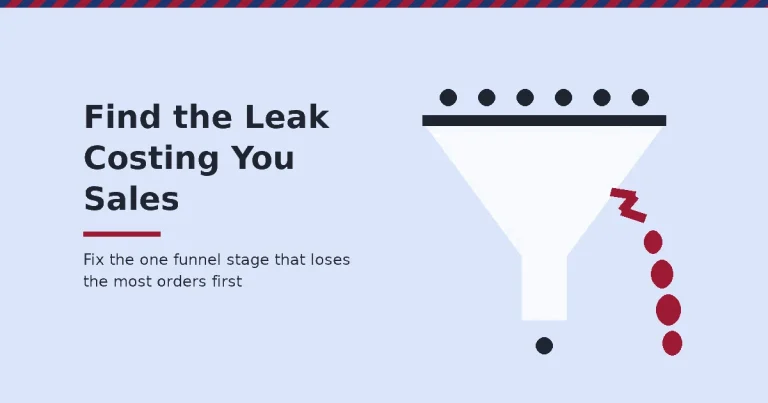
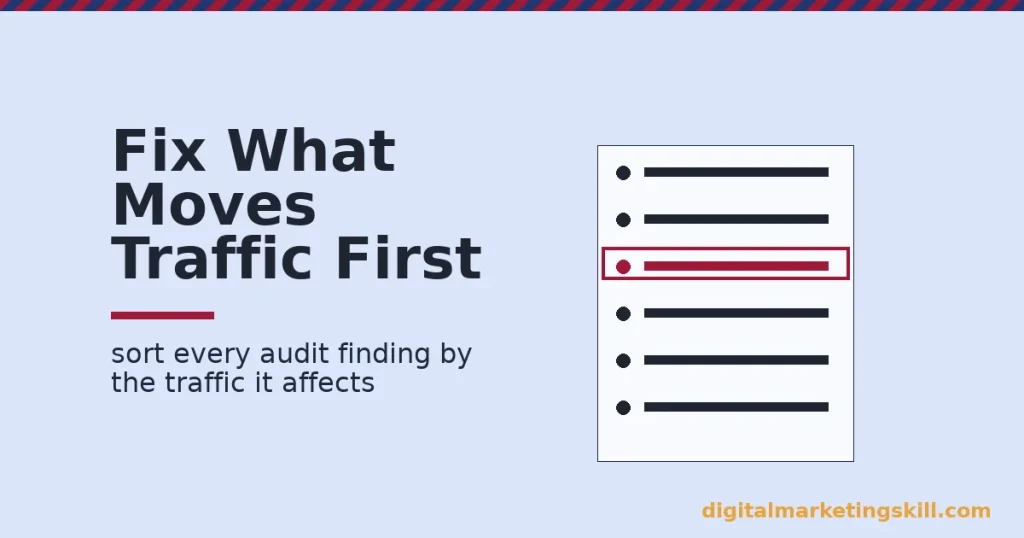
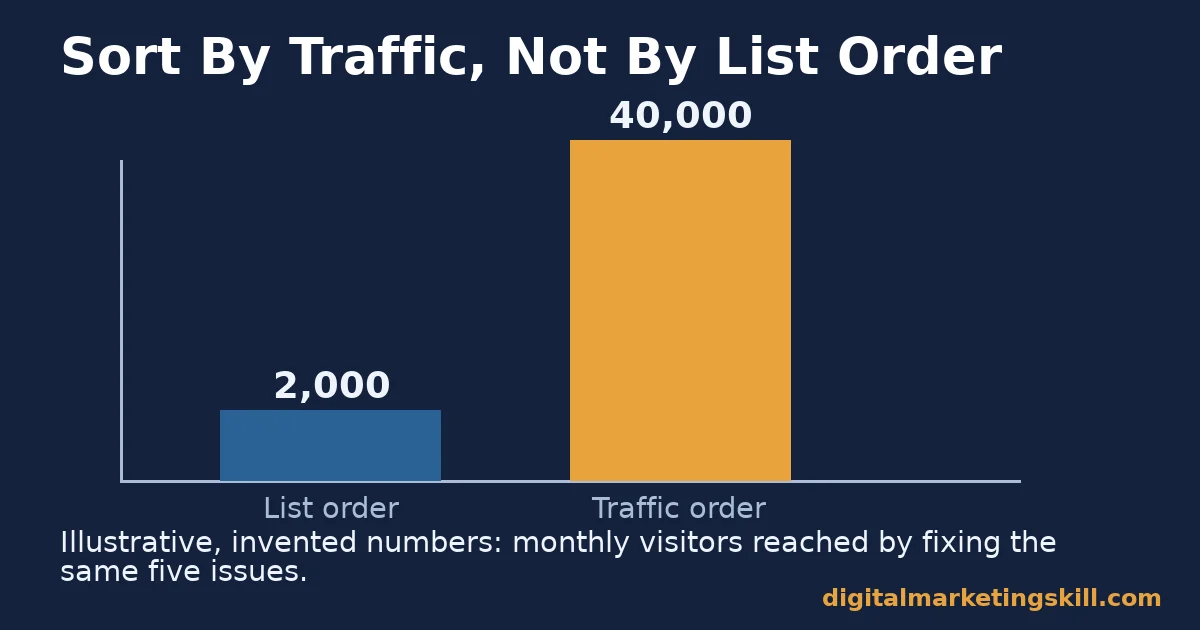
Before you work through a 200-item audit report in order, stop. Sort it by page traffic instead. Fixing ten issues on a page that gets one visit a month moves nothing. Fixing two issues on a page that gets a thousand visits a month can move real numbers within weeks.
Here is why order matters so much. Illustrative, invented numbers: imagine a site with 50 pages flagged for slow load times. If you fix them in the order the audit tool listed them, you might spend a month on pages that together get 2,000 monthly visits. Sort by traffic first, and the top five pages alone might account for 40,000 monthly visits. Fixing those five first, even imperfectly, reaches twenty times more visitors than working the list top to bottom as given. The math rarely favors the order a tool hands you. That order is usually based on technical severity, not business impact. The two do not line up as often as you would hope.
Here is a real, verified example of this payoff. Vodafone Italy improved its Largest Contentful Paint score by 31%. That is according to the published web.dev Core Web Vitals business impact case study. The company measured an 8% increase in sales as a result. A single, well-measured performance fix produced a verified revenue change, not just a better lab score.
Do I need a different tool for each category?
Not always. Some platforms bundle crawl, performance and authority checks into one dashboard, which is convenient but can hide which layer a given finding actually belongs to. A combined tool still deserves the same triage: sort findings by category first, then by the traffic of the page they affect, before you decide what to fix.
Frequently Asked Questions About Website Audit Tools
What are the main types of website audit tools?
Website audit tools generally fall into three categories. Crawl tools check structure: broken links, missing metadata and orphan pages. Performance tools measure speed and stability, mapped to Core Web Vitals. Authority tools trace which other sites link to yours and whether those links still work.
How often should a website run a full audit?
A full audit once a quarter catches most structural and performance drift before it compounds. High-traffic or fast-changing sites, such as ecommerce stores adding products weekly, often benefit from lighter, more frequent checks between the full quarterly passes.
What is a good Core Web Vitals score?
A page is scored “good” only when at least 75% of real visits meet every threshold at once. Those three thresholds are Largest Contentful Paint under 2.5 seconds, Interaction to Next Paint under 200 milliseconds, and Cumulative Layout Shift under 0.1. Good performance tools report all three side by side, so you see exactly which one is dragging a page out of the “good” range. Passing two out of three is not enough. Google requires all three together.
Why do broken links matter if visitors rarely click them?
Broken links matter even when visitors do not click them, because search engines use links to understand and rank your site. A broken internal link can block a crawler from reaching pages that would otherwise rank. A broken inbound link from another site represents authority you earned but are no longer receiving.
Should a small business use a paid website audit tool?
Not necessarily at first. Many free or low-cost crawl and performance tools cover the basics well enough for a small site. Paid authority and backlink tools tend to earn their cost later. That point comes once you have enough inbound links, or enough competitors, to make ongoing link monitoring worth the subscription.
How long does it take to see results after fixing audit findings?
Structural and performance fixes often show up in traffic within a few weeks, once search engines recrawl the affected pages. Authority fixes, such as reclaiming or building new backlinks, tend to take longer, often a few months, because they depend on other sites updating their own content and crawl schedules too.
Does HTTPS actually affect rankings or trust?
Yes, on both counts. HTTPS is now the default for 90.2% of all websites, so a site still running plain HTTP stands out as unusual rather than normal. Visitors and browsers both treat an unencrypted connection as a trust signal worth flagging. That signal shows up before a visitor reads a single word of your content.
What should I fix first after running a website audit?
Sort every flagged issue by the traffic of the page it affects, not by the severity label the tool assigned. A “critical” issue on a page nobody visits moves nothing. A “minor” issue on your highest-traffic page can be worth fixing first, regardless of how the tool labeled it.
Can I audit my own website without hiring an agency?
Yes, for most small to mid-sized sites. The free and low-cost crawl and performance tools now cover the same core checks an agency audit would run. Where an agency tends to add value is the prioritization step. That means deciding which findings actually matter for your specific traffic and goals. This guide’s traffic-first rule gives you a starting framework for doing that yourself.
Does the number of pages on a site change how an audit should be run?
Yes. A site with a few dozen pages can usually be audited manually, page by page, inside a single afternoon, without any dedicated website audit tools at all. A site with thousands of pages needs automated crawl and performance tools from the start, because manual review simply does not scale, and the traffic-first prioritization rule matters even more once the findings list grows into the thousands.
Can a website audit hurt my site if I act on everything it finds?
Rarely directly, but indirectly, yes. Acting on every low-priority warning at once can burn weeks of development time that would have been better spent on the handful of high-traffic fixes that actually move numbers. Treat the audit as a source of candidates to prioritize, not a mandatory checklist to clear in order.
Turn Audit Findings Into A Fix Schedule
Website audit tools are not interchangeable. Running all three categories of website audit tools at once without a plan just produces a longer report. The sites that actually improve from an audit are not the ones that ran the most tools. They are the ones that sorted the findings by traffic, fixed the highest-impact issues first, and checked again on a regular cycle.
Build that process properly instead. Digital Marketing Skill Institute’s Master Diploma in Digital & AI Marketing covers AI-powered SEO and content marketing alongside AI-powered Google Analytics. It comes with unlimited one-on-one coaching and mentoring, plus real project work inside a U.S. partner company from day one. The program is dual US and UK accredited, recognised in more than 100 countries, and delivered 100% online, so you can learn to run and act on a real website audit from anywhere in your country. Explore the full Digital Marketing Skill Institute curriculum, browse more guides on the digital marketing blog, or go straight to the application page when you are ready. Wherever you live, these audit principles apply the same way; only the specific tools available to you change. Visit digitalmarketingskill.com to see the full range of courses inside the Master Diploma.
Every figure in this guide was checked against its original source before publication. Figures marked as illustrative are invented examples, not real results.
![9 Amazing Digital Marketing Skills to Make Money Online [With Proof]](https://digitalmarketingskill.com/wp-content/uploads/2019/07/9-Amazing-Digital-Marketing-Skills-to-Make-Money-Online-With-Proof-17.png)