
Event marketing is the use of live experiences, such as webinars, workshops, conferences, launches and pop-ups, to promote a brand, product or service. It covers planning the event, promoting it to the right people and following up afterwards to turn attendees into leads or customers. It matters because events create direct, memorable contact with your audience, which builds trust faster than most other channels.
Key Takeaways
- Events can be in person, online or a mix of both.
- Good campaigns run in three stages: before, during and after the event.
- Google’s event experience can show eligible events in Search and Maps when you add event structured data.
- Google’s guidelines say events must be bookable to the general public, and each event needs its own page and URL.
- The follow-up is where most leads are won, so plan it before the event starts.
What Is Event Marketing?
Most marketing happens at a distance. An ad, an email or a post reaches people while they scroll. An event is different. People choose to spend time with you, ask questions and see your expertise first-hand.
That’s why event marketing works for so many goals. A software firm might run a webinar to generate leads. A shop might hold a launch party to build buzz. Meanwhile, a training provider might host a free workshop so people can try the teaching style before they sign up.
For more ideas, read our guide to event marketing on the blog.
How Event Marketing Works
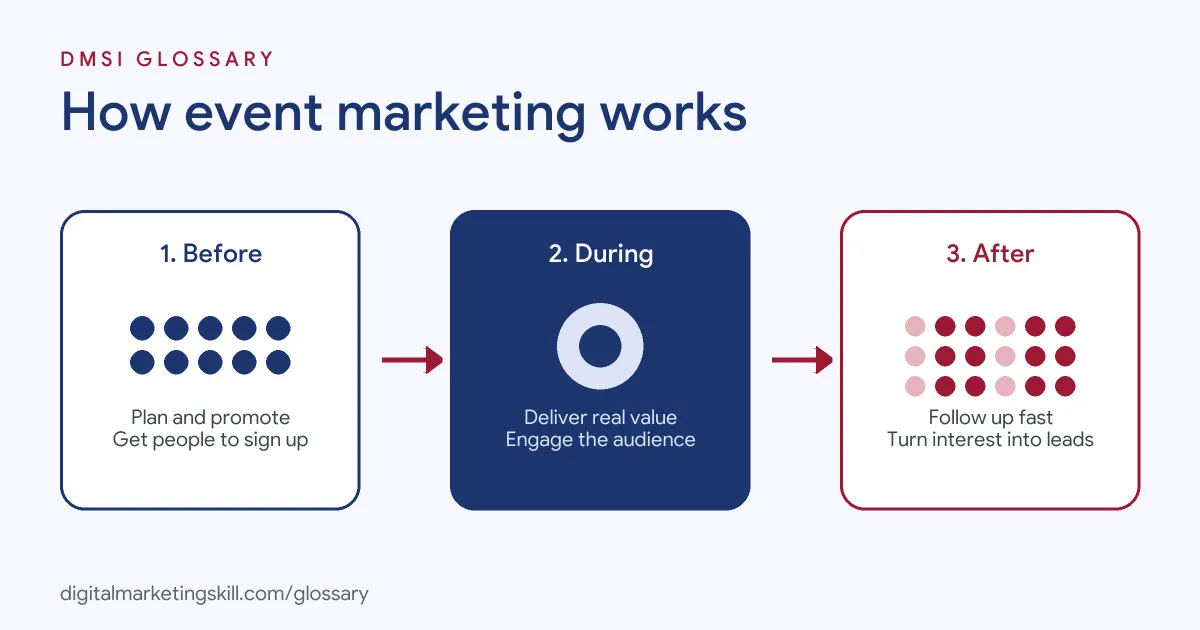
Every event campaign has three stages. First, before the event, you plan the content and promote it to get sign-ups. Next, during the event, you deliver value and engage the audience. Finally, after the event, you follow up with recordings, offers and next steps.
Before the Event
Start with a clear goal and audience. Then build a registration page and promote it through email, social media, partners and ads. Reminders matter, so send a confirmation straight away and further reminders closer to the day.
Getting Found in Search
Search can bring extra sign-ups. Google says its event experience “makes it easier for people to discover and attend events through Google Search results and other Google products, like Google Maps.” To be eligible, you can add Event structured data to your event page. Google lists required properties such as the event’s “name,” “startDate” and “location.”
There are rules, too. Google says “each event MUST have a unique URL,” that “events must be bookable to the general public,” and that you should not “mark coupons or vouchers as events.” It also notes that “virtual experiences that have no real-world component aren’t supported.” Learn more in our glossary entry on schema markup.
During and After
On the day, focus on value and interaction, such as live questions, polls or demos. Afterwards, send a thank-you email with the recording or slides, plus one clear next step. Schema.org even includes an eventStatus property, which it says is “particularly useful when an event is cancelled or rescheduled,” so search engines can show the right information if plans change.
Event Marketing Examples
Here are three made-up examples of event campaigns:
- Webinar: A software company runs a 45-minute live demo. It promotes it by email and LinkedIn, then sends the recording and a free trial offer to everyone who registered.
- In-person workshop: A local accountant hosts a free tax tips evening at a community hall. As a result, several attendees book consultations the following week.
- Product launch: A fashion brand holds a pop-up shop for a new collection and streams part of it on social media for people who can’t attend.
In each case, the event gives people a reason to engage, and the follow-up turns interest into action.
Types of Events Compared
Schema.org describes attendance modes for events that occur “online, offline, or a mix.” Here is how the three compare for marketers:
| Type | Strengths | Watch out for |
|---|---|---|
| In person | Strong personal connection and memorable experiences | Venue costs, travel and limited reach |
| Online | Wide reach, low cost and easy recordings | Lower attention and more no-shows |
| Hybrid (mixed) | Combines live energy with online reach | More complex to plan and run well |
Choose the format that fits your goal, budget and audience. If you are new to events, a short online session is often the easiest place to start.
How to Plan an Event Marketing Campaign
- Set one main goal, such as leads, sales or awareness.
- Define the audience and choose a topic they truly care about.
- Pick the format and date, then build a simple registration page.
- Promote through email, social media, partners and, if budget allows, ads.
- Send a confirmation and reminders before the event.
- Deliver a focused, useful session with time for questions.
- Follow up within a day with the recording, a summary and one clear offer.
Event Marketing Best Practices
- Lead with value. Teach something useful rather than giving a long sales pitch.
- Keep registration short. Ask only for the details you need.
- Remind people. Reminders help more registrants actually attend.
- Record it. A recording serves no-shows and becomes future content.
- Plan the follow-up first. Know your next step before the event begins.
How to Measure Event Marketing
Track the full journey, not just attendance. First, count registrations and the share who attend. Next, look at engagement, such as questions asked or time watched. Then track what happens after: replies, demo bookings, sales or sign-ups. Finally, compare the cost of the event with the value of the leads it brought. For example, imagine 200 people register, 90 attend and 12 book a call. That gives you clear numbers to beat next time.
A Simple Webinar Email Plan
Email does much of the work around an online event. Here is a made-up plan for a free webinar:
- Invitation: sent two weeks before, with the topic, the benefit and a sign-up link.
- Confirmation: sent straight after sign-up, with the date, time and joining link.
- Reminder: sent the day before, with one line on what people will learn.
- Last call: sent an hour before the start.
- Follow-up: sent the next day, with the recording and one clear offer.
Each email has one job. As a result, the sequence stays short, clear and easy to set up in most email tools.
Getting More From Each Event
One event can feed weeks of content. For example, you can cut the recording into short clips for social media. You can also turn the key points into a blog post or a checklist. Audience questions make a great FAQ page. In addition, quotes from speakers or attendees can become social proof. So plan how you will reuse the content before the event starts, and record it in good quality.
Common Mistakes to Avoid
Many teams promote the event too late, so few people sign up. Others turn the whole session into a sales pitch, which makes attendees leave early. Some forget reminders, so attendance drops. Finally, many put all their effort into the event and none into the follow-up, which wastes the interest they worked hard to create. A simple checklist for each stage helps you avoid all of these, even with a small team.
Where You’ll Use Event Marketing at Work
Events appear in many marketing and content roles. For example, recent remote job listings ask candidates to:
- “Lead the planning, coordination and delivery of webinars and virtual events.” (Digital Events and Social Media Executive).
- “Support the execution of integrated marketing campaigns across digital and offline channels, including email, web, social, events, paid media, and sales enablement” (Marketing Campaign Manager).
So as a Digital Marketing Manager, Growth Marketer or Agency Owner, you may plan events, build the sign-up pages and run the email follow-up.
Learn It in the Full Stack Programme
Event marketing draws on social media, email, search and landing pages. That’s why it fits the Full Stack (all four tracks) option, which covers all ten courses, with one portfolio project from each track. Every track is about 90% hands-on, with unlimited 1-on-1 mentoring and a U.S. Project Internship from day one.
Frequently Asked Questions
What is event marketing in simple terms?
It is promoting your business through live experiences, such as webinars, workshops or launches, and then following up with the people who attend.
Are webinars a type of event marketing?
Yes. Webinars are online events, and they are popular for generating leads.
Can my events appear in Google Search?
They can be eligible if you add Event structured data and follow Google’s guidelines. However, Google says virtual experiences with no real-world component aren’t supported.
How do I get more people to attend?
Choose a topic your audience cares about, keep sign-up short and send reminders before the event.
What should I do after an event?
Send a thank-you email with the recording or slides and one clear next step, ideally within a day.
Sources: Google Search Central: Event structured data; Schema.org: Event; Schema.org: Event attendance mode; remote job listings on Himalayas.