
Partnership Marketing is a strategy where two or more businesses, or a business and a creator or charity, work together to reach shared goals such as new customers, more sales or stronger brand trust. Each partner brings something the other lacks, such as an audience, a product or expertise. As a result, both can grow faster than they would alone. It also covers many forms, from affiliate deals to sponsorships and joint products.
Key Takeaways
- Partnership marketing is any planned collaboration that helps both partners grow.
- Common types include affiliate, referral, co-marketing, sponsorship and co-branding deals.
- The best partners share your audience but don’t compete with you.
- Written terms, clear goals and tracking keep partnerships fair.
- Paid partner content must be clearly labelled as advertising.
What Is Partnership Marketing?
In fact, partnership marketing is a broad term. In simple words, it means growing your business by working with others. Adobe describes it as “a strategic collaboration between two parties.” Usually, that means two businesses, or a business and a public figure.
Mailchimp gives a similar view. It says, “Partner marketing is a marketing strategy where two or more businesses combine efforts.” However, each partner still has its own goals. For example, one may want more website traffic, while the other wants more brand awareness.
Here is an everyday example. Think of a hotel and a local tour company. The hotel suggests the tours to its guests. In return, the tour company sends its customers to the hotel. Then both businesses gain bookings they might have missed. So the partnership works because each one serves the same travellers in a different way.
Why It Matters
Why do so many brands invest in partnerships? First, partners give you access to new customers who already trust them. Second, you share costs and skills. Third, Adobe notes that partnering with a proven brand can reduce risk and build customer trust. In addition, many partnerships are paid on results, which helps control your customer acquisition cost. Finally, strong partnerships can last for years and keep bringing in sales.
How Partnership Marketing Works
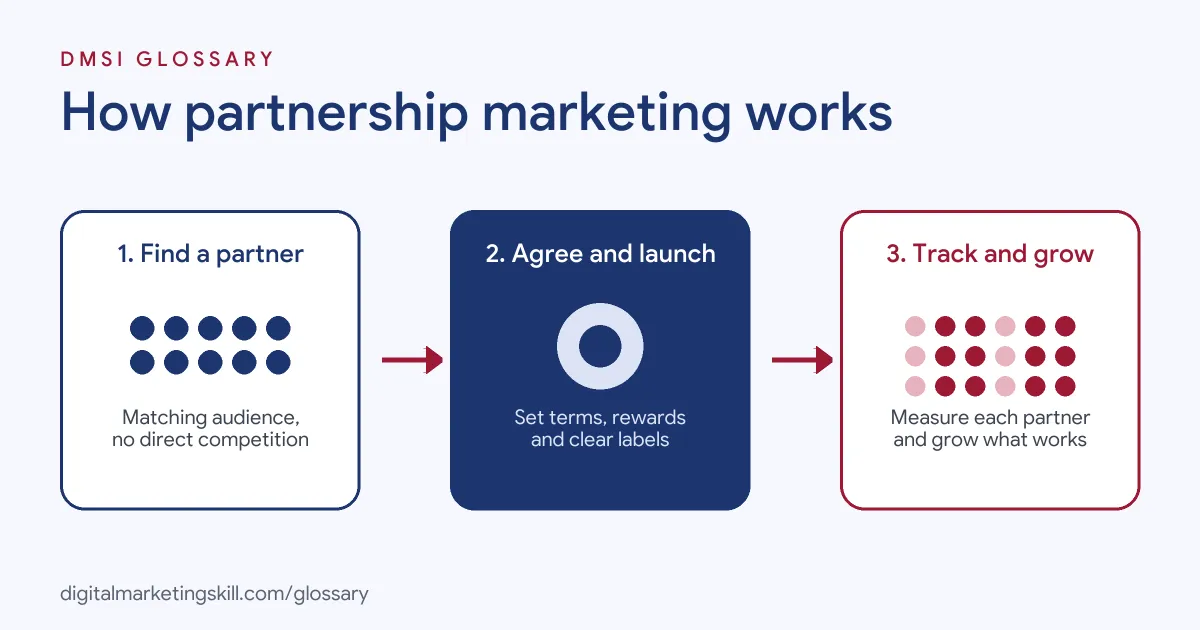
Partnership marketing follows a simple cycle. First, you find a partner with a matching audience. Then you agree the terms and launch the work. Finally, you track the results and grow what works.
The Main Types of Partnership
In practice, there are many kinds of partnership. Adobe lists eleven, and Mailchimp lists nine. The most common include:
- Affiliate partnerships: partners earn a commission for each sale they send.
- Referral partnerships: partners recommend each other, often for a reward.
- Co-marketing: partners run a shared campaign, such as a webinar or guide.
- Sponsorships: a brand pays to be linked with an event, creator or cause.
- Co-branding: two companies create and market a product together.
- Distribution and channel partners: one business sells or bundles another’s product.
- Loyalty partnerships: customers earn or spend rewards across brands.
How Partners Get Paid
Next, partners agree how value is shared. Sometimes no money changes hands, because each side gets reach. In other cases, one side pays a fee, a commission or a share of revenue. For example, the ASA describes affiliate marketing as “a type of performance-based marketing where an affiliate is rewarded by a business.” So the reward depends on results, such as sales or sign-ups.
Tracking the Results
Then you need a way to see what each partner brings. Usually, that means unique links, codes or partner software. Also, you track leads, sales and how many customers stay. Adobe suggests measurable goals such as leads, conversion rates or profit margins. As a result, you can reward good partners and fix or end weak ones.
Staying Within the Rules
Finally, partners must follow advertising rules. In the UK, the ASA says, “Make sure affiliate marketing is obviously identifiable.” In other words, people should know when content is paid for. That applies to blogs, social posts and sponsored content. So agree clear labels with every partner before anything goes live.
Choosing the Right Partner
So how do you pick a partner? First, look at who their customers are. Ideally, they match your own target buyers. Next, check that the partner sells something different, so you don’t compete. Also, look at their reputation, because their name will sit next to yours. In addition, Mailchimp suggests choosing partners who are easy to work with and whose goals match yours. Finally, start small with a test, then grow the deal if it works.
Partnerships With Creators
Partners are not always businesses. For example, many brands work with creators, podcasters and experts. This often overlaps with influencer marketing. Likewise, happy customers can become partners through referral marketing. However, the same basics apply. You still need clear goals, fair rewards, honest labels and good tracking.
Making Partnerships Last
Many partnerships start well and then fade. So plan for the long term from day one. First, set a regular check-in, such as once a month. Then share results openly, good or bad. Also, give partners fresh material, like new offers, images and copy. In addition, celebrate wins together, as Adobe suggests. Finally, review the terms now and then, so the deal stays fair as both businesses grow.
Examples of Partnership Marketing
- A software company and accountants. An invoicing app builds a referral programme for accounting firms. Each firm recommends the app to its clients. In return, the firm gets a reward for each new paying customer.
- A sportswear brand and a charity run. The brand sponsors a local fun run and supplies the T-shirts. As a result, it reaches thousands of active people and supports a good cause.
- A coffee roaster and an office supplier. The supplier adds the roaster’s coffee to its office bundles. So the roaster reaches new business buyers, and the supplier offers a better package.
Partnership Marketing vs Co-Marketing vs Affiliate Marketing
| Point | Partnership Marketing | Co-Marketing | Affiliate Marketing |
|---|---|---|---|
| Scope | The umbrella term for all partner work | One type: a shared campaign | One type: paid on results |
| Typical reward | Reach, revenue share, fees or commission | Shared reach and leads | Commission per sale or lead |
| Length | Short or long term | One campaign or a series | Ongoing |
| Example | Hotel and tour company that refer guests | Joint webinar for both audiences | Blogger earning per sale |
In short, co-marketing and affiliate marketing are both forms of partnership marketing.
How to Start Partnership Marketing
- Set your goal. Decide if you want new customers, more sales, more reach or more trust.
- Pick the type. Choose the partnership model that fits your goal and budget.
- List possible partners. Look for businesses or creators who serve your audience but don’t compete with you.
- Make a clear offer. Explain what the partner gains, such as commission, reach or a better product for their customers.
- Agree terms in writing. Cover goals, tasks, timelines, payment, brand use and what happens if things go wrong.
- Set up tracking. Give each partner unique links or codes, so you can see their results.
- Support and review. Check in often, share results and reward partners who perform well.
Best Practices for Partnership Marketing
- Match audiences, not just size. A smaller partner with the right audience often beats a big one with the wrong one.
- Make it fair. Both sides should gain, or the partnership will fade.
- Put it in writing. Clear terms prevent confusion about money, tasks and brand use.
- Label paid content. Follow advertising rules so people know when content is an advert.
- Train your partners. Mailchimp suggests offering training so new partners learn the process.
- Measure and adjust. Track each partner’s results and improve or end the ones that don’t work.
Common Mistakes to Avoid
- Choosing partners at random. A partner whose audience doesn’t need your product brings few results.
- Vague agreements. Unclear terms about payment or tasks often lead to disputes.
- No tracking. Without unique links or codes, you can’t tell which partners work.
- Hiding the advertising. Paid posts without clear labels can break advertising rules and harm trust.
- Setting and forgetting. Partners need regular contact, updates and fresh material to stay active.
Where You’ll Use Partnership Marketing at Work
Partnership marketing appears in partnership, affiliate and growth marketing roles. For example, real remote job listings say:
- “You have experience in business development, affiliate or partnership marketing.” (Growth Marketing Manager, Affiliates and Partnerships).
- “An analytical approach to partnership marketing and decision-making, weaving in data where there is an opportunity.” (Senior B2B Affiliate and Partnerships Manager).
- “Minimum 1 year of work experience in affiliate/partnership marketing.” (Senior Partnership Marketing Associate).
Learn It in the Social Media and Paid Social Track
You can learn how to work with creators, partners and paid promotions in the AI-Powered Social Media Management and Advertising track. Every track includes a U.S. Project Internship from day one, with unlimited 1-on-1 mentoring.
Frequently Asked Questions
What is partnership marketing in simple terms?
It is when businesses work together to market their products and reach shared goals. Each partner brings an audience, product or skill the other lacks.
What are the main types of partnership marketing?
Common types include affiliate, referral, co-marketing, sponsorship, co-branding, distribution and loyalty partnerships.
Is partnership marketing the same as affiliate marketing?
No. Affiliate marketing is one type of partnership marketing, where partners earn a reward for the sales or leads they send.
How do you measure partnership marketing?
Give each partner unique links or codes. Then track leads, sales, conversion rate and the return on investment for each one.
Do I need to label partner content?
Yes, when it is paid for or rewarded. For example, UK rules say affiliate marketing must be obviously identifiable as advertising.
Sources: Adobe: Partnership marketing guide; Mailchimp: Partner Marketing; ASA | CAP: Online Affiliate Marketing; remote job listings on Himalayas, Himalayas and Himalayas.