
A Virtual Assistant (Marketing) is a remote professional who handles day-to-day marketing tasks for a business, such as scheduling social posts, sending emails, updating listings and pulling reports. Most work as freelancers or through an agency, and they support one or several clients online. As a result, business owners and busy marketing teams get skilled help without a full in-house hire. For you, it’s also one of the most common ways to start a remote career in digital marketing.
Key Takeaways
- A marketing virtual assistant (VA) does hands-on marketing tasks for clients from anywhere.
- Common tasks include social media, email, content updates, research and reporting.
- Many VAs work freelance or for a VA agency on hourly or retainer terms.
- Good VAs combine marketing tool skills with clear communication and reliable admin.
- It’s a human role, not an AI tool, although many VAs use AI to work faster.
What Is a Virtual Assistant (Marketing)?
Put simply, a general virtual assistant gives remote admin help. For example, Coursera describes one as “an administrative professional who offers remote support to businesses.” A marketing VA does the same, but with a focus on marketing work.
In other words, a marketing VA takes care of the steady, repeat tasks that keep a brand visible. One UK VA provider, Virtalent, says “A marketing virtual assistant handles the time-consuming side of your marketing so you can focus on strategy.” So the owner or marketing lead sets the plan, and the VA carries it out.
Here is an everyday example. Say a small bakery owner has no time for Instagram. First, she hires a marketing VA for ten hours a week. Then the VA plans posts, writes captions, replies to comments and sends a short monthly report. As a result, the bakery stays active online while the owner focuses on baking.
Note that the term can cause confusion. An AI assistant is software. By contrast, a marketing virtual assistant is a person. However, many human VAs now use AI tools to draft copy, summarise data and speed up their work.
Why It Matters
Small businesses often need marketing help but can’t afford a full-time hire. Similarly, agencies and in-house teams get busy and need extra hands. Fortunately, a marketing VA fills that gap with flexible hours. So the business pays only for the time or tasks it needs.
For job seekers, the role matters too. First, it’s a practical entry point into remote work. Also, you build real experience across many channels at once. Over time, many VAs move into specialist roles, such as social media manager, email marketer or paid ads specialist.
How a Marketing Virtual Assistant Works
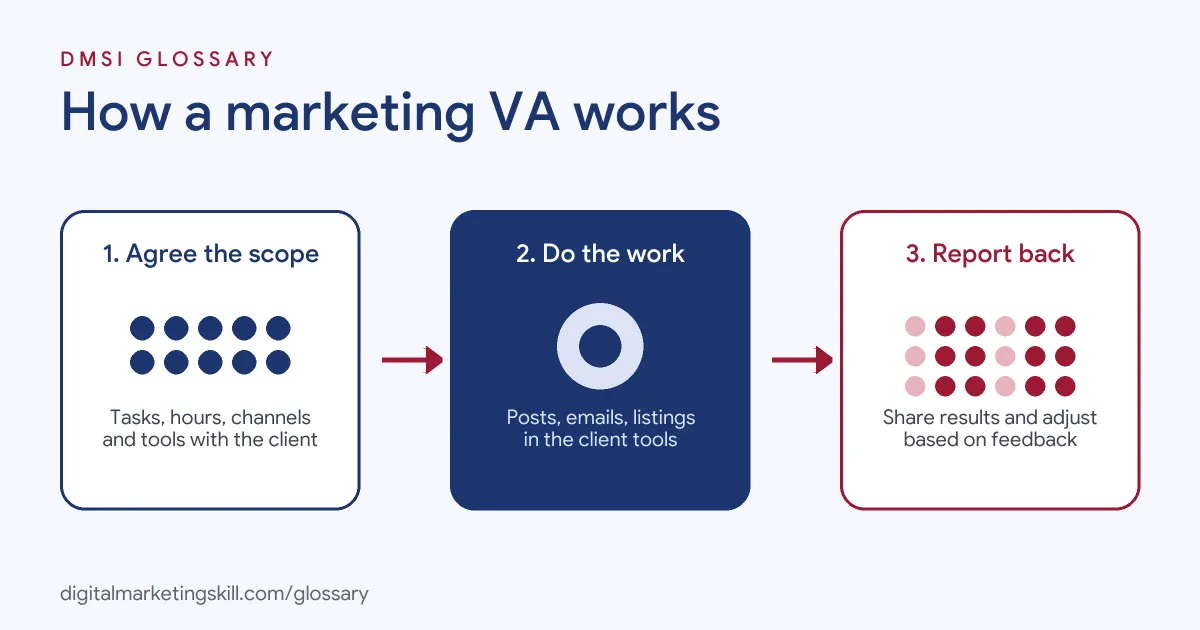
A marketing VA works through a simple cycle. First, they agree the tasks with the client. Then they do the work in shared tools and report back on results. Finally, they adjust based on feedback and data.
Agreeing the Scope
Every client relationship starts with a clear scope. For instance, the VA and client agree which channels to manage, how many hours to work and how to share files. Usually, many VAs work on an hourly basis. However, others agree a monthly retainer for a set number of hours or tasks.
Doing the Work
Next, the VA logs into the client’s tools. For example, these might include a scheduling tool, an email platform, a CRM or a design tool. Then they carry out tasks such as posting to social media, building email campaigns or updating a Google Business Profile. Meanwhile, they keep a content calendar up to date so nothing is missed.
Reporting Back
After that, the VA shares results. For instance, this could be a weekly update or a monthly report on reach, clicks and leads. Virtalent lists “competitor research and performance reports” among common support tasks. So good reporting helps the client see the value of the work.
Working Across Time Zones
Because the role is remote, the VA and client may live in different countries. As a result, clear working hours and fast replies matter. That’s why many job ads set a schedule that overlaps with the client’s business day.
Skills a Marketing VA Needs
Coursera suggests building on “existing technology, administrative, marketing, sales, and customer support skills.” In practice, that means a mix of hard and soft skills. For example, you need to know social tools, email platforms and basic design. In addition, you need clear writing, good time management and attention to detail.
Clients also value people who spot problems early. So if a post link is broken or an email list looks wrong, a good VA flags it straight away. Over time, these habits make you hard to replace. As a result, many VAs grow into a freelance digital marketer with their own client list.
Examples of Marketing Virtual Assistant Work
- A local service business. The VA updates the company’s Google Business Profile with new photos and offers. Also, they manage directory listings so details stay the same everywhere.
- An online coach. The VA builds weekly newsletters in the coach’s email platform. Then they tag new subscribers and check that the welcome sequence runs correctly.
- A small marketing agency. The agency uses a VA to schedule client posts and pull monthly reports. As a result, the account managers can spend more time on strategy and client calls.
Marketing Virtual Assistant vs Social Media Manager vs Agency
| Point | Marketing VA | Social media manager | Marketing agency |
|---|---|---|---|
| Main focus | Hands-on tasks across several channels | Strategy and content for social channels | Strategy and delivery across services |
| Who sets the plan | Usually the client | Often the manager | The agency, with the client |
| Typical set-up | Freelance or via a VA agency | In-house or freelance | A team on a contract |
| Best for | Owners who need reliable support | Brands that rely on social media | Businesses that want full campaigns |
In short, a VA supports the plan, while a social media manager often shapes it.
How to Become a Marketing Virtual Assistant
- Choose your services. Coursera’s first step is to “Decide what types of services you will offer.” For example, pick social media, email or content support.
- Build core skills. Learn the main tools, such as a social scheduler, an email platform and a design tool.
- Create samples. Next, make a few example posts, emails or reports to show your work.
- Set up your online presence. Then create a simple profile or website that lists your services.
- Sort out the business side. In the UK, GOV.UK says you “must register for Self Assessment as a sole trader if you earn more than £1,000 in a tax year.” Check the rules where you live.
- Find clients. After that, look on job boards, freelance platforms and VA agencies.
- Agree clear terms. Put hours, tasks, rates and payment dates in writing before you start.
Best Practices for Marketing Virtual Assistants
- Write down the scope. A clear list of tasks avoids surprises for you and the client.
- Use shared tools. Work in the client’s accounts and shared folders, so nothing gets lost.
- Protect access. Use a password manager and ask for your own user login, not the owner’s password.
- Report regularly. Short, plain updates show progress and build trust.
- Keep learning. Add one new skill at a time, such as email marketing or basic ads.
- Use AI with care. AI can speed up drafts. However, always check facts and match the brand voice.
Common Mistakes to Avoid
- Taking on every task. Saying yes to everything leads to rushed work and burnout.
- Unclear hours. Also, without agreed times, clients may expect replies at all hours.
- Sharing logins unsafely. Sending passwords by plain email puts client accounts at risk.
- Skipping reports. If clients can’t see results, they may not see your value.
- Underpricing for too long. Low rates can help you start. Still, review them as your skills grow.
- Ignoring tax and contracts. Instead, learn the basic rules for self-employed work in your country.
Where You’ll Use This Role at Work
Marketing VA roles appear on remote job boards across many industries, from real estate to e-commerce. For example, real remote job listings say:
- “We are looking for a proactive Marketing Virtual Assistant to support our digital marketing and lead generation activities.” (Marketing Virtual Assistant (Paid Advertising & LinkedIn Outreach)).
- “Manage and optimize GMB profiles by regularly updating business information, photos, and offers” (Marketing Virtual Assistant).
- “Previous experience as a graphic designer, creative virtual assistant, marketing virtual assistant, social media designer, brand designer, or similar creative professional.” (Expert Graphic Designer & Creative Marketing Virtual Assistant).
Learn It in the Full Stack Track
You can build the social, email, ads and SEO skills a marketing VA needs in the Full Stack programme, which covers all four tracks. Every track includes a U.S. Project Internship from day one, with unlimited 1-on-1 mentoring.
Frequently Asked Questions
What does a marketing virtual assistant do?
They handle hands-on marketing tasks remotely. For example, they schedule posts, build emails, update listings and prepare reports.
Is a marketing VA the same as an AI assistant?
No. A marketing VA is a person. However, many VAs use AI tools to work faster.
Do I need a degree to become a marketing VA?
Usually not. In fact, most clients care more about your skills, samples and reliability.
Can a marketing VA work for several clients?
Yes. Many freelance VAs support a few clients at once, each with agreed hours and tasks.
What tools should a marketing VA know?
Start with a social scheduler, an email platform, a design tool and shared docs. Then add a CRM or ads platform as you grow.
Sources: Coursera: How to Become a Virtual Assistant; Virtalent: Marketing Virtual Assistant; GOV.UK: Become a sole trader; remote job listings on Himalayas, Himalayas and Himalayas.