
Brand Equity is the extra value a brand name adds to a product, based on what people know, feel and believe about that brand. It explains why shoppers often pay more for a name they trust, even when a cheaper option looks the same. As a result, strong brand equity can lift sales, prices and loyalty. It also helps a business launch new products with less effort.
Key Takeaways
- Brand equity is the value a brand name adds beyond the product itself.
- It lives in customers’ minds, through awareness, associations, quality and loyalty.
- Strong brand equity can support higher prices and repeat buying.
- It can also fall, for example after a product recall or bad press.
- You measure it with surveys, brand trackers and sales and pricing data.
What Is Brand Equity?
Brand equity is the gap between a branded product and the same product without a name. If people would pay more, choose it first or stay loyal because of the brand, that brand has equity.
Wikipedia describes it as “the worth of a brand in and of itself – i.e., the social value of a well-known brand name.” Similarly, marketing professor David Aaker defined it as “A set of assets or liabilities in the form of brand visibility, brand associations and customer loyalty.” He added that these “add or subtract from the value of a current or potential product or service driven by the brand.”
Think of two bottles of water on a shop shelf. They might hold almost the same water. However, one has a name you know and trust, and the other has a plain label. Many shoppers reach for the familiar name, even if it costs more. That extra pull is brand equity.
So brand equity is not the same as a logo or a slogan. Instead, it is the result of every experience people have with your brand. For example, ads, products, service, reviews and word of mouth all add to it, or take away from it.
Why It Matters
Strong brand equity makes marketing easier. For instance, people notice your ads faster and trust your claims sooner. In addition, loyal customers are less likely to switch when a rival cuts prices. Also, a trusted brand can stretch into new products more easily. On the other hand, weak or damaged brand equity makes every sale harder and often more expensive.
How Brand Equity Works
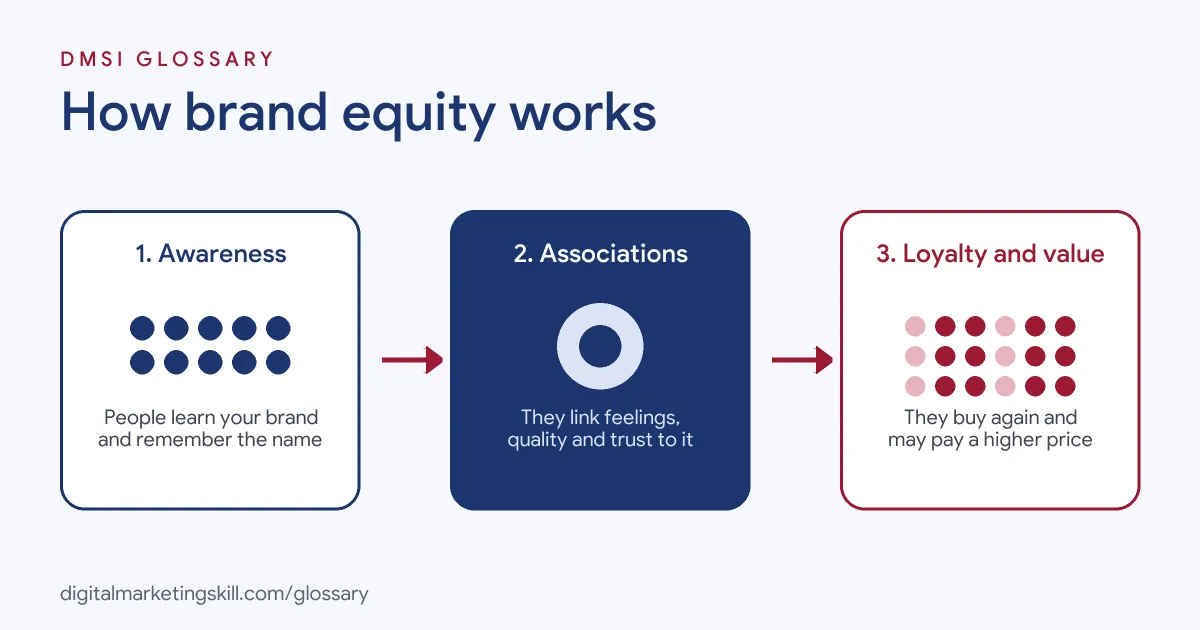
Brand equity builds up in people’s minds over time. First, they learn the brand exists. Then they form feelings and beliefs about it. Finally, those feelings shape what they buy and how much they pay.
Brand Awareness
To begin with, awareness is the starting point. If people don’t know your brand, it can’t have equity in their minds. So brand awareness covers whether people recognise your name and whether it comes to mind when they need your type of product. Ads, social posts, PR and word of mouth all build it.
Brand Associations and Perceived Quality
Next, people link ideas and feelings to your brand. For example, they may see it as reliable, fun, premium or good value. These links come from your brand identity, your messages and real experiences. Also, people judge your quality, often before they have tried the product. According to Wikipedia, citing marketing researcher Kevin Keller, “Brands with high levels of awareness and strong, favorable and unique associations are high equity brands.”
Brand Loyalty
Then good experiences turn into loyalty. In turn, loyal customers buy again, try new products and recommend you to friends. As a result, they cost less to keep than new customers cost to win. This is why customer retention is closely tied to brand equity.
Business Results
Finally, all of this shows up in the numbers. Kantar, a large brand research firm, says its framework “measures the value of brand equity accumulated in the minds of consumers.” It looks at the impact on “penetration and market share,” on “willingness to pay” and on “future growth potential.” In short, brand equity affects how many people buy, how much they pay and how fast you can grow.
Measuring Brand Equity
Because brand equity lives in people’s minds, you can’t read it from one report. Instead, most teams combine a few signals. First, brand surveys ask people if they know your brand and how they feel about it. Next, brand trackers repeat those questions over time, so you can spot changes early. In addition, you can compare your prices and sales with similar unbranded products. If people pay more or buy more often, that gap points to equity. Finally, watch softer signals such as reviews, social comments and share of voice. Together, these give you a fuller picture than any single number.
When Equity Turns Negative
Of course, brand equity can also fall. For instance, a product recall, poor service or a wave of bad reviews can hurt it. Wikipedia notes that some experts think wide recalls or “continued negative press” can even create negative brand equity. So protecting your reputation is part of the job.
Examples of Brand Equity
- A local bakery. Over the years, the bakery becomes known for fresh bread and friendly staff. Then, when it opens a second shop, queues form on day one. As a result, its name alone draws in customers.
- A sportswear brand. First, it works with athletes and keeps a clear, consistent message. So shoppers link it with performance. Because of that, they pay more for its trainers than for similar unbranded pairs.
- A software company after an outage. At first, a long service failure leads to angry posts and reviews. However, the company explains what went wrong and fixes it fast. Over time, trust returns and its brand equity recovers.
Brand Equity vs Brand Awareness vs Brand Value
| Point | Brand Equity | Awareness | Brand Value |
|---|---|---|---|
| What it means | The extra worth a brand adds in people’s minds | How well people know the brand | A money figure for the brand as an asset |
| Where it lives | Customer beliefs and behaviour | Customer memory | Financial reports and valuations |
| How it’s measured | Surveys, trackers, price and sales data | Recall and recognition surveys | Financial valuation methods |
| Who uses it most | Marketing and brand teams | Marketing and media teams | Finance and leadership |
In short, awareness is one part of brand equity. Meanwhile, brand value tries to put a money figure on the whole thing. Clear brand positioning helps all three.
How to Build Brand Equity
- Know your audience. Use market research to learn what your buyers value and believe.
- Define your position. Decide what you want people to think and feel about your brand.
- Build a clear identity. Set your name, look, voice and key messages.
- Stay consistent. Use the same style and message across ads, social, email and packaging.
- Deliver on your promise. Make sure products and service match what your marketing says.
- Grow awareness. Reach new people through ads, content, PR and partnerships.
- Reward loyalty. Thank repeat customers and give them reasons to stay.
- Track and protect it. Measure brand health often, and act fast on problems.
Best Practices for Brand Equity
- Play the long game. Brand equity builds slowly, so keep investing even when sales are good.
- Keep promises small and true. Under-promise and over-deliver to build trust.
- Use brand guidelines. Written rules keep every team and agency on-brand.
- Listen to customers. Track reviews, social comments and Net Promoter Score results.
- Measure more than sales. Track awareness, preference and price premium too.
- Respond to problems openly. A fast, honest response can limit damage to your brand.
Common Mistakes to Avoid
- Chasing short-term sales only. Constant discounts can teach people your brand is worth less.
- Changing your look too often. People need time to learn and remember a brand.
- Over-promising. Claims that the product can’t match damage trust quickly.
- Ignoring bad reviews. Silence can look like you don’t care.
- Stretching too far. A product that doesn’t fit your brand can confuse loyal buyers.
- Not measuring it. Without data, you can’t tell if your brand is growing or slipping.
Where You’ll Use Brand Equity at Work
Brand equity comes up in brand, insights, research and product roles. For example, real remote job listings mention:
- “driving revenue growth and brand equity through supporting strategic licensing partnerships with global brands” (Manager, Consumer Products).
- “brand tracking, brand equity measurement, market landscape, market opportunity assessment” (Associate Customer Insights Manager).
- “experience managing complex market research studies such as brand health and brand equity trackers” (Market Research Manager (US)).
Learn It in the Social Media and Paid Social Track
You can learn to build awareness, a consistent voice and a loyal audience in the AI-Powered Social Media Management and Advertising track. Every track includes a U.S. Project Internship from day one, with unlimited 1-on-1 mentoring.
Frequently Asked Questions
What are the main parts of brand equity?
In general, most models include brand awareness, brand associations, perceived quality and brand loyalty. Aaker’s model also adds other assets, such as trademarks.
Can brand equity be negative?
Some experts think so. For example, a major recall or lasting bad press can make people avoid a brand.
How do you measure brand equity?
Usually, brands use surveys, brand trackers and data on price, sales and loyalty. Many teams track several of these over time.
Do small businesses have brand equity?
Yes. A local shop with a strong name in its area has brand equity, even without big ad budgets.
How long does it take to build brand equity?
It usually takes a long time. However, it can be damaged quickly, so steady, consistent work matters most.
Sources: Wikipedia: Brand equity; The Branding Journal: What is Brand Equity?; Kantar: What is the Meaningful Different and Salient (MDS) framework?; remote job listings on Himalayas, Himalayas and Himalayas.