
A social media marketing strategy only pays off when it names one goal per platform and measures the right metric for it. This guide sorts a social media marketing strategy into four goals, with the evidence behind each. It ends with the one habit that predicts whether the plan survives contact with a real content calendar.
Key Takeaways
- Vague goals sink strategies first. Content Marketing Institute’s survey of B2B marketers found the top reason content strategy underperforms is a lack of clear goals, cited by 42% of respondents.
- Marketers already want this fix. The Sprout Social Index found 65% of marketers want to see a direct connection between social campaigns and business goals, rather than vanity metrics alone.
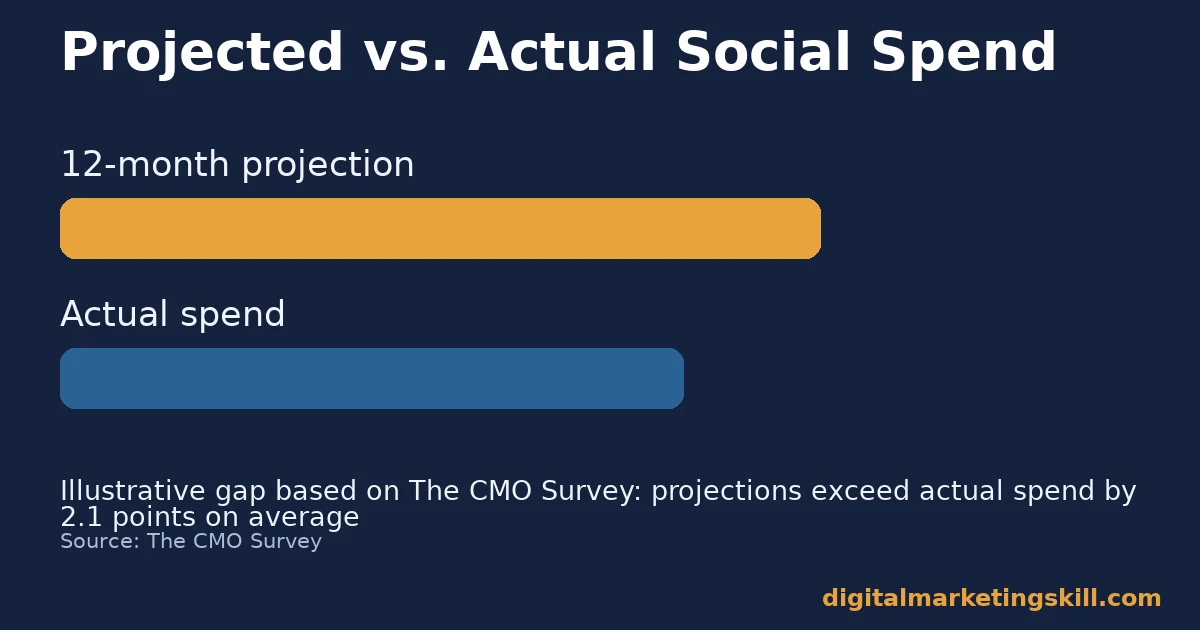
- Budgets keep rising, but projections run ahead of reality. The CMO Survey puts social media at 14.3% of marketing budgets, projected to reach 23.1% within five years. Yet 12-month social spending projections have exceeded actual spend by 2.1 points on average.
- One platform does most of the heavy lifting. Sprout Social’s Content Strategy Report found 70% of marketers say Facebook has the strongest business impact of any social platform they use.
- Consumers reward a working strategy with real purchases. The Sprout Social Index found 81% of consumers say social media sways them into a spontaneous purchase multiple times a year.
In this guide
- Most Social Media Marketing Strategy Guides Skip the Goal Step
- Why a Named Goal Changes Everything Downstream
- A Social Media Marketing Strategy Differs by Goal
- Build a Social Media Marketing Strategy: Lead With the Goal, Not the Platform
- How to Measure Whether a Social Media Marketing Strategy Is Working
- The One Rule: Name the Goal Before You Write the Caption
- A Real Case: What Happens When the Goal Step Gets Skipped
- Frequently Asked Questions About Social Media Marketing Strategy
- Start With One Goal, Measure It, Then Expand
Most Social Media Marketing Strategy Guides Skip the Goal Step
Search “social media marketing strategy” and you get a checklist: pick platforms, post consistently, engage followers, track results. None of that is wrong. But a checklist without a named goal per platform produces generic content that serves no one well. Awareness content and conversion content need different formats, different metrics and different judgment calls.
This guide names the goal step most lists skip. It sorts the real work of a social media marketing strategy by what each piece is built to achieve. Then it shows how to measure whether it worked.
Ground rules first. Content Marketing Institute’s figures below come from B2B marketers specifically and are cited in text without a link, since the organisation also sells training. The CMO Survey draws from a broad mix of US companies. Sprout Social’s figures reflect its own survey panel.
Treat every percentage as direction for your own testing, never as a guarantee for your particular business or audience. Your own page’s past results, sorted by goal, will always tell you more about your specific audience than any industry-wide figure.
Why a Named Goal Changes Everything Downstream
A social media marketing strategy without a named goal defaults to “post and see.” That default fails quietly, because every metric looks like good news. A like could mean brand affinity, a comment could mean intent to buy, and a share could mean reach. Without a goal, there is no way to tell a real signal from noise.
A named goal fixes the metric before the first post goes out. If the goal is awareness, reach and impressions are the right read. If the goal is conversion, click-through rate and sales matter more than likes. Content Marketing Institute found that a lack of clear goals is the single most common reason B2B content strategy underperforms, ahead of resourcing and measurement problems.
In an earlier edition of the same research, not being aligned to the buyer’s journey was the second most common reason, cited by 39% of respondents. That is really the same problem one step downstream. A goal that is never translated into a specific stage of the customer journey is almost as unhelpful as no goal at all.
That single fix also changes which platform deserves the budget. Sprout Social’s Content Strategy Report found 70% of marketers rate Facebook as having the strongest business impact of the platforms they use. That only becomes useful information once you know whether your own goal is awareness, engagement, leads or retention, since the strongest platform can differ by goal.
A Social Media Marketing Strategy Differs by Goal
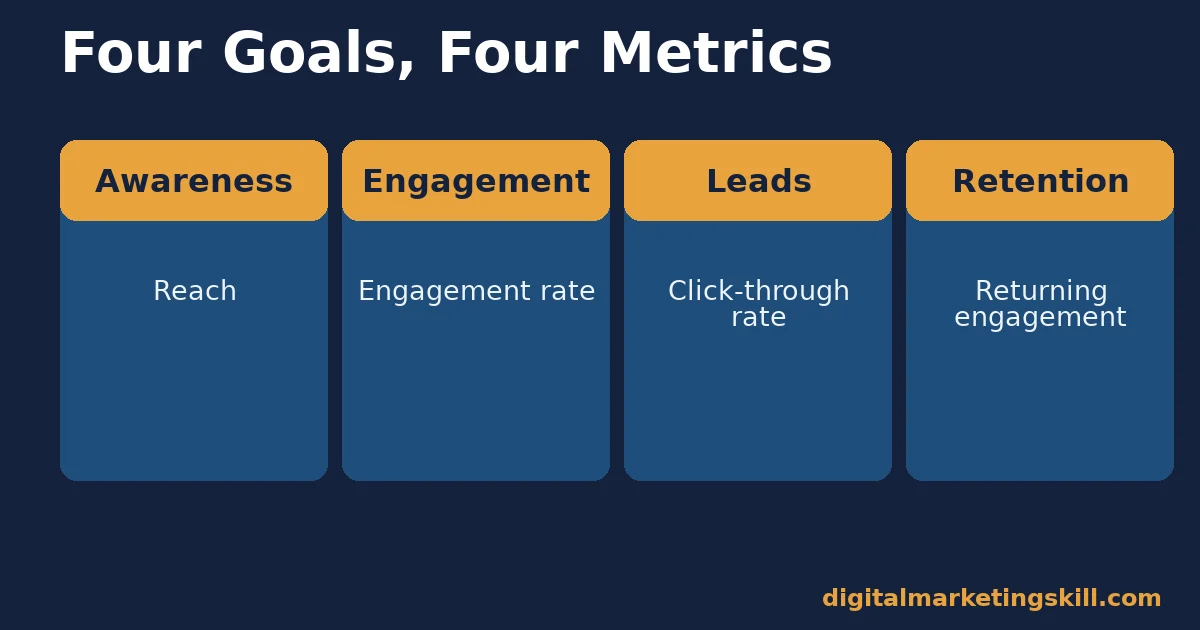
Not every piece of a social media marketing strategy serves the same purpose. The four sections below name a goal and the format built to earn it. Most businesses need all four at some point, but rarely in equal measure, and the right mix shifts as a business grows from unknown to established.
Awareness: Built for Reach, Not Depth
Awareness-goal content is built to put a brand in front of people who do not know it yet. It works best as short, visual, easy-to-share content, since the job is recognition, not persuasion. Reach and impressions are the honest read here, not engagement rate, because a post can reach many people without asking any of them to act.
The trade-off is depth. Awareness content rarely converts directly. Judging it by sales alone will always make it look like it failed, even when it is doing its job of staying visible. Platform ranking systems generally favour original content over reposted content. Meta’s own explanation of Feed ranking names originality as one of the signals it weighs.
Engagement: Built for Conversation, Not Just Views
Engagement-goal content is built to start a conversation: a question, a poll, a request for opinions. Our guide to social media engagement principles that still work covers the mechanics platform by platform. The shared thread is that a comment or share signals more real interest than a quiet view.
The trade-off is volume. Engagement-goal content usually reaches fewer new people than awareness content, because platforms tend to show it first to people who already follow or interact with the page. HubSpot’s marketing statistics page reports that about 48% of social media marketers share similar or repurposed content across platforms, while 34% create unique content for each one. Unique content generally earns more engagement, at the cost of more production time.
Lead Generation: Built for a Specific Action
Lead-goal content is built around one specific action: a link click, a sign-up, a download. It works best with a clear, singular call to action, since a post asking for three different actions usually gets none of them done well.
The trade-off is reach. Lead-goal content, especially link posts, typically earns less organic distribution than awareness or engagement content. Most platforms’ ranking systems favour content that keeps people on the platform.
This is also the goal where paid distribution earns back its cost fastest. A clear offer with a clear metric is the easiest kind of content to test against a specific ad spend. Treat organic lead-generation posts as proof of a good offer worth promoting, not as a full replacement for paid reach.
Retention: Built for Existing Customers, Not New Ones
Retention-goal content is built for people who already bought from you: behind-the-scenes updates, loyalty perks, direct replies to comments. It is the cheapest goal to serve, since it needs no new audience, only consistent attention to the audience already there.
The trade-off is visibility. Retention content rarely shows up in growth reports, so it is easy to under-invest in. Even so, keeping an existing customer usually costs less than acquiring a new one. A social media marketing strategy that ignores retention is leaving a cheap win on the table.
Build a Social Media Marketing Strategy: Lead With the Goal, Not the Platform
Once a goal is named, the platform and format choices follow. The four sections below mirror the four goals above with a concrete first move.
Awareness: Lead With Short Video and Original Posts
Pick one or two platforms where your audience already spends time, then post short, original content consistently rather than spreading thin across every network. A content calendar, like the one in our guide to building a content calendar, keeps that consistency realistic instead of relying on memory.
Engagement: Lead With Direct Questions and Replies
Ask a specific question in the caption, then reply to every comment within the first hour if you can. The reply matters as much as the original post. It signals to both the platform and the audience that the conversation is real, not a one-way broadcast.
Avoid asking more than one question per post. A caption that asks three different things usually gets a thin response to each, because readers answer the easiest part and skip the rest. One sharp question beats three vague ones.
Lead Generation: Lead With One Offer and One Link
Write the caption around a single offer: a free resource, a demo, a discount. State the benefit of clicking before the link itself, and send every click to a landing page built for that specific offer, not your general homepage.
Track where each click actually lands. A homepage link forces a visitor to hunt for the offer again, which loses people who were already interested enough to click once.
Retention: Lead With Replies and Behind-the-Scenes Content
Reply to every comment and direct message from an existing customer before posting new content for new ones. A behind-the-scenes post, a thank-you shout-out, or a quick poll asking current customers what they want next costs little and keeps the relationship active.
How to Measure Whether a Social Media Marketing Strategy Is Working
Match the metric to the goal, not to whichever number looks biggest. Each one below gets a one-sentence definition and a note on how to read it.
Five Metrics Worth Tracking Monthly
- Reach. The number of unique accounts that saw a post. Use it for awareness-goal content, since it is the direct measure of new exposure.
- Engagement rate. Reactions, comments and shares divided by reach or followers. Use it for engagement-goal content; a rising rate shows real conversation, not just visibility.
- Click-through rate. The share of viewers who tapped a link. This is the right read for lead-goal content, not for awareness or retention posts.
- Cost per lead. Ad spend divided by leads generated, for any paid lead-goal content. Compare it against your other channels’ cost per lead, not against social media averages alone.
- Returning-customer engagement. The share of comments, replies or shares that come from known existing customers, visible in most platforms’ own audience insights. A rising share shows retention content is doing its job.
Read these together. A post with high reach but low engagement did its awareness job, not its engagement job. Judging it by the wrong metric makes a working post look like a failure.
Review all five metrics monthly rather than daily. Daily swings are normal and rarely mean anything on their own, but a trend that holds for several weeks is worth acting on. Pick one metric to improve at a time, since chasing all five at once usually means none of them move.
The One Rule: Name the Goal Before You Write the Caption
If you remember one decision rule from this guide, make it this one. Before you write a single word of a post, name which of the four goals it serves. That one step forces the format, the call to action and the metric to line up. Nothing gets decided after the fact by whichever number happens to look good.
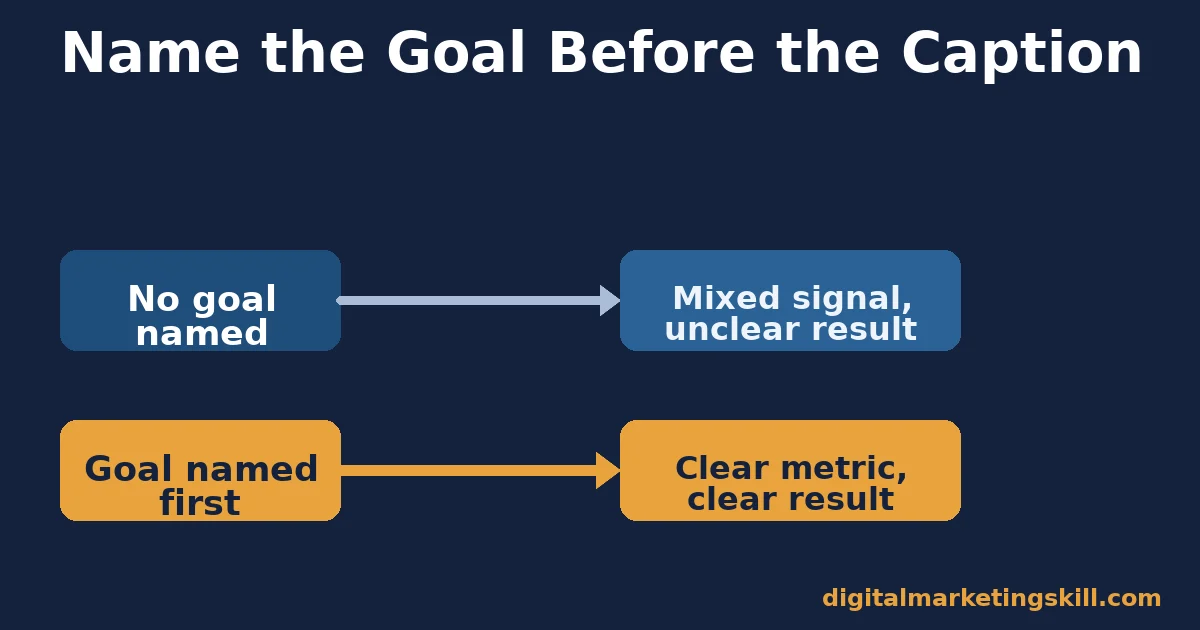
Here is an illustrative example, with invented numbers, showing how naming the goal in advance can change the outcome of an otherwise identical posting schedule. A small business posts without naming a goal for a month and tracks only total engagement, which averages 420 interactions weekly across five posts.
The next month, it names a goal for each post in advance: two awareness, two engagement, one lead-generation. Total weekly interactions barely change, around 440. But link clicks on the one lead-generation post rise from near zero to 85 a week. That post finally had a single, clear call to action instead of competing for attention with the others. The lift came from clarity, not from posting more.
A Real Case: What Happens When the Goal Step Gets Skipped
The CMO Survey is a useful case because it tracks the gap between planned and actual social spending over time, not just one company’s result. It found that 12-month social media spending projections have exceeded actual spend by 2.1 percentage points on average. Even so, marketers keep predicting social media will reach 23.1% of budgets within five years.
The limits matter here. The CMO Survey draws from a broad mix of US companies and relies on self-reported projections, not a controlled experiment. It cannot prove exactly why plans overshoot reality.
But the pattern lines up with the mechanism explained earlier. A vague ambition, such as “invest more in social,” is easy to plan on paper. A named goal with its own budget line and metric is harder to overstate, because it has to be justified against a specific number.
The practical takeaway costs nothing to test. Before your next budget cycle, write down the specific goal and metric for any new social spending, not just the platform and the amount. A one-line note next to each budget item, naming the goal it serves, forces the same discipline the survey data suggests most plans skip.
Frequently Asked Questions About Social Media Marketing Strategy
What is the most important part of a social media marketing strategy?
Naming a specific goal for each platform or campaign before choosing content or format. Content Marketing Institute found that a lack of clear goals is the top reason B2B content strategy underperforms, ahead of resourcing and measurement issues.
How many social media platforms should a business use?
Fewer than most businesses think. One or two platforms, chosen for where your specific audience spends time, usually beats a thin presence across five. Consistency matters more than coverage for most goals. Adding a third platform only once the first two run on a steady, sustainable rhythm avoids spreading your attention too thin to do any of them well.
How often should a business post as part of its social media marketing strategy?
Consistency matters more than raw frequency. A realistic, sustainable schedule you can actually keep beats a heavy posting pace that collapses after a few weeks. A content calendar makes that consistency easier to plan and track, and it gives you a record to compare against your metrics month over month.
Which social media metric matters most?
None of them matter most on their own; the right metric depends on the goal. Reach serves awareness, engagement rate serves conversation, click-through rate serves lead generation, and returning-customer engagement serves retention.
What is a common mistake businesses make with social media marketing strategy?
Judging every post by the same metric, usually likes or followers, regardless of what the post was built to do. That habit makes awareness content look like it failed. It can also hide a lead-generation post that is actually working, since the real signal, clicks, sits in a different report.
Does social media marketing strategy actually drive sales?
It can, when the strategy includes a lead-generation or conversion goal with its own call to action and link. The Sprout Social Index found 81% of consumers say social media has swayed them into a spontaneous purchase multiple times a year. That shows the bottom-line effect is real, not just anecdotal.
How long does it take to see results from a social media marketing strategy?
Awareness and engagement goals can show measurable movement within a few weeks of consistent posting, since reach and engagement rate respond directly to each post. Lead-generation and retention goals usually take longer, often a full quarter, because they depend on accumulated trust and a large enough sample of clicks or repeat interactions to read the trend reliably.
Should budget for social media marketing strategy keep increasing?
Only if it is tied to a specific, measured goal. The CMO Survey shows marketers have consistently projected faster social media budget growth than what actually happens. Plan the budget around a named outcome rather than a general sense that spending should rise.
Can a small business run a social media marketing strategy without a big budget?
Yes. The four-goal framework in this guide works at any budget, since naming a goal and tracking the matching metric costs nothing beyond time. Paid spend can accelerate a lead-generation or retention goal once organic content proves which offer and format actually work.
Start With One Goal, Measure It, Then Expand
Pick one goal from this guide, awareness, engagement, lead generation or retention, and build one month of content around it before adding the others. Track the single metric that matches that goal, and only then decide whether to expand your social media marketing strategy further. For the platform-selection half of the decision, see our guide to choosing the best social media platforms for your business.
If you want structured practice building and measuring a real social media marketing strategy, Digital Marketing Skill Institute teaches it hands-on. The Master Diploma in Digital & AI Marketing covers it through the AI-Powered Social Media Management and Advertising track. The programme pairs unlimited 1-on-1 coaching and mentoring with a U.S. Project Internship and a verified U.S. Work Reference Letter, and it is dual US and UK accredited and recognised in more than 100 countries.
The programme is fully online, so you can build this social media marketing strategy from anywhere in your country. Browse more guides on the Digital Marketing Skill Institute blog and read real outcomes on the reviews page. When you are ready, apply for the Master Diploma or start from the Digital Marketing Skill Institute homepage.
Every figure in this guide was checked against its original source before publication. Figures marked as illustrative are invented examples, not real results.
![9 Amazing Digital Marketing Skills to Make Money Online [With Proof]](https://digitalmarketingskill.com/wp-content/uploads/2019/07/9-Amazing-Digital-Marketing-Skills-to-Make-Money-Online-With-Proof-17.png)






