

Blog monetization means turning regular readers into regular income, through ads, affiliate links, products, or sponsorships. Most blogs that fail to earn anything never picked one primary method and built around it. This guide covers the real options for blog monetization, how to combine them, and the disclosure rules that keep a blog compliant.
Key Takeaways
- 6.04 billion people use the internet globally, 73.2% of the world’s population. The potential audience for a monetized blog keeps growing (DataReportal).
- The typical online adult spends about 33.5 hours a week consuming online media, roughly 29% of their waking hours (DataReportal).
- The FTC requires bloggers to disclose any paid or free-product relationship with a brand clearly. The disclosure must sit with the content itself, not hidden behind a “more” link (FTC).
- Google requires AdSense applicants to be at least 18, with a site of original content that complies with its program policies, before approval (Google AdSense Help).
- Most successful blogs combine two or three revenue streams rather than relying on one. This spreads the risk when any single method’s payout drops.
In this guide
- Why Blog Monetization Plans Fail
- How Blog Monetization Actually Works
- What Differs By Monetization Method
- How To Fix The Most Common Monetization Mistakes
- How To Measure Blog Monetization Performance
- The One Rule For Choosing Your Primary Method
- A Worked Example: A Blog’s First Year Of Monetization
- Choosing an Ad Network for Blog Monetization
- Why an Email List Compounds Blog Monetization
- What Affiliate Programs Actually Require
- Tracking What Actually Earns
- Frequently Asked Questions About Blog Monetization
- Common Blog Monetization Mistakes to Avoid
- Where to Go From Here
Why Blog Monetization Plans Fail
Most new bloggers try every method at once. Display ads, affiliate links, a digital product, and sponsorship pitches, all in the first month. Readers notice the clutter before any method has time to actually earn.
This is not a guaranteed path to income. Results depend on niche, traffic, and consistency. Treat every figure below as a starting point for your own testing, not a promise.
Two ground rules come before the methods. First, nothing here claims a fixed income number. Blog income varies enormously by niche and audience size. Any number you see elsewhere is an average across very different blogs.
Second, every disclosure note here is general information, not legal advice for your specific situation. Check your own obligations with a professional before you monetize at scale.
How Blog Monetization Actually Works
Every monetization method depends on the same two inputs: traffic and trust. Traffic is the number of people reading. Trust is how much they believe your recommendations.
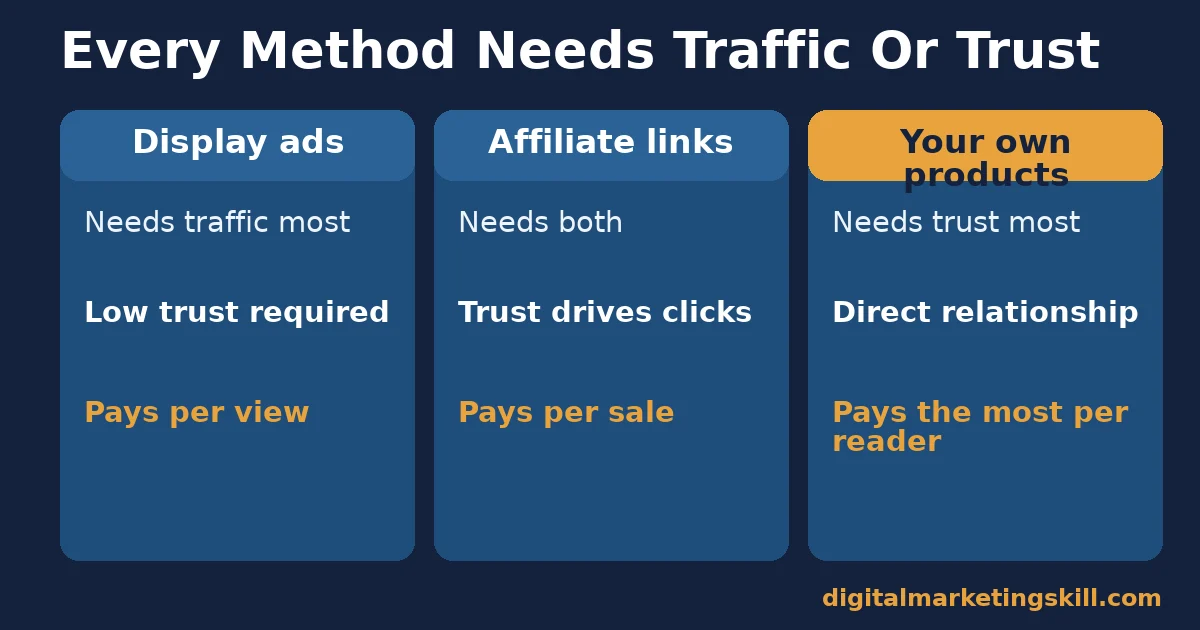
Display ads need traffic more than trust. A reader does not need to believe anything to generate ad revenue by viewing a page. Affiliate links and sponsorships need both. A reader has to trust the recommendation enough to click and buy.
Your own products need the most trust of all, since someone is paying you directly, not a third party. This is why a brand-new blog with high traffic but low trust often earns more from ads than from affiliate links.
An established blog with a smaller, loyal audience often earns more from its own products than from ads alone. The gap comes down to trust, not traffic.
What Differs By Monetization Method
Two broad paths dominate blog monetization: passive methods like display ads, and active methods like affiliate marketing and products. They reward different kinds of effort.
Display Ads: Built For Volume
Display ads, through networks like Google AdSense, pay per thousand views. This happens regardless of whether anyone clicks through to buy anything. They require the least ongoing work once set up. They need meaningful traffic to add up to real income, and payout rates vary by niche and region.
Affiliate Links and Products: Built For Margin
Affiliate links and your own products pay far more per reader than ads do. But only when the reader trusts the recommendation enough to act. A blog with a thousand loyal, engaged readers can out-earn a blog with ten times the traffic and no real connection to its audience.
How To Fix The Most Common Monetization Mistakes
These two paths fail in different ways. Match the fix to the method you are leaning on.
Display Ads: Lead With Placement, Not Volume
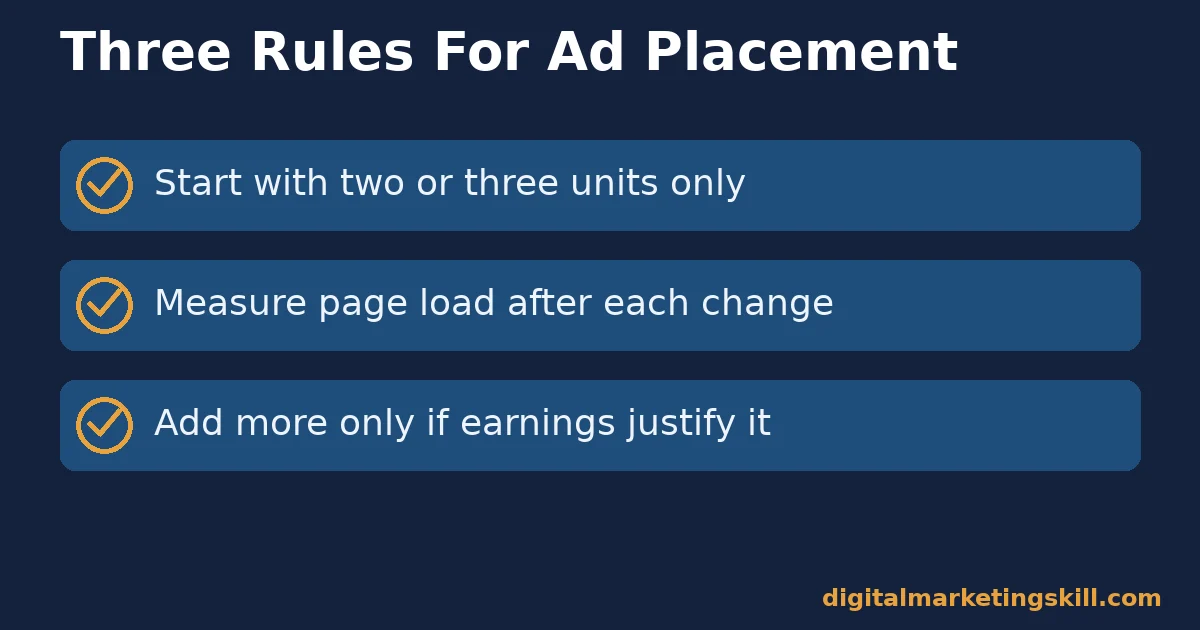
Too many ad units slow a page down. They push readers away before they ever see one. Start with two or three well-placed units. Measure the page load impact, and add more only if earnings justify the extra friction.
Affiliate Links and Sponsorships: Lead With Disclosure
A recommendation that turns out to be a hidden paid promotion damages trust permanently. It also breaks FTC rules. Disclose every material connection clearly, in plain language like “affiliate link” or “sponsored.” Place it next to the content itself, not buried in a footer or behind a click.
How To Measure Blog Monetization Performance
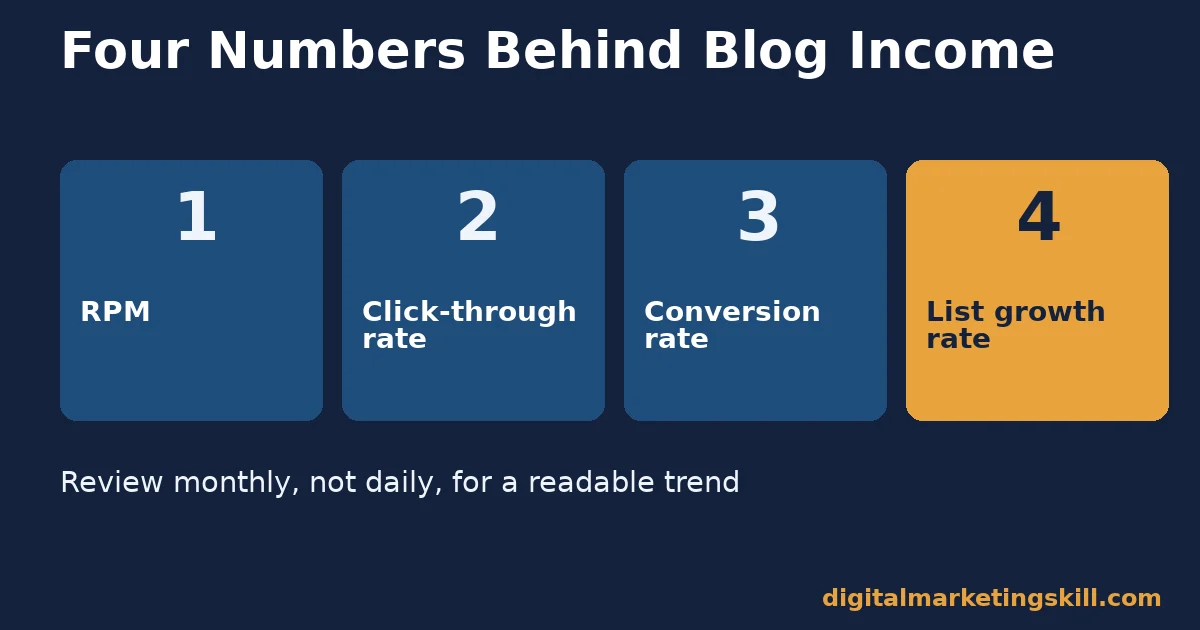
Four numbers tell you whether a monetization strategy is actually working, not just technically live.
- Revenue per thousand visitors (RPM): total earnings divided by traffic, times 1,000. This lets you compare performance across months with different traffic levels.
- Affiliate click-through rate: the share of readers who click an affiliate link. A low rate usually means the recommendation does not fit the content around it.
- Affiliate conversion rate: the share of clicks that turn into a sale. This reflects how well-matched the product is to your specific audience.
- Email list growth rate: how fast your subscriber list grows. A list you own is the one audience asset no platform change can take away from you.
None of these four numbers needs special software. Your ad network dashboard reports RPM directly. Most affiliate programs report clicks and conversions in their own reporting panel.
The One Rule For Choosing Your Primary Method
Decision rule: if your blog has high traffic but a broad, less-engaged audience, lead with display ads and add affiliate links where they fit naturally. If your blog has a smaller but loyal, specific audience, lead with affiliate links or your own product, and treat ads as a secondary layer.
Illustrative, invented numbers: imagine two blogs with 10,000 monthly readers each. A broad lifestyle blog might earn more from ads, at a steady rate per thousand views. Its audience is too varied for any single affiliate offer to fit everyone.
A niche blog about one specific hobby might earn far more per reader from a handful of well-matched affiliate links. The audience already wants exactly what is being recommended. In this illustrative comparison, the right primary method depends on audience fit, not traffic size alone.
A Worked Example: A Blog’s First Year Of Monetization
Illustrative, invented numbers: this is a step-by-step walkthrough, not a real blog’s results. A new blog in a specific niche starts with no monetization in month one. It focuses entirely on consistent, useful content and an email signup form.
By month four, with a small but steady readership, the blog adds two or three carefully chosen affiliate links to its most popular posts, each disclosed clearly. By month eight, once traffic is steady, it adds a small number of display ad units, placed to avoid slowing the page down.
In this illustrative walkthrough, income stays modest through most of the first year. It grows faster once the email list and affiliate relationships have had time to compound. The order matters: trust and traffic came first, monetization layered on top.
Choosing an Ad Network for Blog Monetization
Google AdSense is the most common starting point for blog monetization, because it needs no minimum traffic figure, only original content that follows its program policies and an applicant at least 18 years old. Many blogs start here and move to a premium ad network once traffic grows.
Premium networks typically pay a higher RPM than AdSense, but most set a minimum monthly traffic threshold before they accept a new site. Check each network’s current requirements directly, since thresholds and payout structures change and vary by niche.
Whichever network you choose, test ad placement the same way you would test anything else. Move a unit, wait a few weeks, and compare RPM before deciding whether the change helped or hurt.
Switching networks too often resets this comparison every time, so give each test enough weeks to produce a stable, readable number before changing anything else.
Why an Email List Compounds Blog Monetization
An email list is the one audience asset a platform change cannot take away. A search algorithm update or a social network’s policy shift can cut traffic overnight; a list of people who gave you their email address directly stays reachable regardless.
Every monetization method in this guide works better with a list behind it. Affiliate promotions sent directly to engaged subscribers convert at a higher rate than the same link placed in a blog post alone. Your own products sell faster to a list that already trusts your recommendations.
Start collecting emails before you need them. A simple signup form, offering one genuinely useful resource related to your niche, is enough to begin; the list compounds in value with every month it grows.
What Affiliate Programs Actually Require
Every affiliate program has its own rules on top of the general FTC disclosure requirement, and breaking them can get an account suspended regardless of how well a blog performs. Amazon Associates, one of the largest and most commonly used programs, is a useful example of the kind of rules that apply across most affiliate networks.
Amazon’s own operating policy requires affiliates to follow applicable disclosure laws, citing the FTC’s endorsement guides directly, including using plain terms like “#ad” or “#sponsored” where relevant. It also prohibits several practices that sound minor but carry real consequences: cloaking or hiding the destination URL, offering an incentive for someone to click a link, and buying products through your own affiliate link.
Most other affiliate programs mirror these same core rules, even when the specific wording differs. Read the operating agreement for any program before relying on it for blog monetization, since the penalty for a violation is usually losing the account and every link in it, not a warning first.
Technical compliance matters too. Google recommends marking affiliate and paid links with a rel="sponsored" attribute on the link, a small code change that tells search engines the link is commercial rather than an organic editorial recommendation (Google Search Central). Most WordPress affiliate link plugins add this automatically.
Tracking What Actually Earns
A blog with no tracking cannot tell which posts drive income and which just drive traffic. Most ad networks and affiliate programs provide their own dashboard, but connecting them to a single view of your traffic makes the pattern much easier to see.
At a minimum, track pageviews per post, affiliate clicks per post, and RPM per post, reviewed monthly rather than daily. A single slow day rarely tells you anything useful; a month of consistent underperformance from one post usually does.
Once a pattern is clear, act on it deliberately. A high-traffic post with a low affiliate click-through rate might need a better-placed or better-matched recommendation, not a completely different product. A low-traffic post with a strong conversion rate might be worth promoting more, rather than changing at all.
Frequently Asked Questions About Blog Monetization
How much traffic do I need to start blog monetization?
There is no fixed minimum for affiliate links or your own products. You can start as soon as you have relevant content and an honest recommendation to make. Display ad networks like Google AdSense require original content that meets their program policies, rather than a specific traffic number, though more traffic generally means more ad revenue.
Is affiliate marketing better than display ads for blog monetization?
Neither is universally better. Affiliate marketing usually pays more per reader but needs a trusting, well-matched audience. Display ads pay less per reader but need less trust, and work well for broad-traffic blogs. Many successful blogs use both.
Do I have to disclose affiliate links on my blog?
Yes. The FTC requires a clear disclosure of any material connection, including affiliate links and free products. It must be placed where readers will actually see it, not hidden in a footer or a separate disclosure page alone.
How long does it take for blog monetization to generate real income?
It varies widely by niche, traffic, and consistency, so there is no fixed timeline to quote. Most blogs that succeed build an audience and trust for several months before monetization produces meaningful income.
Can I combine display ads, affiliate links, and my own products?
Yes, and most blogs that earn consistently do exactly that. The key is sequencing. Build traffic and trust first, then layer in methods that fit the content, rather than adding every method at once before either exists.
What is RPM in blog monetization?
RPM stands for revenue per thousand visitors: your total earnings divided by your traffic, multiplied by 1,000. It lets you compare monetization performance across months or posts with very different traffic levels on a level basis.
Do I need a business license to monetize a blog?
Requirements vary by location and income level, so check your own jurisdiction’s rules on self-employment and business registration. This guide covers general marketing and disclosure practice, not legal or tax advice for your specific situation.
What is the easiest blog monetization method to start with?
Display ads are usually the easiest technically, since a network like Google AdSense handles the ad serving once you are approved. Easiest to start is not the same as most profitable, though. Affiliate links and your own products typically pay more per reader once your audience trusts you.
Do sponsored posts count as blog monetization?
Yes. A sponsored post is a brand paying for coverage directly, rather than through an ad network or a per-sale commission. The same FTC disclosure rule applies: label it clearly as sponsored, paid, or an advertisement, placed where the reader sees it before or while reading, not only at the end.
Should a new blog start with ads or affiliate links?
A new blog usually has little traffic and little trust yet, so neither method earns much at first. Focus early effort on content and an email list. Add ads once traffic is steady, and affiliate links once you have a few posts that already attract the right kind of reader.
Common Blog Monetization Mistakes to Avoid
A few habits show up again and again on blogs that struggle to earn. Avoiding them is often more useful than adding a new method.
Recommending a product you have never used is the most common one. Readers can usually tell, and an inaccurate recommendation costs more trust than the sale was worth. Only promote what you genuinely believe helps your specific audience.
Changing monetization methods too often is another. Switching ad networks or affiliate programs every few weeks makes it impossible to tell whether a drop in income came from the change itself or from something else entirely. Give any new method at least a full month before judging it.
Ignoring page speed is a third. Too many ad units or tracking scripts slow a page down enough to push readers away before they ever see the content, let alone a recommendation. Check page load time after adding any new ad unit or tracking script, not just once a year.
Finally, treating disclosure as optional is the mistake with the most serious consequences. It is not a style choice; it is a legal requirement in most places a blog is read from, and skipping it risks both reader trust and regulatory attention.
Where to Go From Here
Blog monetization works best once the audience and trust already exist, wherever in your country your readers are based. This site’s guide to starting and growing a blog covers the groundwork this guide builds on, and the notes on making money from blogging cover more income ideas beyond the four methods here.
For the affiliate side specifically, see the guide to affiliate marketing for beginners, and for building the audience these methods depend on, see the content marketing guide.
At Digital Marketing Skill Institute, blog monetization sits inside the AI-Powered Lead Generation and Email Automation track of the Master Diploma in Digital & AI Marketing. It is one of four AI-powered tracks, totalling ten courses, with a Full Stack option if you want all four.
Every track includes unlimited 1-on-1 coaching and mentoring, a U.S. Project Internship with a verified U.S. Work Reference Letter, and dual US and UK accreditation recognised in more than 100 countries. The program runs 100% online, wherever you live.
See real outcomes on the reviews page, read the full program on the Master Diploma page, browse more guides on the blog, or go straight to the application page to start. Learn more at digitalmarketingskill.com, and start your application at digitalmarketingskill.com today.
Every figure in this guide was checked against its original source before publication. Figures marked as illustrative are invented examples, not real results.
![9 Amazing Digital Marketing Skills to Make Money Online [With Proof]](https://digitalmarketingskill.com/wp-content/uploads/2019/07/9-Amazing-Digital-Marketing-Skills-to-Make-Money-Online-With-Proof-17.png)






