A digital marketing game plan is the document that turns scattered social posts, ads and emails into one coordinated effort toward a stated goal. Marketers who document their strategy report success far more often than those who carry the plan in their heads. So the real question is not whether you need a digital marketing game plan. It is which four parts yours is still missing.
Key Takeaways
- Documentation changes outcomes. CoSchedule’s Trend Report on Marketing Strategy, surveying 515 marketers across 75 countries, found organised marketers were 674% more likely to report success, and marketers who documented their strategy were 414% more likely to report success.
- Budgets vary sharply by business type. The CMO Survey (Duke University Fuqua School of Business, with Deloitte and the American Marketing Association; 281 US marketing leaders) found marketing budgets averaging 9.4% of company revenue, with B2C product companies allocating about 15.5% and B2B product companies about 6.4%.
- The audience is mostly online already. DataReportal’s Digital Global Overview Report counted more than 6 billion people online worldwide, 73.2% of the world’s population.
- Specialist roles that execute these plans are in demand. The U.S. Bureau of Labor Statistics projects market research analyst and marketing specialist roles to grow 7% over the coming decade, with about 82,000 openings projected each year.
- Outsourcing is common, not a last resort. A Clutch survey of 500 small-business decision-makers found 45% plan to outsource marketing work.
In this guide
- What Most Digital Marketing Game Plan Advice Skips
- Why a Documented Digital Marketing Game Plan Outperforms a Mental One
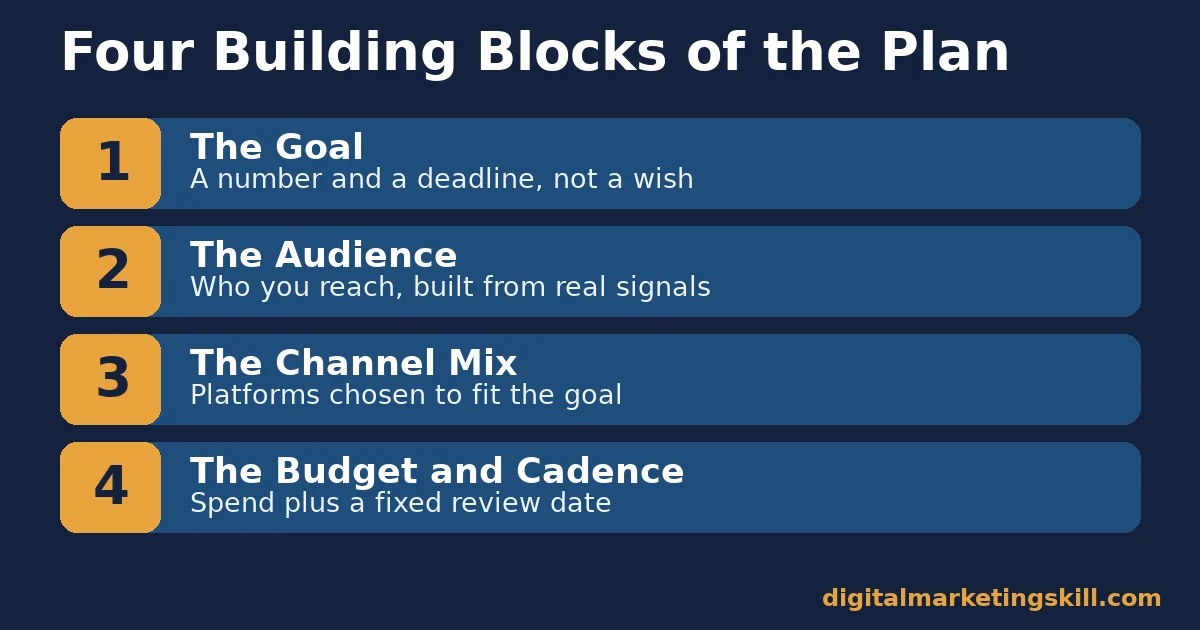
- Four Building Blocks of a Digital Marketing Game Plan
- How to Build and Strengthen Each Part
- Common Mistakes That Break a Digital Marketing Game Plan
- How Much to Put Behind a Digital Marketing Game Plan
- How to Measure Whether the Plan Is Working
- The One Rule: Fund the Channel That Moves Your Stated Goal
- A Real Case: A Small, Tested Budget Beating a Big Guess
- Frequently Asked Questions About a Digital Marketing Game Plan
- Start With the Goal, Then Build the Rest of the Plan
What Most Digital Marketing Game Plan Advice Skips
Most guides describe channels: run ads here, post here, email there. That is tactics, not a plan. A digital marketing game plan is the layer above tactics. It states the goal, names the audience, sets the channel mix, and fixes the budget and the review schedule. Skip that layer, and the same tactics produce inconsistent results.
This distinction matters because tactics without a plan tend to multiply. A team without a documented goal adds a new channel every time someone reads about one working elsewhere. Budget and attention end up spread across far more platforms than the team can run well. Our overview of what digital marketing covers is a useful map of the channels available. A digital marketing game plan decides which of them actually earn a place in your mix.
Here are the ground rules. The CMO Survey and U.S. Bureau of Labor Statistics figures below describe the United States specifically. Treat them as one well-documented market, not a global guarantee. The CoSchedule Trend Report on Marketing Strategy spans 75 countries but is self-reported, which can inflate success claims. Treat every number here as evidence to weigh, not a settled fact.
A digital marketing game plan is not country-specific by nature. The structure, a goal, an audience, a channel mix, a budget, a review cycle, applies anywhere in your country. Only the numbers inside it change by market. DataReportal’s Digital Global Overview Report counts more than 6 billion people online worldwide, so the audience section of most plans starts from a genuinely global pool.
Why a Documented Digital Marketing Game Plan Outperforms a Mental One
A plan that lives only in someone’s head is hard to check, share or improve. It changes with mood and memory. A written digital marketing game plan removes that drift. Everyone involved works from the same goal, the same audience definition and the same budget.
This also explains why two people on the same team describe the strategy differently in a meeting. Without a written reference, each person fills gaps with their own assumptions. Those assumptions quietly diverge over weeks. A document does more than record the plan. It keeps the team’s understanding of the plan from drifting apart in the first place.
This is not a minor advantage. CoSchedule’s survey of 515 marketers found organised marketers were 674% more likely to report success than peers. Marketers who documented their strategy specifically were 414% more likely to report success. The gap is not about talent. It is about whether the plan exists somewhere other than memory.
Goals Before Tactics, Every Time
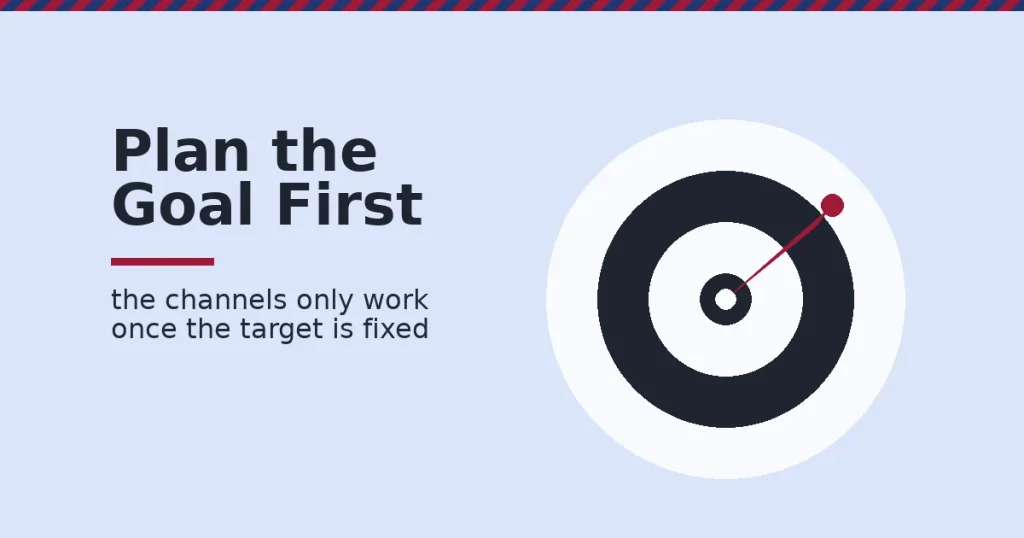
Every strong digital marketing game plan states a goal before it names a single channel. A vague goal like “grow online” has no way to be measured, so it cannot guide a budget decision. A specific goal, such as a target number of qualified leads in a stated period, tells you which channels matter and which do not.
This ordering also prevents a common trap: choosing a channel because it is trendy, then inventing a goal to justify it. The goal should select the channel. Never the other way round.
A Plan Is a Decision Tool, Not a Filing Exercise
A digital marketing game plan only earns its name if someone uses it to decide things: what to fund, what to pause, what to test next. Write a plan once and never reopen it, and it becomes a filing exercise, not a tool. Build in a fixed point to revisit it, because the market, the budget and the team all change.
Four Building Blocks of a Digital Marketing Game Plan
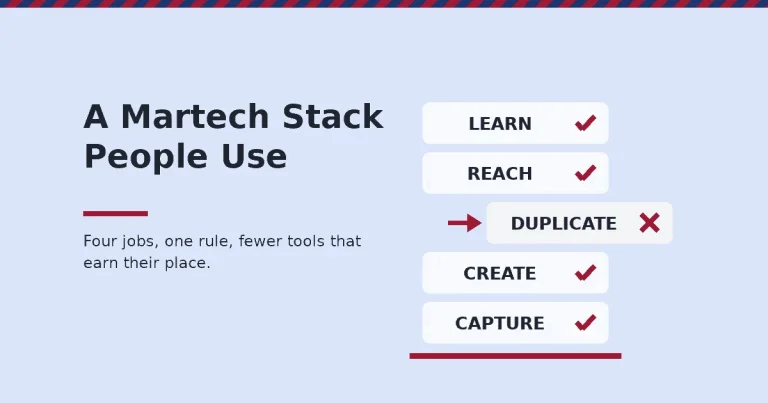
Almost every working plan reduces to four parts. Skip one, and the plan breaks down somewhere predictable. These four parts are also where the underlying digital marketing skills, SEO, paid media, email, analytics, get pointed at a specific outcome instead of practiced in isolation.
The Goal: Built to Be Checked, Not Just Stated
The goal names a number and a deadline: a lead count, a revenue figure, a cost-per-acquisition ceiling. Without a number, nobody can say later whether the plan worked. A goal stated as “more leads” or “better visibility” has nothing concrete to check against. Disagreements about whether the plan is working then become arguments about opinion rather than evidence.
The Audience: Built From Evidence, Not Assumption
The audience section names who you are trying to reach and where they already spend time online. Guessing here wastes the rest of the plan, because the channel mix and the message both follow from this section. Two businesses selling similar products can need entirely different channel mixes if their actual buyers use different platforms. This section needs real customer data behind it, not an assumption about who “should” be buying.
The Channel Mix: Built to Match the Goal, Not the Trend
The channel mix lists which platforms and formats carry the message, and why each one is there. A channel earns a place because it reaches the stated audience toward the stated goal, not because a competitor uses it. Write a short line next to each channel, stating the role it plays. If you cannot explain why a channel is in the plan, it probably should not be.
The Budget and Cadence: Built to Survive Contact With Reality
The budget section states how much money and time go to each channel, and on what schedule the plan gets reviewed. Skip a review date, and a struggling channel can run for months before anyone questions it. Cadence also covers who owns each channel day to day. A budget without a named owner tends to drift, no matter how clearly it was written.
How to Build and Strengthen Each Part
Knowing the four parts is not the same as building them well. Here is where effort pays off fastest.
The Goal: Lead With One Number, Not a Wish List
Pick one primary number for the period ahead. Secondary numbers can sit underneath it, but only one should decide whether the plan succeeded. A plan with five equally weighted goals rarely hits any of them cleanly.
The Audience: Lead With Real Signals, Not a Persona Template
Build the audience section from real signals: past customers, search terms people actually use, and the platforms your current traffic already comes from. A generic persona template produces a generic plan.
The Channel Mix: Lead With a Small Test Before a Full Budget
Before committing a full budget to a new channel, run a small, time-boxed test. A test sized like the one below shows whether the channel can work before you scale spending into it.
Illustrative, invented numbers: a small business tests a new channel with $200 over two weeks and tracks cost per lead. If that figure beats the business’s existing channels, the plan scales the budget. If it does not, the plan drops the channel before a larger budget is at risk.
The Budget and Cadence: Lead With a Fixed Review Date
Put a review date on the calendar before you need one. A monthly or quarterly check, compared against the goal number, is what turns a static document into a plan that actually steers decisions.
Common Mistakes That Break a Digital Marketing Game Plan
Most broken plans fail for one of two reasons, and both are visible early if you know where to look.
Writing the Plan Around Channels Instead of a Goal
It is tempting to start a digital marketing game plan by listing platforms: a social calendar, an ad account, an email tool. That order feels productive, but it builds activity without a target. Months later, nobody can say whether the work succeeded, because nobody defined success. Write the goal number first, every time, even before you open a single platform’s dashboard.
Treating the Plan as Finished Once It Is Written
The second common failure is finishing the document and never reopening it. A digital marketing game plan stays useful only while someone keeps checking it against results. Leave it unread in a shared drive, and it stops guiding decisions the moment it is filed away, no matter how well it was written on day one. Put the review date in a calendar, not just in the document, so it actually happens.
How Much to Put Behind a Digital Marketing Game Plan
There is no single right number, but benchmarks help you sanity-check your own budget. The CMO Survey found US marketing budgets averaging 9.4% of company revenue. The figure varies sharply by business type: B2C product companies allocate about 15.5% of revenue to marketing, B2B product companies about 6.4%, and B2B services companies about 9%.
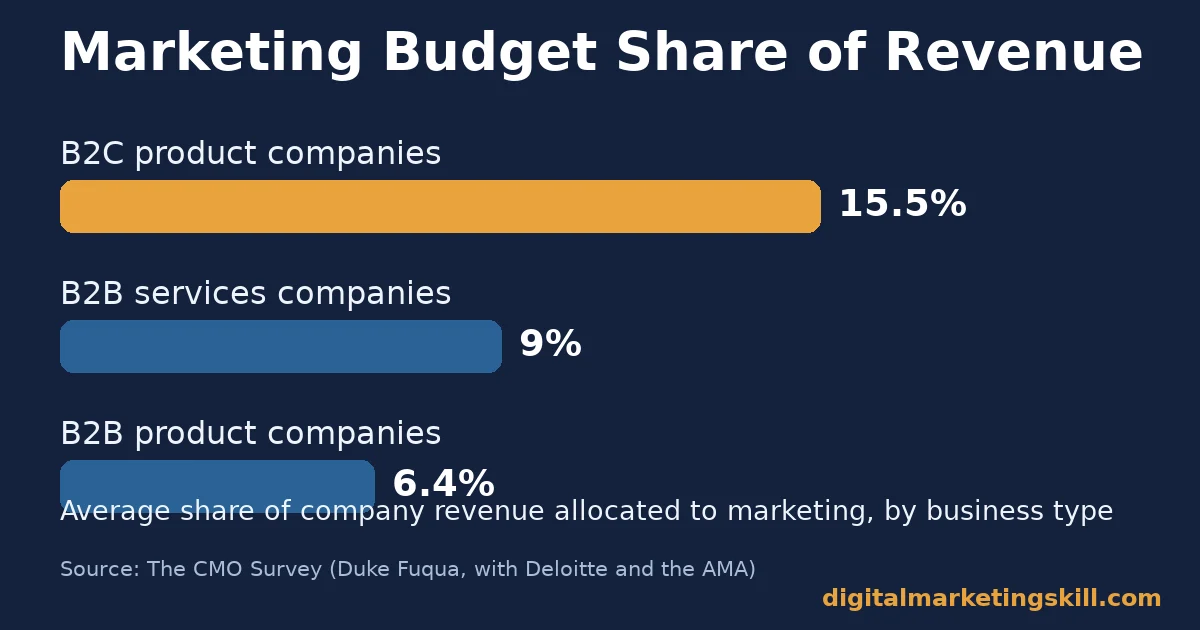
Read these as a starting range, not a rule. A new business building awareness from zero often needs to spend above its category’s typical share. An established business with strong word of mouth may need less. The goal from earlier in your plan should drive the number, not the benchmark alone.
Outsourcing part of the work is common at this stage. A Clutch survey of 500 small-business decision-makers found 45% plan to outsource marketing. A documented digital marketing game plan makes outsourcing safer, because an outside freelancer or agency can execute against a written goal and budget instead of guessing at one. Our guide to freelancing fundamentals covers what to check before handing part of a plan to an outside contractor.
How to Measure Whether the Plan Is Working
A digital marketing game plan without measurement is just a set of intentions. Google Analytics’ own guidance on key events frames this the same way, defining a key event as one that “measures an action that’s particularly important to the success of your business,” not just an action that is easy to count. Track these at the review point you set earlier.
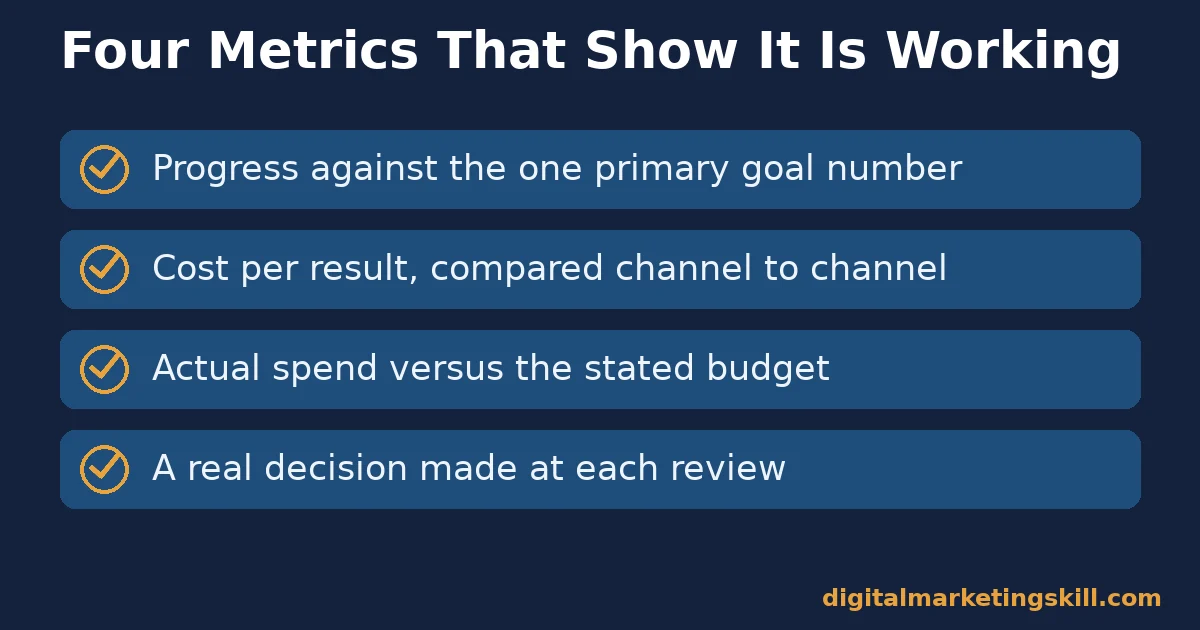
Four Metrics That Show the Plan Is Working
- Progress against the one primary goal number. Not every number in the plan, just the one you chose to be decisive.
- Cost per result by channel. Cost per lead or cost per sale, compared channel to channel, not just totalled.
- Spend versus the stated budget. Whether actual spend matches what the plan allocated, and why if it does not.
- Decisions made at each review. Whether the review point actually changed a budget or a channel, or was simply noted and ignored.
Reading These Metrics Together
A good cost per result on one channel means little if total spend has drifted far from the plan. Read spend discipline and channel performance together. If a review point keeps producing the same notes without a decision, the review itself, not the plan, is the part that needs fixing.
It also helps to separate a channel that is underperforming from one that simply has not been given enough time. A new channel often needs a few review cycles before its true cost per result settles, so judge it against the goal and the test budget you set, not against older, established channels in the same review.
The One Rule: Fund the Channel That Moves Your Stated Goal
If you remember one rule from this guide, make it this: fund the channel that moves your stated goal number, and defund the one that does not, regardless of how popular either channel is elsewhere. A digital marketing game plan exists precisely to make that comparison possible instead of guesswork.
Applying this rule consistently is harder than stating it, because a popular channel can feel safer to keep funding even when its numbers lag. The plan’s job is to make that comparison explicit at every review, so the decision rests on the goal number rather than on which channel feels most familiar to the team.
A Real Case: A Small, Tested Budget Beating a Big Guess
Among the outcomes published on Digital Marketing Skill Institute’s reviews page, graduate Ayooluwa Osemi tested a small paid social budget of $14 and generated $878 in sales within two weeks, a return over 300% on that spend. The published account frames this as a small, deliberate test rather than a large, unplanned spend.
Treat this as one documented account, not a typical or guaranteed result; outcomes vary by effort, market and offer. The Institute’s earnings disclaimer sets out that context in full, and it is worth reading before using any single case as a budget baseline.
Set the specific numbers aside. The structural lesson is the one worth carrying into your own digital marketing game plan: a small, bounded test produced a clear enough result to justify a decision, because someone measured it against a specific spend rather than judging it by feel.
Frequently Asked Questions About a Digital Marketing Game Plan
How long should a digital marketing game plan be?
Long enough to cover the goal, the audience, the channel mix and the budget clearly, and short enough that your team actually rereads it. Most working plans fit on a few pages, not a lengthy document nobody opens again. If a section needs more than a page to explain, that is usually a sign the goal underneath it is still too vague.
How often should I update my digital marketing game plan?
Review it at a fixed point, monthly or quarterly depending on how fast your market moves, and update it whenever the goal, budget or audience changes meaningfully in between. A fast-moving, newer business usually benefits from a monthly check; an established business with stable channels can often review quarterly without losing control of the plan.
Do I need a different digital marketing game plan for every channel?
No. One plan should cover all channels under a single goal, with a section for each channel’s role. Separate, disconnected plans per channel are exactly the fragmentation a digital marketing game plan is meant to fix.
What is the biggest mistake businesses make with their digital marketing game plan?
Skipping the goal number and jumping straight to channels. Without a specific number to aim at, a plan cannot tell you whether it is working, so spending drifts toward whatever feels busy rather than what performs. The second most common mistake is close behind: writing the plan once and never scheduling a real review of it.
Should a small business copy a large company’s digital marketing game plan?
No. The four parts transfer, but the numbers inside them should come from your own goal, audience and budget, not a competitor’s public strategy. Benchmarks are a sanity check, not a template to copy directly, because a competitor’s budget share, channel mix and audience rarely match your own closely enough to copy safely. Use the benchmark to notice when your own number looks unusual, then dig into why, rather than adjusting your budget to match it automatically.
Can I build a digital marketing game plan without hiring an agency?
Yes. The four-part structure works whether you execute it yourself, with a small team, or with outside help. What matters is that the goal, audience, channel mix and budget are written down and reviewed, not who carries them out.
Start With the Goal, Then Build the Rest of the Plan
Write the goal number first, then the audience, the channel mix, and the budget with a review date attached. That order, kept in writing and revisited on schedule, is what separates a digital marketing game plan from a list of tactics. None of the four parts needs to be perfect on the first draft; what matters is that all four exist in writing and get checked against real results on a schedule you actually keep.
Digital Marketing Skill Institute’s Master Diploma in Digital & AI Marketing teaches this planning process alongside the execution skills behind it. Nine practical, AI-powered courses cover strategy and planning, SEO and content, Google Advertising and Analytics, email marketing automation, lead generation, and social media marketing and advertising. The program includes unlimited one-on-one mentoring and coaching, plus real project-based work experience inside a U.S. partner company from day one. The diploma is dual US and UK accredited and recognised in more than 100 countries, and it runs 100% online, so you can build and run your plan from anywhere in your country.
Visit Digital Marketing Skill Institute for the fuller course breakdown, browse the blog for more planning guides, and when you are ready to build a structured plan with guidance, you can apply directly. Wherever in your country you are building from, the same four parts apply. You can start that process at digitalmarketingskill.com today.
Every figure in this guide was checked against its original source before publication. Figures marked as illustrative are invented examples, not real results.
![9 Amazing Digital Marketing Skills to Make Money Online [With Proof]](https://digitalmarketingskill.com/wp-content/uploads/2019/07/9-Amazing-Digital-Marketing-Skills-to-Make-Money-Online-With-Proof-17.png)