
Brand guidelines are a written set of rules that explain how a brand should look, sound and behave everywhere it appears. They cover things like the logo, colours, fonts, images and tone of voice, with examples of what to do and what to avoid. They matter because they let many different people, from designers to freelancers, create work that still feels like it came from one brand.
Key Takeaways
- People also call them a brand book or style guide. In every case, the aim is consistency.
- Most cover visual identity (logo, colour, type, imagery) and verbal identity (voice, tone and word choices).
- Mailchimp’s public content style guide exists to help its teams “write clear and consistent content across teams and channels.”
- Colour choices should pass accessibility rules. WCAG asks for a contrast ratio of at least 4.5:1 for normal text.
- Good guidelines are short, practical and full of examples, so people actually use them.
What Are Brand Guidelines?
Imagine ten people making posts, ads and emails for the same company. Without shared rules, one uses a blue logo, another a black one. One writes in a jokey tone, another sounds like a bank. Customers quickly feel the brand is messy, or even fake.
A guidelines document stops this. Instead, it sets the rules once, so everyone follows the same playbook. As a result, the brand looks and sounds the same on a billboard, a TikTok video and a customer email.
The NHS describes its identity as “one of the most cherished and recognised brands in the world.” It also says, “All users of the NHS Identity have a responsibility to protect it.” That sense of shared responsibility is exactly what good guidelines create.
How Brand Guidelines Work
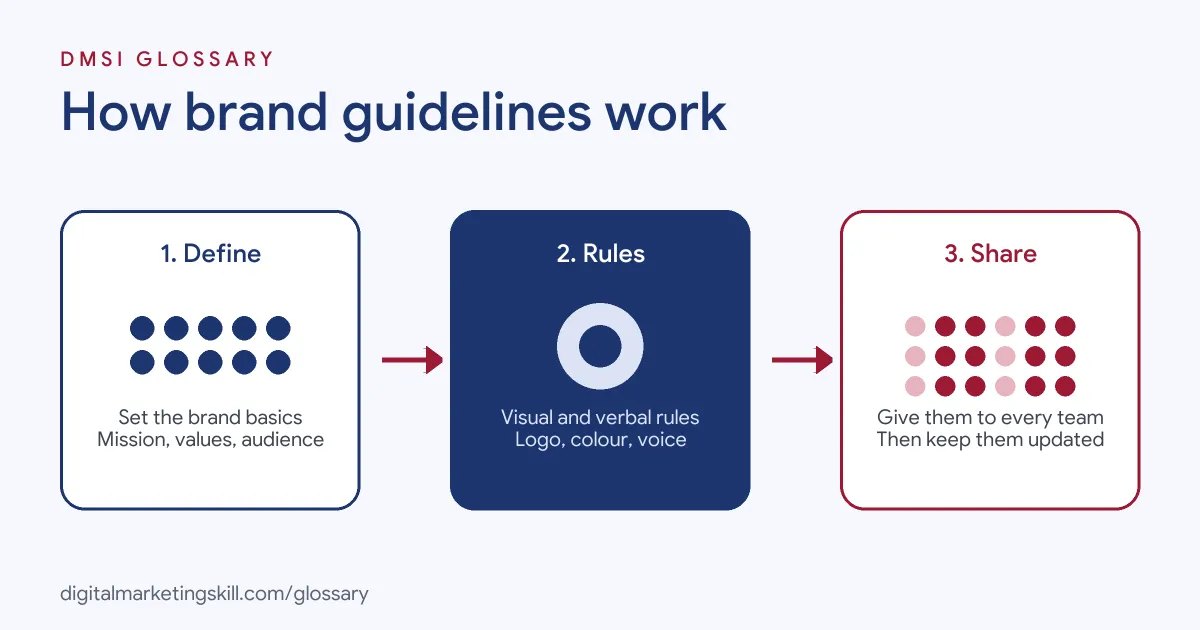
Guidelines turn a brand strategy into rules people can follow. First, the brand defines who it is. Next, it sets visual and verbal rules. Finally, it shares them with everyone who creates content, and keeps them up to date.
The Brand Foundation
Most guidelines open with the big picture. Typically, this includes the mission, values, audience and positioning. In other words, it explains why the brand exists and who it serves. For background, see our entries on brand identity and brand positioning.
Visual Identity Rules
Next come the visual rules. These usually include:
- Logo: versions, minimum size, clear space around it and examples of misuse.
- Colours: exact codes for print and screen, plus which colours to use for text and buttons.
- Typography: fonts, sizes and how to set headings and body text.
- Imagery: the style of photos, illustrations and icons.
- Layouts: templates for social posts, slides, ads and emails.
Accessibility belongs here too. The Web Content Accessibility Guidelines (WCAG) ask for a contrast ratio of at least 4.5:1 for normal text and 3:1 for large text. Interestingly, WCAG says text that is part of a logo “has no contrast requirement.”
Verbal Identity Rules
Then come the rules for words. Usually, this section covers the brand voice, how tone shifts in different situations, and grammar choices. Mailchimp’s guide is a well-known public example. Its sections include “Voice and Tone”, “Grammar and Mechanics”, “Writing for Social Media” and “Writing for Accessibility”. Similarly, the UK Government Digital Service publishes style guides that cover style points for GOV.UK content.
Brand Guidelines Examples
Here are three made-up examples of guidelines in action:
- Coffee chain: A café brand gives every franchise a one-page sheet. It shows the logo, two colours, one font and five rules for social captions.
- Software company: A tech firm keeps its guidelines in an online design system. Designers pull approved buttons, icons and colours straight into their work.
- Agency client: A skincare brand sends its brand book to a new agency. On day one, the agency’s designers already know the fonts, photo style and words to avoid.
In each case, the guidelines save time and protect the brand. They also cut down on rounds of feedback, because the basic choices are already made.
What to Include: A Checklist
| Section | What it covers |
|---|---|
| Brand foundation | Mission, values, audience and positioning |
| Logo | Versions, sizes, clear space and misuse |
| Colour | Codes for screen and print; accessible pairings |
| Typography | Fonts, sizes and hierarchy |
| Imagery | Photo, illustration and icon style |
| Voice and tone | Personality, tone by situation, words to use and avoid |
| Templates | Ready-made layouts for common formats |
Of course, you do not need every section on day one. After all, a short guide that people use beats a long one that nobody opens.
How to Create Brand Guidelines
- Gather what exists. Collect your logo files, colours, fonts and best-performing content.
- Agree the foundation. Write the mission, values and audience in plain words.
- Set the visual rules. Choose logo versions, colour codes and fonts, then show do and don’t examples.
- Check accessibility. Test text and background colours against the WCAG contrast ratios.
- Define the voice. Pick three or four words that describe how you sound, with sample sentences.
- Build templates. Create layouts for the formats you use most, such as social posts and emails.
- Share and train. Put the guide where everyone can find it, and walk new staff and suppliers through it.
- Review regularly. Update it when the brand, channels or products change.
Best Practices for Brand Guidelines
- Show, don’t just tell. Real examples of good and bad use teach faster than rules alone.
- Keep it practical. Focus on the decisions people make every day.
- Make files easy to get. Link logo files, fonts and templates in one place.
- Allow some flexibility. Explain the reason behind each rule, so people can make good choices in new situations.
- Name an owner. One person or team should answer questions and approve changes.
For a wider view of building a brand, read our guide to brand identity strategy.
Signs You Need Brand Guidelines
Not sure whether your business needs a guide yet? Look for these warning signs. First, your social posts, website and emails all look slightly different. Second, new staff or freelancers keep asking which logo or colour to use. Third, you spend time fixing work that is off-brand before it goes out. Finally, customers mention that your brand feels confusing or inconsistent.
If two or more of these sound familiar, start small. For example, write a one-page guide with your logo, colours, fonts and three voice rules. Then share it with everyone who creates content. As the business grows, you can add templates and more detail. That way, the guide grows with the brand rather than sitting unfinished.
Common Mistakes to Avoid
First, many brands write a beautiful document, then never share it. Second, they cover the logo in detail but say nothing about tone of voice. Third, they pick colours that fail contrast checks, so text is hard to read. Finally, they never update the guide, so it slowly drifts away from what the brand actually does. Each of these problems weakens the very consistency the guide was meant to create.
Where You’ll Use Brand Guidelines at Work
Almost every creative and marketing role works with brand rules. For example, remote job listings ask candidates to:
- “Learn and apply brand guidelines and values, ensuring consistent representation across all print and digital design work.” (Senior Graphic Designer).
- “Design captivating and visually appealing emails using Figma, ensuring they align with brand guidelines and effectively communicate key messages.” (Email Designer).
- Bring “Experience building brand guidelines, style guides, toolkits or creative systems.” (Styleguides Artist).
So whether you aim to be a Social Media Manager, Content Creator or Freelance Digital Marketer, you will follow guidelines daily. With experience, you may also help write them for clients.
Learn It in the Full Stack Programme
Brand rules shape social posts, ads, emails and websites, so the best fit is the Full Stack programme (all four tracks). You take all ten courses and complete one portfolio project from each track. You also get unlimited 1-on-1 mentoring and a U.S. Project Internship from day one.
Frequently Asked Questions
What are brand guidelines in simple terms?
They are a rulebook for how a brand looks and sounds. They tell people which logo, colours, fonts and tone of voice to use.
What is the difference between brand guidelines and a style guide?
People often use the terms interchangeably. Sometimes “style guide” means only the writing rules, while brand guidelines cover visuals and words together.
How long should brand guidelines be?
As short as possible while still being useful. A small business can start with a few pages and add more over time.
Who uses brand guidelines?
Designers, writers, marketers, agencies, freelancers and partners. Anyone who creates content for the brand should have a copy.
Do brand guidelines need to cover accessibility?
They should. For example, colour pairings for text should meet the WCAG contrast ratios, so everyone can read your content.
Sources: Mailchimp Content Style Guide; W3C: Understanding contrast (minimum); NHS England: NHS Identity; GOV.UK: Style guides; remote job listings on Himalayas.