
Interest targeting is a way of choosing who sees your ads based on the topics, hobbies and products people show an interest in, such as cooking, travel or running. The ad platform works out those interests from what people do online, and you pick the ones that fit your offer. It matters because it lets you reach likely customers who have never heard of you, even without any data of your own.
Key Takeaways
- Platforms infer interests from activity, such as pages viewed, videos watched and content people engage with.
- Google splits interests into affinity segments, for long-term passions, and in-market segments, for people actively shopping.
- On TikTok, choosing several interests widens your audience, while adding other filters narrows it.
- LinkedIn infers interests from how members engage with content, and members can change their ad preferences.
- Interest targeting is best for testing new markets. Your own data often beats it once you have enough.
What Is Interest Targeting?
Ad platforms watch what people read, watch and click. Over time, they group users by the topics they seem to care about. Interest targeting lets you show ads to those groups.
For example, a new vegan snack brand has no customer list yet. So it targets people interested in vegan food, healthy eating and fitness. Those people are not customers, but they are far more likely to care than a random audience.
Google explains the idea through its affinity segments. These let you reach people based on “a holistic picture of their lifestyles, interests, and habits”. In-market segments go further and focus on people actively researching a purchase.
How Interest Targeting Works
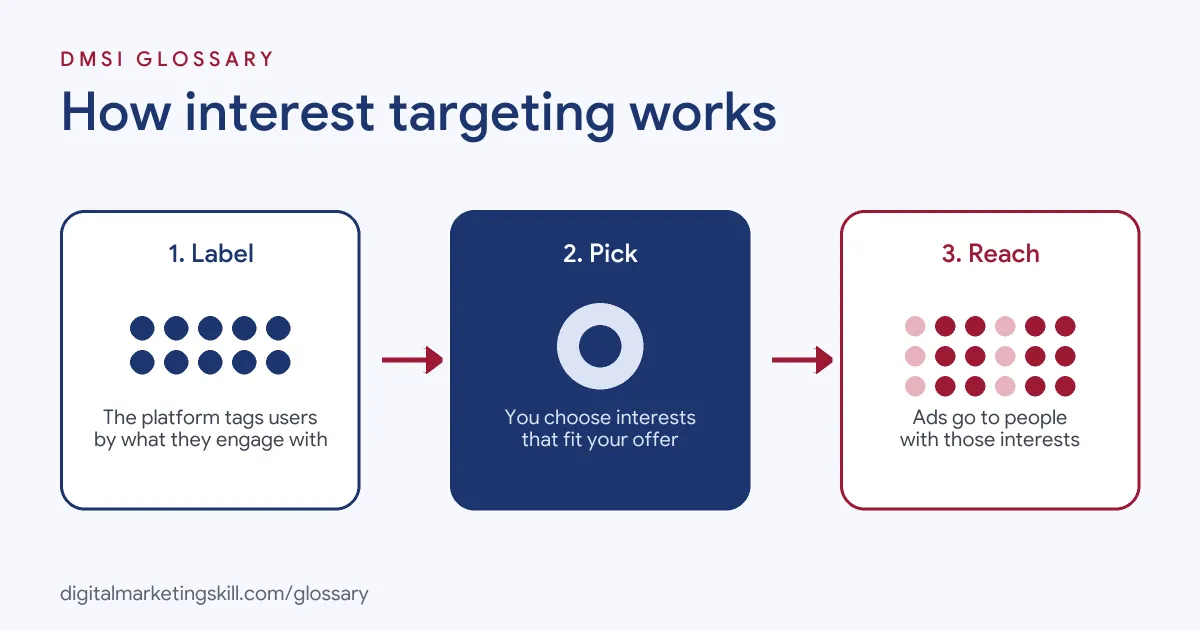
The process has three stages. First, the platform studies user activity and assigns interest labels. Next, you choose the labels that match your product. Finally, the platform shows your ads to users with those labels and reports the results.
Where Interests Come From
Each platform uses its own signals. Google says its audiences are based on activity on Google products and third-party sites, or estimated from content certain groups tend to like. LinkedIn says interests and traits may be based on, or inferred from, member actions and engagement with content on LinkedIn.
Types of Interest Segments on Google
Google offers three main options that use interests:
- Affinity segments: long-term passions and habits, such as “Health and Fitness Buffs”.
- In-market segments: people researching or planning to buy something, such as fitness products.
- Custom segments: you enter keywords, URLs and apps, and Google shows ads to people likely to be interested in them.
Google gives a useful example. Rather than the broad “Sports Fans” segment, a running shoe brand might build a custom segment to reach keen marathon runners.
Combining Interests
How you combine choices matters. TikTok’s help centre says selections within the same dimension use OR logic. So picking “Beauty” and “#makeup” includes people who match either. By contrast, selections across dimensions use AND logic, so adding an age range narrows the audience.
Privacy and User Control
Interest data is personal, so platforms set limits. Google, for example, points advertisers to its personalised advertising policy, which it notes was formerly called its interest-based advertising policy. It also says it never uses sensitive information such as health, race, religion or sexual orientation to tailor ads. Meanwhile, LinkedIn says members can update their ad preferences for interest targeting in their account settings. So the people in your audience have some say over whether they appear in it.
Interest Targeting Examples
Here are three made-up examples:
- Camping gear shop (example): A new shop targets people interested in hiking, camping and outdoor travel on Google Display. It then tests a custom segment built from keywords such as “lightweight tent”.
- Language app (example): An app runs TikTok ads to people interested in travel and languages, aged 18 to 34. Because it adds two interests, the pool grows; because it adds an age band, the pool narrows.
- B2B webinar (example): A software firm targets LinkedIn members interested in marketing automation and email marketing. It pairs those interests with job functions to stay relevant.
In each case, the business has little or no data of its own, so interests give it a sensible place to start.
A Simple Interest Test Plan
Here is a made-up plan for a small budget. A yoga studio has £30 a day for one week. It splits the money across three interest groups, so each gets £10 a day:
- Group A: yoga and meditation.
- The second group, B: fitness and healthy eating.
- A third group, C: wellness and self-care.
All three use the same ad and the same location. After seven days, Group A brings 14 trial bookings, Group B brings 6 and Group C brings 9. So Group A’s cost per booking is £5, compared with about £11.67 for B and £7.78 for C. The studio moves most of the budget to Group A, then tests a new idea against it the next week.
Interest Targeting vs Other Options
Here is how interests compare with other common ways to target:
| Option | Who it reaches | Best for |
|---|---|---|
| Interest targeting | People the platform links to chosen topics | Testing new markets with no data yet |
| Custom audience | People who already know you, such as site visitors | Retargeting and follow-ups |
| Lookalike audience | New people who resemble a list you provide | Finding new customers at scale once you have data |
| Broad targeting | Almost anyone in your location and age range | Letting the algorithm find buyers from scratch |
In short, interests guess who might care, while your own data shows who already does.
How to Set Up Interest Targeting
The menus differ by platform, but the steps are much the same:
- Describe your buyer. Note what your best customers read, watch and buy.
- Brainstorm related interests. Include direct topics, such as “yoga”, and nearby ones, such as “wellness”.
- Pick a few to start. Group similar interests into one audience rather than testing dozens at once.
- Set location and age. Keep these filters to what you truly need.
- Check the audience size. If it is very small, add related interests or remove filters.
- Launch two or three interest groups. Run them side by side with the same ads.
- Compare cost per result. Keep the winners, cut the losers and test new ideas.
Best Practices
A few habits help interest targeting pay off:
- Think like your customer. Choose interests your buyers actually have, not just your product category.
- Test against broad. Automated delivery sometimes finds buyers that interest lists miss.
- Move to your own data. Once you have buyers, build custom and lookalike audiences from them.
- Respect sensitive topics. Google says it never uses sensitive information such as health, race, religion or sexual orientation to tailor ads.
Common Mistakes to Avoid
First, many beginners stack too many filters on top of interests, so the audience becomes tiny. Second, they pick interests that are too broad, such as “shopping”. Third, they test so many interest groups that each one gets too little budget. Finally, they never compare interests with their own data. Each of these makes results harder to read.
Where You’ll Use Interest Targeting at Work
Paid social and media buying roles expect this skill. For example, one current remote listing asks candidates to:
- “Use custom audiences, lookalikes, and interest-based targeting to improve reach and relevance” (Facebook Ads Specialist).
So as a Paid Social Specialist, Social Media Manager or Content Creator, you will plan interest tests, read the results and decide what to scale. It is one part of wider audience targeting, alongside custom and lookalike audiences.
Learn It in the Social Media Track
You can learn to test interests and other audiences in the AI-Powered Social Media Management and Advertising track. There, you plan, create and run a paid social campaign for a real brand. You also get unlimited 1-on-1 mentoring and a U.S. Project Internship from day one.
For more platform tips, read our guide to Facebook ad targeting.
Frequently Asked Questions
What is interest targeting in simple terms?
It means showing your ads to people the platform believes are interested in topics linked to your product, such as fitness or travel.
How do platforms know my interests?
They infer them from what you do, such as the pages you view, videos you watch and content you engage with.
What is the difference between affinity and in-market segments?
On Google, affinity segments reflect long-term passions. In-market segments reach people actively researching or planning a purchase.
Is interest targeting still worth using?
Yes, especially when you have no customer data yet. However, test it against broad targeting and your own audiences.
How many interests should I choose?
Start with a small group of related interests per audience. Then test a few groups side by side and keep the best.
Sources: Google Ads Help: About audience segments; TikTok Ads Help: About ad targeting; LinkedIn Help: Targeting options for LinkedIn Ads; remote job listings on Himalayas.