
LinkedIn marketing is the use of LinkedIn’s free and paid tools to build a brand, share content and reach professional audiences for business goals. It covers company Pages, personal posts from founders and staff, and paid ads. As a result, it is one of the main channels for B2B marketing, hiring and thought leadership. It also lets you target people by job title, industry and seniority.
Key Takeaways
- LinkedIn marketing mixes organic content with paid advertising on a professional network.
- A company Page is the base, while employee and founder posts add reach and trust.
- Paid options include Sponsored Content, Sponsored Messaging, Dynamic Ads and Text Ads.
- You can target ads by job title, company, industry, seniority and skills.
- Regular, useful posts and clear goals matter more than posting volume alone.
What Is LinkedIn Marketing?
LinkedIn is a social network built around work. People use it to find jobs, follow companies and learn from others in their field. So LinkedIn marketing is the work of reaching those people with your brand, content and offers.
LinkedIn says businesses can “reach over 1 billion professionals worldwide.” In addition, the platform knows a lot about each member’s working life. For example, it knows their role, employer and industry. Therefore, it suits brands that sell to businesses or want to reach specific job roles.
Think of a busy trade show. You can set up a stand, give short talks and chat with visitors. On the other hand, you can also pay for a bigger stand in a busy spot. In the same way, LinkedIn marketing combines free activity, such as posts, with paid ads that reach more people.
LinkedIn marketing has two sides. First, there is organic work, which includes your company Page and posts from your team. Second, there is paid work, which uses LinkedIn Ads to reach targeted audiences. Most strong strategies use both together.
Why It Matters
For many B2B brands, buyers are already on LinkedIn. In fact, they read posts, check company Pages and look up the people they might work with. As a result, a strong presence builds trust before a sales call even starts. Also, LinkedIn’s targeting lets you reach decision-makers that are hard to find on other platforms.
LinkedIn also helps with hiring. For example, a strong Page shows job seekers what it is like to work with you. In addition, staff posts give a real view of your culture. So the same content can attract both customers and new team members. Because of that, marketing and HR teams often plan LinkedIn content together.
How LinkedIn Marketing Works
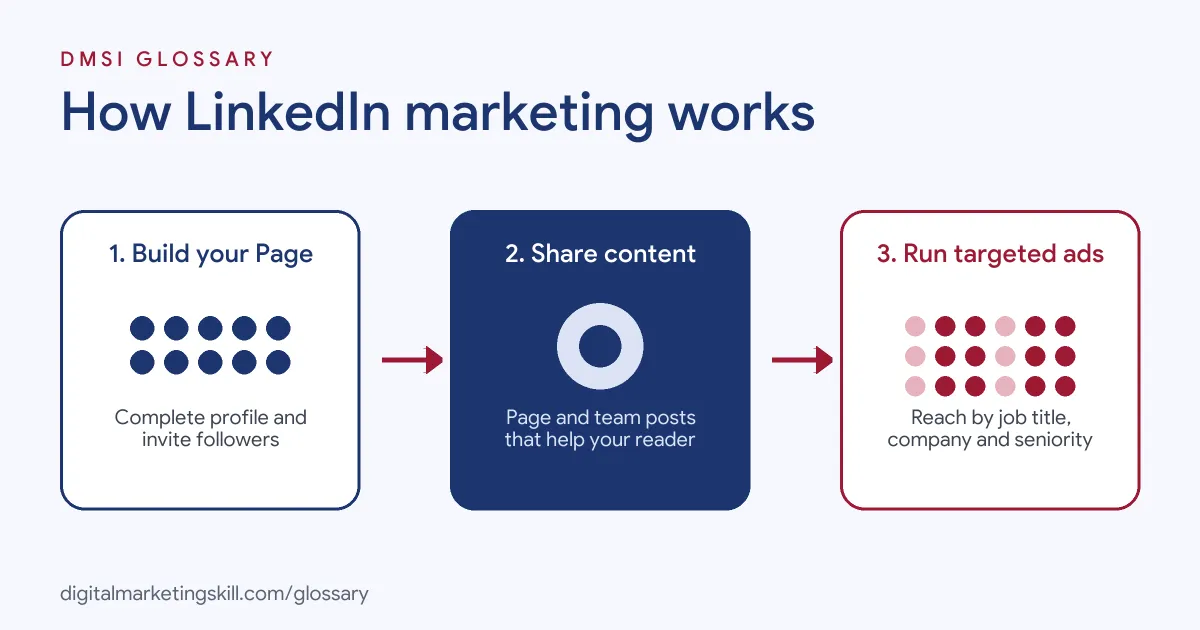
LinkedIn marketing usually follows three steps. First, you set up a strong company Page. Next, you share useful content from the Page and from real people. Then you use paid ads to reach a wider, targeted audience.
Company Pages
To begin with, your LinkedIn Page is the home of your brand on the platform. LinkedIn describes it as a place to “build your company’s brand and build trust with your community.” For instance, you can share updates, articles, images and videos. In addition, Page analytics show what is working. LinkedIn notes that “Pages with complete information get 30% more weekly views than incomplete pages.”
Personal and employee posts
In general, people trust people more than logos. So many brands ask founders and staff to post about their work. This builds personal branding and spreads the company’s message to wider networks. However, these posts work best when they share real experience, not sales pitches.
Paid advertising
Next, LinkedIn offers several ad formats. For example, Sponsored Content appears in “targeted members’ LinkedIn feeds on desktop, tablet, and mobile devices.” Sponsored Messaging sends messages to inboxes. Meanwhile, Dynamic Ads personalise creative with profile data, and Text Ads are simple pay-per-click ads on desktop.
Targeting
For many teams, targeting is LinkedIn’s biggest strength. You can reach people by “job title, company, industry, seniority and more.” Also, Matched Audiences let you “Reach people you already know with website, contact and account targeting.” As a result, LinkedIn suits account-based marketing, where you focus on a short list of key companies.
Lead Gen Forms
LinkedIn also helps with lead generation. For example, Lead Gen Forms appear inside an ad. When someone clicks, the form fills in their name, job title and company from their profile. LinkedIn says “Lead Gen Forms come pre-filled with accurate LinkedIn profile data.” So people can sign up without leaving LinkedIn. As a result, forms are quick to complete on a phone. Then you can send the leads to your CRM or email tool.
Measuring results
Finally, you need to know what works. LinkedIn Page analytics show followers, impressions and engagement on each post. In addition, Campaign Manager shows clicks, costs and leads for your ads. So you can compare posts and ads side by side.
Also, pick one main number for each goal. For example, track leads for a lead campaign and follower growth for a brand campaign. Then look at engagement rate to see if your content keeps people interested. Because of this, you can stop guessing and focus on what your audience values.
Examples of LinkedIn Marketing
- A software start-up. The founder posts short lessons from building the product each week. Then the company Page reshares the best posts. Over time, prospects start to recognise the brand before sales reaches out.
- A recruitment agency. The agency uses its Page to share job openings and hiring tips. In addition, it runs Sponsored Content aimed at HR managers in one region.
- A business consultancy. The team creates a free guide for finance directors. So it runs ads with a Lead Gen Form, which fills in details from the member’s profile and makes signing up quick.
LinkedIn Marketing vs Other Social Media Marketing
| Point | LinkedIn marketing | Other social platforms |
|---|---|---|
| Main audience | Professionals and decision-makers | Broad consumer audiences |
| Best for | B2B leads, hiring, thought leadership | Brand awareness, consumer sales |
| Targeting strength | Job title, company, seniority | Interests and behaviour |
| Content style | Insight, advice, industry news | Entertainment, trends, visuals |
| Typical ad cost | Often higher per click | Often lower per click |
LinkedIn is one part of wider social media marketing. Most brands use it alongside other channels, not instead of them.
How to Start LinkedIn Marketing
- Set a clear goal. Decide if you want leads, hires, brand awareness or event sign-ups.
- Complete your Page. Add a logo, cover image, description, website and location. Then invite your network to follow.
- Know your audience. Write down the job titles, industries and problems of the people you want to reach.
- Plan your content. Build a content calendar with a mix of tips, stories, case studies and company news.
- Involve your team. Encourage founders and staff to share their own views and to reshare company posts.
- Test paid ads. Start with a small budget and one clear audience. After that, compare formats and messages.
- Measure and improve. Check Page and ad analytics every month. Then do more of what works.
Best Practices for LinkedIn Marketing
- Post regularly. LinkedIn says “Companies that post weekly see 2x higher engagement.”
- Use visuals. Add images, documents or short videos to make posts stand out in the feed.
- Write for one reader. Speak to a specific job role and its daily problems.
- Start conversations. End posts with a question, and reply to comments quickly.
- Keep ads tightly targeted. A narrow, relevant audience usually beats a broad one on LinkedIn.
- Track real results. Watch leads and meetings, not just likes.
Common Mistakes to Avoid
- Only posting company news. Constant announcements bore readers. Instead, share useful advice.
- Selling in every post. Hard pitches tend to get ignored. Build trust first.
- Leaving the Page half-finished. An empty Page looks inactive and loses views.
- Ignoring comments. Unanswered comments waste the chance to start real conversations.
- Targeting too broadly. Wide audiences can make costly ads reach the wrong people.
- Sending spammy messages. Cold, generic connection requests damage your reputation.
Where You’ll Use LinkedIn Marketing at Work
LinkedIn marketing appears in social media, content and lead generation roles, especially in B2B companies. For example, real remote job listings ask for:
- “We are looking for a LinkedIn Marketing & Outreach Specialist to help us generate leads, book meetings, and grow our business through strategic LinkedIn outreach.” (LinkedIn Marketing & Outreach Specialist).
- “Manage and optimize LinkedIn content calendar, including thought leadership posts, viral content, and industry updates.” (Content Marketer and Technical Writer).
- “You have written LinkedIn content on behalf of founders, executives or investors.” (Content Lead).
Learn It in the Social Media and Paid Social Track
You can learn LinkedIn content and advertising in the AI-Powered Social Media Management and Advertising track. Every track includes a U.S. Project Internship from day one, with unlimited 1-on-1 mentoring.
Frequently Asked Questions
Is LinkedIn marketing only for B2B?
No, but it works best for B2B, hiring and professional services. Consumer brands can still use it to reach specific job roles.
Is LinkedIn marketing free?
Organic posting and company Pages are free. However, LinkedIn Ads are paid, and you set your own budget.
How often should a company post on LinkedIn?
Aim for at least once a week. LinkedIn’s own data links weekly posting with higher engagement.
What is a Lead Gen Form?
It is a LinkedIn ad form that fills in details from the member’s profile. As a result, people can sign up in a few taps.
Should I post from my personal profile or the company Page?
Both work well together. Personal posts often feel more trusted, while the Page gives your brand a home.
Sources: LinkedIn Marketing Solutions: Overview; LinkedIn Marketing Solutions: LinkedIn Pages; LinkedIn Marketing Solutions: Ad targeting; LinkedIn Marketing Solutions: Lead Gen Forms; remote job listings on Himalayas, Himalayas and Himalayas.