Good lead generation ideas fail more often from poor channel fit than from weak execution. Referral leads convert at roughly 56% from lead to marketing-qualified lead, the highest of any channel. The average visitor-to-lead rate across all channels sits closer to 2.9%.
This guide gives you a lead generation idea for each major channel, plus the one number that shows whether it is actually working. For the fundamentals of capturing and qualifying a lead once it arrives, see our lead generation guide.
Key Takeaways
- Referral leads convert at a 56% lead-to-MQL rate, roughly 3.6 times higher than leads from other channels. They also carry about 16% higher lifetime value (lead generation statistics roundup).
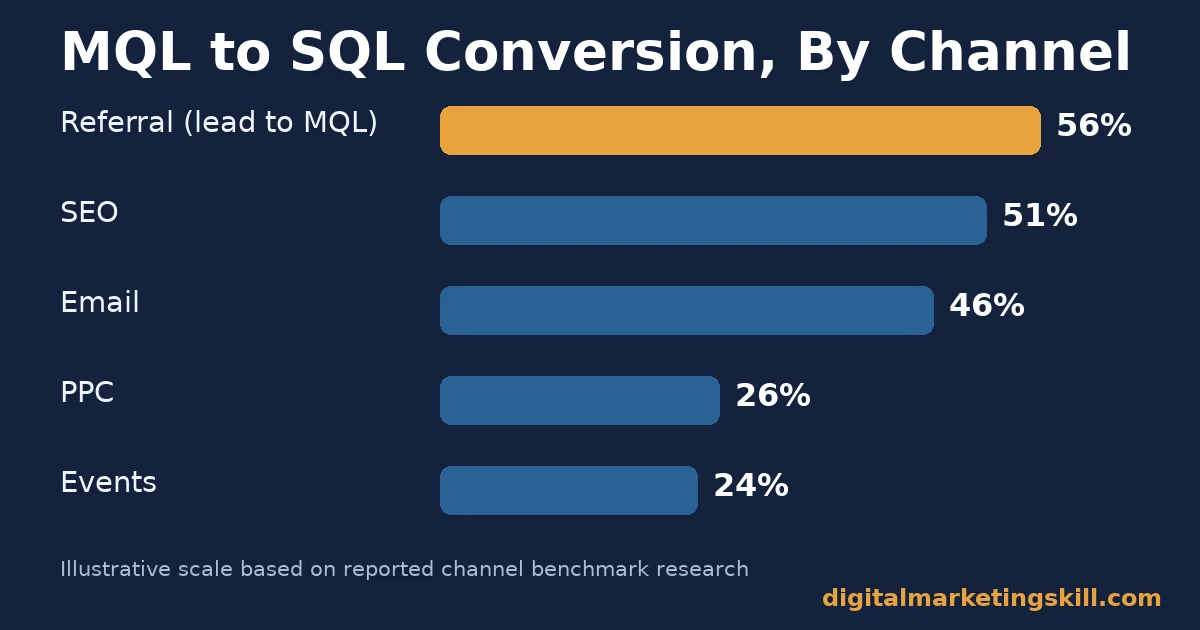
- Among channels moving a marketing-qualified lead to a sales-qualified one, SEO converts at 51% and email marketing at 46%. Both lead PPC at 26% and events at 24% (Snov.io lead generation statistics).
- Conversational lead capture, through live chat or a chatbot, converts at roughly 10-20% for engaged visitors. That is two to three times the 2-3% typical of a static web form (Tidio live chat statistics).
- The average visitor-to-lead conversion rate across channels is about 2.9%. Most lead generation ideas live or die on traffic quality, not just page design.
- Email marketing converts website visitors to leads at close to 4.9%, making it one of the more reliable lead generation ideas once a list already exists (benchmark data roundup).
In this guide
- Why Most Lead Generation Idea Lists Fall Flat
- The Two Types Behind Every Lead Generation Idea
- Seven Lead Generation Ideas, Ranked by Channel Performance
- Lead Generation Idea 1: A Structured Referral Program
- Lead Generation Idea 2: A Simple Email Opt-In Offer
- Lead Generation Idea 3: One Cornerstone SEO Page Per Service
- Lead Generation Idea 4: Live Chat or a Simple Chatbot
- Lead Generation Idea 5: One Social Platform, Done Properly
- Lead Generation Idea 6: A Focused Webinar or Live Session
- Lead Generation Idea 7: A Narrow, Tested Paid Campaign
- Three Mistakes That Waste a Good Lead Generation Idea
- Turning Lead Generation Ideas Into a Working Plan
- How to Measure Whether Your Lead Generation Ideas Are Working
- The One Decision Rule: Match the Idea to Your Sales Cycle
- A Real Case: Why Referral Leads Convert So Much Higher
- Frequently Asked Questions About Lead Generation Ideas
- Turn These Ideas Into a Full Lead Generation Skill Set
Why Most Lead Generation Idea Lists Fall Flat
Most lead generation idea lists are just a checklist. Content marketing, SEO, social media, email, referrals, repeat. They rarely explain which channel actually converts best, or why. That gap matters. A business running the wrong channel first wastes months before the data tells them to switch.
Two ground rules first. Conversion benchmarks below come from third-party marketing research panels, not a single controlled study. Read them as informed snapshots, not a guarantee for your industry. Benchmarks vary a lot by niche, price point and audience, so use your own numbers once you have them.
The Two Types Behind Every Lead Generation Idea
Every lead generation idea on this page falls into one of two families. Knowing which family an idea belongs to tells you what kind of effort and timeline to expect.
Inbound Lead Generation Ideas: Earning Attention First
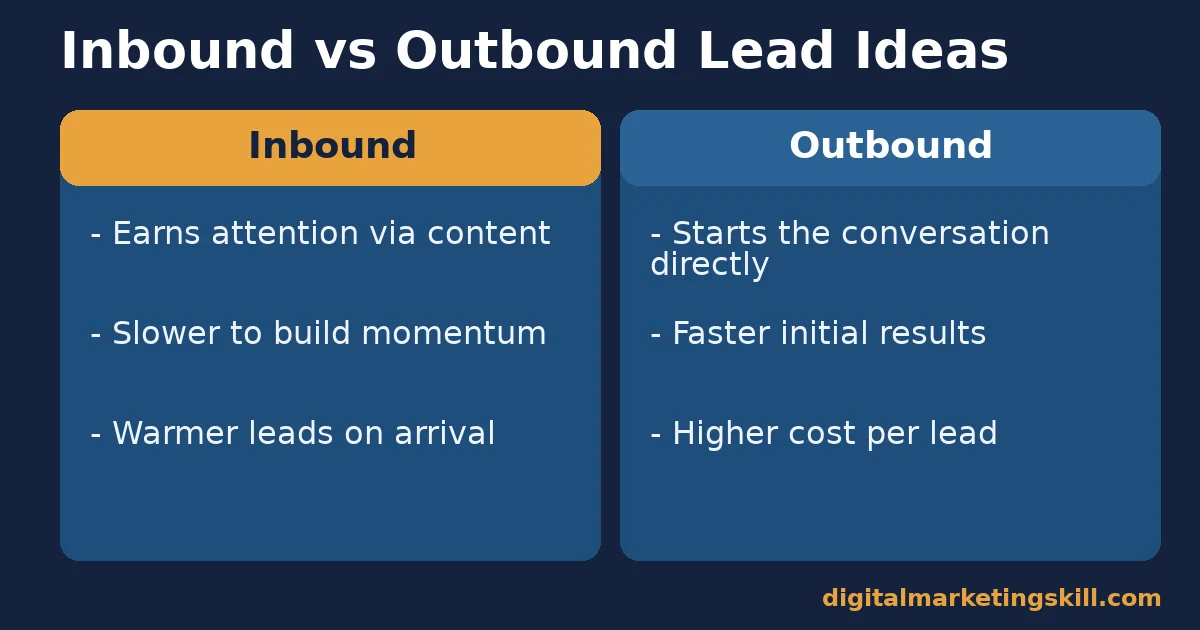
Inbound lead generation ideas attract people through content, search visibility and useful experiences. A blog post, a free tool or a helpful video brings someone to you because they were already looking for an answer.
Inbound ideas take longer to build momentum. But the leads that arrive tend to be warmer, since the person chose to engage.
Outbound Lead Generation Ideas: Starting the Conversation
Outbound lead generation ideas reach out directly, through cold outreach, paid ads, events or direct mail. These ideas can produce leads faster, since you are not waiting for someone to search or discover you. The tradeoff is cost per lead, which is usually higher than a mature inbound channel.
Most businesses need both. Outbound ideas fill the pipeline while inbound ideas are still building authority. Inbound ideas eventually lower the cost of every lead you generate.
Seven Lead Generation Ideas, Ranked by Channel Performance
These are ranked loosely by typical conversion strength, drawing on the benchmark research cited throughout. Your own numbers may differ. Treat the order as a starting point for testing, not a fixed ranking.
Lead Generation Idea 1: A Structured Referral Program
Ask satisfied customers directly, and make the ask specific rather than vague. Referral leads convert at roughly 56% from lead to marketing-qualified lead, the strongest rate of any channel in the research cited above.
Offer an incentive to both the referrer and the new customer. A two-sided reward tends to produce more referrals than a one-sided one.
Lead Generation Idea 2: A Simple Email Opt-In Offer
Build an email list around one clear, specific offer, not a generic “sign up for updates” box. Our email marketing checklist covers the technical details worth getting right before your first send.
Email converts website visitors to leads at close to 4.9%. Ongoing email marketing then converts those leads at around 3.2%, among the highest return on effort of any channel once a list exists.
Lead Generation Idea 3: One Cornerstone SEO Page Per Service
Write one thorough, genuinely useful page for each core service or product you offer, built around the exact terms people search for. SEO-sourced leads convert from marketing-qualified to sales-qualified at around 51%, ahead of paid channels in the same research.
The tradeoff is time. A new page can take months to rank, so pair this idea with a faster channel while it builds.
Lead Generation Idea 4: Live Chat or a Simple Chatbot
Add live chat or a basic chatbot to your highest-traffic pages. Conversational lead capture converts at roughly 10-20% for engaged visitors, two to three times the 2-3% typical of a static form. Keep the first message short and specific to the page the visitor is on, rather than a generic greeting.
Lead Generation Idea 5: One Social Platform, Done Properly
Pick the one social platform your audience actually uses, and commit to it rather than spreading thin across four. Use a mix of useful content and a clear lead capture form or link in every relevant post, so interested followers have an obvious next step.
Resist the urge to run every platform at launch. A single platform done well outperforms a thin presence spread across several networks. Consistent posting and real engagement matter more than how many platforms you technically appear on.
Lead Generation Idea 6: A Focused Webinar or Live Session
Host a session that teaches one specific, useful skill rather than a broad overview. Require registration to capture contact details.
Follow up with attendees and no-shows differently. A no-show who registered is still a warm lead worth a direct follow-up.
Lead Generation Idea 7: A Narrow, Tested Paid Campaign
Start paid advertising with a narrow audience and a single, specific offer, rather than a broad campaign testing everything at once. Paid channels tend to convert from marketing-qualified to sales-qualified lead at a lower rate than SEO or email in the research above.
Budget for ongoing testing rather than expecting this lead generation idea to be efficient immediately. If you are comparing software to run any of these channels, our lead generation tools guide matches common tools to the mechanism they actually automate.
Three Mistakes That Waste a Good Lead Generation Idea
Even a sound idea underperforms when it runs into one of these common problems. Check your current channels against this list before switching strategy entirely.
Mistake One: An Offer Nobody Actually Wants
A generic “subscribe to our newsletter” box converts far worse than a specific, valuable offer tied to a real problem. Before blaming the channel, test whether the offer itself gives someone a clear reason to hand over their contact details.
Mistake Two: No Follow-Up System
Capturing a lead is only half the job. A lead generation idea that produces plenty of contacts but no structured follow-up wastes most of the value those contacts represent, since interest fades fast without a prompt, relevant response. A simple automated acknowledgment helps. Follow it with a human response within a day, and that combination closes most of the gap without needing a large team.
Mistake Three: Judging Ideas on Volume Alone
A channel that produces a hundred cheap, low-quality leads can cost more in sales time than one that produces ten expensive, well-qualified ones. Judge every lead generation idea on conversion quality, not just how many contacts it collects.
Turning Lead Generation Ideas Into a Working Plan
Pick two or three ideas to start, not all seven. Running every channel at once usually means doing each one poorly, and you will not have clean enough data to know which one is actually working.
Start with one fast channel, often paid or referrals, and one slower channel, usually SEO or content, running at the same time. The fast channel buys you leads while the slow channel compounds in the background.
Avoid Running Too Many Lead Generation Ideas at Once
A common mistake is launching five lead generation ideas in the same month. Each one then gets too little budget and attention to produce a clean result, so you learn nothing about which one actually works for your business.
How to Measure Whether Your Lead Generation Ideas Are Working
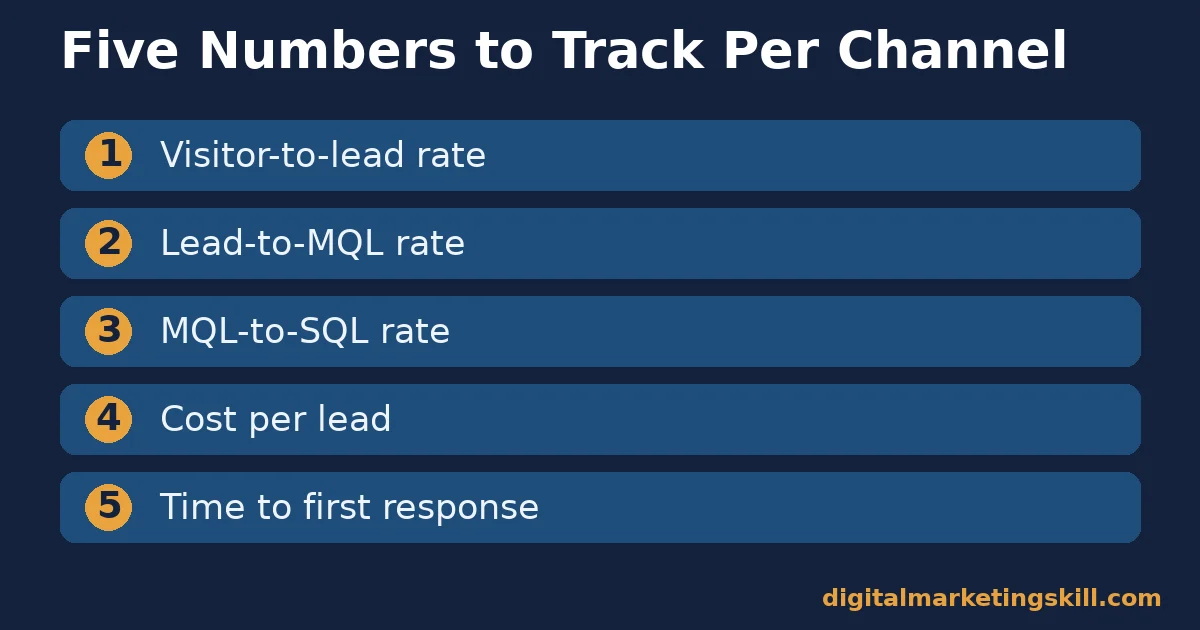
Track these numbers for each channel separately. A single blended number hides which idea is actually earning its place.
- Visitor-to-lead rate: the share of visitors who become a lead. The overall average sits near 2.9%, so use it as a rough baseline, not a target.
- Lead-to-MQL rate: the share of leads qualified enough to hand to sales or nurture further. This is where referrals lead the pack by a wide margin.
- MQL-to-SQL rate: the share of qualified leads sales considers ready for a real conversation. SEO and email both tend to lead here over paid channels.
- Cost per lead, by channel: total channel spend divided by leads generated. Compare this against lead quality, not just the raw number, since a cheap, low-quality lead can cost more in sales time than it saves. Review this number alongside close rate. A channel with a lower cost per lead is not actually cheaper if very few of its leads ever close.
- Time to first response: how quickly a new lead gets a human or automated reply. A slow response can undo an otherwise strong lead generation idea before the conversation even starts.
Review these numbers monthly rather than weekly for slower channels like SEO, since a single month of SEO data is usually too small a sample to judge fairly. Faster channels like paid ads and live chat can be reviewed weekly, since they generate enough volume to show a trend sooner.
Build a Simple Channel Dashboard
List each active lead generation idea down one column, with the five metrics above across the top. Update it on the same day each week or month, so comparisons stay consistent over time.
A spreadsheet is enough; you do not need expensive software to start tracking this properly. Revisit the dashboard before adding any new lead generation idea, so the decision to expand is based on evidence rather than enthusiasm for a new tactic.
The One Decision Rule: Match the Idea to Your Sales Cycle
If you only remember one rule, make it this one. A short sales cycle favors fast-conversion ideas like referrals and live chat. A long sales cycle can afford the slower payoff of SEO and content, since you have more time for trust to build before a decision happens.
Illustrative, invented example: a local service business with a short sales cycle leans into referrals and a simple chatbot, seeing leads within days. A B2B software company with a six-month sales cycle invests more heavily in cornerstone SEO pages. It accepts a slower ramp in exchange for a lower long-term cost per lead.
Neither business is wrong. They are simply matching the lead generation idea to the speed their market actually moves at.
A Real Case: Why Referral Leads Convert So Much Higher
Across the lead generation research cited in this guide, referral leads convert at roughly 3.6 times the rate of leads from other channels and carry about 16% higher lifetime value. The pattern holds across a broad base of B2B and B2C research, not just one company’s internal data.
The likely reason is trust transfer. A referral arrives pre-vetted by someone the prospect already trusts, which removes much of the skepticism a cold lead starts with.
The limits of this data matter too. These are benchmark averages across many businesses and industries, not a single controlled experiment. Your own referral conversion rate may land meaningfully above or below this figure, depending on how structured your program is.
The practical takeaway is simple: most businesses treat referrals as a passive hope rather than an active lead generation idea with its own process. Give it the same structure as a paid campaign: a clear ask, a tracked incentive, and a defined follow-up. That structure tends to close much of the gap between a passive referral trickle and a real channel.
Frequently Asked Questions About Lead Generation Ideas
What is the single best lead generation idea for a brand-new business?
A structured referral ask to your first customers, paired with a narrow paid test, since both can produce leads fast while slower channels like SEO are still building. Add content and SEO once you have the cash flow to wait for them to compound.
How many lead generation channels should a small business run at once?
Two or three, chosen deliberately rather than all at once. Running every channel simultaneously usually dilutes effort and makes it hard to tell which idea is actually converting.
Why do referral leads convert so much better than other channels?
Trust transfer. The prospect already trusts the person who referred them. That removes much of the skepticism a cold lead starts with, so referral leads tend to move through the funnel faster and convert at a notably higher rate.
Is SEO still a good lead generation idea given how slow it is?
Yes, for businesses that can wait. SEO-sourced leads convert from marketing-qualified to sales-qualified at around 51% in the research cited here, ahead of paid channels, even though it takes longer to see results.
Do chatbots actually generate better leads, or just more of them?
Both, according to the research. Chatbots convert visitors at two to three times the rate of a static form. A majority of businesses using them report higher lead quality, not just higher volume.
How quickly should a new lead be contacted?
As fast as realistically possible. A slow first response can undo the advantage of an otherwise strong lead generation idea, since interest and intent both fade quickly after someone takes the first step.
Should lead generation ideas differ between B2B and B2C businesses?
The channels overlap, but the weighting usually differs. B2B businesses tend to lean more on referrals, SEO and longer-form content, since their sales cycles run longer. B2C businesses often get faster payoff from paid ads, social media and live chat. Our dedicated guide on B2B lead generation goes deeper into that side specifically.
Can a lead generation idea that works for a competitor fail for my business?
Yes, and this happens often. Conversion benchmarks are averages across many businesses, not a guarantee. Your audience, price point and sales cycle all change which idea performs best. That is why testing your own numbers matters more than copying a competitor’s channel mix.
How long should I test a new lead generation idea before judging it?
Give a fast channel like paid ads or live chat at least two to four weeks of consistent spend or traffic before judging results.
Give a slow channel like SEO or content at least three to six months, since search visibility takes time to build regardless of how good the page is. Judging a slow lead generation idea after only a few weeks is one of the most common reasons businesses abandon a channel that would have worked.
Is it worth hiring help for lead generation, or should a small business do it in-house?
It depends on the channel and your team’s existing skills. A narrow paid campaign or a technical SEO setup often benefits from outside expertise early on, while referral programs and simple email opt-ins are usually straightforward enough to run in-house from the start.
What is a realistic first-month goal when starting a new lead generation idea?
Set a goal around learning, not just volume. A realistic first month proves the idea can produce at least a handful of qualified leads and gives you clean enough data to decide whether to scale it, adjust it, or drop it in favor of a better-fitting channel.
What should I do if none of my lead generation ideas are converting?
Go back to the offer before switching channels again. A weak or unclear offer underperforms on every channel, so a string of disappointing results across several different lead generation ideas often points to the offer itself rather than any single channel being the wrong choice.
Turn These Ideas Into a Full Lead Generation Skill Set
Picking the right lead generation ideas is really just applied digital marketing. It means understanding channels, reading conversion data, and matching effort to your sales cycle.
If you want to build that skill set properly, look at the Master Diploma in Digital & AI Marketing at Digital Marketing Skill Institute. It is built around four AI-powered tracks drawn from ten execution-first courses, including AI-Powered Lead Generation and Email Automation, with a Full Stack option for completing all four tracks.
The program includes unlimited 1-on-1 coaching and mentoring, a U.S. Project Internship with a verified U.S. Work Reference Letter, and is dual US and UK accredited, recognised in more than 100 countries, delivered 100% online so you can study anywhere in your country.
See the full Master Diploma program structure, read real outcomes on the student reviews page, or browse more guides on the digital marketing blog. When you’re ready, apply now wherever you live. The whole application runs through digitalmarketingskill.com, no matter which time zone you’re learning from.
Every figure in this guide was checked against its original source before publication. Figures marked as illustrative are invented examples, not real results.