The best strategies in digital marketing share one trait. Each is matched to a budget, a timeline and a way to measure it. Search and content compound slowly but keep paying off. Paid ads buy speed. Email marketing returns the most per dollar. Social media builds reach and trust. Pick strategies in digital marketing by goal, not by trend, and track each one on its own terms.
Key Takeaways
- The audience is larger than ever. More than 6 billion people are online worldwide. That is about 73% of the global population, so reach is rarely the real limit (DataReportal).
- Most content is never found. Ahrefs studied roughly 14 billion pages. It found that 96.55% get no traffic from Google, so a plan needs a discoverability step, not just good writing.
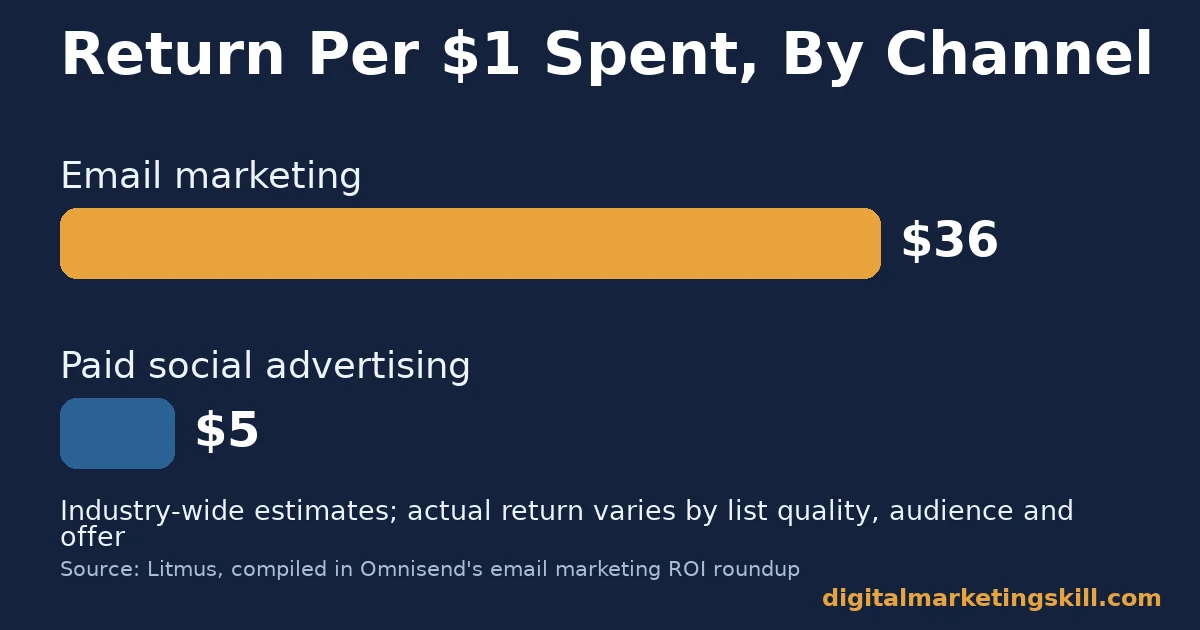
- Email still returns the most per dollar. Email marketing returns about $36 for every $1 spent on average. Paid social usually returns $2 to $5 per $1 (Litmus, Omnisend).
- Paid search converts well but costs more per click. Search ads convert at an average of 8.18%. The average cost per click is $5.42, across thousands of advertiser accounts (LocalIQ).
- Having a strategy is not the same as it working. Content Marketing Institute found 95% of B2B marketers have a documented content strategy. Only 29% rate it extremely or very effective.
In this guide
- What Most Advice on Digital Marketing Strategies Gets Wrong
- How Strategies in Digital Marketing Work Together
- Four Strategies in Digital Marketing, and What Each One Is For
- How to Lead With Each Strategy
- How to Measure Each Strategy
- The One Decision Rule: Fund the Channel You Can Measure
- A Real Case: Turning One Strategy Into Repeat Revenue
- Frequently Asked Questions About Strategies in Digital Marketing
- Start With One Strategy, Then Add the Next
What Most Advice on Digital Marketing Strategies Gets Wrong
Most lists of digital marketing strategies read the same way. A paragraph on SEO, a paragraph on social media, a paragraph on email. Each is written as if you should run them all at once, starting today. That advice is not wrong. But it skips the real question: which strategy fits your budget, your timeline and your team right now?
This guide ranks four strategies in digital marketing by what they actually do best. It shows how to lead with each one. It also gives you the metric to judge whether a strategy is working, before you spend another month on it.
A few ground rules first. The figures below come from named sources, each with its own scope. Some are global, some US-only, some self-reported by the company that collected them. Content Marketing Institute’s and HubSpot’s surveys are benchmarks from their own respondent pools, not universal truths. Read every percentage as a snapshot, not a settled fact. Where a figure is illustrative, not sourced, it says so.
How Strategies in Digital Marketing Work Together
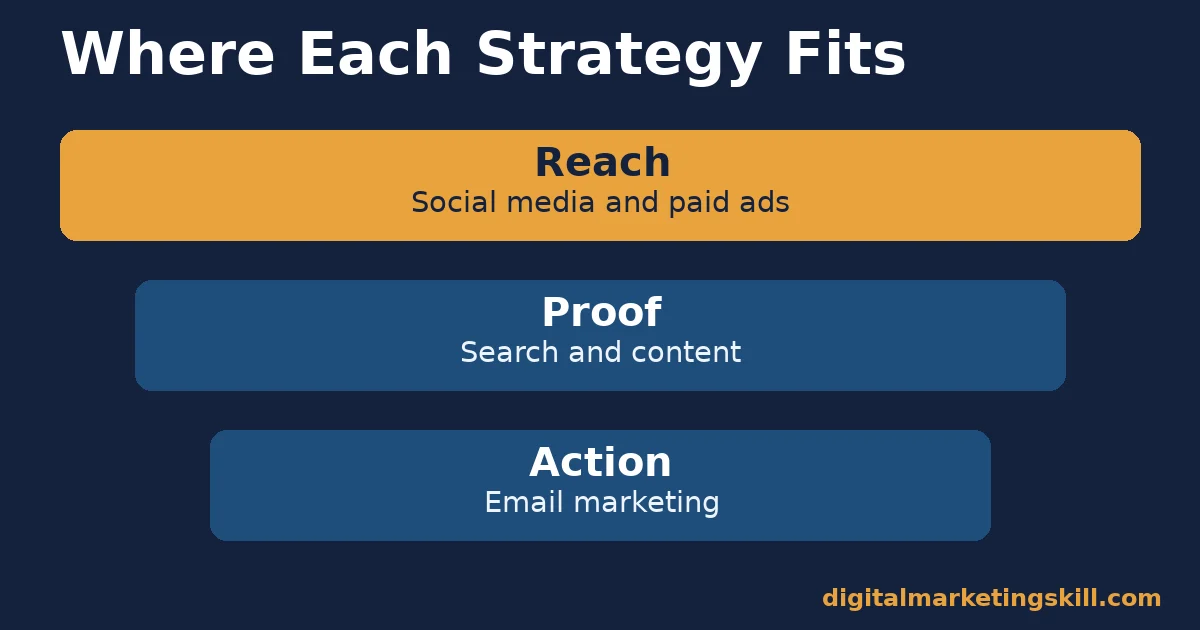
Every strategy in digital marketing does one of three jobs: it earns attention, it builds trust, or it closes a sale. A buyer who has never heard of you needs awareness first. A buyer comparing options needs proof. A buyer who is ready needs an easy way to pay. No single channel does all three jobs well. That is why “which strategy is best” is the wrong question to start with.
Where Each Strategy Fits in the Funnel
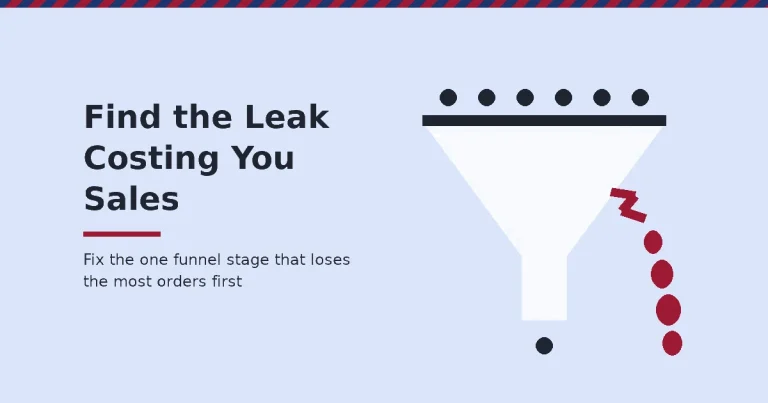
Social media and paid ads work best at the top of the funnel. Their job is reach: showing your product to people who do not know it exists yet. Search and content sit in the middle. They answer the exact questions buyers type into Google once they already know they have a problem. Email marketing works best at the bottom, after someone has already raised a hand.
Treat these as default lanes, not fixed rules. A good article can start a stranger’s journey through search. A well-timed ad can close a sale directly. The point is to know which job you are asking a channel to do, before you judge whether it worked.
The Two Inputs That Decide Everything: Budget and Time
Two things decide which strategies in digital marketing make sense for you: how much cash you have now, and how much time you have before you need results. Paid advertising trades cash for speed. Search and content trade time for a lower cost later. Email marketing needs little cash, but it needs an audience you can already reach.
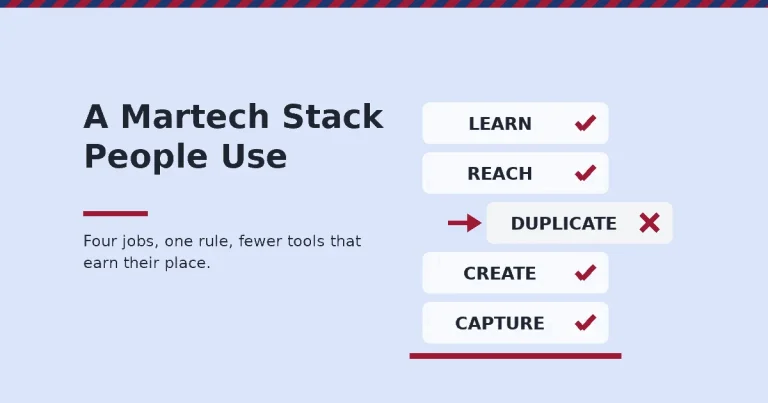
Most businesses cannot pick only one. The realistic move is sequencing. Start with the strategy that matches your current constraint. Add the next one once the first strategy pays for itself.
Four Strategies in Digital Marketing, and What Each One Is For
Each of the four strategies below solves a different problem. Knowing what each one is built for stops a common mistake: judging a reach channel by a sales number, or a sales channel by a reach number.
Search and Content: Built for Compounding Reach
SEO and content marketing answer real questions in a way search engines choose to show. Google’s own guidance on helpful, people-first content asks whether a reader would leave a page “feeling they’ve learned enough” to decide. Pages that pass this test keep ranking without extra spend.
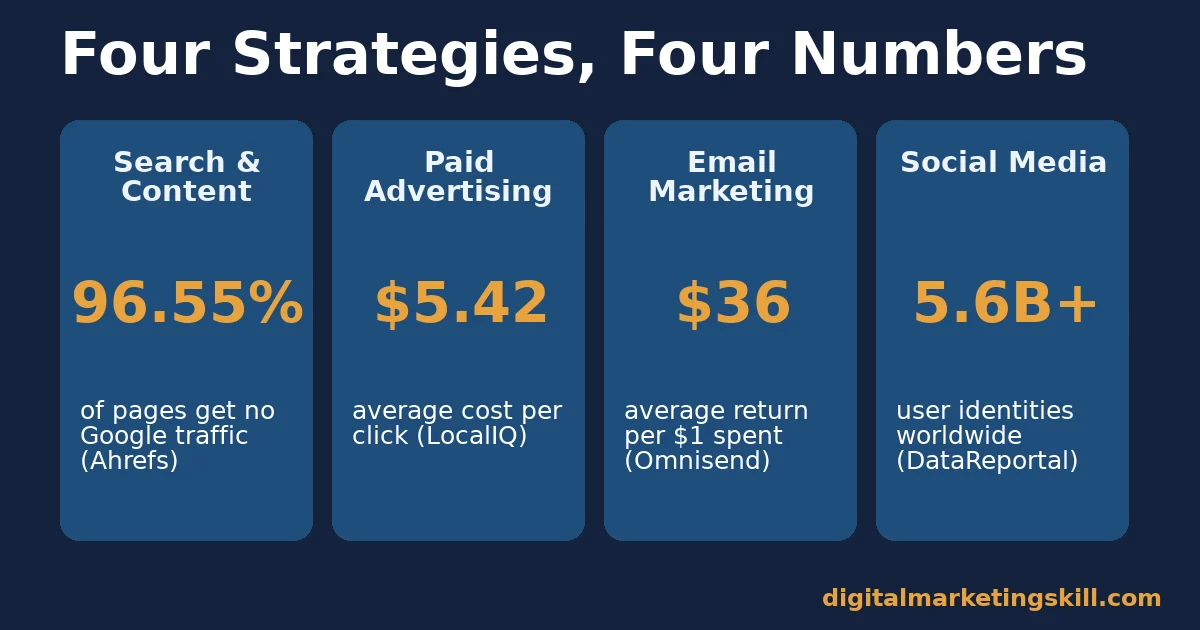
The catch is discovery and patience. Ahrefs checked roughly 14 billion pages in its search traffic study. It found that 96.55% get no traffic from Google at all. Usually nobody searches the exact topic, the page has no supporting links, or it misses what searchers actually want. Content that clears this bar keeps earning visits for years. Content that does not clear it earns almost nothing, no matter how well it reads.
Paid Advertising: Built for Fast, Controllable Volume
Paid advertising is the one strategy in digital marketing where volume is mostly a dial. Raise the daily budget, and traffic rises with it, within the limits of the audience and the auction. Results show up within hours, not months.
That control costs money per result. The price varies sharply by channel and intent. LocalIQ’s search advertising benchmarks come from thousands of advertiser accounts across more than 20 industries. They put the average search ad cost at $5.42 per click, with an average conversion rate of 8.18% and an average cost per lead of $66.69. Paid social tends to run cheaper per click but converts at a lower rate. Among the strategies in digital marketing compared here, paid advertising is the one you can turn up or down fastest.
Email Marketing: Built for Owned, Repeatable Return
Email marketing is the one strategy in digital marketing where you own the list outright. No algorithm decides whether a subscriber sees your message. That is why it keeps the highest reported return per dollar of any channel. Industry estimates compiled in Omnisend’s email marketing ROI roundup put email’s return at roughly $36 to $42 per $1 spent. Paid social advertising typically returns $2 to $5 per $1.
That return depends on list quality, not luck. Mailchimp’s own email marketing benchmarks come from its own customer base. They report an all-industry average open rate of 35.63% and a click rate of 2.62%. Treat those as a baseline to beat, not a ceiling.
Social Media: Built for Awareness and Trust
Social media marketing is rarely the fastest route to a direct sale. But it is one of the fastest ways to put a brand in front of a large, specific audience. More than 5.6 billion social media user identities exist worldwide. That scale is why almost every other strategy in digital marketing benefits from a social presence, even when social is not the channel that closes the sale.
The trade-off is attribution. A follower who later buys through search, or a direct visit, rarely gets credited back to the social post that first caught their eye. That gap makes social media marketing look weaker in last-click reports than its real pull on the funnel. Judge it alongside the other strategies in digital marketing, not against them alone.
How to Lead With Each Strategy
Knowing what each strategy is built for is only half the job. The other half is leading with the right first move, so your early effort goes where it counts.
Search and Content: Lead With the Query, Not the Brand
Start from the exact question a buyer types, not from what you want to say about your product. Build the page around that question. Answer it in the first two sentences. Then use subheadings that repeat the words searchers scan for. Our guide to WordPress SEO covers the technical checklist that keeps a well-written page from staying invisible to search engines.
Publish a topic cluster, not a single page. One article rarely outranks a competitor with ten related pages, because search engines read topical depth as a sign of real expertise.
Paid Advertising: Lead With One Measurable Offer
Point paid advertising at one specific offer, with its own landing page, not at your homepage. A homepage tries to serve every visitor at once. A dedicated page can match the exact promise made in the ad. That match is what keeps the cost per lead down. Our guide to retargeting that converts covers how to bring warm visitors back once the first ad has done its job.
Set a stop-loss before you launch. Pick a cost-per-lead ceiling that triggers a pause, not a guess you make after the budget is already spent. Paid advertising rewards fast, disciplined testing far more than a clever first attempt.
Email Marketing: Lead With a List You Actually Own
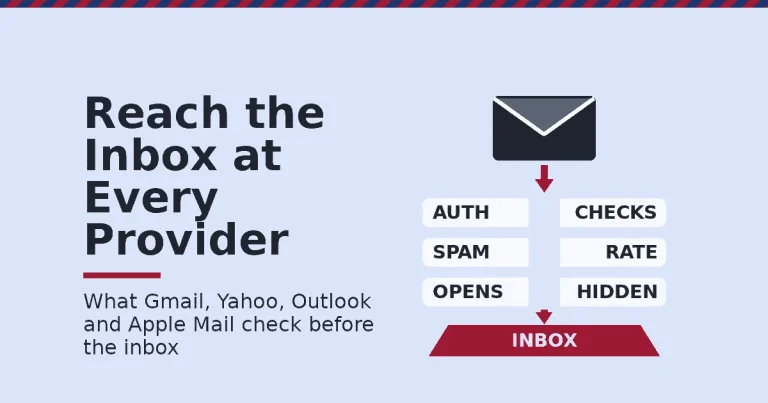
Build the list before you need it. Give people a clear reason to subscribe, not a vague newsletter signup. Our guide to email deliverability explains how poor engagement can push every future message toward spam folders. That quietly caps this channel’s return long before anyone notices.
Judge email campaigns by clicks, not opens, where you can. Apple’s Mail Privacy Protection inflates open rates by pre-loading messages. A steady click rate near or above Mailchimp’s 2.62% average is a better health sign than a high open rate alone.
Social Media: Lead With Consistency, Not Virality
Post on a schedule you can sustain for months. A familiar, steady presence builds more trust over time than one viral post followed by silence. Our guide on choosing and combining digital marketing channels walks through matching platforms to where your audience actually spends time.
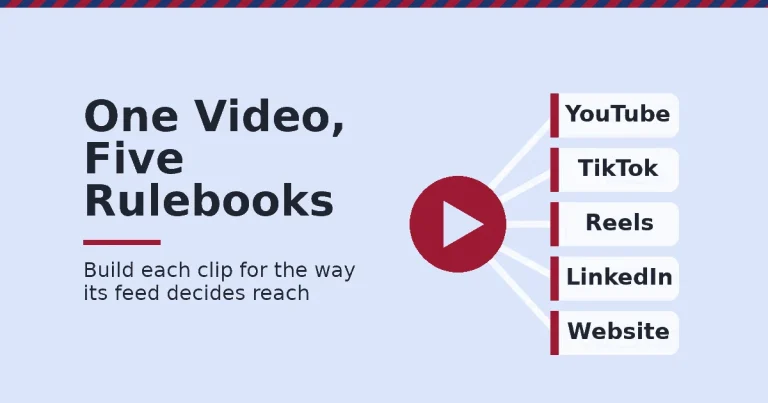
Repurpose your best content across formats, instead of writing something new every day. A strong article from your search and content strategy can become several weeks of social posts, with no blank page to start from.
How to Measure Each Strategy
Strategies in digital marketing that you cannot measure, you cannot improve. Each metric below is defined in one sentence. Each is paired with the strategy it judges best.
Eight Metrics That Show Whether a Strategy Is Working
- Organic sessions and ranking keywords (search and content). Search Console and your analytics tool show how many visits come from unpaid search, and which queries drive them. Watch the trend over months, not days.
- Cost per click and cost per lead (paid advertising). These show exactly what you pay for attention and for a qualified contact. Compare both against your own margin, not just an industry average.
- Conversion rate (paid advertising and landing pages). This is the share of visitors who complete your offer. A low rate usually points to a mismatched landing page, not a bad audience.
- Open rate and click rate (email marketing). Open rate shows subject-line and sender trust, though Apple’s privacy features distort it. Click rate shows whether the email’s content earns attention.
- List growth rate (email marketing). This is the share by which your list grows each month, net of unsubscribes. A shrinking list usually means lead generation has stalled, not email itself.
- Engagement rate (social media). This is the share of people who saw a post and reacted, commented or shared, close to how Google Analytics defines an engaged session. It shows whether people actually read the post, not just saw it.
- Follower-to-website click-through (social media). This is the share of followers who click through to your site in a given period. It ties an awareness channel back to a number you can measure.
- Customer acquisition cost, blended across channels. Divide total marketing spend by new customers in a period. This number decides which mix of strategies in digital marketing you can actually afford to keep funding.
How to Read These Numbers Together
Read channel-specific metrics first. Then check the blended acquisition cost. A channel can look efficient on its own numbers, and still be a poor use of budget once you compare the blended cost with your margin per sale.
Track each strategy against its own baseline first. Compare it with another channel’s benchmark second. A 3% conversion rate might be strong for a cold paid-social audience, and weak for a warm email list, even though the number looks the same on a report.
The One Decision Rule: Fund the Channel You Can Measure
If you remember one rule from this guide, make it this one. Before you add new strategies in digital marketing to your plan, check that you can measure each result cleanly. A channel you cannot measure will absorb budget forever, because nobody can prove it should stop.
Here is an illustrative example, with invented numbers. A small services business splits a modest monthly budget three ways: search and content, paid search ads, and email to its existing list. After three months, email shows the clearest, cheapest return, because the audience already trusted the sender. Paid search shows a measurable but costlier return. The content pieces show almost no traffic yet, because search results take longer to move.
The owner doubles down on email right away. They keep a smaller paid budget running as a steady lead source. They leave the content investment in place, because its payoff curve is slower, not absent.
The lesson here is sequencing, not exclusivity. These strategies in digital marketing got funded in proportion to how fast and how cleanly each could prove itself. The slower channel was not cancelled. It was just correctly expected to take longer.
A Real Case: Turning One Strategy Into Repeat Revenue
Olajire Jacob, a Digital Marketing Skill Institute graduate, built a freelance service around one specific strategy in digital marketing: setting up email marketing automation flows for small businesses. As published on the Digital Marketing Skill Institute reviews page, Jacob charged an average of $500 per client, for businesses in the US, UK and Canada. The service scaled to roughly $5,000 a month.
This case makes the broader point of this guide. One strategy, done well and repeated for more clients, can beat a thin effort spread across every channel at once. Treat this as one published result, not a guarantee. Results vary by market, offer and effort, and Digital Marketing Skill Institute’s earnings disclaimer applies to every student outcome mentioned on the site.
Frequently Asked Questions About Strategies in Digital Marketing
What are the main strategies in digital marketing?
The core strategies in digital marketing are SEO and content marketing, paid advertising, email marketing and social media marketing. Each one does a different job in the funnel, from first awareness through to repeat revenue.
Which digital marketing strategy gives the best ROI?
Email marketing is commonly reported as the highest-return channel, at roughly $36 to $42 per $1 spent. You own the list, so you are not paying for distribution on every send. The best strategy for you still depends on your budget, timeline and existing audience.
Can a small business run all of these digital marketing strategies at once?
Most small businesses cannot fund all four strategies well at the same time. A more realistic plan is sequencing. Start with the channel that matches your current budget and timeline. Add the next strategy once the first is producing a measurable, repeatable result.
How long does it take for a digital marketing strategy to work?
Paid advertising can show results within days. Email marketing can show results within weeks, if a list already exists. Search and content usually take several months, because search engines need time to evaluate and rank new pages.
Do I need a large budget to start with digital marketing strategies?
No. Email marketing and a focused content or search strategy can start small, mostly on time rather than cash. Paid advertising is the strategy most directly limited by how much you can afford per click or per lead.
How do I know if a digital marketing strategy is actually working?
Measure each strategy with the metric built for it: organic sessions for search and content, cost per lead for paid ads, click rate for email, and engagement rate for social media. Then compare your blended customer acquisition cost against your margin, to see which mix you can actually afford.
Should social media marketing be judged by sales alone?
No. Social media marketing mainly builds awareness and trust. A follower who buys later through search, or a direct visit, rarely gets credited back to the social post that first caught their eye. Judge it by engagement and reach, and expect its real contribution to show up in other channels’ numbers.
Start With One Strategy, Then Add the Next
Strategies in digital marketing work best one at a time, each funded by what the last one proved. Pick the channel that matches your current budget and timeline. Measure it with the right metric. Only add the next strategy once the first has a repeatable result behind it.
If you want guided, hands-on practice building and measuring these strategies, Digital Marketing Skill Institute’s Master Diploma in Digital & AI Marketing is built from four AI-powered tracks across ten execution-first courses. These include AI-Powered Google Specialist and AI-Powered Lead Generation and Email Automation, with a Full Stack option for all four tracks. It comes with unlimited 1-on-1 coaching and mentoring, plus a U.S. Project Internship with a verified U.S. Work Reference Letter. The diploma is dual US and UK accredited and recognised in more than 100 countries.
The programme is 100% online, so you can study and apply these strategies from anywhere in your country. Browse more guides on the Digital Marketing Skill Institute blog. Read more outcomes on the reviews page. When you are ready, apply for the Master Diploma or start from the Digital Marketing Skill Institute homepage.
Every figure in this guide was checked against its original source before publication. Figures marked as illustrative are invented examples, not real results.