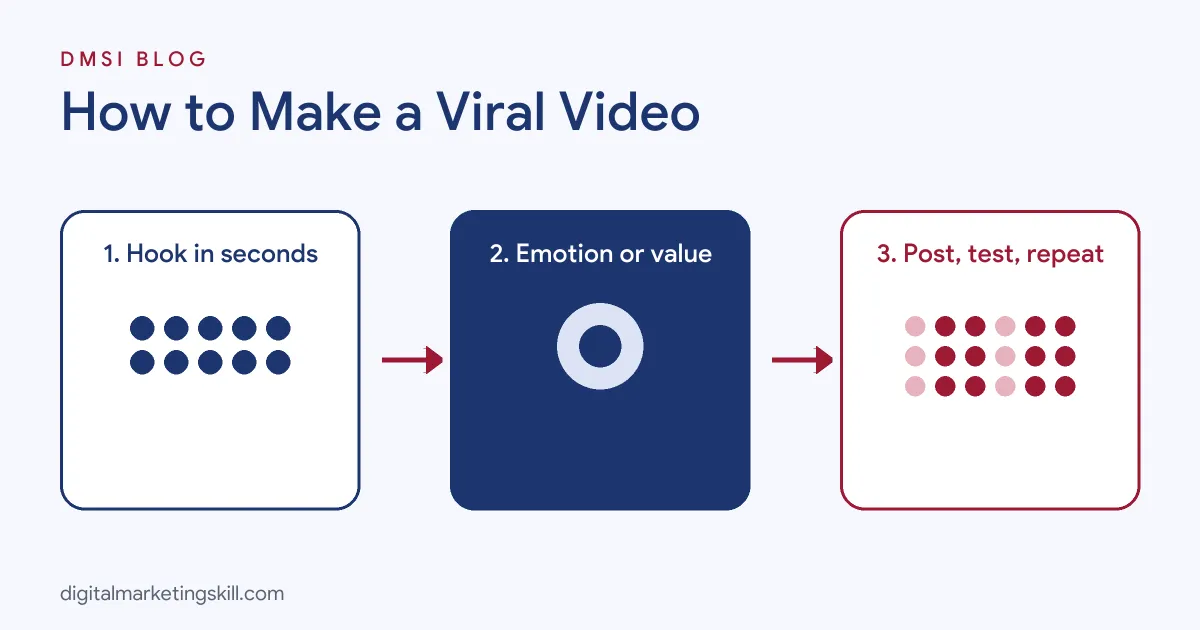
No one can guarantee a viral video, but you can greatly improve the odds. Videos that spread usually share the same ingredients: a hook in the first one to three seconds, an idea that triggers a strong emotion or is genuinely useful, a format that fits the platform, fast pacing with captions so it works on mute, and a reason for people to share, comment or rewatch. Creators who go viral most often also post consistently, study what already works in their niche, put their own twist on it and test many variations instead of betting everything on one video.
This guide explains what “viral” actually means, the psychology behind sharing, a step-by-step process for planning, filming and editing, platform-specific tips, what to do when a video takes off, and how businesses can use viral thinking without chasing luck.
Key Takeaways
- Sprout Social says there is no single number of views that makes a video viral, and that what counts as viral has changed over time (Sprout Social).
- Mashable’s reporting from creators says a good rule of thumb is that a video has gone viral when its views are significantly higher than the creator’s typical content, and that creators stress a good story, curiosity and a solid hook (Mashable via AOL).
- upGrad’s tips include making the first seconds captivating, keeping it short, staying relevant and making sure the video makes sense with the sound off (upGrad).
- What Most Viral Video Guides Miss
- What Counts as Viral
- Why People Share Videos
- How to Make a Viral Video: 10 Steps
- Platform Tips
- When a Video Takes Off
- Viral Videos for Businesses
- Common Mistakes
- FAQ
What Most Viral Video Guides Miss
Most guides list tips such as “use trending sounds” or “hook viewers fast”. Those help, but they hide two uncomfortable truths. First, luck plays a real part; creators interviewed by Mashable say that reaching a new audience is partly luck and that the real work is keeping those viewers. Second, a single viral hit is rarely the goal. Millions of views from people who do not care about your niche can bring little value. The more useful aim is repeatable reach: videos that regularly travel beyond your followers to the right audience.
That changes the strategy. Instead of chasing one perfect video, you build a system: a steady stream of ideas, quick production, consistent posting and fast learning from data. Each video is a test. When one outperforms, you study why and make more like it. This guide is built around that system.
What Counts as “Viral”?
There is no official threshold. Sprout Social notes that what is considered viral has changed over time and cites various definitions, including platform-specific benchmarks. A more practical definition comes from creators quoted by Mashable: a video is viral for you when it gets far more views than your usual content. For a small account averaging 300 views, 50,000 views is viral. For a large brand, it might take millions.
Shares are often a better signal than views. A video people send to friends and repost spreads beyond the algorithm’s first push, which is the true meaning of “viral”: spreading from person to person.
Why People Share Videos
Understanding why people share helps you design videos worth sharing. Marketing professor Jonah Berger, author of the book Contagious, describes six principles that make ideas spread, often summarised as STEPPS:
- Social currency: sharing makes people look good, clever or in the know.
- Triggers: things that are easily brought to mind by everyday cues get talked about more.
- Emotion: content that makes people feel something strongly is shared more.
- Public: things that are visible get copied.
- Practical value: useful tips and information get passed on to help others.
- Stories: ideas wrapped in a story travel further.
Research by Berger and Katherine Milkman on which online news articles were most shared also found that positive content was shared more overall, and that content triggering high-arousal emotions, such as awe, anger or anxiety, tended to be shared more than content triggering low-arousal emotions such as sadness. CMSWire’s guide makes a similar point, recommending that you identify the emotion you want viewers to feel before you create the video.
How to Make a Viral Video: 10 Steps
1. Know who you are making it for
Viral videos still need a core audience who instantly “get it”. Decide who that is: small business owners, new parents, gamers, students, nurses. A video that feels made for a specific group is more likely to be shared within it, and then beyond.
2. Study what already works
One creator quoted by Mashable recommends studying what other people are doing and putting your own twist on it. Spend time in your niche on TikTok, Reels and Shorts. Note the formats, hooks, lengths and topics of videos with unusually high views. Look for patterns, not single lucky hits.
3. Choose an idea with a strong angle
Strong ideas usually do at least one of these:
- surprise people or challenge a belief;
- make people laugh;
- teach something useful quickly;
- tell a relatable story;
- show an impressive transformation or skill;
- spark a debate people want to join.
Write your idea as one sentence. If it is not interesting in one sentence, it will not be interesting in a video.
4. Write a hook for the first one to three seconds
upGrad puts making the opening captivating first in its list. On short-form platforms, people decide in a moment whether to keep watching. Combine a visual hook (movement, an unexpected image, a close-up), a text hook on screen and a spoken hook. Examples:
- “I tried the cheapest and most expensive version of this.”
- “Nobody tells you this about starting a business.”
- “Watch what happens when I…”
- “You have been doing this wrong.”
For help writing tight openings, see our guide on how to write a video script.
5. Keep it short and tightly paced
upGrad advises keeping videos short and to the point. Cut every pause, filler word and slow moment. Change the shot, angle, text or visual every few seconds to hold attention. The video should feel slightly too fast rather than too slow.
6. Make it work with the sound off
upGrad notes that videos should make sense with the sound turned off. Add captions, on-screen text and clear visuals. At the same time, use sound well for people who do listen: trending audio where it fits, clear speech and sound effects that add punch.
7. Build in a reason to engage
Algorithms reward videos that people watch fully, rewatch, comment on and share. Encourage this naturally:
- end with a question people want to answer;
- leave a small mystery or reveal that rewards rewatching;
- create a “send this to someone who…” moment;
- make the ending loop back to the start on short-form platforms.
8. Optimise the caption, text and keywords
Social platforms are also search engines. Use clear words in your caption and on-screen text that describe the topic, add a few relevant hashtags and say key terms out loud. See our guide on how to use hashtags.
9. Post at the right time and consistently
upGrad includes releasing on the right days in its tips. Check your analytics to see when your audience is active. More importantly, post consistently. Creators interviewed by Mashable highlight consistency as a key habit, because each video is another chance for the algorithm to find the right audience.
10. Test, learn and double down
Make several versions of a promising idea with different hooks, lengths or formats. When one beats your average, analyse it: where did viewers drop off, what comments did it get, who shared it? Then make more videos in that style. Over time, your hit rate improves.
Viral Video Formats That Often Travel
- Before and after: transformations of rooms, gardens, designs, fitness journeys or businesses.
- Myth versus fact: correcting a common belief in your niche.
- Day in the life: an inside look at an unusual job, place or routine.
- Quick tutorials: “how to do X in 30 seconds”.
- Reactions and duets: responding to popular videos with your expertise.
- Challenges and trends: joining a trend with a clever twist relevant to your niche.
- Behind the scenes: how products are made or how a team works.
- Storytime: a short, gripping personal story with a twist.
- Comparisons: cheap versus expensive, beginner versus expert.
- Relatable humour: moments everyone in a group recognises.
Platform-Specific Tips
TikTok
TikTok’s For You feed can show videos from new accounts to large audiences, so strong content can travel fast. Hook immediately, use on-screen text, join trends early and engage with comments. For more, see our guide on how to go viral on TikTok.
Instagram Reels
Reels can reach non-followers through recommendations. Use vertical video, strong covers, original audio or trending audio where appropriate, and captions. Shares through direct messages and Stories help Reels spread.
YouTube Shorts and long-form
Shorts reward strong hooks and looping. Long-form YouTube videos go viral differently, often through search and suggested videos over weeks or months, so titles, thumbnails and watch time matter. See our guide to video SEO.
Facebook videos often spread through shares in groups and among friends and family. Relatable, emotional and practical videos tend to travel well, and captions are essential because many people watch silently.
On LinkedIn, practical insights, career stories and behind-the-scenes looks at work perform well. Keep a professional angle, add captions and start with a clear statement of value.
What to Do When a Video Takes Off
Creators quoted by Mashable say the real work comes after a video reaches new people. If a video starts to spread:
- Reply to comments quickly. Engagement can extend the reach and turn viewers into followers.
- Pin a helpful comment with a link or next step, where the platform allows.
- Post a follow-up while interest is high: part two, an answer to a popular comment or a behind-the-scenes look.
- Update your profile so new visitors understand who you are and what to watch next.
- Repurpose it on other platforms, adjusted for each.
- Analyse why it worked and plan more videos in the same vein.
- Protect yourself. Viral attention can bring negative comments. Moderate respectfully and do not engage with abuse.
Viral Videos for Businesses
For brands, a viral video is only valuable if it reaches people who might become customers or remembers the brand. Practical guidance:
- Stay on brand. Jumping on irrelevant trends can bring views but confuse your audience.
- Feature people. Employees, founders and customers often perform better than polished adverts.
- Show the product naturally. Demonstrate it solving a problem or surprising people.
- Plan the next step. Have a clear profile, link and offer ready for new visitors.
- Measure business outcomes. Track follows, website visits, sign-ups and sales, not just views.
- Respect rules. Use licensed music, get permission from people who appear and disclose any paid partnerships.
CMSWire recommends telling a narrative and planning a viral marketing strategy rather than hoping for luck. Brands that do this well create a series of shareable videos rather than one-offs.
Equipment and Editing Basics
You do not need expensive gear to make videos that spread. Many viral videos are filmed on phones. Focus on:
- Light: face a window or use a simple ring light so your face and subject are clear.
- Sound: a small clip-on microphone often improves quality more than a better camera.
- Stability: use a tripod or rest the phone on something solid.
- Vertical framing: film in 9:16 for TikTok, Reels and Shorts, with important elements in the centre.
- Editing apps: mobile editors and platform editors let you cut, add captions, text, transitions and music quickly.
- Captions: use auto-captions, then check them for errors.
Clarity, energy and a strong idea beat high production values on social platforms.
How to Measure Whether a Video Is Working
- Average watch time and completion rate: the clearest sign that the hook and pacing work.
- Retention graph: shows the exact moment viewers leave.
- Shares and saves: strong signals that people value the video.
- Comments: show what sparked interest or debate.
- Reach from non-followers: indicates the algorithm is pushing the video to new people.
- Follows and profile visits: show whether views turn into an audience.
Compare each video against your own averages, not against famous creators. Small improvements across many videos add up.
Building an Idea Bank
Consistency is easier when you never run out of ideas. Keep a running list in a notes app and add to it every day. Good sources include questions customers ask, comments on your videos, mistakes beginners make in your field, surprising facts you come across, trends you see while scrolling and moments from your daily work that others would find interesting. When you review your analytics, add a few new ideas based on what already worked, such as a new angle on a popular video or a part two.
Group ideas into series, such as “Myth Mondays” or “One-minute fixes”. Series make planning faster, help viewers know what to expect and give the algorithm repeated signals about what your account is about. Batch-film several videos in one session when possible, then edit and schedule them across the week. This turns viral video from a lottery into a routine you can sustain, which is exactly what creators who succeed tend to do.
Ethics and Authenticity
Chasing virality can tempt people into staged pranks, misleading claims or dangerous stunts. These can damage trust, break platform rules or put people at risk. Stay honest: label sponsored content, avoid fake before-and-after results and never encourage unsafe challenges. Viewers increasingly value authenticity, and creators quoted by Mashable repeatedly advise simply being yourself.
Common Mistakes
- Slow openings. Logos, greetings and long set-ups lose viewers immediately.
- Copying without a twist. Exact copies rarely beat the original.
- Clickbait that does not deliver. It hurts watch time and trust.
- No captions. Many viewers watch on mute.
- Giving up too soon. Most creators post many videos before one breaks through.
- Chasing irrelevant trends. Views from the wrong audience rarely help.
- Using music or clips you do not have rights to. It can lead to muted or removed videos.
- Ignoring comments. Early engagement helps videos keep spreading.
One Rule to Remember
You cannot force a video to go viral, but you can stack the odds: hook in the first seconds, make people feel something or learn something, keep it tight and captioned, and post consistently so each video is another chance.
Example: a small shoe-repair shop in Nairobi starts posting 20-second before-and-after videos of worn shoes being restored, with on-screen text such as “10-year-old boots, saved”. Most get modest views, but one showing a pair of old school shoes restored for a graduation gets many times the shop’s usual views and lots of shares. The owner replies to comments, posts a follow-up and starts a weekly series. Bookings increase from people who found the shop through the videos. This example is illustrative and not a real business.
Video Skills and Marketing Careers
The ability to plan, script, film and edit short videos that hold attention is one of the most in-demand skills in social media and content marketing. Brands, agencies and creators hire people who can produce consistent, engaging short-form video and read the analytics behind it. If you are in your country, building a portfolio of videos with clear results can help you win remote social media and content roles worldwide.
Frequently Asked Questions
How many views does a video need to be viral?
There is no fixed number. A practical definition is a video that gets far more views and shares than your usual content.
What makes a video go viral?
A strong hook, emotional or practical value, a relatable story, tight pacing, platform-native style and a reason for people to share or comment.
How long should a viral video be?
As short as the idea allows. Many viral short-form videos last under a minute, but length matters less than whether people watch to the end.
Can a new account go viral?
Yes. Recommendation feeds on TikTok, Reels and Shorts can show videos from new accounts to people who do not follow them.
What is the best time to post for virality?
When your audience is most active, which you can see in your analytics. Consistency matters more than the perfect time.
Do hashtags make videos go viral?
Hashtags help categorise videos, but the content itself, especially the hook and watch time, matters far more.
Should I use trending sounds?
They can help on TikTok and Reels if they fit your video, but make sure you have the rights to use them, especially for business accounts.
How many views does a YouTube video need to make $100?
It depends on your RPM, which varies by niche and audience. See our guide on how much YouTubers make for how to estimate it.
Can businesses plan viral videos?
Businesses cannot guarantee virality, but they can plan shareable series, test ideas and learn from what performs best.
What should I do after a video goes viral?
Reply to comments, post a follow-up quickly, update your profile and analyse why it worked so you can make more like it.
Your Next Step
Short-form video skills, from hooks to editing and analytics, are some of the most hired skills in social media marketing. The Master Diploma in Digital & AI Marketing at Digital Marketing Skill Institute covers AI-powered Social Media Management and Advertising, Lead Generation and Email Automation, Google, and a WordPress and SEO track where you build and rank a real website.
From day one, you work on a real U.S. company’s project through the U.S. Project Internship, so you finish with real results and a verified U.S. work reference letter. You also get unlimited one-on-one coaching. The program carries dual US and UK accreditation, is recognised in more than 100 countries, and runs 100% online over three months.
You can build those skills wherever you live, anywhere in your country. Read student reviews, then apply for the 65% partial scholarship to see if you qualify.
Sources checked November 2026: Sprout Social, Mashable via AOL, upGrad and CMSWire, plus Jonah Berger, Contagious. We have no connection with these companies.