
Digital customer engagement is the ongoing exchange that keeps a buyer coming back. It is emails opened, chats answered, posts shared, and reviews left. Get it right and customers return more often and spend more. Get it wrong and they quietly drift to a competitor.
Key Takeaways
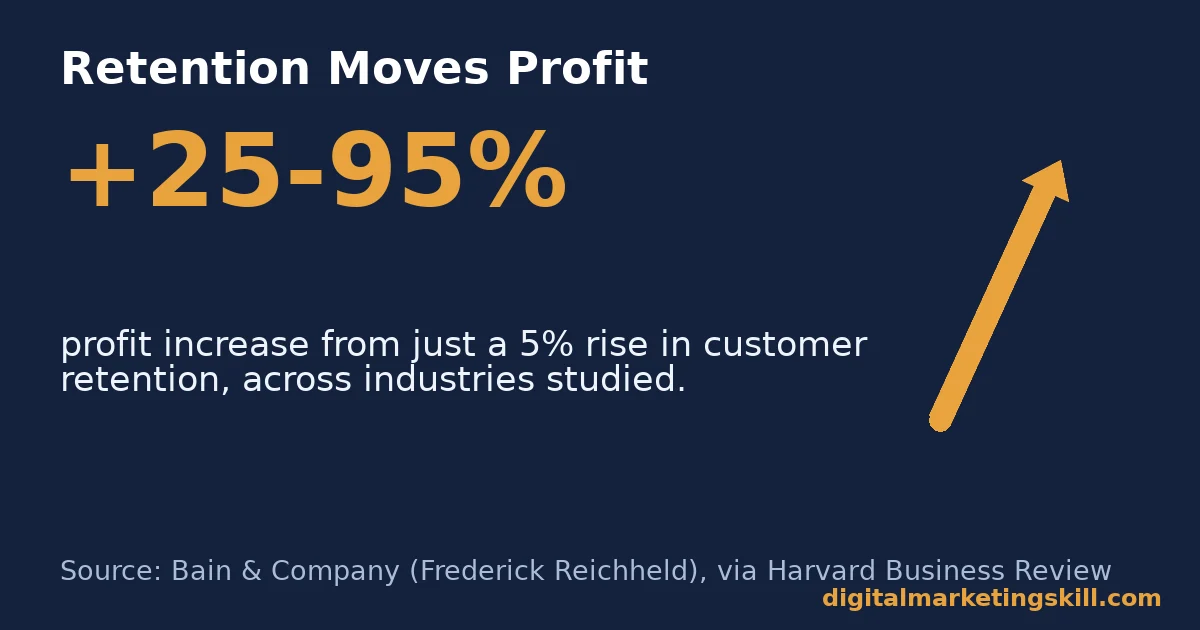
- A 5% increase in customer retention lifts profits by 25% to 95%. This comes from Bain & Company research (Frederick Reichheld), cited in Harvard Business Review.
- Consumers say they will pay up to a 16% price premium for a better customer experience. This is based on a global PwC survey of roughly 15,000 respondents.
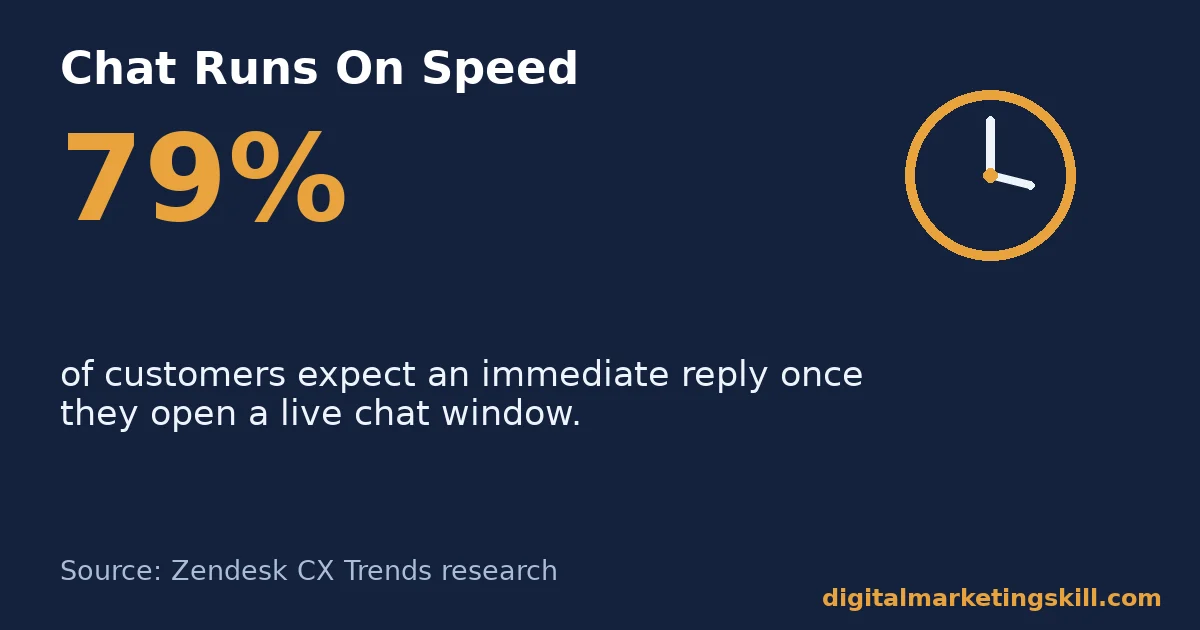
- 79% of customers expect an immediate reply when they open a live chat window, per Zendesk’s CX Trends research.
- 92% of consumers trust word-of-mouth above every other form of advertising, according to Nielsen’s Global Trust in Advertising study.
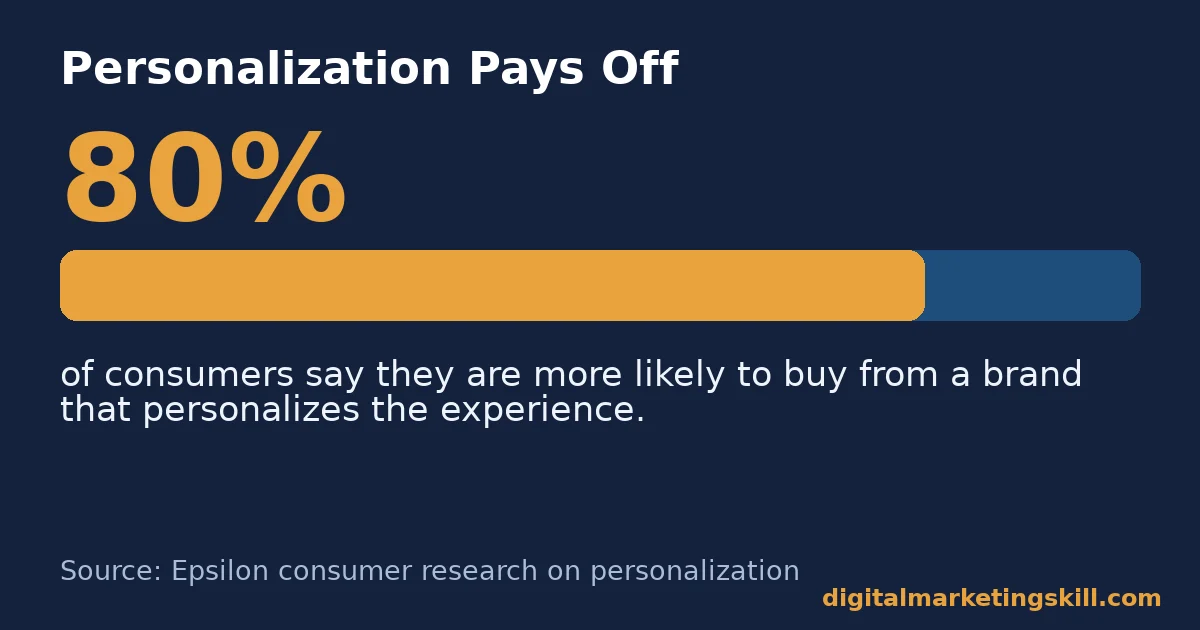
- 80% of consumers say they are more likely to buy from a brand that personalizes their experience. This is from Epsilon’s consumer research on personalization.
In this guide
- The Gap Between Being Reachable And Being Engaging
- What Digital Customer Engagement Actually Means
- What Differs By Channel
- How To Lead With Each Channel’s Strength
- Measuring Digital Customer Engagement
- The One Decision Rule Worth Applying
- A Worked Example: Turning Slow Replies Into Repeat Customers
- Frequently Asked Questions About Digital Customer Engagement
- Where To Build This Skill Properly
The Gap Between Being Reachable And Being Engaging
Most businesses are reachable. They have an email list, a chat widget, and a few social profiles. Far fewer, however, are engaging. Engaging means customers actually open the email, answer the chat, or comment on the post. So, that gap is where digital customer engagement either compounds into loyalty, or quietly leaks away.
Two ground rules first. One: every figure here is an informed inference from published research. It is not a settled fact about your specific audience. Treat each number as a starting benchmark to test, not a guarantee. Two: channel habits shift as platforms change. Read any single figure as a snapshot, not a permanent ranking of one channel over another.
With those limits set, this guide covers six things. What digital customer engagement means. What differs by channel. How to lead with each channel’s strength. How to measure it. One decision rule to apply. And a worked example of what the numbers can look like in practice.
What Digital Customer Engagement Actually Means
Digital customer engagement is every voluntary interaction a customer has with a brand after the first sale. It includes opening an email, replying to a chat, reacting to a post, leaving a review, or browsing again without being asked.
It differs from reach, which is how many people can see a message. It also differs from satisfaction, which is how happy someone felt about one transaction. For instance, a customer can be satisfied once and never come back. Engagement, by contrast, is what predicts whether they do.
The mechanism is simple. Every interaction either confirms to a customer that staying in touch is worth their time, or it teaches them the opposite. A fast, relevant reply confirms it. A generic blast, a slow chat reply, or an ignored comment teaches the opposite. That accumulated signal, not any single campaign, decides whether a customer re-engages.
This is why the Bain & Company figure above matters so much. A 5% lift in retention does not come from one clever email. It comes from dozens of small, consistent signals that add up over the life of the relationship. Customers who stay longer buy more often, refer others, and cost less to serve than new customers do.
Salesforce’s State of the Connected Customer research found that 76% of customers expect a company to understand their needs. Not just their name and order number, but what they actually buy and when. As a result, that expectation drives digital customer engagement.
What Differs By Channel
A brand that remembers context treats every follow-up as part of one relationship. On the other hand, a brand that resets to zero each time treats every message as a cold outreach. So, customers feel that difference within a single exchange.
It also helps to separate digital customer engagement from marketing in general. Marketing is one-directional: a brand decides what to say and when. Engagement, however, is bidirectional — it only exists when a customer chooses to respond. That is why engagement metrics, like opens and replies, are more honest signals of relationship health than reach metrics, like impressions and followers.
Email, live chat, and social media all carry “engagement.” But each one rewards something different. Treating them the same is the most common reason engagement programs underperform.
A brand that uses one tone, one response-time standard, and one dashboard for every channel is optimizing for convenience. It is not optimizing for what actually earns a reply. The three sections below pair with the three that follow them. Read them side by side to spot where a program is mismatched to a channel’s real expectations.
Email: Built For Depth And Timing
Email rewards relevance and timing over speed. A customer does not expect an instant reply to a newsletter. But they do notice when an email arrives at the wrong moment, or has nothing to do with what they bought.
For example, Epsilon’s research found 80% of consumers are more likely to buy from brands that personalize the experience. Therefore, email is built to carry that personalized marketing, because it holds more context than a chat window or a social post ever will.
Live Chat: Built For Speed And Reassurance
Chat rewards speed above almost everything else. Zendesk’s CX Trends research found that 79% of customers expect an immediate response once they open a chat window. Not within the hour. Not within a few minutes. Now. Consequently, a thoughtful chat reply that arrives five minutes late still reads to the customer as a slow brand.
Social Media: Built For Proof And Reach
Social rewards visible proof over private depth. Every public reply or review response does double duty. It serves the one customer who posted, and it signals to everyone watching how the brand treats people. Nielsen’s Global Trust in Advertising study found that 92% of consumers trust word-of-mouth above every other form of advertising. A visible, well-handled social exchange is itself a piece of earned word-of-mouth.
A US-based BrightLocal survey found that 97% of consumers read reviews before choosing a local business. That means a reviews section already works as a live engagement channel, whether a brand treats it as one or not.
In practice, the three channels are connected. A fast chat reply is more likely to earn the positive review that influences the next buyer. Likewise, a well-segmented email is more likely to earn the reply that becomes a public testimonial.
How To Lead With Each Channel’s Strength
Knowing what each channel rewards only helps if a program is built around it. Below is what leading with each channel’s strength looks like in practice, matched one for one to the three channels above.
Email: Lead With Segmentation, Not Blasts
Segment the list by lifecycle stage: new buyer, repeat buyer, lapsed buyer. Segment by behaviour too: browsed but did not buy, bought once, bought repeatedly. Then write a distinct, short message for each segment instead of one message for everyone.
This is the same discipline behind why segmentation changes email marketing ROI. For that reason, a welcome series for a new buyer and a win-back message for a lapsed one should never share the same copy — they solve different problems.
Live Chat: Lead With A Speed Target
Set an explicit first-response target for chat. Under one minute during staffed hours is a reasonable goal. Route anything slower into a clear “we’re looking into this” holding reply, rather than silence. This is one of the customer service automation skills worth building deliberately. Silence reads as neglect. A quick, honest acknowledgement reads as respect for the customer’s time, even if the full answer takes longer.
Social Media: Lead With Fast, Public Response
Answer public comments and reviews in public, even the critical ones. Do not move every conversation to private messages right away. This is the practical side of social media management that most programs skip. A calm, specific public reply to a complaint does more for engagement than ten promotional posts. It is proof, not a claim, that the brand responds.
Measuring Digital Customer Engagement
Four KPIs matter most. Each is defined below in one sentence, with how to read it.
- First response time. The time between a customer’s message and the first reply, human or automated. Read it against the channel’s own expectation: immediate for chat, same-day for email and public social replies.
- Repeat interaction rate. The share of customers who engage with a second message or visit, without being re-targeted by paid ads. A rising rate over several months suggests the engagement loop is working.
- Engagement rate. Opens, clicks, replies, or reactions divided by messages sent or posts published. It is most useful for tracking one channel’s own trend over time.
- Customer satisfaction or net promoter score. A short post-interaction survey asking how satisfied a customer was, or how likely they are to recommend the brand. Read the trend over many responses, since one bad day can skew a single score.
Track these quarterly rather than daily. Digital customer engagement is a slow-moving signal. Daily noise, like a delayed shipment or a holiday, will swamp any daily reading.
Two habits matter more than any tool. First, measure each KPI against its own history, not another brand’s published benchmark. A 20% email engagement rate might be excellent for one audience and mediocre for another. Second, read a handful of actual message threads each quarter, start to finish. The numbers show that something changed. Reading real exchanges usually shows why.
The One Decision Rule Worth Applying
One more habit matters before the rule itself: name an owner for each channel’s KPI, even in a small team. Without an owner, a dip in engagement often goes unnoticed for a full quarter, because no single person feels responsible for noticing it. With an owner, the same dip gets flagged within days, while there is still time to act on it.
If a channel’s first response time already meets what customers expect, invest the next budget in personalization. If it does not, fix speed first. Personalizing a slow channel only makes a slow reply feel more tailored, not faster. Speeding up a channel that already works wastes effort that would do more good spent on relevance.
Here is an illustrative, invented example to show how the rule plays out. A brand replies to chat messages in nine minutes on average. That is far outside the near-immediate expectation customers bring to chat. Its email open rate, meanwhile, sits at a healthy 28%.
Applying the rule, this brand should fix chat speed first, through staffing, routing, or an honest holding reply. After all, the slower channel is the one actively losing engagement.
A Worked Example: Turning Slow Replies Into Repeat Customers
This walkthrough uses illustrative, invented numbers. It shows the shape of the effect in Bain & Company’s research, not one company’s real results. Picture a small online retailer whose customers reorder once every four months on average.
The retailer tightens live chat response times. It also segments win-back emails by how long a customer has been inactive. As a result, reorders move to roughly every three and a half months. On its own, that looks like a modest change.
Even so, the limit is worth stating plainly. This example illustrates a mechanism; it does not promise a result for any real business. Actual outcomes depend on starting response times, the audience, the product, and many other factors a short example cannot capture.
What the Bain research does show, however, is different: using real industry data, small, compounding retention gains carry outsized profit effects. That is the real reason this mechanism is worth building, even before a business has its own numbers.
The same caution applies to every figure in this guide. A 16% price premium. A 79% expectation of immediate chat replies. A 92% trust level in word-of-mouth. Each is a published, named finding, not a forecast for any one business’s next quarter. Use them to decide where digital customer engagement deserves attention first. Then replace them with your own measured numbers once you have enough history to trust.
Frequently Asked Questions About Digital Customer Engagement
What is the difference between customer engagement and customer satisfaction?
Satisfaction measures how a customer felt about one interaction. Engagement measures whether that customer keeps choosing to interact afterward. A customer can be satisfied once and never return. Engagement is the pattern that predicts whether they do.
How often should a brand email a customer?
There is no single safe frequency. The better question is relevance per send. A short, well-segmented email sent every few days can engage more than a generic monthly newsletter. The signal customers respond to is “this applies to me,” not a fixed schedule.
A simple way to test this is to compare open rates for one segmented send against one generic send to a similar-sized group. Then let that result, not a calendar rule, set the cadence going forward.
What counts as a good live chat response time?
Based on Zendesk’s CX Trends research, customers expect an immediate reply. The practical target is under a minute during staffed hours, with an honest automated holding message for anything slower.
Does social media engagement actually affect sales?
Indirectly, but measurably. Nielsen’s research found that 92% of consumers trust word-of-mouth above advertising. A visible, well-handled public reply works as a piece of that earned trust for everyone watching, not just the customer who posted.
How do you measure digital customer engagement without expensive tools?
Most of the four KPIs above can be tracked with a spreadsheet and the reporting already built into most email, chat, and social platforms. The real discipline is reviewing them every quarter, not the tooling you use.
Can a small business compete on engagement without a big budget?
Yes. Engagement rewards consistency and relevance more than spend. A small list that gets one well-segmented, timely email beats a large list that gets one generic blast. A fast, honest chat reply costs process discipline, not a large team.
In fact, a one-person team that answers every chat message within a minute, and replies to every public review, often out-performs a much larger team that is slower and more generic on both fronts.
Should every customer message get a personal, human reply?
Not every message needs a human in the first second. But every message needs a prompt, honest acknowledgement. An automated acknowledgement that sets a clear expectation, followed by a real human reply, consistently beats either silence or a slow personal reply.
Does digital customer engagement matter more for new customers or existing ones?
Both, but the leverage is larger with existing customers. Bain & Company ties a 5% retention improvement to a 25% to 95% profit increase. New-customer engagement earns the first purchase. Existing-customer engagement decides whether that customer’s full value is ever realized.
What is the biggest mistake brands make with digital customer engagement?
Treating every channel the same way: the same cadence, the same tone, the same response-time standard. The fix is matching each channel to what it actually rewards, as the sections above describe for email, live chat, and social media.
Is digital customer engagement different for B2B and B2C brands?
The channels and cadence can differ, but the mechanism does not. A B2B buyer and a retail shopper both decide whether to re-engage based on the same signal: did this interaction feel worth my time? That is why the four KPIs above apply equally well to a long B2B sales cycle and a same-day online purchase.
Where To Build This Skill Properly
Everything in this guide is taught as applied, hands-on work inside the Digital Marketing Skill Institute’s Master Diploma in Digital & AI Marketing. That includes segmentation, response-time targets, measurement, and the decision rule above. Two tracks apply most directly: AI-Powered Lead Generation and Email Automation, and AI-Powered Social Media Management and Advertising. A Full Stack option exists for anyone who wants all four tracks.
The program pairs unlimited 1-on-1 coaching and mentoring with a U.S. Project Internship and a verified U.S. Work Reference Letter. It is dual US and UK accredited, recognised in more than 100 countries, and runs 100% online. You can build and practice these skills wherever in your country you happen to be based.
That matters because digital customer engagement is a practical skill, not a theory. It is best learned on real campaigns, with real response-time targets and real segmented lists, under the guidance of a coach who reviews the actual messages, not just the final numbers.
Visit https://digitalmarketingskill.com/ to see the program tracks. Read real outcomes on the reviews page, or browse more guides on the blog. For the full track breakdown, go to the Master Diploma program page. When you are ready, you can apply here. Wherever you live, the application and the coaching work the same way, entirely online at https://digitalmarketingskill.com/.
Every figure in this guide was checked against its original source before publication. Figures marked as illustrative are invented examples, not real results.
![9 Amazing Digital Marketing Skills to Make Money Online [With Proof]](https://digitalmarketingskill.com/wp-content/uploads/2019/07/9-Amazing-Digital-Marketing-Skills-to-Make-Money-Online-With-Proof-17.png)






