An email marketing campaign works when three things line up. A list people actually chose to join. A message split by what each group cares about. And a send that triggers automatically at the right moment. Skip any one of those and opens and clicks fall fast. This guide covers all three, with the numbers to track along the way.
Key Takeaways
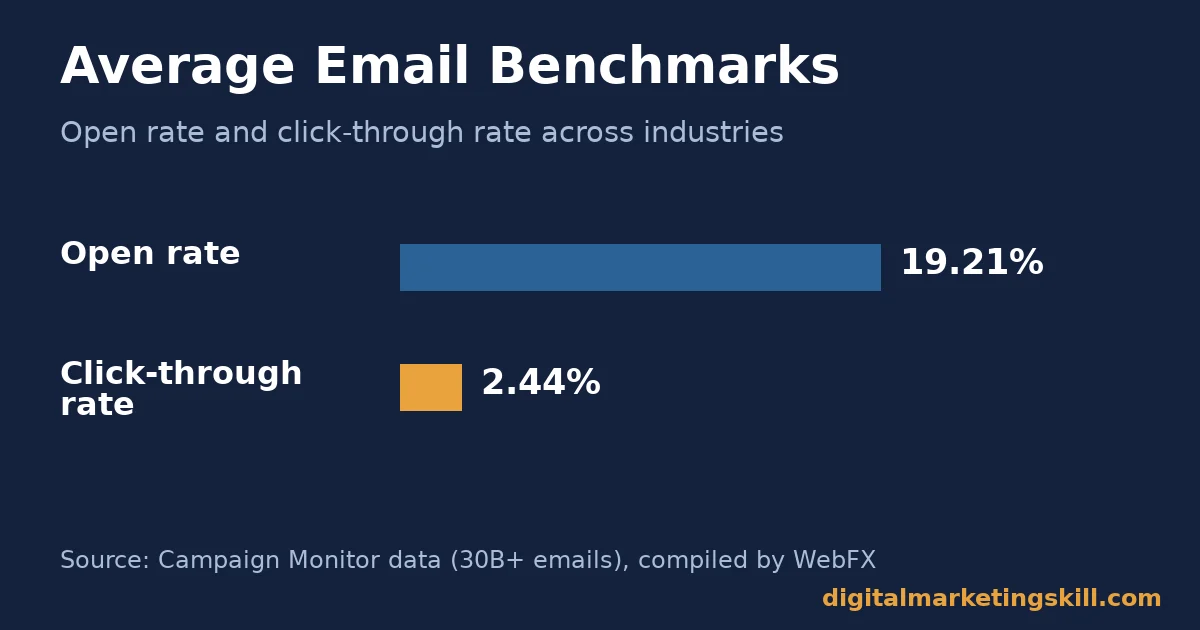
- Campaign Monitor analysed more than 30 billion emails, compiled by WebFX. The average open rate came out at 19.21%. The average click-through rate was 2.44% across industries. Judge any email marketing campaign against this range, not a guess.
- Litmus State of Email data puts the average return on email marketing at $36 to $42 for every $1 spent. That is among the highest of any digital channel, though actual results vary by list quality and industry.
- Mailchimp’s own data shows accounts using predicted, connected-store segments see roughly twice the revenue of accounts that do not segment at all.
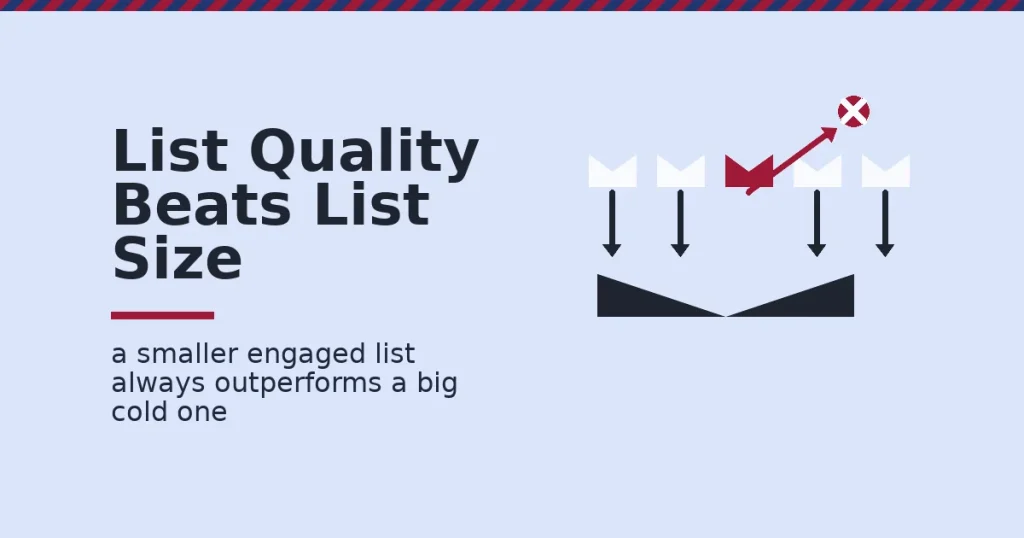
- A quality list beats a large one. A smaller list of people who opted in and expect your emails will consistently outperform a bigger, colder one.
- One named decision rule (below) tells you whether to spend your next hour growing the list, segmenting it, or building an automation.
In this guide
- The Gap Most Email Marketing Campaigns Miss
- How an Email Marketing Campaign Actually Gets Opened
- What an Email Marketing Campaign Looks Like By List Type
- How To Lead With the Right Approach For Your Goal
- Measuring an Email Marketing Campaign That Works
- The One Decision Rule For Where To Put Your Next Hour
- A Real Case: What Changed When the List Got Smaller
- Frequently Asked Questions About Email Marketing Campaigns
- Build Your Email Marketing Campaign With the Right Training
The Gap Most Email Marketing Campaigns Miss
Most advice on running an email marketing campaign repeats the same checklist. Write a catchy subject line. Add a call to action. Hit send. None of that is wrong. But it skips the part that decides whether anyone sees the email at all. Who is on the list? Does the message match why they joined it?
Two ground rules before the detail. First, this is an informed approach built from public benchmark data and documented platform behaviour, not a guarantee. Results depend heavily on your list, niche, and sending history. Second, inbox providers change their filtering constantly. Treat the figures here as a current snapshot, not a permanent ranking. Check your own account’s reports every few months rather than trusting a single benchmark forever.
A number that looked strong a year ago can quietly drift once a filter update changes how inboxes score your sends.
Keep a simple log of each send’s numbers in one place. Without it, it is easy to remember the one campaign that did well. You repeat its subject line forever, while ignoring the pattern across the ten sends that did not. A spreadsheet with the date, subject line, open rate, and click rate for every send takes minutes to set up and pays off within a month.
How an Email Marketing Campaign Actually Gets Opened
Before you build a working email marketing campaign, it helps to know what happens between you clicking send and a subscriber seeing the message. For the groundwork that makes any of this possible, see this guide to ways to increase website traffic. It covers how to turn visitors into subscribers in the first place.
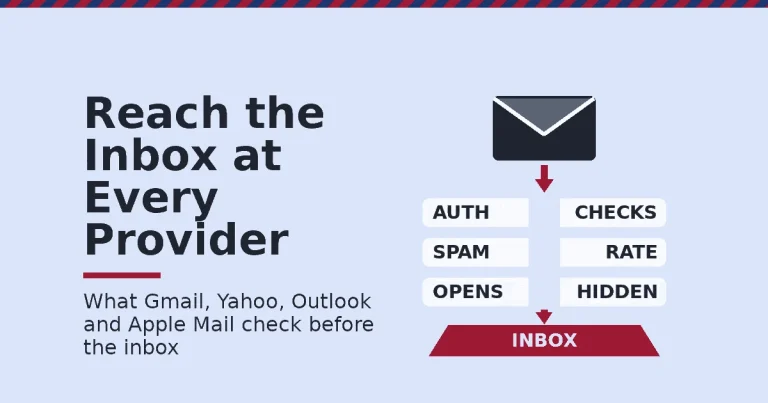
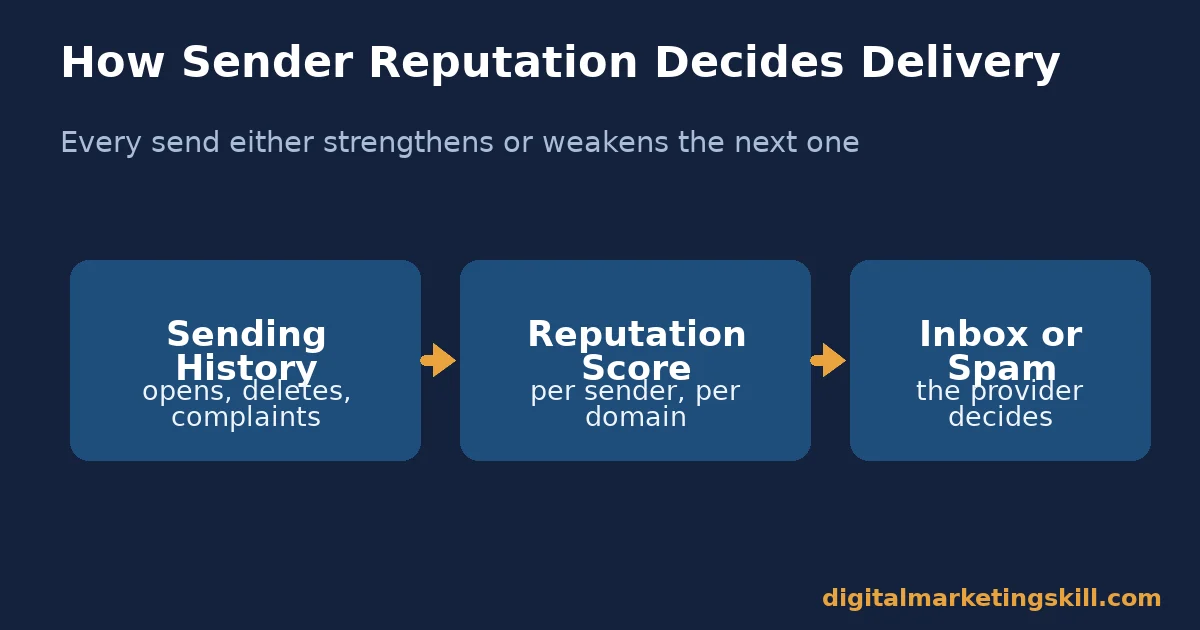
An inbox provider checks a sender’s reputation before anything else. It looks at how often that sender’s past emails were opened, deleted unread, or marked as spam. A clean history earns the inbox. A poor one earns the spam folder, no matter how good this particular email is. This is true even for a well-designed, genuinely useful message. That reputation builds slowly, email by email, which is why consistent sending habits matter more than any single clever subject line.
Google’s own sender guidelines spell this out in concrete terms. Bulk senders must keep their spam complaint rate below 0.30%, and ideally below 0.10%. They must also offer a one-click unsubscribe link in every marketing message. Cross that line and Gmail can restrict how many of your emails reach the inbox at all.
Why Sender Reputation Decides So Much
Picture two senders who each send a campaign on the same day. One has a history of steady opens and few complaints. The other has a history of being ignored or reported.
Both emails can look identical. But the inbox provider treats them differently before a human ever sees either one. So the lesson is not “write a better subject line.” It is “protect the sending history that earns the inbox in the first place.”
This is also why a purchased or scraped list is so damaging. Those contacts never opted in. They ignore or report the email at a much higher rate, and that damage follows every future email marketing campaign you send from the same account. Rebuilding a damaged sender reputation can take months of clean sending, far longer than it took to break it.
What an Email Marketing Campaign Looks Like By List Type
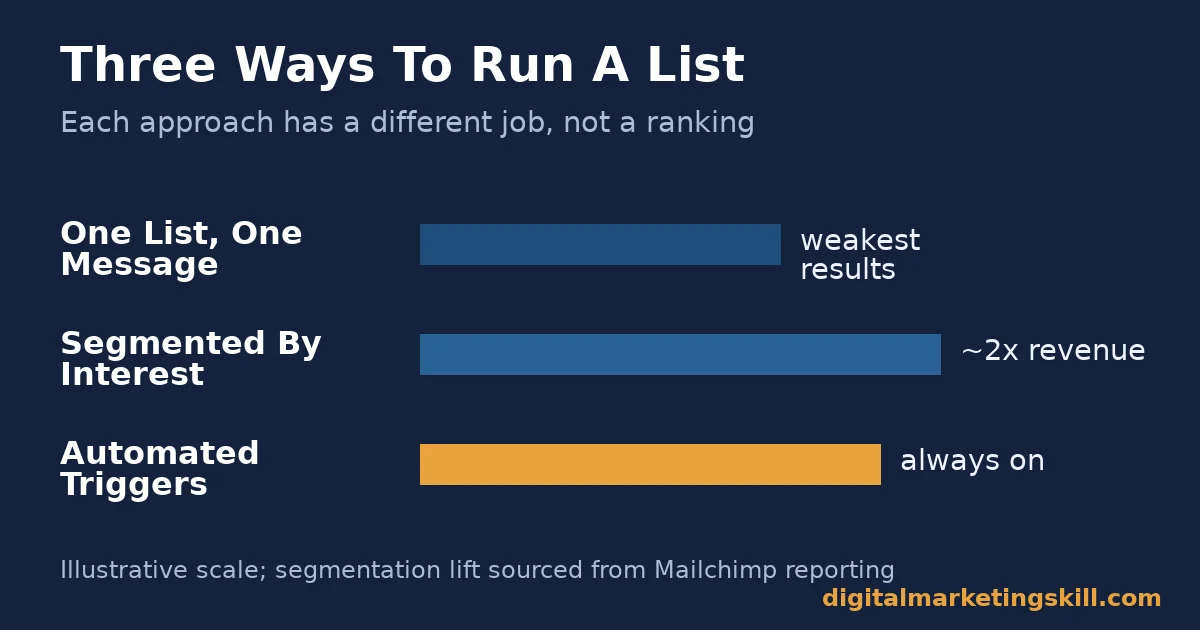
Not every subscriber should get the same message at the same time. Three approaches behave differently, and each has a different job. None of the three is wrong on its own. Using only one, forever, usually is.
One Unsegmented List: Built For Simplicity, Not Results
Sending one message to an entire list is the easiest way to run an email marketing campaign, and the weakest. Everyone gets the same offer regardless of whether it is relevant. Opens and clicks average out toward the lowest common denominator across your whole audience. It is a reasonable way to start when a list is brand new and too small to split. It is a poor way to run things once that list has grown.
A Segmented List: Built For Relevance, Not Speed
Splitting a list by interest, past purchase, or engagement takes more setup time than sending one message to everyone. But it is where email marketing ROI actually comes from. Mailchimp’s own reporting shows accounts using predicted, connected-store segments seeing about twice the revenue of unsegmented sends, because each message matches what that group has already shown interest in.
Automated Trigger Emails: Built For Consistency, Not Creativity
A welcome series, an abandoned-cart reminder, or a re-engagement message triggered by a specific action runs without you remembering to send it. It will never be as novel as a hand-written campaign. But it reaches every subscriber at the exact moment they are most likely to act, every time, without fail. Set it up once, check it every few months, and it keeps working quietly in the background.
How To Lead With the Right Approach For Your Goal
Knowing what each approach is built for only matters if it changes what you build next. Here is how to act on each one.
Building the List: Lead With Quality Over Speed
Grow the list through people who actually want to hear from you. A genuinely useful lead magnet, a clear opt-in form, or a sign-up offered after someone reads something they found valuable, all work. Every commercial email also needs a visible way to opt out and honest sender information. The FTC’s CAN-SPAM compliance guide spells this out for US senders. The UK’s ICO guidance sets out similar consent rules for a European audience. Check the rules that apply to wherever your subscribers live.
Resist the urge to buy a list or pad the numbers. A smaller list that opens your email marketing campaign consistently protects the sender reputation that every future send depends on.
Segmentation: Lead With One Split, Not Ten
Start with a single, meaningful split. New subscribers versus returning customers is a good first split. Do this rather than building ten narrow segments on day one. One good split that changes the message in a real way beats ten segments that all receive nearly identical content. Add a second split only once the first one is clearly working.
Automation: Lead With the Most Obvious Trigger First
Build the welcome email before anything more advanced. It is the single highest-engagement message most accounts ever send, because the subscriber just chose to join and is paying attention. Add abandoned-cart or re-engagement automations once the welcome sequence is working well, and keep feeding the list with the kind of content covered in this guide to improving website content.
Measuring an Email Marketing Campaign That Works
These are the KPIs worth tracking after every send, each defined in one sentence:
- Open rate is the share of delivered emails that were opened. It tells you whether the subject line and sender name earned attention, though privacy features on some email clients can inflate this figure.
- Click-through rate (CTR) is the share of delivered emails that got at least one click. It tells you whether the content inside matched what the subject line promised.
- Click-to-open rate (CTOR) is clicks divided by opens rather than by total sends. It tells you how persuasive the email was once someone actually opened it, separate from how many people opened it in the first place.
- Unsubscribe rate is the share of recipients who opted out after a specific send. It tells you when frequency or relevance has slipped, before it damages your sender reputation.
- Conversion rate is the share of recipients who completed the action you wanted, such as a purchase or sign-up. It tells you whether the traffic the campaign generated was the right traffic.
Read these together, not alone. A healthy open rate with a weak click-through rate usually means the subject line oversold the content inside. A healthy click-through rate with rising unsubscribes usually means the list is being emailed more often than it wants to hear from you.
Why Deliverability Comes First
Deliverability sits underneath all five of these numbers. If a growing share of your email marketing campaign never reaches the inbox at all, every other metric looks worse than the content actually deserves. Check your inbox-placement reports alongside opens and clicks, not instead of them. Google’s own Postmaster Tools dashboard, free for any sender, shows spam rate, reputation, and delivery errors for mail sent to Gmail addresses specifically, which is often the fastest way to spot a reputation problem before it shows up in your open rate.
How Often to Check These Numbers
Review these numbers after every send, not just once a month. An email marketing campaign that drifts off target is far easier to fix after one bad send than after ten, once a damaged sender reputation has already set in. A quick five-minute check after each campaign is usually enough to catch a problem early.
The One Decision Rule For Where To Put Your Next Hour
With limited time, use this rule. If your list is small and barely engaged, spend the hour growing it with a genuine opt-in offer. A reasonable-sized list where every message looks the same calls for an hour building your first segment instead. And when the list is already segmented but you are manually sending the same type of message on a schedule, spend the hour automating it instead.
Illustrative, invented numbers: imagine a small business with 2,000 subscribers and one generic newsletter sent monthly. Following the rule, since the list is a reasonable size but unsegmented, they spend the hour splitting it into new subscribers and repeat customers. They write one tailored message for each group instead of one message for everyone.
They leave automation for later, since the manual send is still infrequent enough to manage by hand for now. Once that first split is working and the send volume grows, the same rule would point them toward automating the welcome message next, before adding any further segments.
If instead that same business already had ten narrow segments and a manual send going out every week, the rule would point somewhere else entirely: consolidate the weakest segments and automate the weekly send, rather than adding an eleventh segment nobody has time to maintain properly.
A Real Case: What Changed When the List Got Smaller
Among the stories published on the Institute’s own student reviews page, a pattern shows up with email specifically. Students who focused on growing a smaller, genuinely interested list reported stronger engagement once they started sending. They did this instead of chasing subscriber counts.
The shift was not a better template. It was not a cleverer subject line either. It was accepting a smaller number and sending to people who actually wanted the email. That one change moved the numbers more than any design tweak did. As with any student outcome, results vary by effort, niche, and market, and the Institute makes no income or results guarantees; see the earnings disclaimer for details.
None of this requires expensive software. Most email service providers now include basic segmentation and a welcome automation on their lowest paid plan, sometimes even their free tier. It requires picking one genuine opt-in source, one meaningful segment, and one automated trigger. Getting all three working properly comes before adding more complexity. Chasing a fourth or fifth tactic before the first three are solid usually just adds noise, not results.
Frequently Asked Questions About Email Marketing Campaigns
What is a good open rate for an email marketing campaign?
Campaign Monitor’s data, compiled by WebFX, from more than 30 billion emails, puts the cross-industry average at 19.21%. Treat that as a baseline and compare your own account’s trend over time, since niche and list quality shift the number in either direction.
How often should I send an email marketing campaign?
Send as often as you can while keeping every message genuinely useful. A smaller number of relevant sends protects your sender reputation better than a high volume of filler content that pushes people to unsubscribe or mark messages as spam.
Does list segmentation really make a difference?
Yes. Mailchimp’s own reporting shows accounts using predicted, connected-store segments seeing roughly twice the revenue of unsegmented sends. Each message matches what that specific group has already shown interest in.
Is it worth buying an email list to get started faster?
No. A purchased list never opted in, so it produces far higher complaint and unsubscribe rates. That damages the sender reputation that every future email marketing campaign from that account depends on.
What is the single highest-value automated email to build first?
The welcome email. It typically earns the highest engagement of any automated message, because the subscriber just chose to join and is still paying attention.
What is a realistic return on an email marketing campaign?
Litmus State of Email data puts the average across accounts at $36 to $42 for every $1 spent. This varies widely by industry and list quality, so use it as a general benchmark rather than a guarantee for any specific account.
How long should an email subject line be?
Keep it short enough to display fully on a phone screen and focused on one clear idea. Testing your own subject lines against your own list matters more than any single universal length, since studies disagree on the ideal character count.
Do email marketing rules differ by country?
Yes. The exact consent and unsubscribe rules vary, though the underlying principle is the same almost everywhere: get real permission first, and make opting out easy, whether your subscribers are covered by the FTC’s rules or the ICO’s.
What happens if too many people mark an email as spam?
Inbox providers start routing more of that sender’s mail to the spam folder automatically, even for genuinely interested subscribers. Google’s own guidance sets a hard ceiling at a 0.30% complaint rate for bulk senders, with 0.10% as the safer target, so a single bad send can have a real, lasting cost.
Can a small business run an email marketing campaign without paid software?
Yes, to a point. Most providers offer a free tier for small lists that includes basic list building, a simple welcome automation, and open or click tracking. Segmentation and more advanced automation usually require a paid plan once the list grows past a few hundred or a few thousand contacts, depending on the provider.
What is the difference between an email marketing campaign and a newsletter?
A newsletter is one format within a wider email marketing campaign, usually a regular update sent on a fixed schedule. A campaign can also include one-off promotions, automated sequences, and segmented sends that a newsletter alone does not cover.
Build Your Email Marketing Campaign With the Right Training
An email marketing campaign works best as one piece of a wider digital marketing skill set, alongside the content and traffic strategy that fills the list in the first place. Digital Marketing Skill Institute’s Master Diploma in Digital & AI Marketing covers nine practical courses built around that mix. It comes with unlimited one-on-one coaching and mentoring and real project work inside a U.S. company, so what you learn gets tested on a live account rather than a hypothetical one.
The program is dual US and UK accredited, and recognised in more than 100 countries. It is delivered 100% online, so you can study from your country on your own schedule.
Wherever you live, the fundamentals of a working email marketing campaign stay the same: a genuine list, a meaningful segment, and a message built around what the reader actually asked for. None of that depends on which country your subscribers are in, even though the exact consent rules do. Explore the Master Diploma in Digital and AI Marketing program, browse more lessons on the digital marketing blog, or go straight to the application page to start. Learn more about Digital Marketing Skill Institute at https://digitalmarketingskill.com/, or return to https://digitalmarketingskill.com/ any time to explore other free lessons.
Every figure in this guide was checked against its original source before publication. Figures marked as illustrative are invented examples, not real results.
![9 Amazing Digital Marketing Skills to Make Money Online [With Proof]](https://digitalmarketingskill.com/wp-content/uploads/2019/07/9-Amazing-Digital-Marketing-Skills-to-Make-Money-Online-With-Proof-17.png)