
toc items: 19
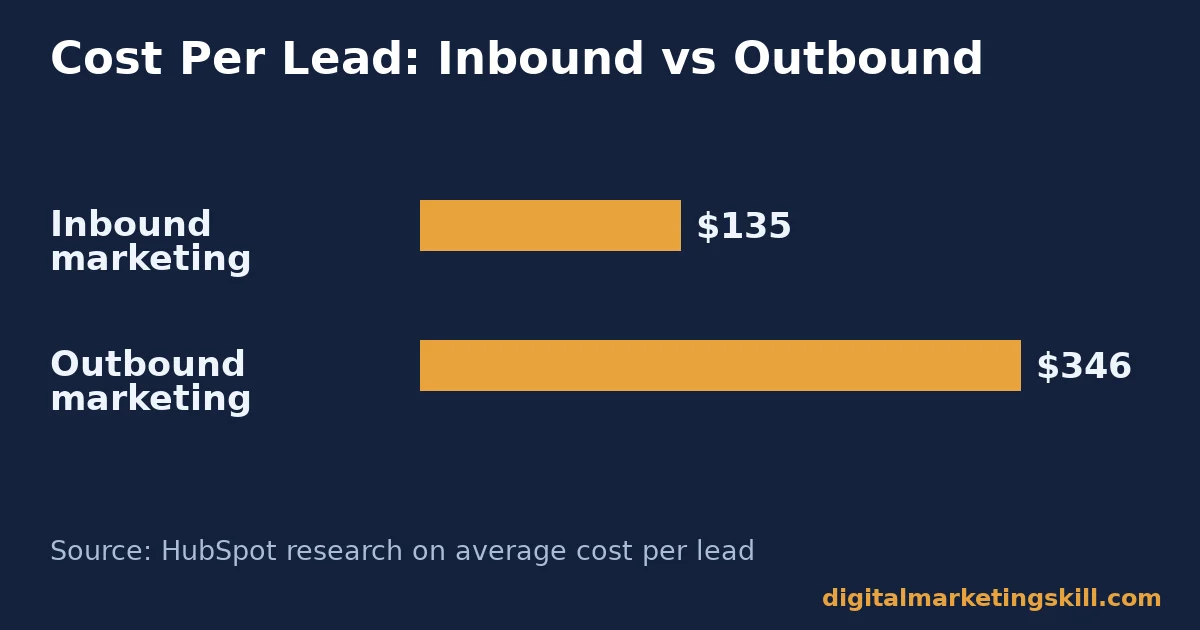
Inbound marketing strategies earn attention instead of buying it. Content, search and email pull people in, rather than interrupting them with ads. HubSpot’s own data found inbound leads cost 62% less than outbound ones. This guide shows how each channel actually works, and how to allocate your effort across them.
Key Takeaways
- Inbound leads cost far less. HubSpot’s research found inbound leads average $135, against $346 for outbound, 62% less.
- Inbound also produces more leads. The same HubSpot data found inbound tactics generate 54% more leads than outbound tactics.
- SEO leads close better. HubSpot reported that SEO-sourced leads close at roughly 7 times the rate of outbound leads.
- Ranking first in search still matters most. Backlinko’s study of over 4 million Google results found the #1 organic result gets an average click-through rate of 27.6%.
- Email keeps paying back more than any other channel. Litmus’s State of Email research reported $36 to $42 returned for every $1 spent.
In this guide
- What Most Inbound Marketing Strategies Lists Get Wrong
- How Inbound Marketing Strategies Actually Work
- What Differs Among Inbound Marketing Channels
- Cost And Time To Results, By Channel
- Pairing Two Inbound Marketing Strategies
- How To Execute Each Of These Inbound Marketing Strategies
- How To Measure Whether Your Inbound Marketing Strategies Are Working
- The One Rule: Spend Most Of Your Time Where Compounding Is Fastest
- A Real Case: Scaling Services Through Inbound Work
- Frequently Asked Questions About Inbound Marketing Strategies
- Your Next Step With Digital Marketing Skill Institute
What Most Inbound Marketing Strategies Lists Get Wrong
Search “inbound marketing strategies” and you get a list of 20 or 30 tactics. Blog weekly. Post on social media. Send a newsletter. Build landing pages. The list is not wrong, but it skips the one idea that ties every tactic together.
Inbound marketing strategies work because they earn attention before they ask for anything. Outbound marketing interrupts someone’s day with an ad or a cold call. Inbound marketing answers a question someone already has, so they come to you. Every tactic on a long list is just one channel for doing that.
This guide narrows those long lists to four underlying channels: search content, email, social media and lead magnets. Every specific tactic you have read about, guest posting, a weekly newsletter, a TikTok series, a free template, fits inside one of these four. Understanding the channel underneath a tactic matters more than collecting more tactics, because it tells you what skill you actually need to practice.
A ground rule before we go further. Figures below are checked against the organization that published them, and labeled where they are from a single study or a specific time period. Nothing here is a guaranteed result. Any example marked “illustrative” is invented, used only to show the math.
How Inbound Marketing Strategies Actually Work
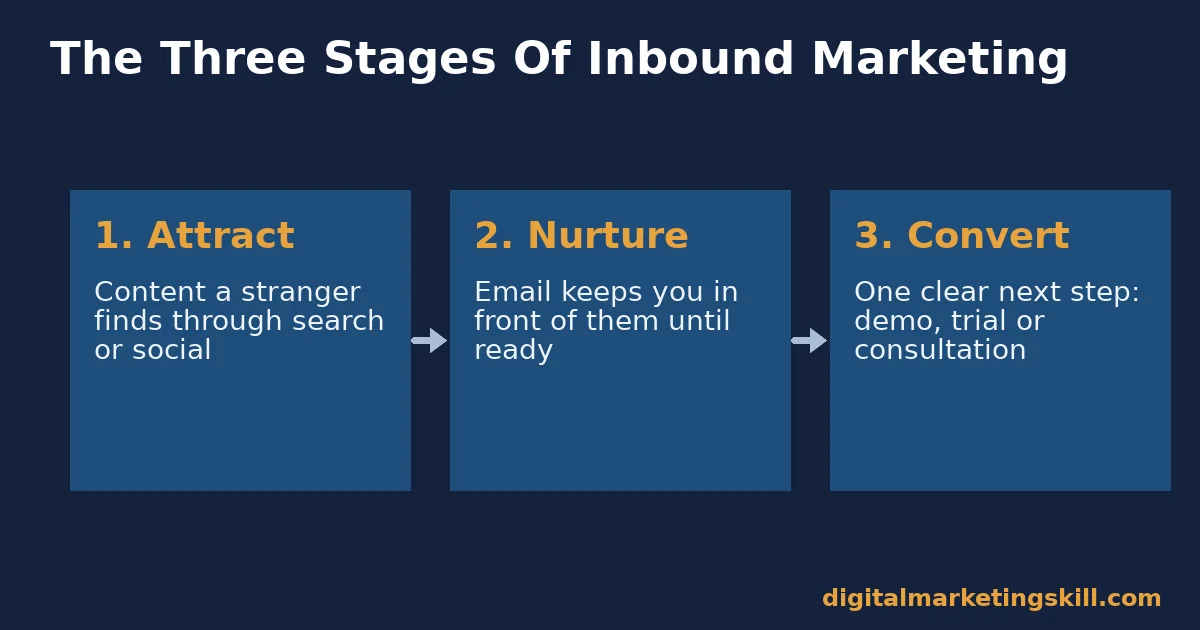
Inbound marketing runs on three stages: attract, nurture, convert. Attract means publishing something a stranger would search for or share, a blog post, a guide, a useful tool. Nurture means staying in front of that person after they find you, usually through email, until they are ready to buy. Convert means giving them one clear next step, a demo, a free trial, a consultation, at the moment they are ready.
Most businesses that struggle with inbound marketing strategies skip the middle stage. They publish content, then expect a sale on the first visit. Almost nobody buys on a first visit from a stranger. Nurture is the stage that turns a one-time visitor into someone who trusts you enough to eventually say yes, and it is usually the weakest link in an otherwise reasonable inbound plan.
Outbound marketing skips straight to convert. A cold email or a paid ad asks for the sale before earning any trust. That is why outbound can produce results immediately, while inbound marketing strategies usually take two to six months to build enough content and traffic to compound.
The payoff is in that word: compound. A blog post published once can keep ranking and earning clicks for years. An outbound campaign stops producing the moment you stop paying for it.
There is also a growing reason to lean on inbound specifically. DataReportal’s Digital overview counted 6.12 billion people online worldwide, about 73.8% of the world’s population, a large pool of people that HubSpot’s own comparison of the two approaches argues respond better to being helped than interrupted.
What Differs Among Inbound Marketing Channels
Four channels make up most inbound marketing strategies: search content, email, social media and lead magnets. Each pulls people in differently, and each needs a different skill to do well.
They also differ in how long they take to produce a result and how much of that result you keep owning. Search content and email both build an asset you control: a ranking page or a list of subscribers.
Social media builds an audience you only partly control, since the platform sets the rules for who sees your posts. Lead magnets do not stand alone; they convert traffic that one of the other three channels already brought in.
Search Content: Answer A Question People Are Already Asking
Search content targets a specific question or phrase someone types into Google. It ranks over weeks or months, then keeps earning clicks without ongoing cost. The skill that matters most is picking topics people actually search for, not just topics you want to write about. Our guide on blog content strategy covers how to choose and prioritize those topics.
Email: Keep A Direct Line To People Who Already Said Yes
Email reaches people who already gave you permission to contact them. It is the one channel you fully own. No algorithm change can take your list away. The skill that matters most is segmentation, sending the right message to the right group instead of one blast to everyone. See our guide on email marketing strategies that lift revenue for the full playbook.
Social Media: Build Familiarity Before You Ask For Anything
Social media builds familiarity in public, where people can see you before they ever visit your site. It rewards consistency more than any single viral post. The skill that matters most is picking the one or two platforms your specific audience actually uses, not posting everywhere thinly. A quiet, steady presence on one platform usually earns more trust than a loud, inconsistent presence on five.
Lead Magnets: Trade Something Useful For An Email Address
A lead magnet, a checklist, a template, a short course, trades something useful for an email address. It turns anonymous traffic from search or social into a named contact you can nurture. The skill that matters most is making the offer specific enough that only your real buyers want it.
Cost And Time To Results, By Channel
Before you commit effort, see the four channels side by side on cost and speed. Both vary more than most lists admit.
Search content costs mostly time, not cash. Expect three to six months before a new page ranks well enough to produce steady traffic, matching HubSpot’s broader finding that inbound results build gradually rather than instantly.
Email costs very little once you have a list, usually just a sending tool. The real cost is upfront: building the list in the first place, which depends on the other three channels sending people your way.
Social media costs mostly time and consistency, since organic reach rarely needs ad spend to start. Results on familiarity and trust build over months, though paid boosts can speed up reach if budget allows.
Lead magnets cost little to create, often a single well-made document, but only work once you already have traffic from one of the other three channels to offer it to.
Pairing Two Inbound Marketing Strategies
These four channels are not separate businesses. They feed each other. Search content and email pair most naturally: a ranking page earns the visit, a lead magnet on that page earns the email address, and the email list then nurtures that visitor toward a sale over weeks or months.
Social media pairs well with search content too, though differently. A blog post gives you something worth sharing on social, and social gives that post an early audience before search rankings catch up. Relying on social media alone, without content behind it, tends to produce attention that disappears the moment you stop posting.
How To Execute Each Of These Inbound Marketing Strategies
Picking a channel is step one. Executing it well is a separate, specific set of moves.
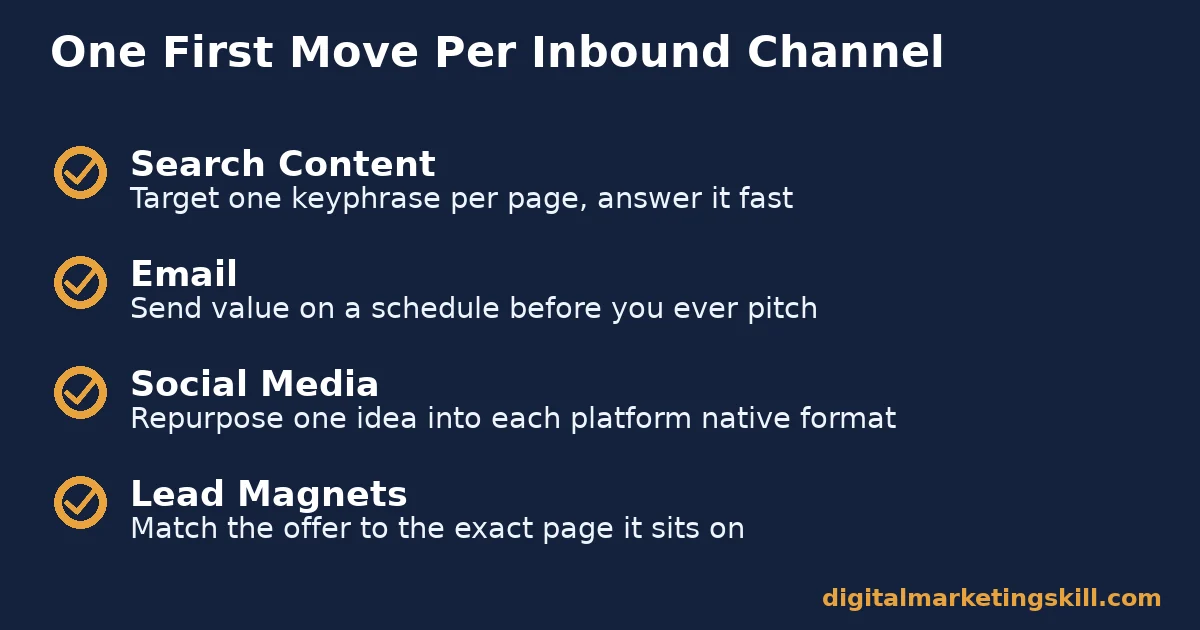
Search Content: Target One Keyphrase Per Page
Write one page per keyphrase, not one page trying to rank for ten. Answer the exact question in the first few sentences, then go deeper. Update the page every few months rather than publishing a new one on the same topic, since a single strong page outranks several thin ones.
Link related pages to each other with descriptive anchor text, so search engines and readers can both follow the full topic.
Email: Send Value Before You Send An Offer
Send useful content on a predictable schedule before you ever pitch. A list that only hears from you when you are selling unsubscribes fast. Segment your list by what people actually clicked, not just by when they joined, so each email matches real interest. Keep a consistent sender name and subject-line style, so recipients recognize your email before they even open it.
Social Media: Repurpose One Idea Into Several Formats
Take one idea from a blog post or an email and reshape it for each platform’s native format, instead of writing something new every time. This keeps output consistent without multiplying the workload. Reply to comments and messages personally; social platforms reward accounts that behave like people, not broadcasters. Schedule posts in advance so consistency does not depend on remembering every single day.
Lead Magnets: Match The Offer To The Page It Sits On
Put a narrow, specific lead magnet on the page most related to it, rather than the same general offer on every page. A checklist about one exact problem converts far better than a generic “free guide” on an unrelated page. Test one new lead magnet at a time, so you know what changed the result. Our guide on turning leads into paying customers covers what happens after someone downloads one.
How To Measure Whether Your Inbound Marketing Strategies Are Working
Each channel has one number that shows whether it is working, before revenue is large enough to judge alone. Our guide to content marketing metrics worth tracking goes deeper on the search and content side specifically.
Search content: organic traffic growth per published page. New organic visits a page earns in its first 90 days. A page earning close to zero after 90 days usually targets the wrong keyphrase or lacks real depth.
Email: click rate, not open rate. Opens are an unreliable signal in current inboxes. Clicks show real interest. A healthy click rate is usually 2 to 5% of the list, depending on your industry.
Social media: engagement rate per follower, not follower count. A smaller, engaged audience converts better than a large, silent one. Track likes, comments and shares as a share of your total followers.
Lead magnets: landing page conversion rate. Visitors who give their email, divided by visitors who see the offer. Unbounce’s conversion benchmark report is a useful reference point by industry. Under 10% usually means the offer is too broad or the page asks for too much too soon.
The One Rule: Spend Most Of Your Time Where Compounding Is Fastest
If you only have time for one inbound marketing strategy, start with search content, because it compounds the longest once it ranks. Add email next, since it is the cheapest way to keep in touch with people that content brings in. Treat social media as amplification for content you already made, not a separate content engine. Add lead magnets once you have enough traffic for the list to actually grow.
Illustrative, invented numbers: a single ranking guide that earns 500 visits a month, converting 3% through a lead magnet, produces 15 new contacts monthly without new spend. The same budget in outbound ads might produce leads faster today, but the cost resets to zero the moment the campaign stops.
The rule is not “inbound always wins.” A business that needs revenue inside 30 days, with nothing published yet, often needs some outbound spend to survive the months it takes inbound marketing strategies to compound. The point is to start the compounding clock as early as possible, even while outbound covers short-term needs.
A Real Case: Scaling Services Through Inbound Work
Olajire Jacob, a Digital Marketing Skill Institute graduate, reported charging an average of $500 to set up email marketing flows for clients in the US, UK and Canada, and scaling that work to $5,000 a month. This was published on the Institute’s own reviews page.
The result shows that a specific, well-executed inbound skill, in this case email marketing, can become a service business on its own. It does not show that every freelancer reaches this figure on the same timeline; the result comes from one person’s reported experience, not an audited average.
The underlying mechanism is still worth noting: email marketing is one of the four inbound channels covered in this guide, and it can be sold as a service on its own, not just used to market your own business. Read the Institute’s earnings disclaimer before using any student result to set expectations for your own inbound marketing strategies.
Frequently Asked Questions About Inbound Marketing Strategies
What is the difference between inbound and outbound marketing?
Inbound marketing earns attention through content, search and email that people seek out. Outbound marketing interrupts people with ads, cold calls or cold emails they did not ask for. Most businesses that grow steadily use both, but inbound marketing strategies typically cost less per lead over time.
How long do inbound marketing strategies take to work?
Most take two to six months before traffic or leads become consistent, since search content needs time to rank and an email list needs time to grow. Results then tend to compound, unlike outbound spend, which stops the moment you stop paying.
Which inbound marketing strategy should a beginner start with?
Search content, because one well-targeted page can keep earning traffic for years without ongoing cost. Pick one specific question your audience asks, answer it thoroughly, and build outward from there.
Do inbound marketing strategies work for every industry?
They work wherever your audience searches, scrolls or reads email, which covers nearly every industry today. The exact mix of channels differs: a visual product may lean on social media, while a technical service may lean on search content and email.
How much budget do inbound marketing strategies need?
Less than outbound advertising, since the main cost is time rather than ad spend. A small business can start with no paid budget at all: one blog post, one email a week, and consistent posting on one social platform.
Can inbound and outbound marketing work together?
Yes, and many businesses combine them. A common approach uses outbound ads for immediate leads while inbound content builds toward a lower, compounding cost per lead over the following months. As the inbound channels mature, many businesses gradually shift budget away from outbound, since the cost per lead keeps falling on the inbound side while it stays flat on the outbound side.
What is the biggest mistake businesses make with inbound marketing strategies?
Expecting immediate results and stopping too early. Search content and email lists both take months to build momentum. Most of the compounding value shows up after that point, not before it.
Do inbound marketing strategies still work with rising ad blocker use?
Yes, and that trend favors inbound further. Ad blockers only stop paid ads from loading. They do nothing to a search result, an email someone subscribed to, or a social post in their feed, which is exactly where inbound marketing strategies operate.
How do you know which inbound channel to prioritize first?
Match the channel to what you already have. If you have writing skill and patience, start with search content. If you already have an email list sitting unused, start there instead. Prioritize the channel where you already hold an advantage, rather than starting from zero on all four at once.
Your Next Step With Digital Marketing Skill Institute
Whichever inbound marketing strategies fit your business, the skill behind all of them is the same. Creating content and messages that earn attention, then converting that attention into customers. Digital Marketing Skill Institute’s Master Diploma in Digital & AI Marketing teaches this through four AI-powered tracks. AI-Powered Social Media Management and Advertising, AI-Powered Lead Generation and Email Automation, AI-Powered Google Specialist, and AI-Powered WordPress and SEO Specialist.
A Full Stack option covers all four tracks and earns the combined certificate. Every track includes unlimited 1-on-1 coaching and mentoring, plus a U.S. Project Internship with a verified U.S. Work Reference Letter.
The program carries dual US and UK accreditation, recognized in more than 100 countries. It runs 100% online, so you can build your inbound marketing strategies from anywhere in your country.
Start with the Digital Marketing Skill Institute blog. See the full program on the Master Diploma page. Browse real outcomes on the reviews page. When you are ready, apply here. Digital Marketing Skill Institute built this program for people starting from anywhere, wherever you live. digitalmarketingskill.com is the best place to start exploring which track fits your inbound marketing strategies.
Every figure in this guide was checked against its original source before publication. Figures marked as illustrative are invented examples, not real results.
![9 Amazing Digital Marketing Skills to Make Money Online [With Proof]](https://digitalmarketingskill.com/wp-content/uploads/2019/07/9-Amazing-Digital-Marketing-Skills-to-Make-Money-Online-With-Proof-17.png)






