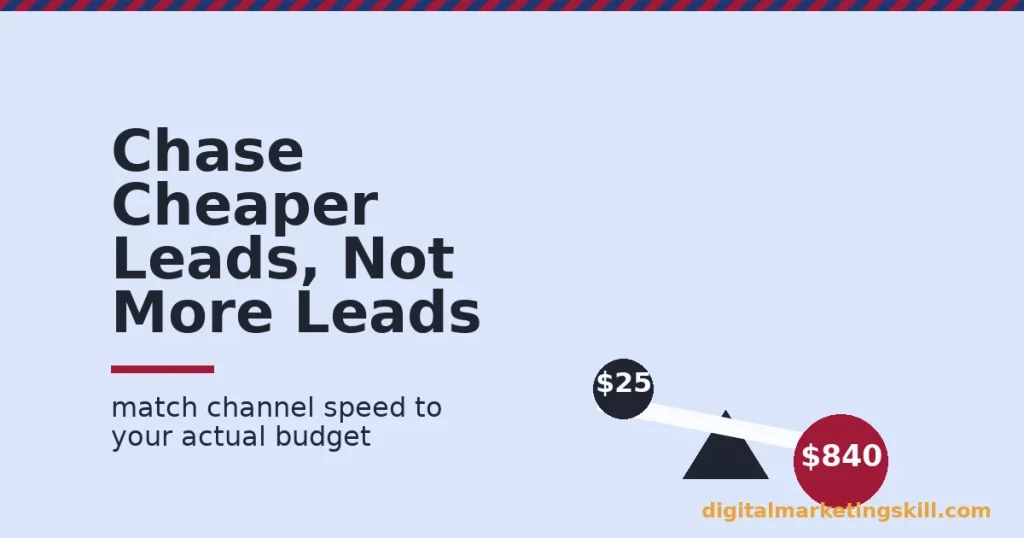
Quality lead generation strategies turn strangers into people who have given you permission to follow up. That happens through paid ads, content, webinars or referrals. Cost varies enormously by channel: referrals average around $25 per lead, while trade shows and in-person events average roughly $840. This guide explains how each channel actually works, what differs between paid and organic approaches, and how to measure which one is worth your budget. Once a lead opts in, how you follow up matters: see this email marketing campaign guide for building a list that actually converts.
Key Takeaways
- Cost per lead varies by up to 34 times. Published benchmarks put referrals near $25 per lead and trade shows near $840. Channel choice is a budget decision, not just a tactic choice.
- Multi-channel prospecting sits mid-pack on cost. One cost-per-lead benchmark set puts multi-channel prospecting around $188. That is cheaper than paid social or cold calling but pricier than referrals or SEO, so diversifying is a risk hedge more than a guaranteed discount.
- Ebooks still get used, but convert less than they used to. Gated-ebook conversion has fallen below 0.9% on average. Interactive tools like quizzes and templates now convert at 5.2% or higher.
- Webinars lose over half their registrants. The median registration-to-attendance rate for B2B webinars sits near 41% to 42%. Plan content assuming most registrants never show up live.
- Follow-up compounds. Sending two to three follow-up emails can lift reply rates from about 9% to around 27%. A nurture sequence is one of the cheapest strategies to improve.
In this guide
- What Most Lead Generation Advice Misses
- How Quality Lead Generation Strategies Actually Work
- What Differs Between Paid and Organic Quality Lead Generation Strategies
- How to Choose the Right Strategy for Each Channel
- How to Measure Quality Lead Generation Strategies
- The Decision Rule: Match Channel Speed to Your Runway
- Common Mistakes That Waste Lead Generation Budget
- Combining Quality Lead Generation Strategies Into One Stack
- Frequently Asked Questions About Quality Lead Generation Strategies
- Where to Go From Here
What Most Lead Generation Advice Misses
Most lists of quality lead generation strategies read the same way. Try paid ads, write a blog, build an ebook, run a webinar. The list rarely says which channel fits which budget and timeline, or what to expect once a lead actually opts in. Quality lead generation strategies differ far more in mechanism than most lists suggest, and that mechanism is what this guide covers first.
This guide groups strategies by mechanism: paid versus organic, one-time content versus ongoing nurture, and what each channel costs against what it delivers. One ground rule first. Cost-per-lead figures below are published industry averages. They vary by up to four times across industries, so treat every number as a planning range, not a guarantee for your specific market.
How Quality Lead Generation Strategies Actually Work
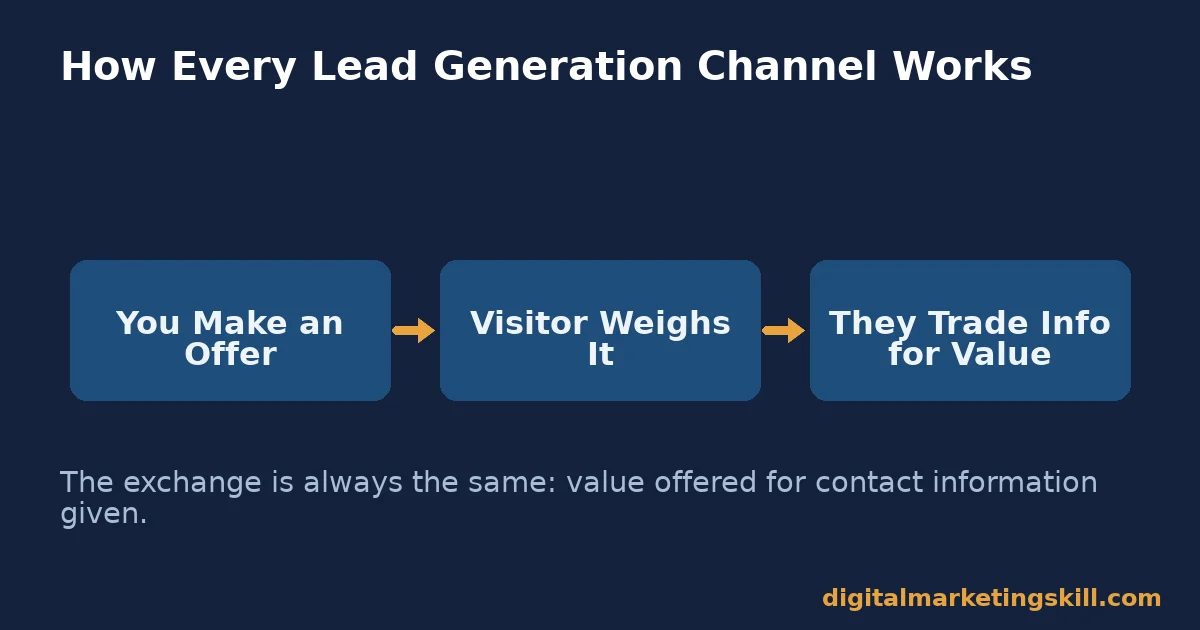
Every lead generation channel follows the same basic mechanism underneath the tactics. A visitor sees an offer and decides the exchange is worth it. Then they hand over contact information in exchange for something of value. That something might be an ebook, a webinar seat, a discount or simply useful content.
What changes between channels is the cost of reaching that visitor and the trust required before they convert. Paid channels buy visibility directly but charge for every click, whether or not it converts. Organic channels like SEO and content cost time instead of money. Trust builds slowly rather than being bought outright.
The mechanism matters because it explains the cost gap. Referral leads average around $25 because someone who trusts you is doing the persuading for free. Event leads average around $840 because they bundle venue, staff and travel costs into a channel that still only reaches a small, local audience.
What Differs Between Paid and Organic Quality Lead Generation Strategies
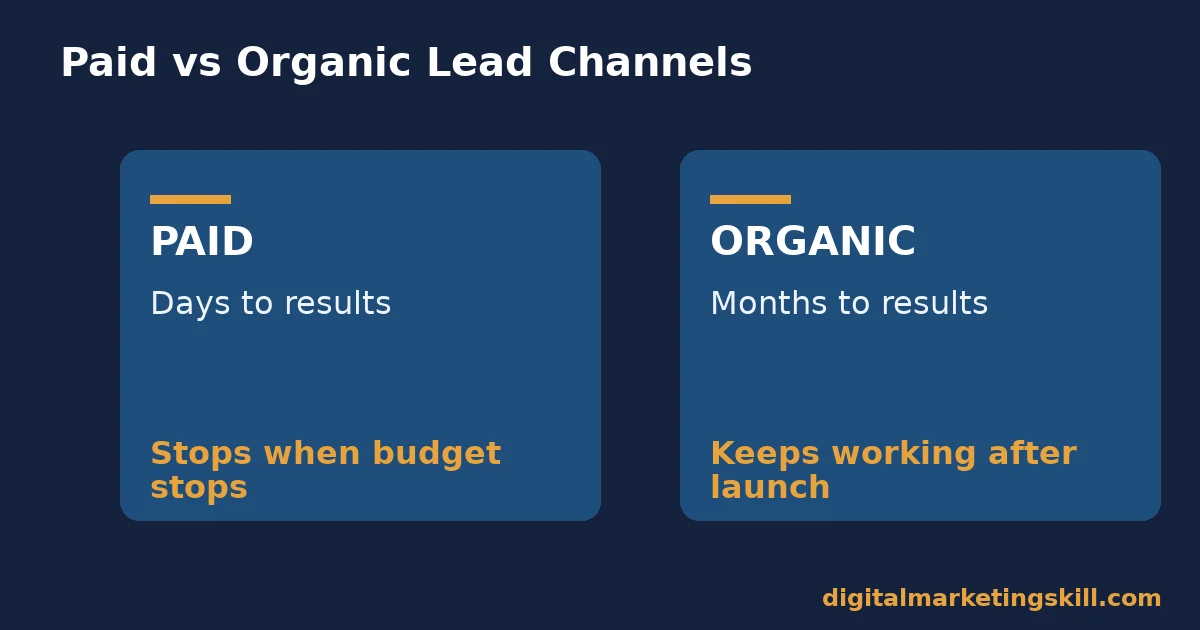
Quality lead generation strategies split cleanly into two mechanisms. The right mix depends on how much time your business has before it needs results.
Paid Channels: Built for Speed
Paid search and social ads can generate leads within days of launch. That makes them the right choice when a business needs pipeline fast. Google Search ads average a median of around $45 per lead for high-intent terms. LinkedIn Ads sits higher at a median around $125, reflecting LinkedIn’s more specific but smaller B2B audience.
The trade-off is that paid leads stop the moment the budget stops. There is no compounding benefit the way there is with content that keeps ranking in search results for years after it was written.
Organic Channels: Built to Compound
SEO averages around $206 per lead in blended benchmarks. That sits generally below paid channels like cold calling or trade shows, though still well above referrals. The cost is time rather than cash: content typically takes months to rank and build an audience before it generates a meaningful volume of leads.
The payoff is that organic assets keep working after the initial investment. A blog post or guide that ranks well can keep generating leads for years without a recurring ad spend. That is why organic channels usually look expensive in month one and cheap by year two.
How to Choose the Right Strategy for Each Channel
Picking a channel is only the first step. The sections below give the specific adjustment that makes each channel type actually convert.
Paid Ads: Match the Offer to the Click Intent
Send paid traffic to a landing page built around one specific offer, not your homepage. A visitor who clicked a specific ad expects a specific answer, and a generic page loses that intent immediately.
Our guide to landing page design covers the specific elements that keep that visitor converting instead of bouncing. Retarget visitors who did not convert the first time, since a second exposure often costs far less than the first click.
Content and Lead Magnets: Choose Format by Traffic Temperature
Ebooks remain the most common lead magnet. 75% of marketers still use them, and they account for 55% of HubSpot’s own top-performing submissions. But the average gated ebook now converts at well below 0.9%, while interactive formats like quizzes and templates convert at 5.2% or better.
That gap makes interactive formats worth testing alongside a traditional ebook, rather than replacing it outright. Ebooks still work well for demonstrating deep expertise, even at a lower conversion rate. Our guide to why lead generation matters covers the broader content-to-lead pipeline in more depth.
Webinars: Plan Content for the Half That Shows Up
Expect roughly 41% to 49% of registrants to actually attend live. Build your promotional content and follow-up assuming most registrants will watch a replay or nothing at all. Send a reminder sequence in the days before the webinar, since attendance rates respond directly to how recently a registrant was reminded.
Record every webinar and send the replay to no-shows within a day. A registrant who intended to attend but missed it is still a warm lead. A prompt replay link captures value you would otherwise lose entirely. Pair the replay with a short follow-up email sequence; our guide to email marketing fundamentals covers building that sequence properly.
How to Measure Quality Lead Generation Strategies
Lead volume alone hides whether a channel is actually working. Track these metrics alongside volume to see the full picture.
- Cost per lead. Total channel spend divided by leads generated. Compare it against the published benchmarks in this guide, but weight your own trend over time more heavily than any single external number.
- Lead-to-customer rate. The share of leads that eventually become paying customers. A channel with a higher cost per lead can still win if its leads convert to customers at a much higher rate.
- Time to conversion. How long a lead takes, on average, from first contact to purchase. Paid channels often convert faster. Organic and nurture-based leads often take longer but convert at a lower cost overall.
- Webinar attendance rate. Live attendees divided by registrants. A rate well below the 41% to 49% benchmark range signals a reminder or timing problem worth fixing before blaming the topic.
- Nurture reply rate. The share of nurtured leads who reply to a follow-up sequence. Rising reply rates after adding follow-up touches show the sequence is working, not just adding noise.
Reading These Numbers Together
Start with cost per lead to rule channels in or out of your budget. Then check lead-to-customer rate before committing more spend. A cheap channel that never converts to revenue is not actually cheap. Use time to conversion to set realistic expectations with anyone waiting on results from a new channel.
The Decision Rule: Match Channel Speed to Your Runway
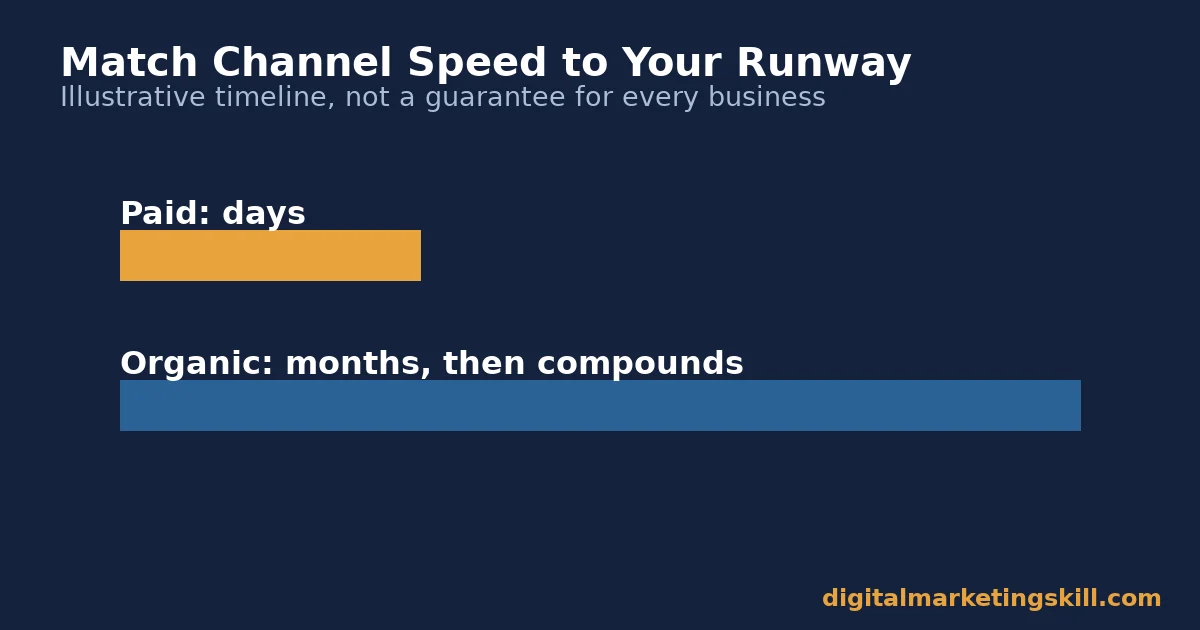
If you remember one rule from this guide, make it this one. Use paid channels when you need leads within weeks and have budget to spend on acquisition. Use organic channels when you have months of runway and want leads that keep arriving after the initial work is done. Most businesses need both running at once, just not necessarily at equal investment.
Here is an illustrative example, with invented numbers. A services business spends $3,000 a month entirely on paid search, generating about 65 leads at roughly $45 each. It shifts $1,000 of that budget into an SEO content programme instead.
Six months later, the content programme is producing 15 leads a month at a falling cost per lead, as older posts keep ranking. Paid search still delivers its usual volume at the same rate. The business now has a second, more durable source of leads without reducing total volume.
Common Mistakes That Waste Lead Generation Budget
Most lead generation budgets lose efficiency to a handful of repeatable mistakes, not to a single bad channel choice.
Mistake One: Relying on a Single Channel
A single channel means a single point of failure. An ad account can get suspended, a platform can change its algorithm, or a key referral partner can move on. A business with only one acquisition channel loses its entire pipeline overnight when that happens.
Running at least one paid and one organic channel together does not guarantee a lower blended cost. But it does mean no single disruption can stop lead flow completely.
Mistake Two: Treating the First Email as the Only Email
A single follow-up lifts average reply rates from about 9% to roughly 13%. Two to three follow-ups can push that closer to 27%. A lead that does not reply to the first message is not necessarily uninterested; they may simply have been busy when it arrived.
Mistake Three: Sending Every Click to the Same Generic Page
A landing page built for one specific offer consistently outperforms a generic page asked to serve every traffic source. Build a dedicated page for each major lead magnet or ad campaign, even when it duplicates most of the layout. The specific match between promise and page is what drives the conversion.
Mistake Four: Ignoring the Webinar No-Show Rate
A webinar programme that only measures registrations is tracking the wrong number. Well over half of registrants typically never attend live. Track attendance rate and replay views separately from registration count. Treat a low attendance rate as a signal to fix reminder timing before changing the topic.
Mistake Five: Sending the Same Nurture Sequence to Every Lead
A lead who downloaded a pricing guide is closer to buying than one who downloaded a beginner’s checklist, yet many nurture sequences treat both identically. Branch your follow-up by what the lead actually engaged with, even with just two or three paths. A message that matches intent earns a reply far more often than a generic broadcast.
Combining Quality Lead Generation Strategies Into One Stack
Most of the quality lead generation strategies in this guide work better together than alone. A single tactic produces a single stream of leads that rises and falls with whatever is happening on that one channel. A stack of two or three complementary tactics produces a steadier total, even when any one piece has a slow week.
Sequence the Stack, Don’t Launch Everything at Once
Launching five channels in the same month makes it impossible to tell which one is actually working. Add one new lead generation channel at a time. Run it for at least a full quarter, and only then decide whether to add the next. This sequencing takes longer to reach a full stack, but it means every channel’s real cost per lead is known before you commit more budget to it.
Route Every Lead Through One System, Regardless of Source
Quality lead generation strategies fail quietly when leads from different channels land in different places. A spreadsheet holds referrals, an ad platform’s own dashboard holds paid leads, and an email tool’s list holds webinar sign-ups. Route every lead into one CRM or tracking sheet instead, with its source tagged.
That single system is what makes the cost-per-lead and lead-to-customer comparisons in this guide actually possible to calculate across your real channel mix.
Review the Stack Quarterly, Not Just the Individual Channels
A channel that looked strong on its own numbers can still be a weak fit once you see the full stack together. Set a quarterly review where you compare every active channel’s cost per lead, lead-to-customer rate and time to conversion side by side, not in isolation.
Quality lead generation strategies that seemed obviously worth keeping often look different once a slower, cheaper channel is sitting right next to them in the same table. Drop or pause whichever channel keeps landing at the bottom of all three metrics for two reviews in a row, rather than assuming it just needs more time.
Frequently Asked Questions About Quality Lead Generation Strategies
What is the cheapest lead generation channel?
Referrals average around $25 per lead in published benchmarks, making them the cheapest channel on average, because an existing customer does the persuading for you. The trade-off is that referral volume is hard to control directly. It grows from service quality and relationships rather than a budget you can simply increase.
What is the fastest way to generate leads?
Paid search and social ads generate leads fastest, often within days of launch, because they buy visibility directly instead of earning it over time. Google Search ads average a median around $45 per lead for high-intent terms and can start producing results almost immediately after launch.
Do ebooks still work as lead magnets?
Yes, but less reliably alone than they used to. Most marketers still use ebooks, and they remain a major source of top-performing lead submissions. Average gated-ebook conversion has fallen below 0.9% as interactive formats like quizzes and templates, which convert at 5.2% or higher, have gained ground. Testing both formats usually beats relying on one.
Why do so many webinar registrants not attend?
Registration is a low-commitment action, so many registrants intend to attend but get pulled away by other priorities. The median attendance rate for B2B webinars sits near 41% to 42%, which is why a reminder sequence and a prompt replay matter as much as the live event itself.
How many follow-up emails should a lead nurture sequence include?
Sequences with four to seven messages reach around a 27% reply rate, roughly three times the 9% reply rate of sequences with only one to three messages, according to an analysis of over 20 million cold emails. Even a single follow-up measurably improves reply rates over a one-and-done email, so more touches, spaced sensibly, generally outperform fewer.
Is it better to focus on one lead generation channel or several?
Usually several, once you have the capacity to manage them well. Multi-channel prospecting does not automatically produce the lowest cost per lead. In published benchmarks it lands in the middle of the cost range, cheaper than cold calling or paid social but pricier than referrals. Its real value is resilience: no single channel outage can stop your pipeline.
How should a small business with a limited budget prioritise these channels?
Start with referrals, since they cost the least and often need only a simple ask to existing happy customers. Add one paid channel for speed once referrals are running, and begin an SEO content programme in parallel, since it takes months to pay off and the sooner it starts, the sooner it compounds.
Where to Go From Here
Quality lead generation strategies work best as a deliberate mix: a paid channel for speed, an organic channel for compounding value, and a nurture sequence that follows up more than once. Pick one gap in your current mix this week, whether that is adding a follow-up sequence or testing a second channel. Measure cost per lead against lead-to-customer rate before scaling it further.
If you want a structured way to learn lead generation alongside the rest of digital marketing, the Digital Marketing Skill Institute’s Master Diploma in Digital & AI Marketing covers paid advertising, SEO, content and email together. It includes unlimited one-on-one coaching and mentoring and real project work inside a U.S. company.
The diploma is dual US and UK accredited and recognised in more than 100 countries, so you can study and apply it anywhere in your country, 100% online. Explore the course library at digitalmarketingskill.com, read graduate outcomes on the reviews page, browse more guides on the blog hub, and when you are ready, apply here wherever you live.
Every figure in this guide was checked against its original source before publication. Figures marked as illustrative are invented examples, not real results.
![9 Amazing Digital Marketing Skills to Make Money Online [With Proof]](https://digitalmarketingskill.com/wp-content/uploads/2019/07/9-Amazing-Digital-Marketing-Skills-to-Make-Money-Online-With-Proof-17.png)