
Social media lead generation rarely fails simply because of a bad post. It fails because the handoff between platform and pipeline is missing. Fix the capture, the response speed and the follow-up, and the same audience starts producing real leads instead of likes.
Key Takeaways
- Only 37% of marketers say it is easy to tie social activity to business outcomes. 41% of B2B marketers call that link hard to prove (HubSpot).
- Paid social media is a top-3 ROI channel for both B2B (23.3%) and B2C (28.5%) marketers. Organic social trails close behind for B2C at 23.9% (HubSpot).
- 68% of consumers expect a reply to a social message within 24 hours. 24% expect one in 1-2 hours, and 14% expect one in under an hour (Sprout Social).
- 5.79 billion social media user identities exist worldwide. The typical user is active on 6.5 different platforms a month (DataReportal and We Are Social).
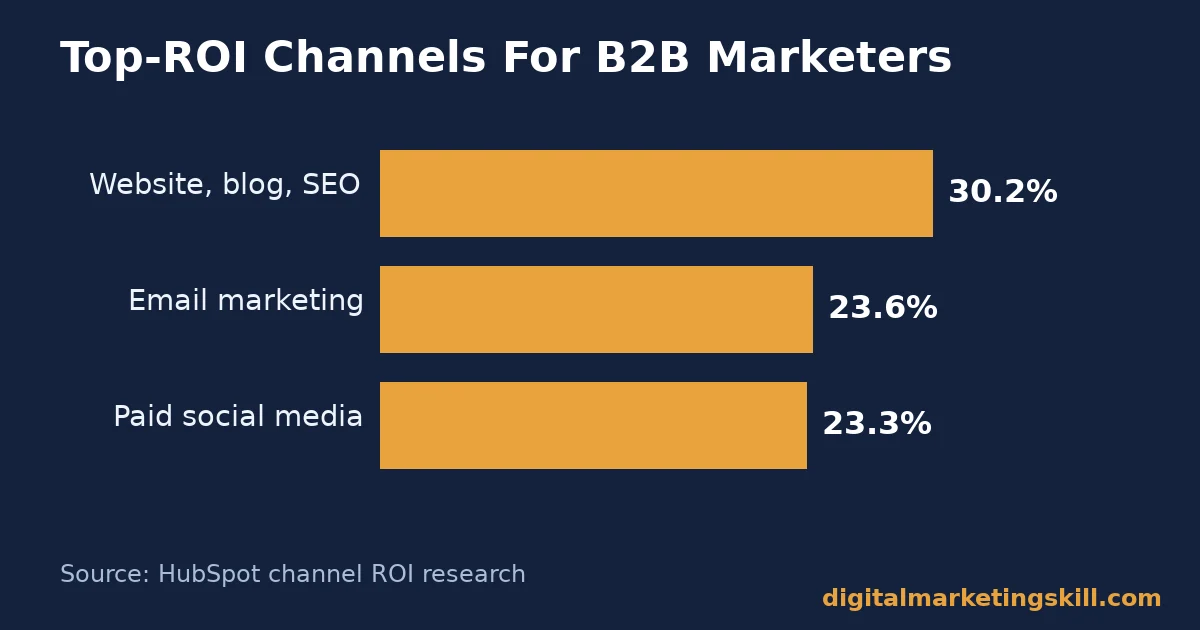
- For B2B marketers, website, blog and SEO (30.2%) and email (23.6%) still out-earn paid social on ROI. Social media lead generation usually works best feeding those channels, not replacing them (HubSpot).
In this guide
- Why Social Media Lead Generation Stalls
- How Social Media Lead Generation Actually Works
- Why Response Speed And Nurture Decide The Outcome
- What Changes By Channel
- How To Improve Each Channel
- Measuring Whether Social Media Lead Generation Works
- The One Decision Rule For Choosing A Channel
- Real Case: Fixing The Response Gap
- Common Social Media Lead Generation Mistakes
- Frequently Asked Questions About Social Media Lead Generation
- Build A Lead Generation System, Not Just A Posting Habit
Why Social Media Lead Generation Stalls
Most teams can point to likes, comments and follower counts. Far fewer can point to a lead. That gap is not an accident. HubSpot’s own social media marketing research found that only 37% of marketers say it is easy to tie social activity to business outcomes. A further 41% of B2B marketers call connecting social activity to sales genuinely difficult.
That difficulty is not a reason to abandon the channel. Social media lead generation remains a real top-3 ROI channel for both B2B and B2C marketers, according to the same research. It is instead a reason to be specific about what “generation” actually means. A real lead is a named person, with contact details, who took one deliberate action.
Ground rule for this guide: a follower is not a lead. A lead is a specific person who gave you a way to reach them. Every tactic below is measured against that one definition. Reach and engagement matter, but only as inputs to that outcome, never as a substitute for it.
How Social Media Lead Generation Actually Works
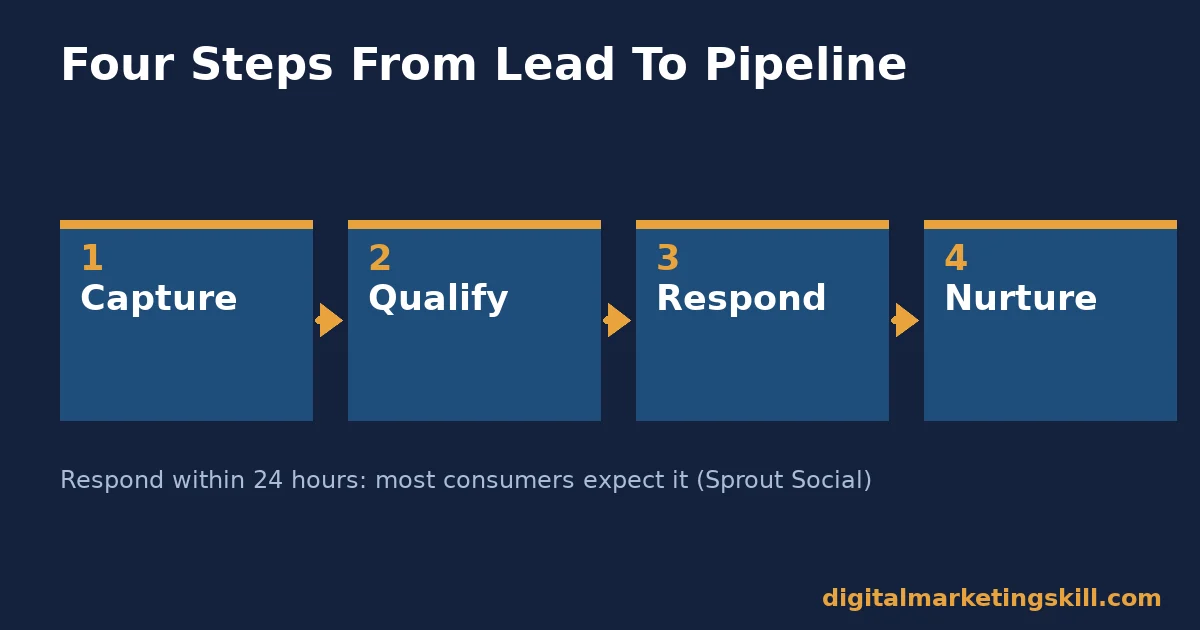
A lead becomes a lead in four steps: capture, qualify, respond, and nurture. Weakness in any one step quietly drains the other three. A brilliant offer still fails if the reply takes three days; a fast reply still fails if nobody qualified the lead first.
Capture is the offer and the form. A vague call to action, such as “learn more,” captures almost nobody. A specific offer tied to one clear outcome captures far more. The visitor knows exactly what they are trading their details for, so they are far more willing to hand them over.
Qualify separates a real prospect from a curious stranger. A short form field, a simple question, or a specific landing page can filter for intent before a lead ever reaches a human. This step matters because an unqualified lead wastes exactly as much follow-up time as a qualified one. Skipping it rarely saves time; it just moves the wasted effort downstream, onto a sales or support team.
Why Response Speed And Nurture Decide The Outcome
Respond is the step most teams underrate. Sprout Social’s research found that 68% of consumers expect a reply within 24 hours, and 24% expect one within 1-2 hours. A lead that sits untouched for two days has usually cooled. No amount of ad spend or clever copy can fix a slow reply, because by the time it arrives the original moment of interest has already passed. Speed is cheap to fix and expensive to ignore.
Nurture is everything after the first response. Most leads are not ready to buy the moment they convert. A short, useful follow-up sequence keeps the relationship warm until they are.
This is where this site’s email marketing lead conversion guide picks up the thread. Treat nurture as part of social media lead generation itself, not as a separate, later project. A lead captured today and ignored for a month was rarely worth capturing at all.
What Changes By Channel
Social media lead generation does not work the same way on every channel. Here is what actually differs before you touch a decision rule.
Paid Social: Built For Volume
Paid social buys reach on demand. That is why it is a top-3 ROI channel for B2C marketers at 28.5% and for B2B marketers at 23.3%, per HubSpot’s research. Its strength is speed and scale. A campaign can reach a defined audience the same day it launches. Its weakness is cost. Without a tight offer and a qualified audience, paid social can generate volume without generating leads worth following up. Spend scales faster than quality does, unless the targeting and the offer are both unusually sharp.
Organic Social: Built For Trust
Organic social trades speed for credibility. It ranks close behind paid social for B2C ROI at 23.9%, without a media budget attached. Its strength is that an audience chooses to follow a brand, which signals real interest. Its weakness is patience. Organic reach builds slowly, and it rarely produces a sudden spike of leads the way a paid campaign can.
Native Lead Forms: Built For Speed
A native, in-platform lead form removes the extra click to an external landing page, which is often where visitors drop off. Its strength is a shorter path from interest to submission. Its weakness is context. A native form captures a name and an email, but rarely enough information to qualify the lead well. The response and qualify steps have to work harder afterward to make up the difference.
Direct Messages And Communities: Built For Relationship
A direct message or a comment thread inside a community rarely looks like lead generation. It often behaves like the final step of it, though. Its strength is context. By the time someone messages a brand directly, they usually already trust it. Its weakness is scale. This channel cannot be automated the way an ad campaign can, and it depends on real people reading and replying promptly.
How To Improve Each Channel
Knowing what each channel is built for only helps once you have a starting move for fixing it. These three approaches mirror the channels above.
Paid Social: Lead With A Tight Offer
Narrow the audience and narrow the offer at the same time. A broad “get a free consultation” ad attracts broad, often unqualified interest. A specific offer, aimed at one audience segment with one clear next step, attracts people who already recognize their own problem in the ad. That alignment is what keeps paid social media lead generation efficient instead of expensive.
Organic Social: Lead With Proof
Post the evidence, not just the opinion. A single verified statistic, a real customer result, or a short worked example earns more trust than a general claim. Google’s own guidance on helpful content makes a similar point: first-hand expertise and real experience build more credibility than secondhand claims. This site’s social media engagement principles guide covers how to build that kind of credibility post by post, which is what eventually turns a follower into a lead.
Native Lead Forms: Lead With Fewer Fields
Every extra field lowers completion. Ask only for what the next step actually requires: usually a name, an email, and one qualifying question. Add more fields later, once the lead is already inside your pipeline and has a reason to keep answering questions.
Direct Messages And Communities: Lead With A Real Reply
Treat every direct message as a lead until proven otherwise, not as background noise. A short, specific, human reply does more for social media lead generation here than any template ever will. Save canned responses for simple questions, and write a genuine answer whenever someone describes an actual problem. This site’s social media management tools guide covers ways to keep that volume of messages manageable without losing the personal reply that makes this channel work. A single well-handled message can also become a case study for the organic proof approach above, if the person agrees to share their result.
Measuring Whether Social Media Lead Generation Works
A tactic only earns more budget once a number confirms it is working. These are the KPIs worth checking before you scale any channel.
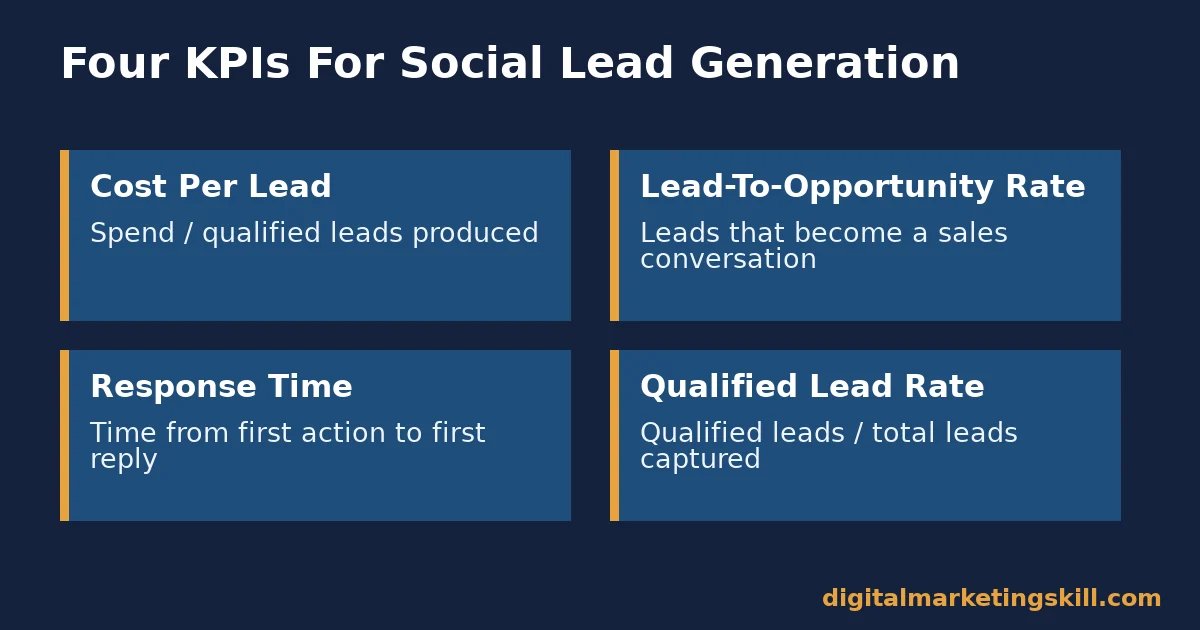
Cost per lead is total spend on a channel divided by the number of qualified leads it produced. It tells you whether a channel is efficient, independent of how much reach it earned. Sprout Social’s own definition of conversion rate, total conversions divided by clicks, visits or impressions, is the closely related metric worth tracking alongside it.
Lead-to-opportunity rate is the share of leads that become a real sales conversation. It tells you whether your qualify step is actually filtering for intent, or just collecting names.
Response time is the time between a lead’s first action and your first reply. Given that 68% of consumers expect a reply within 24 hours, a slow response time quietly caps every other number in this list.
Qualified lead rate is qualified leads divided by total leads captured. A low qualified lead rate usually means the offer or the form is attracting the wrong audience, not that the channel itself has failed. Fix the targeting or the offer first, before assuming the channel itself needs to change.
Track these four numbers by channel, not only in aggregate. HubSpot’s channel ROI research found paid social, organic social and email all rank differently for B2B versus B2C marketers, so a single blended number can hide a channel that is quietly underperforming.
The One Decision Rule For Choosing A Channel
If you only take one rule from this guide, take this one. Match the channel to how ready your audience already is to act. A cold, broad audience needs paid social’s reach. A warm audience that already follows you needs organic social’s proof. An audience already on your website, close to a decision, needs a native lead form’s speed. An audience already messaging you directly needs only a fast, honest reply.
Illustrative, invented numbers: imagine a team spends its entire budget on paid social for a cold audience, and gets a 1% qualified lead rate. The same budget split toward organic proof content for an existing, warmer audience might produce a smaller volume of leads, but a far higher qualified lead rate, because the audience already trusts the brand before the offer appears.
This rule also explains a common mistake: judging a channel purely by volume. A paid campaign that produces 500 raw leads can easily underperform an organic post that produces 40, if the organic leads convert into opportunities at a far higher rate. Volume without readiness is rarely worth celebrating, even when it looks impressive on a dashboard. A dashboard full of raw leads can still hide a pipeline that is quietly empty.
Real Case: Fixing The Response Gap
Illustrative, invented numbers, not a real company’s figures: a small team runs a paid social campaign that generates plenty of form fills, but few of those leads ever book a call. After reviewing the process, they find replies are going out two to three days after each form fill, far past the 24-hour window most consumers expect. They commit to replying within a few hours instead, without changing the ad, the offer, or the form. Lead-to-opportunity rate rises noticeably over the following weeks. Nothing else about the funnel changes; only the speed of that one step does. The fix costs nothing beyond a new habit.
The limits of this case matter. It describes one hypothetical team, it is not a controlled study, and results vary by industry, offer and audience. Even so, the direction of the fix is worth testing broadly: before changing an ad, an offer or a form, check how fast leads are actually getting a reply. DataReportal and We Are Social report 5.79 billion social media user identities worldwide, competing for the same attention; a slow reply simply hands that attention to whichever brand answers first.
Common Social Media Lead Generation Mistakes
A few mistakes show up again and again across channels, regardless of budget or team size. Fixing them usually costs nothing but attention. None require a bigger budget. They require a different habit.
The first is chasing followers instead of leads. A growing follower count feels like progress, but it says nothing about whether any of those followers ever became a reachable contact. Track the conversion from follower to lead directly, instead of assuming it happens on its own.
The second is a single, generic offer used everywhere. The same “book a demo” button rarely works equally well for a cold audience and a warm one. Match the offer to the audience’s readiness, the way the decision rule below describes, instead of relying on one offer for every channel. A cold audience usually needs a lighter first ask.
The third is treating response time as a support-team problem rather than a lead generation problem. By the time a lead reaches support, the sale is often already lost if nobody replied quickly enough. Response speed belongs inside the social media lead generation process itself, not downstream of it. Whoever owns the channel should own the reply time, too.
Frequently Asked Questions About Social Media Lead Generation
What counts as a lead in social media lead generation?
A specific person who gave you a way to reach them: an email, a phone number, or a booked call. A like, a follow or a comment is engagement, not a lead, even though it often precedes one. Keep the definition strict; a loose definition makes every number in this guide harder to trust.
Which social platform is best for social media lead generation?
There is no single best platform. The right one depends on where your specific audience already spends time and how ready that audience is to act, not on which platform is trending. Test two channels at once if you genuinely cannot tell, and let the qualified lead rate decide.
How fast should a team respond to a social media lead?
As fast as realistically possible, ideally within a few hours. Consumer expectations cluster around 24 hours at the outside, and interest fades quickly once a lead goes cold.
Do paid ads work better than organic posts for lead generation?
They work differently, not simply better or worse. Paid social buys speed and reach; organic social earns trust more slowly. Most teams need both, aimed at different stages of audience readiness.
How many form fields should a social media lead form have?
As few as the next step genuinely requires, usually two or three. Every additional field reduces how many visitors finish the form, even when each field feels justified on its own.
Why do social media leads go cold so quickly?
Mostly because of slow replies, not bad leads. A person who filled out a form was interested in that moment; a reply two or three days later often arrives after that moment has passed.
Is social media lead generation worth it for a small business?
Often yes, especially organic social, which does not require a media budget. The key is measuring qualified leads, not followers, so the effort is judged on results that actually matter, not on vanity metrics that look good but change nothing.
Should social media lead generation replace email or search?
No. HubSpot’s data shows website, blog and SEO, along with email, still earn more ROI than paid social for B2B marketers. Social media lead generation works best feeding those channels with new contacts, not replacing them.
Do direct messages count as social media lead generation?
Yes, often an underrated form of it. A direct message from someone already describing a real problem is frequently a warmer lead than a cold form fill, because the person chose to start the conversation themselves. Treat it with at least as much urgency as a form fill, not less.
How do I know if my social media lead generation budget is working?
Track cost per lead and lead-to-opportunity rate by channel, not just total leads. A channel producing cheap, plentiful leads that rarely convert is usually a worse investment than a pricier channel with a much higher opportunity rate. Look at the full funnel before cutting a channel’s budget.
Can a small team run social media lead generation without paid ads?
Yes. Organic social, direct messages and community replies cost time rather than a media budget, and they often produce warmer, more qualified leads precisely because the audience already chose to engage first.
Build A Lead Generation System, Not Just A Posting Habit
Capturing one lead is a start. Building a system that captures, qualifies, responds and nurtures consistently is what actually grows a pipeline. If you want to build that system properly, the Digital Marketing Skill Institute’s Master Diploma in Digital & AI Marketing can help.
It includes an AI-Powered Lead Generation and Email Automation track and an AI-Powered Social Media Management and Advertising track, inside four AI-powered tracks totalling ten courses, with a Full Stack option for completing all four.
The program pairs unlimited 1-on-1 coaching and mentoring with a U.S. Project Internship and a verified U.S. Work Reference Letter. It is dual US and UK accredited and recognised in more than 100 countries, 100% online, so you can study from anywhere in your country.
Explore the full Master Diploma in Digital & AI Marketing program, browse more guides on the digital marketing blog, and read real outcomes on the reviews page. When you are ready, apply here. Learn more about the Institute at digitalmarketingskill.com, wherever you live, and start turning social reach into a real pipeline anywhere in the world at digitalmarketingskill.com.
Every figure in this guide was checked against its original source before publication. Figures marked as illustrative are invented examples, not real results.
![9 Amazing Digital Marketing Skills to Make Money Online [With Proof]](https://digitalmarketingskill.com/wp-content/uploads/2019/07/9-Amazing-Digital-Marketing-Skills-to-Make-Money-Online-With-Proof-17.png)






