A social media marketing checklist turns scattered posting into steady growth. It sets a cadence for each platform, a response-time target, and a short list of metrics to review every week. This guide covers what differs by platform, how to lead with each one’s strength, and how to measure whether it is working.
Key Takeaways
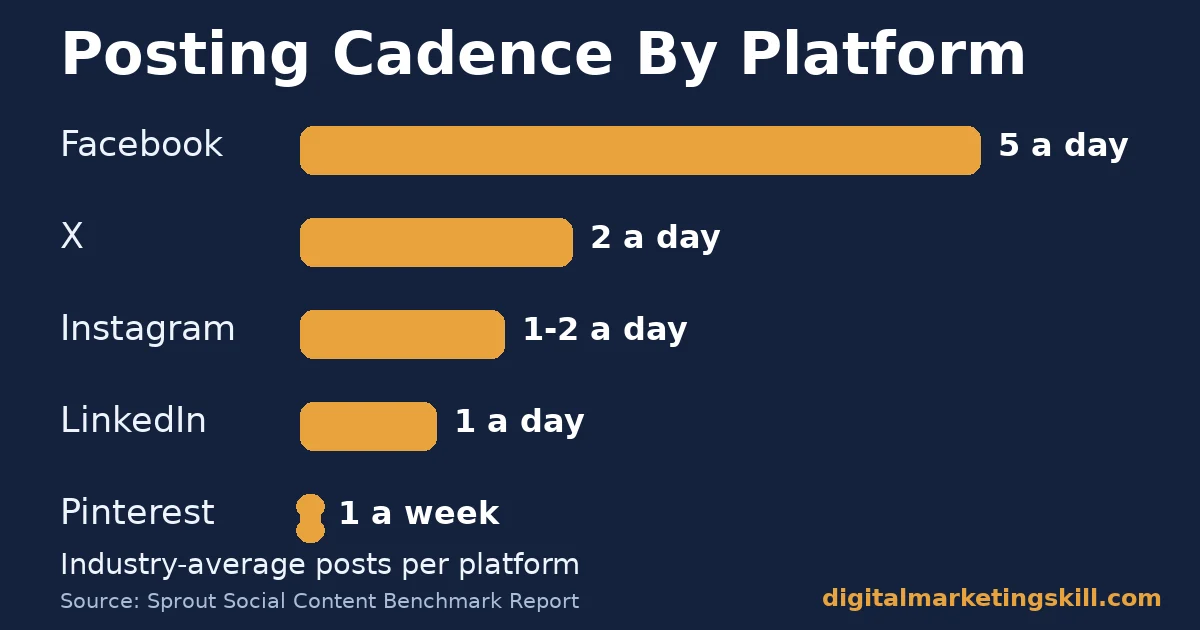
- Cadence beats volume. Sprout Social’s Content Benchmark Report, built from nearly 3 billion messages across about 1 million public profiles, found posting frequency ranges from about 1 post a week on Pinterest to 5 posts a day on Facebook. There is no single right number.
- Response time is now part of the checklist. The Sprout Social Index found that 73% of social users say they will buy from a competitor if a brand does not respond to them on social. 68% expect a reply within 24 hours.
- Speed expectations tighten for complaints. Sprout Social’s response-time research found that around 72% of users expect a reply to a public complaint on X within one hour.
- Attention is still growing, slowly. DataReportal’s Global Overview Report puts global social media identities at 5.66 billion, up 4.8% year-on-year. The average user is active on 6.75 different platforms a month.
- Quality is overtaking quantity. Sprout Social’s benchmark research found inbound engagement per post grew even as some brands posted less. That is why this social media marketing checklist leads with platform fit, not one posting count.
In this guide
- What a Generic Social Media Marketing Checklist Gets Wrong
- How a Social Media Marketing Checklist Builds Consistency
- What Differs by Platform
- How to Lead With Each Platform’s Strength
- A Weekly Social Media Marketing Checklist Template
- Common Mistakes That Break a Social Media Marketing Checklist
- How to Measure a Social Media Marketing Checklist
- The One Rule: Fix Response Time Before You Add Posting Volume
- Content Pillars That Make a Checklist Easier to Fill
- A Real Case: What Consistent Posting Did for One Student
- Frequently Asked Questions About Social Media Marketing Checklists
- Put the Checklist to Work
What a Generic Social Media Marketing Checklist Gets Wrong
Most checklists give one number. Post this many times a day. Use this many hashtags. Reply within this many hours. That advice is not wrong, but it is incomplete. A single cadence cannot fit Facebook, LinkedIn and Pinterest at once, because each platform rewards a different rhythm.
This guide treats cadence as a variable you set per platform, not a constant you copy from a blog post. The figures below come from Sprout Social’s own customer data and from DataReportal’s global survey work. Read them as a starting point, not a fixed rule. Treat them as a snapshot from one period, not a permanent ranking.
A useful social media marketing checklist also separates what you control from what you do not. You cannot control a platform’s algorithm or how many people are scrolling at a given moment. You can control your cadence, your response time, your content pillars and how honestly you review your own numbers each week. The rest of this guide focuses on those controllable habits.
How a Social Media Marketing Checklist Builds Consistency
A checklist works because it replaces daily decisions with a standing routine. You stop deciding each morning whether to post. Instead, you follow a cadence you already set for that platform. That removes the friction that causes inconsistent accounts to stall.
The same logic applies to every habit a good social media marketing checklist covers, not just posting. Checking for new comments, logging the week’s metrics and planning next week’s content all become routine steps rather than decisions you have to motivate yourself to make each time.
Why Posting Cadence Beats Posting Volume
Sprout Social’s Content Benchmark Report analysed nearly 3 billion messages across about 1 million public profiles. It found posting frequency varies hugely by platform: roughly 1-2 posts a day on Instagram, 5 a day on Facebook, 1 a day on LinkedIn, 2 a day on X, and 1 a week on Pinterest.
None of those numbers is a target for every brand. They describe what happens across many accounts, not what should happen on yours. The report also found engagement growing even where posting slowed, which points to quality mattering more than raw count.
Why Response Time Belongs on the Checklist
A checklist that only tracks publishing misses half the job. The Sprout Social Index found 76% of consumers value how quickly a brand responds to their needs. It also found 73% say they would buy from a competitor instead if a brand ignores them on social. Those numbers make response time as much a weekly habit as posting itself.
What Differs by Platform
Each platform rewards a different kind of consistency. The headings below name the same five platforms twice. First, what they are built for. Then, how to lead with that strength in practice.
Instagram: Built for Fewer, Stronger Posts
Instagram’s industry-average cadence sits at roughly 1-2 posts a day, well below Facebook’s. The format rewards a polished visual over frequency. Posting more without raising quality tends to dilute reach rather than grow it.
Facebook: Built for Daily Frequency
Facebook’s average sits near 5 posts a day, the highest of the platforms Sprout Social tracks. Sprout reports that close to half of consumers, 44%, interact with brand content daily on the platform. A thin posting schedule leaves a visible gap in a feed built around frequent updates.
LinkedIn: Built for One Sharp Post
LinkedIn’s industry average is close to 1 post a day. Outside analysts commonly suggest two to five posts a week as a professional-feed pace. Either way, the format rewards one well-reasoned post over several shallow ones, because professional feeds favour substance.
X: Built for Real-Time Conversation
X’s average cadence of around 2 posts a day is down from the 3-4 a day Sprout Social recorded a few years earlier. That decline reflects a platform that still rewards timely, conversational posts over a pre-scheduled stream.
Pinterest: Built for Long-Life Content
Pinterest’s industry average is about 1 post a week, down from the daily cadence once recommended. Pins keep surfacing in search long after they are published. The platform rewards evergreen, searchable content over frequent, time-sensitive updates.
How to Lead With Each Platform’s Strength
The headings below mirror the five above. Start with whichever platform brings you the most visits or leads today. A fix there moves your numbers fastest.
Instagram: Lead With Fewer, Stronger Posts
Plan one or two posts a day at most. Spend the time you save on the visual and the caption’s opening line. Our guide to common Instagram marketing mistakes covers the habits that quietly cap reach on this platform.
Facebook: Lead With Daily Frequency
Keep a visible daily presence. Mix original posts with timely shares, and check Facebook’s Page Insights weekly rather than per post. If reach has fallen, review our breakdown of Facebook marketing mistakes that quietly kill reach before you change your cadence.
LinkedIn: Lead With One Sharp Post
Write one substantial post a day, or two to five a week if daily is not realistic. Build it around one idea, one example and one takeaway, rather than several short updates. Comment on other people’s posts between your own, since LinkedIn’s feed still rewards visible participation.
X: Lead With Real-Time Conversation
Post around twice a day. Reserve at least one slot for a timely reply or comment on a live conversation in your niche, rather than a scheduled update. Our guide to what actually works on X breaks down which post formats hold attention now.
Pinterest: Lead With Long-Life Content
Batch a handful of pins weekly rather than daily. Point each one at a durable piece of content, like a guide or checklist, that will still answer the search months later. Treat Pinterest as a search engine for images, not a feed to fill.
A Weekly Social Media Marketing Checklist Template
A checklist is easier to follow when it is broken into daily and weekly blocks, rather than one long list. Adapt the cadences below to the platform guidance earlier in this guide.
Daily Block
- Check and answer comments and direct messages on every active platform, aiming to clear the queue well inside 24 hours.
- Publish or schedule that day’s posts for the platforms on a daily cadence, such as Facebook and X.
- Scan one relevant hashtag, group or conversation in your niche and leave a genuine comment or reply.
- Note anything unusual, a spike in mentions, a complaint or a sudden drop in reach, so it does not wait for the weekly review.
Weekly Block
- Batch and schedule content for platforms on a weekly cadence, such as Pinterest, and review what is still due for daily platforms.
- Pull the five metrics from the measurement section below and log them in a simple spreadsheet so the trend is visible over time.
- Review your top and bottom performing posts from the week and note one reason each might have done well or poorly.
- Plan one piece of evergreen content, a guide, checklist or explainer, that can be reused across platforms for months.
Common Mistakes That Break a Social Media Marketing Checklist
Most checklists fail quietly. They are not abandoned outright; they simply stop being followed. Watch for these four patterns, since each one tends to show up before an account’s growth visibly stalls, not after.
Copying One Cadence Across Every Platform
Treating Instagram, Facebook and Pinterest the same way is the most common mistake. As this guide’s platform data shows, the right cadence for one platform can be five times higher or lower than another. A single number borrowed from a generic checklist usually fits none of your platforms well.
Treating Replies as Optional
Teams that track publishing but not response time often believe their checklist is working because posts keep going out. Meanwhile, unanswered comments and messages quietly push people toward a competitor, exactly the pattern the response-time research in this guide describes.
Measuring Only Followers and Likes
Follower counts and likes are easy to see, so they are also easy to over-trust. A rising follower count paired with falling click-through and response-time numbers usually means the audience is growing but the account’s usefulness to that audience is not.
Never Reviewing the Checklist Itself
A checklist written once and never revisited slowly drifts out of date as platforms change their own behaviour and your audience’s habits shift. Revisit the cadence and metrics in this guide every few months, rather than treating the checklist as a one-time setup task.
How to Measure a Social Media Marketing Checklist
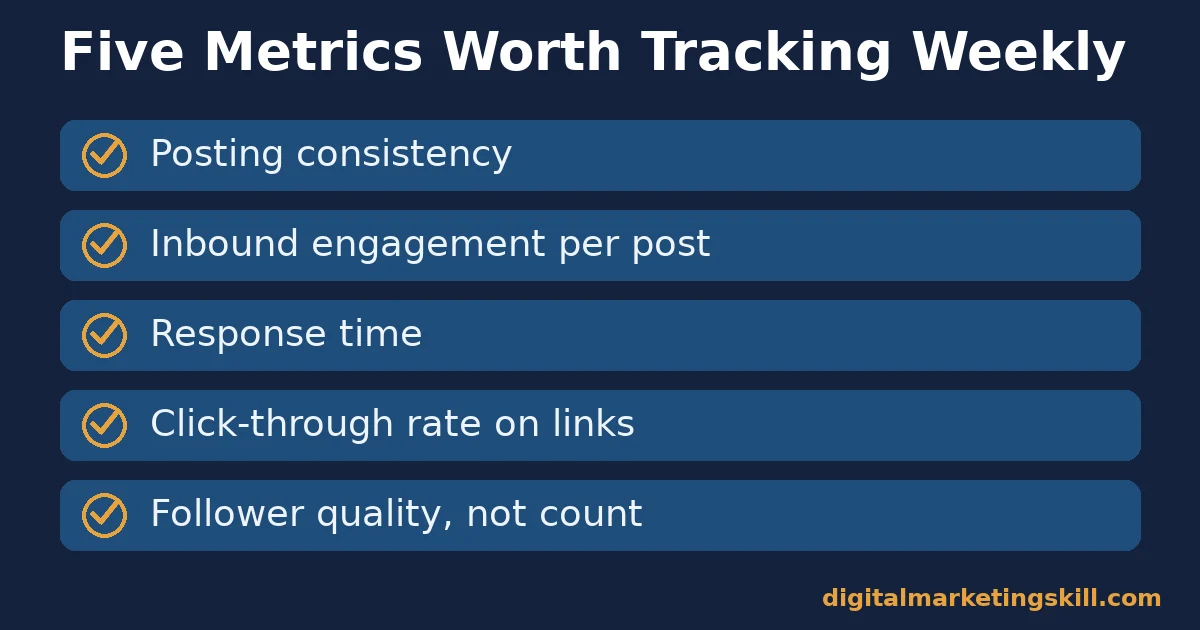
A checklist only proves its worth if you measure it. Review these five numbers weekly, on the same day each time, so the trend stays comparable. Without this step, a social media marketing checklist is just a list of habits with no way to tell which ones are paying off.
Five Metrics That Show Real Progress
- Posting consistency: the share of planned posts you actually published that week. This shows whether you followed the checklist, not just wrote one.
- Inbound engagement per post: likes, comments, shares and reactions divided by posts published. This separates genuine traction from simply posting more.
- Response time: the median time between an incoming comment or message and your first reply. Measure it against the 24-hour general benchmark and the roughly one-hour benchmark for complaints.
- Click-through rate on links: clicks divided by impressions on posts that link off-platform. This shows whether your content moves people toward your site, not just your feed.
- Follower quality, not count: the share of new followers who engage again within 30 days. This flags vanity growth, like bought or bot followers, before it distorts your other numbers.
The One Rule: Fix Response Time Before You Add Posting Volume
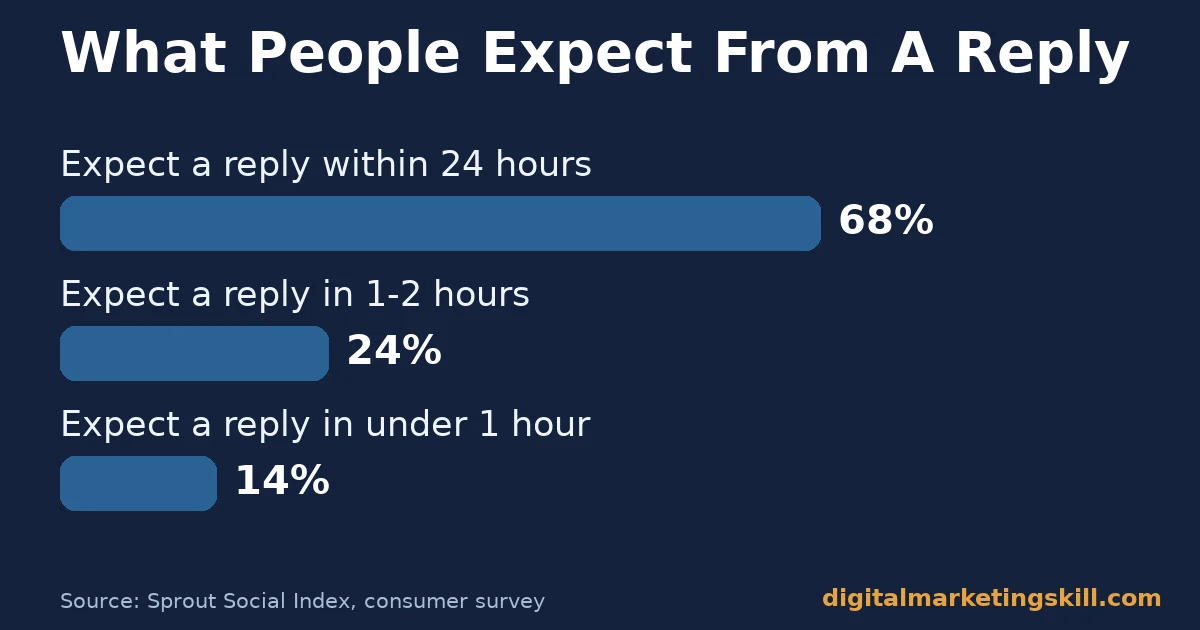
If your response time is slower than 24 hours on any platform, fix that before you add a single extra post to your checklist. Most consumers, 68%, expect a reply within 24 hours, Sprout Social’s research found.
A meaningful share wants it faster: 24% expect a reply in one to two hours, and 14% expect one in under an hour. Posting more while replies lag only grows the number of people who feel ignored.
Illustrative, invented numbers: picture two accounts, each posting once a day. Account A replies to comments within four hours. It converts roughly 1 in 20 engaged commenters into an email subscriber.
Account B posts the same content but replies within three days. It converts closer to 1 in 80, because most commenters have moved on by the time a reply arrives. The posting cadence is identical. The response habit is what changes the outcome.
Content Pillars That Make a Checklist Easier to Fill
A checklist is only as easy to follow as it is to fill with content. Without a plan for what to post, teams either freeze or fall back on low-effort filler. Content pillars solve this by giving every slot on the checklist a ready category to pull from.
Four Pillars That Cover Most Accounts
- Educational: a tip, step or explainer that solves one small problem for your audience, the kind of post most likely to earn a save or share.
- Proof: a case, result, testimonial or before-and-after that shows your product or service working, always labelled honestly if any numbers are illustrative.
- Behind the scenes: a short look at how something gets made or decided, which builds familiarity between posts that sell directly.
- Conversation: a question, poll or reaction to something happening in your niche, built to invite comments rather than just views.
Rotating through these four pillars, rather than posting whatever comes to mind that day, keeps a checklist sustainable even when a team is small. It also gives each platform’s cadence a content type suited to its format: proof and educational posts tend to suit Instagram and LinkedIn, while conversation posts suit X.
A simple way to start is to assign one pillar to each day of the week, then let the weekly block in the template above decide which platform each piece goes out on. Over a month, that produces a mix of content types without requiring a new idea every single day.
A Real Case: What Consistent Posting Did for One Student
Among the published student outcomes on Digital Marketing Skill Institute’s reviews page, one student reports spending $14 on Facebook and Instagram ads and generating $878 in sales from that campaign. This is a single, self-reported result from one account, not a guarantee.
Paid ads are only one part of a social media marketing checklist, alongside organic posting and response time. See our earnings disclaimer for how to read student results like this one.
Frequently Asked Questions About Social Media Marketing Checklists
How often should I post on social media?
It depends on the platform. Industry averages run from about 1 post a week on Pinterest to roughly 5 a day on Facebook, with Instagram, LinkedIn and X in between. Match your cadence to the platform rather than copying one number across all of them.
What should a social media marketing checklist include?
At minimum, it should include a posting cadence per platform, a response-time target, a content plan tied to your audience’s questions, and a weekly review of engagement, click-through and response-time numbers. Treat the checklist as a routine, not a one-time setup task.
Does posting more often increase engagement?
Not reliably. Sprout Social’s benchmark research found engagement growing even as some brands posted less often. That suggests quality and relevance matter more than raw frequency, once you are posting consistently at all.
How fast should I respond to comments and messages?
Aim for well inside 24 hours as a general rule, since most consumers expect a reply by then. Aim for closer to one hour on public complaints, where research shows expectations are far tighter.
Which platform should I prioritize first on my checklist?
Prioritize whichever platform already sends you the most traffic, leads or sales. Fix its cadence and response time before you expand to a new one. A checklist followed on one platform beats a longer checklist followed on none.
How do I know if my social media marketing is actually working?
Track posting consistency, inbound engagement per post, response time, click-through rate on links, and the quality of new followers over several weeks. Compare the trend, not a single week’s numbers, since any single week can be skewed by one viral post or one slow day.
Can one person run a full social media marketing checklist alone?
Yes, if the checklist is scoped to one or two platforms at first rather than five at once. Trying to keep a daily cadence and fast response times across every platform immediately is the most common reason a solo marketer abandons a checklist within weeks.
Should every post link back to my website?
No. Mixing in posts that only entertain, inform or invite conversation, without a link, tends to perform better over time than a feed of constant links. Save direct links for posts where the click-through rate on links metric in this checklist shows people are already engaged enough to act.
Put the Checklist to Work
A social media marketing checklist works best when it is backed by real skills in content planning, paid promotion and analytics, not just a cadence. Digital Marketing Skill Institute’s Master Diploma in Digital & AI Marketing includes a dedicated AI-powered social media marketing and analytics course, alongside paid advertising, content creation and SEO.
It comes with unlimited one-on-one mentoring and real project-based work experience with a U.S. partner company. The program is dual US and UK accredited, recognised in more than 100 countries, and 100% online, so you can study from anywhere in your country.
Explore the full curriculum on the Master Diploma in Digital & AI Marketing page. Read more student outcomes on our reviews page, or browse more guides on the digital marketing blog. When you are ready, apply here. This works wherever you live, because the whole program runs online. Learn more at https://digitalmarketingskill.com/, or start your application today at https://digitalmarketingskill.com/.
Every figure in this guide was checked against its original source before publication. Figures marked as illustrative are invented examples, not real results.
![9 Amazing Digital Marketing Skills to Make Money Online [With Proof]](https://digitalmarketingskill.com/wp-content/uploads/2019/07/9-Amazing-Digital-Marketing-Skills-to-Make-Money-Online-With-Proof-17.png)