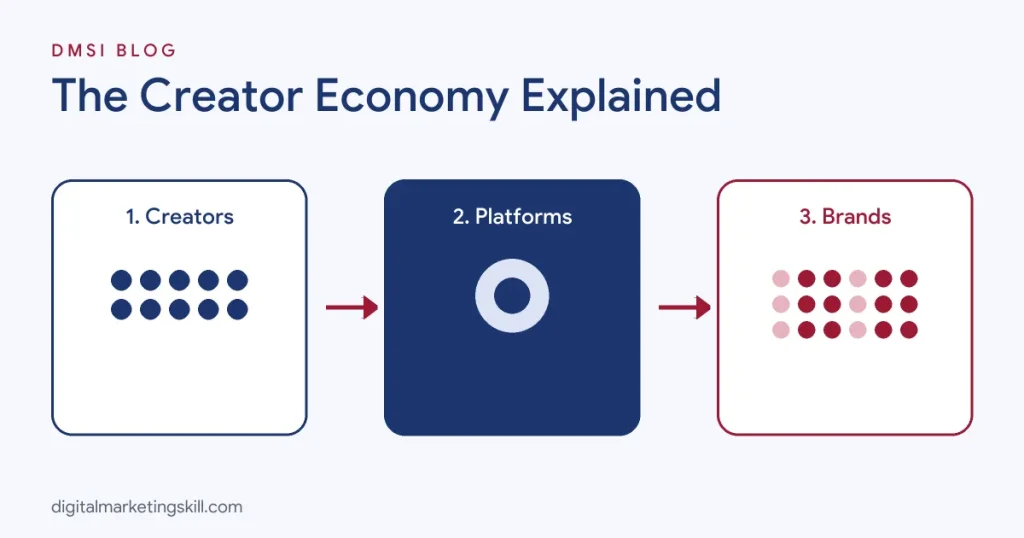
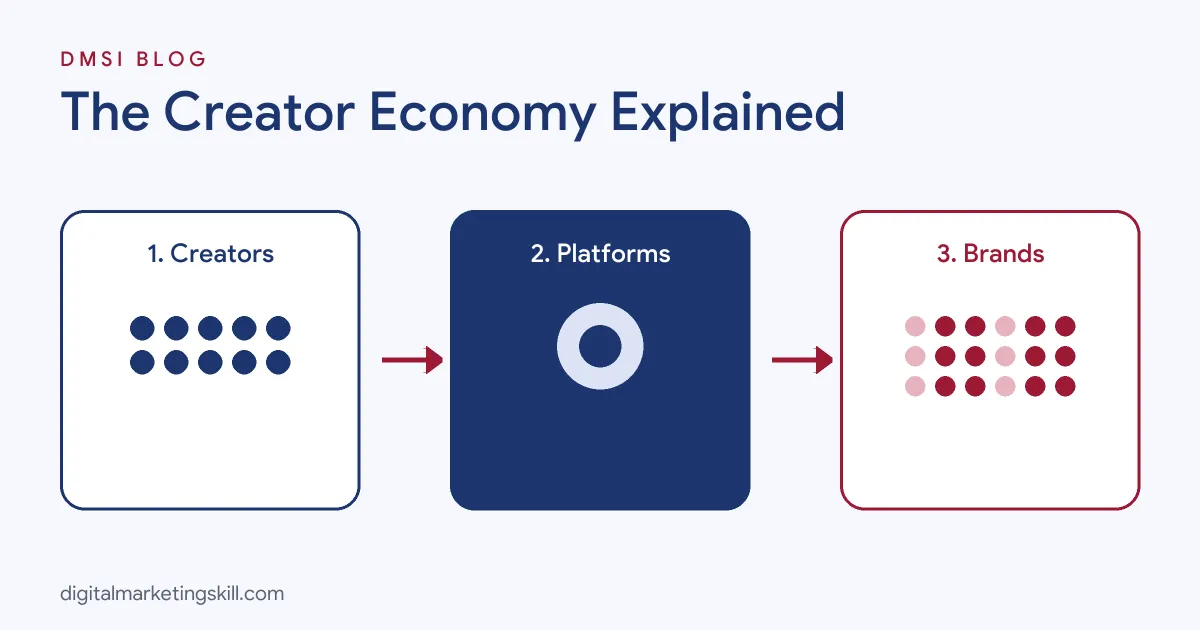
The creator economy is the market built around independent people who make content online, such as YouTubers, podcasters, newsletter writers, streamers, educators and social media creators, and earn money from it directly. Creators get paid through platform revenue sharing, brand partnerships, affiliate links, subscriptions, digital products, merchandise and their own businesses. Around them sits a large industry of platforms, tools, agencies and brands. For marketers, the creator economy matters in two ways: it is how many brands now reach audiences, and it is a career path in its own right. This guide explains how it works, how creators make money, how brands work with creators, and the skills it takes to succeed.
Key Takeaways
- The creator economy covers creators, the platforms they publish on, the tools they use and the brands that pay them.
- Goldman Sachs Research has projected the creator economy could approach $480 billion by 2027, up from about $250 billion, showing how much money now flows through creators (Goldman Sachs Research).
- YouTube shares advertising revenue with creators in its Partner Program; for long-form videos, creators receive the majority share of net ad revenue from ads shown on their videos (YouTube Help, YouTube Partner Program).
- Most creators earn from several income streams rather than one, and many do it part-time. Income varies widely and is never guaranteed.
- In the US, the FTC requires creators to clearly disclose brand relationships, including free products and paid posts (Federal Trade Commission, “Disclosures 101 for Social Media Influencers”).
- What the creator economy is
- What most creator economy guides miss
- Who makes up the creator economy
- How creators make money
- How major platforms pay creators
- Lessons from MrBeast and other creator businesses
- How brands work with creators
- Careers in the creator economy
- Challenges and risks
- Frequently Asked Questions
What the Creator Economy Is
Not long ago, reaching a big audience meant going through gatekeepers: TV networks, publishers, record labels. Today, anyone can publish a video, podcast or newsletter, build an audience and earn from it. The creator economy is the name for that shift and everything that has grown around it.
A creator is anyone who makes content for an audience and builds a relationship with that audience over time. That includes people you might call influencers, but also teachers on YouTube, writers on newsletter platforms, game streamers, podcast hosts, artists, comedians and niche experts. Our guides to the digital creator and content creator roles look at the job itself.
| Term | What it usually means |
|---|---|
| Creator economy | The whole market of creators, platforms, tools and brands |
| Influencer marketing | Brands paying creators to reach their audiences; one part of the creator economy |
| Passion economy | People earning from a specific skill or interest, often through courses, products or subscriptions |
| UGC creators | People paid to make content for a brand to post, rather than posting to their own audience |
What Most Creator Economy Guides Miss
We read the top-ranking guides on the creator economy before writing this one. Many are packed with market statistics. Three practical points were often missing.
1. Most creators are small, and that is where much of the opportunity is. Headlines focus on the biggest names. In practice, many brands now work with small, specialised creators whose audiences trust them, and many skilled people earn by helping creators rather than becoming famous themselves.
2. It is a business, not just content. Successful creators think about audience, products, partnerships, operations and legal basics. The same marketing skills that grow any business grow a creator business.
3. Platform risk is real. Algorithms, payout rules and even platform availability can change quickly. Creators and brands who own an email list or website are less exposed than those who rely on one platform.
Who Makes Up the Creator Economy
| Group | Examples | Role |
|---|---|---|
| Creators | YouTubers, TikTokers, podcasters, newsletter writers, streamers, educators | Make content and build audiences |
| Platforms | YouTube, TikTok, Instagram, Twitch, Substack, Patreon, podcast platforms | Host content and often share revenue |
| Creator tools | Editing apps, link-in-bio tools, email platforms, course and membership software | Help creators make, publish and sell |
| Brands | Consumer brands, software companies, service businesses | Sponsor creators and buy creator content |
| Agencies and managers | Talent managers, influencer agencies, creator platforms | Connect creators and brands, negotiate deals |
| Support roles | Editors, thumbnail designers, writers, community managers, strategists | Help creators run and grow their businesses |
How Creators Make Money
Most creators combine several income streams. Relying on one is risky, because a change in platform rules or one sponsor leaving can cut income overnight.
| Income stream | How it works | Good for | Watch out for |
|---|---|---|---|
| Platform ad revenue | The platform shares ad income from views | Creators with large, consistent viewing | Varies with views, topic and advertiser demand |
| Platform creator funds and bonuses | Payments for performance on a platform | Short-form video creators | Rules and amounts change often |
| Brand sponsorships | Brands pay for mentions, integrations or dedicated content | Creators with a clear, trusted niche | Must disclose; must fit the audience |
| Affiliate marketing | Commission on sales through the creator’s link | Review, how-to and recommendation content | Disclosure rules; only recommend what you trust. See our guide to promoting affiliate products |
| Subscriptions and memberships | Fans pay monthly for extra content or community | Creators with loyal, engaged audiences | Needs ongoing value for members |
| Digital products | Courses, templates, ebooks, presets | Educators and experts | Quality and support take effort |
| Physical products and merchandise | Clothing, consumer products, own brands | Creators with strong identity and large audiences | Stock, logistics and cash flow |
| Services | Consulting, coaching, freelance work, speaking | Experts in professional niches | Limited by the creator’s time |
| Tips and live gifts | Fans tip during streams or on posts | Live streamers | Unpredictable |
| Licensing | Brands or media pay to reuse content | Creators with viral or high-quality footage | Contracts and rights matter |
A common path is: build an audience with free content, add affiliate income and small sponsorships, then launch an owned product or service once the audience trusts you. An email list, which the creator owns, often becomes the most valuable asset. Our guide to email list building explains how.
How Major Platforms Pay Creators
Each platform has its own programmes and rules, which change regularly. Check the official pages before relying on any of them.
| Platform | Main ways creators earn on the platform |
|---|---|
| YouTube | Partner Program ad revenue sharing on long-form videos and Shorts, channel memberships, Super Chat and Super Thanks, YouTube Shopping |
| TikTok | Creator rewards programmes for longer videos, LIVE gifts, subscriptions, TikTok Shop affiliate commissions |
| Instagram and Facebook | Subscriptions, gifts, bonuses where available, branded content tools for sponsorships |
| Twitch | Subscriptions, Bits (tips), ad revenue share |
| Substack and newsletter platforms | Paid subscriptions, with the platform taking a percentage |
| Patreon | Monthly memberships from fans |
| Podcast platforms | Sponsorship ads, listener subscriptions on some apps |
For YouTube specifically, our guide on how to make money on YouTube covers eligibility and the main options.
Lessons From MrBeast and Other Creator Businesses
Jimmy Donaldson, known as MrBeast, is one of the best-known examples of a creator turning an audience into a broader business. His YouTube channel became one of the most-subscribed in the world, built on big, simple video ideas with heavy reinvestment into production. Around it, he launched consumer brands such as the Feastables snack brand, and his format expanded into a competition series on Amazon Prime Video. We describe this from public reporting; we have no connection with MrBeast or his companies.
The marketing lessons apply far beyond giant channels:
| Lesson | What it looks like | Small-creator version |
|---|---|---|
| Obsess over the click and the first seconds | Titles, thumbnails and openings designed and tested carefully | Test two thumbnails or hooks and keep the better one |
| Reinvest in quality | Earnings put back into better content | Spend on one thing that most improves your content, such as audio |
| Turn attention into owned products | Consumer brands sold in shops and online | A template, course or service your audience already asks for |
| Build a team | Editors, producers and business staff | Outsource editing or design once you can afford it |
| Keep the format simple | An idea anyone can understand in one sentence | Make each video or post about one clear promise |
Other creator businesses follow similar patterns: educators who turn free tutorials into paid courses, newsletter writers who build paid publications, and niche reviewers who launch their own product lines. The common thread is a trusted audience first, then products that serve it.
How Brands Work With Creators
For brands, creators offer reach, trust and content. Common ways of working together include:
- Sponsored posts and integrations: the creator features the product in their own content.
- Affiliate and commission deals: the creator earns per sale, which suits performance-focused brands.
- UGC (user-generated content) commissions: creators make videos or photos for the brand to post or use in ads.
- Ambassador programmes: longer partnerships with regular content.
- Co-created products: limited editions or collaborations designed with the creator.
- Paid amplification: brands run ads using creator content, with permission (for example, through platform partnership ad tools).
How to choose creators: match audience over follower count, check engagement quality and comments, review past sponsored content, and agree clear briefs, rights, timelines and disclosure. Our guides to influencer marketing and small business influencer marketing go deeper.
What brands should measure in creator campaigns
| Goal | What to measure | How |
|---|---|---|
| Awareness | Reach, views, watch time, follower growth on brand accounts | Creator insights screenshots or platform partnership dashboards |
| Consideration | Comments, saves, shares and the quality of questions people ask | Read the comments, not just the counts |
| Sales or sign-ups | Clicks, conversions and revenue | Unique links with UTM tags and creator-specific discount codes |
| Content value | Performance of creator content reused in ads or on brand channels | Compare with brand-made content in the same placements |
Agree what will be measured, and how creators will share data, before the campaign starts. Judging creators only on likes undervalues those whose audiences buy rather than tap.
Careers in the Creator Economy
You do not have to become a famous creator to work in the creator economy. Many of the steadiest roles are behind the scenes.
| Role | What they do | Key skills |
|---|---|---|
| Creator | Builds an audience and a business around content | Content, storytelling, consistency, business basics |
| UGC creator | Makes content for brands to post or use in ads | Filming on a phone, scripting hooks, reliability |
| Video editor | Edits long-form and short-form videos for creators and brands | Editing software, pacing, captions, retention |
| Thumbnail and graphic designer | Designs thumbnails, channel art and social graphics | Design tools, testing, visual hierarchy |
| Content strategist or producer | Plans ideas, research and publishing schedules | Research, analytics, planning |
| Community manager | Runs comments, Discord, memberships and audience engagement | Communication, moderation, empathy |
| Influencer marketing manager | Runs creator campaigns for a brand or agency | Briefing, negotiation, measurement, contracts |
| Creator partnerships or talent manager | Finds and negotiates brand deals for creators | Sales, relationships, deal terms |
| Social media manager | Manages a brand’s social channels, often working with creators | Content, analytics, platform knowledge |
Skills that transfer
- Short-form video: hooks, pacing, captions and trends.
- Copywriting: titles, scripts, captions and emails.
- Analytics: reading platform data to improve content.
- Email marketing: turning followers into an owned audience.
- Partnership skills: pitching brands, writing briefs, negotiating and reporting results.
- Business basics: pricing, invoicing, contracts and tax obligations where you live.
How to start as a creator
- Pick a niche you can sustain. A topic you know or are learning, with an audience that has clear problems or interests.
- Choose one main platform. Where your audience already spends time and where your content style fits.
- Publish consistently. Regular, focused content beats occasional perfect content.
- Study your analytics. Watch which topics, hooks and formats hold attention, and do more of them.
- Start an email list early. It protects you from platform changes.
- Add income gradually. Affiliate links and small sponsorships first, then products or services once you know what your audience wants.
- Treat it as a business. Keep records, read contracts and disclose partnerships properly.
Creator economy terms to know
- Media kit: a short document showing a creator’s audience, results and rates for brands.
- Usage rights: permission for a brand to reuse creator content, for how long and where.
- Whitelisting or partnership ads: brands running ads through a creator’s account with permission.
- Exclusivity: an agreement that a creator will not promote competitors for a set time.
- Engagement rate: interactions divided by reach or followers, used to judge how active an audience is.
- Owned audience: contacts a creator controls directly, such as an email list.
Understanding these terms helps both creators and brands agree clear, fair deals.
Challenges and Risks
| Challenge | Why it matters | How to manage it |
|---|---|---|
| Uneven income | Most creators earn modest or irregular amounts | Build several income streams; keep a buffer; consider creating alongside other work at first |
| Platform dependence | Algorithms, payouts and rules change | Own an email list and website; publish on more than one channel over time |
| Burnout | Constant publishing and public feedback are draining | Batch content, set boundaries, build a team or workflow |
| Disclosure and legal rules | Undisclosed sponsorships can breach advertising rules | Label paid and gifted content clearly; read contracts |
| Brand safety | Brands worry about controversy | Be consistent and professional; brands check past content |
| AI-generated content | More content competes for attention | Lean into personality, experience and trust, which are harder to copy |
Trends Shaping the Creator Economy
- AI tools for creators: faster editing, captions, translations and idea generation, which lower costs but raise competition.
- Social platforms as search engines: more people search on TikTok, YouTube and Instagram, so creator content increasingly works like SEO. Our guide on whether TikTok is a search engine explores this.
- Creator-led brands: more creators launch their own products rather than only promoting others’.
- B2B and expert creators: professionals building audiences on LinkedIn, YouTube and newsletters for their industry.
- Brands thinking like creators: companies hiring in-house creators and running channels like media brands.
Common Mistakes
- Chasing followers instead of a clear audience. A small, engaged niche is worth more than a large, random following.
- Accepting every sponsorship. Poor-fit deals damage trust.
- Not disclosing partnerships. It breaks rules and trust.
- Relying on one platform. Build an owned audience.
- Ignoring the business side. Contracts, invoices and taxes matter.
- Brands choosing creators only by follower count. Audience fit and engagement quality matter more.
One Rule to Remember
Trust is the currency. Creators earn because audiences trust them; brands pay creators to borrow that trust. Protect it in every piece of content and every deal.
An Illustrative Example
This example is illustrative and not a real person. A bookkeeper started posting short videos explaining simple money tips for freelancers. She chose one platform, posted three times a week, and added a free spreadsheet template in exchange for an email address. After a year, she had a modest but engaged audience. She earned from affiliate links to accounting software she actually used, two small sponsorships that fitted her niche, and a paid course on bookkeeping basics sold to her email list. Her income came from several sources, none of them dominant, and she kept her bookkeeping job part-time while the creator business grew.
The lesson: a clear niche, an owned email list and several modest income streams make a more stable creator business than chasing one viral hit.
The Creator Economy as a Career Skill
Whether you want to be a creator, work for one, or run creator campaigns for brands, the creator economy rewards practical digital marketing skills. If you are building those skills in your country or anywhere else, start small: create content on one topic, or offer editing, design or community help to a creator you admire. Real projects make a strong portfolio. Our guides to social media manager rates and the TikTok viral playbook are useful next reads.
Frequently Asked Questions
What is the creator economy?
The market built around independent creators who make content online and earn from it, along with the platforms, tools, agencies and brands that support or pay them.
How do creators make money?
Through platform ad revenue, brand sponsorships, affiliate links, subscriptions and memberships, digital products, merchandise, services and tips. Most combine several streams.
How big is the creator economy?
Estimates vary. Goldman Sachs Research projected it could approach $480 billion by 2027, up from about $250 billion. Different studies measure different things, so treat any single figure as an estimate.
What is the difference between the creator economy and influencer marketing?
Influencer marketing is brands paying creators to reach their audiences. The creator economy is the wider market, including platform payments, creator products, tools and services.
Do you need a large following to earn as a creator?
No. Smaller creators with engaged niche audiences can earn from affiliate links, sponsorships, products and services. Income varies widely, and there is no guaranteed level.
What platforms are best for creators?
It depends on your content and audience. YouTube suits long-form and search-driven video; TikTok and Instagram suit short-form; newsletters suit writers; Twitch suits live streaming.
Can I work in the creator economy without being a creator?
Yes. Video editors, designers, writers, community managers, talent managers and influencer marketing managers all work in the creator economy.
Do creators have to disclose sponsorships?
In many countries, yes. In the US, the FTC expects clear disclosure of paid, gifted or affiliate relationships. Platforms also have branded content rules.
How is AI changing the creator economy?
AI tools make editing, captioning and ideation faster and cheaper, which helps creators produce more but also increases competition. Personality, expertise and trust become more valuable.
Is being a creator a good career?
It can be rewarding, but income is uncertain and success usually takes time. Many people start part-time and build skills that are also valuable in marketing jobs.
Your Next Step
Want to build the content, social media and marketing skills behind the creator economy? The Master Diploma in Digital & AI Marketing at Digital Marketing Skill Institute covers AI-powered Social Media Management and Advertising, Lead Generation and Email Automation, Google, and a WordPress and SEO track where you build and rank a real website.
From day one, you work on a real U.S. company’s project through the U.S. Project Internship, so you finish with real results and a verified U.S. work reference letter. You also get unlimited one-on-one coaching. The program carries dual US and UK accreditation, is recognised in more than 100 countries, and runs 100% online over three months.
You can build those skills wherever you live, anywhere in your country. Read student reviews, then apply for the 65% partial scholarship to see if you qualify.
Sources checked November 2026: Goldman Sachs Research, creator economy outlook; YouTube Help, YouTube Partner Program overview and revenue sharing; Federal Trade Commission, “Disclosures 101 for Social Media Influencers”; public reporting on MrBeast’s businesses (no connection with the company); and the current top-ranking pages for this search from Socialthink, AWISEE, Later and the US Chamber of Commerce, read for coverage only.