

A content creator is someone who plans, makes, and publishes original material, such as videos, articles, or posts, to inform or entertain a specific audience on a chosen platform. Most creators earn little at first. Over half make under $15,000 a year from content alone. The gap between hobby and income comes down to platform fit, steady output, and a few legal rules most guides skip.
Key Takeaways
- Most income sits near zero. The Influencer Marketing Hub Creator Earnings Report surveyed over 3,000 creators. More than half earn under $15,000 a year from their content.
- Full-time does not mean a living wage. The same report found nearly 57% of full-time creators earn below the US living wage from content alone, even with years of experience.
- Platforms reward different formats. YouTube’s own Partner Program needs 1,000 subscribers plus either 4,000 watch hours in a year or 10 million Shorts views in 90 days. That structural difference decides which format pays off first.
- Formats go beyond influencing. If writing or podcasting fits you better than on-camera influencing, see our guide on becoming a digital creator for format-specific thresholds and proof.
- Disclosure is a legal rule, not a suggestion. The US Federal Trade Commission requires paid endorsements to be disclosed with the content itself. One settled case cost a company $15.2 million.
- Hiring has shifted from writing to making. A Semrush study of 8,000 content marketing job listings found “content creation” mentions rose 209% year over year, while plain “writing” requirements fell 28%.
In this guide
- What Most Content Creator Guides Leave Out
- How Becoming a Content Creator Actually Works
- Content Creator Platforms Are Built for Different Jobs
- How to Lead With Each Platform’s Strength
- The Skills Employers Actually Check
- The Legal Disclosure Rules Regulators Check
- How to Measure Whether Your Content Creator Work Is Paying Off
- The One Decision Rule: Match the Platform to Your Format, Not the Trend
- A Real Case: One Creator’s Published Revenue Split
- Frequently Asked Questions About Content Creators
- Start by Matching Your Format to the Right Platform
What Most Content Creator Guides Leave Out
Most articles on this topic define the role, list a dozen platforms, and stop. That is useful background. But it skips three things a new creator actually needs: realistic income data, the legal disclosure rules that can trigger a fine, and a clear way to pick a platform-format pair instead of chasing whatever trends this week.
This guide fills that gap. It explains how the creator economy actually pays, what differs between the major platforms, and how to measure progress with real numbers. It also gives you the one decision rule that saves the most wasted effort.
A few ground rules first. The income and growth figures below come from named surveys and official sources, not averages pulled from search summaries. Survey data is self-reported by participants. Read it as a snapshot of who answered, not a census of every creator. Platform rules change too, so treat specific thresholds as current practice, not a permanent standard.
How Becoming a Content Creator Actually Works
Three mechanics drive almost every content creator’s results: what you make, how a platform distributes it, and how you turn attention into money. Miss one and the other two cannot save you.
Distribution usually matters more than production quality early on. A platform’s recommendation system decides who sees a new post, not your follower count. That is why a creator with 500 followers can outperform one with 50,000, if the system favours their format and topic that week.
Why Trust Pays More Than Reach
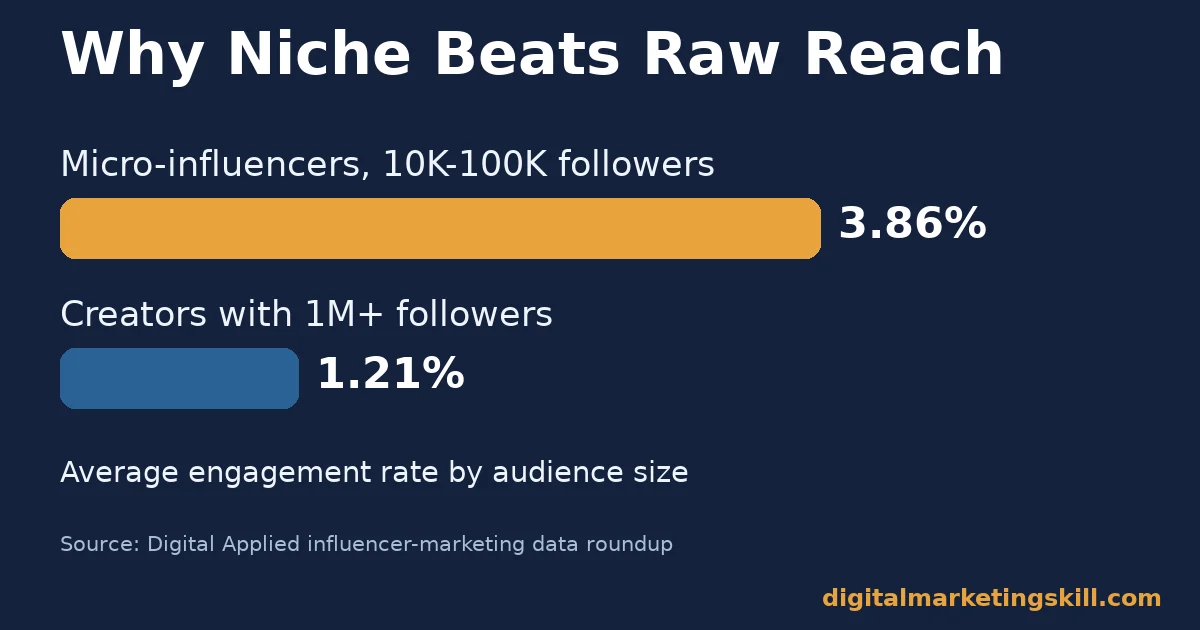
Monetisation then depends on reach and trust together, not reach alone. Advertisers and affiliate programmes pay for an audience that acts. So engagement rate and niche relevance often matter more than raw audience size. Micro-influencers, with 10,000 to 100,000 followers, average 3.86% engagement. Creators with over a million followers average only 1.21%, roughly a third as much, according to Digital Applied’s influencer-marketing data roundup.
Market-size research points the same way. Grand View Research values the influencer marketing platform market at $34.2 billion, projected to keep growing at a 14.4% compound annual rate. Brands are chasing engaged niche audiences, not just raw reach.
Put together, the loop looks like this: a format suited to the platform earns distribution, distribution builds a trusting audience, and trust converts into income. Weak output anywhere in that chain caps everything after it.
Scale makes the opportunity real, even though the odds for any one creator are long. DataReportal’s Digital Global Overview Report puts worldwide internet users at more than 6 billion people, with roughly 5.66 billion active social media identities across platforms. That audience is large enough to support thousands of profitable niches. A broad topic like “fitness” or “travel” is crowded. A narrow niche inside that topic faces far less competition for the same attention.
Content Creator Platforms Are Built for Different Jobs
Not every platform rewards the same content the same way. Picking the wrong one for your format is the most common reason new creators give up within months.
YouTube: Built for Long-Form Authority
YouTube favours sessions, not single clicks. Its algorithm tracks watch time across a whole visit. A video that keeps people on the platform after it ends gets rewarded more than one that only earns views.
YouTube is also the one platform with a published monetisation threshold. Google’s YouTube Partner Program requires 1,000 subscribers plus 4,000 valid public watch hours in the past 12 months. Or it requires 1,000 subscribers plus 10 million valid public Shorts views in the past 90 days.
That threshold rewards patience. A creator building tutorials or explainers can hit the watch-hours path faster than one posting short clips, because longer sessions count more toward the 4,000-hour bar. Our guide on how to make money on YouTube covers the payout paths once you clear that threshold.
TikTok and Reels: Built for Discovery, Not Depth
Short-form platforms distribute almost entirely through a “for you” feed. That feed runs on completion rate and rewatches, not follower count. A brand-new account can reach millions of strangers with one clip, which is why these platforms suit discovery far better than long relationship-building.
The cost of that reach is depth. A 15 to 60-second video cannot carry nuance. Creators who rely only on short-form content often struggle to convert viewers into anything beyond another view.
HubSpot’s State of Marketing survey of over 1,500 marketers found short-form video is now the single most used content format, cited by 48.6% of respondents. Competition for attention in that format keeps rising. Our guide on building a content creator career on TikTok covers how to work within that format’s limits.
Blogs and Newsletters: Built for Ownership
A blog or email list is the only format here that a platform cannot shut down, demonetise, or algorithmically bury overnight. Search engines send traffic based on relevance and backlinks, not a feed. Growth is slower, but the audience belongs to the creator, not to a platform’s recommendation system.
The tradeoff is discovery speed. Search traffic compounds over months, not days. This format suits creators who already have some presence elsewhere to drive the first readers in. If a blog is your chosen format, our guide on how to start and grow a blog covers the foundations in more depth.
Podcasts: Built for Trust Over Time
Podcasts get consumed in long, undivided sessions, often while a listener does something else. That builds a kind of trust a six-second video rarely produces. The trust shows up later as higher-value sponsorships and more durable fan support, but it takes many episodes before a new show earns either.
Podcasts rely on repeat listening, not viral reach. So growth tends to come from guest appearances and word of mouth more than from any single platform’s algorithm.
How to Lead With Each Platform’s Strength
Understanding the differences above only helps if it changes what you do next. Here is the matching tactic for each platform.
YouTube: Lead With a Search-First Upload Plan
Treat your first 20 to 30 videos as answers to questions your audience already searches for, not as a personal vlog. Searchable titles bring steady views long after a video drops out of the “new” feed. That compounding traffic is what eventually pushes a channel past the watch-hours threshold.
Keep sessions long by linking related videos into playlists. A viewer who moves from one video to the next inside your channel adds directly to the watch-hours total that unlocks monetisation.
TikTok and Reels: Lead With Hooks and Volume
Write the first three seconds before you write anything else. The feed rewards completion rate, so a video people watch to the end outperforms a longer one people abandon, even with fewer total views.
Post often enough to let the algorithm test your content against different audiences. One strong clip a month will not generate enough data for the system to learn who to show it to. Several clips a week will.
Blogs and Newsletters: Lead With an Email List From Day One
Put a visible sign-up on every post before you have any search traffic at all. The list is what survives a platform’s next algorithm change. A subscriber you can email directly is worth more long-term than a dozen extra pageviews from a search engine you do not control.
Write for one search question per post, using the exact phrase people type, and answer it in the opening two sentences. That structure is what earns a place in search results in the first place.
Podcasts: Lead With Consistency Over Production Value
A fixed weekly or biweekly release schedule matters more than studio-quality audio in the first year. Listeners build a podcast into a routine. A broken routine loses them faster than slightly rough sound ever will.
Ask every guest to share the episode with their own audience. Guest-driven discovery is usually a new podcast’s fastest growth channel, because it borrows an existing audience’s trust instead of building trust from zero.
The Skills Employers Actually Check
A working content creator needs a different skill set than a hobbyist, and employers are now explicit about what they want.
The market has shifted away from pure writing. Semrush’s analysis of 8,000 US content marketing job listings on Indeed found “content creation” as a listed skill rose 209% year over year. Plain “writing” requirements fell 28% over the same comparison.
Analytics is now the single most requested skill, appearing in 40% of senior listings and 36% of other roles. General AI literacy now appears in 34% of senior listings and 19% of non-senior ones.
In practice, that means a modern content creator needs to read their own performance data and use AI tools, not just write or film well.
The Legal Disclosure Rules Regulators Check
Any creator paid or given free products in exchange for a post is making an endorsement. The FTC’s “Disclosures 101 for Social Media Influencers” guidance says the disclosure must sit with the endorsement itself. A label buried in an “about” section or behind a “more” button does not count.
The FTC has enforced this. In a settled case against the wellness brand Teami, the company paid a $15.2 million judgment after disclosures from several influencers were only visible after a viewer clicked “more.” The agency separately sent warning letters to ten influencers involved.
That is not a reason to avoid paid partnerships. It is a reason to disclose plainly, every time, in the post itself. Our guide to how influencer marketing works and what it costs looks at these same partnerships from the brand’s side.
Disclosure rules are not unique to the United States. Consumer protection regulators in most major markets now require some form of advertising disclosure for paid content, even where the exact wording and placement rules differ. If you work with brands in more than one country, check the local rule for each market. Do not assume the practice that satisfies one regulator satisfies all of them.
How to Measure Whether Your Content Creator Work Is Paying Off
Vanity numbers like total followers hide more than they show. Track the metrics below instead. Each one is defined in a single sentence.
Four Numbers That Show Real Progress
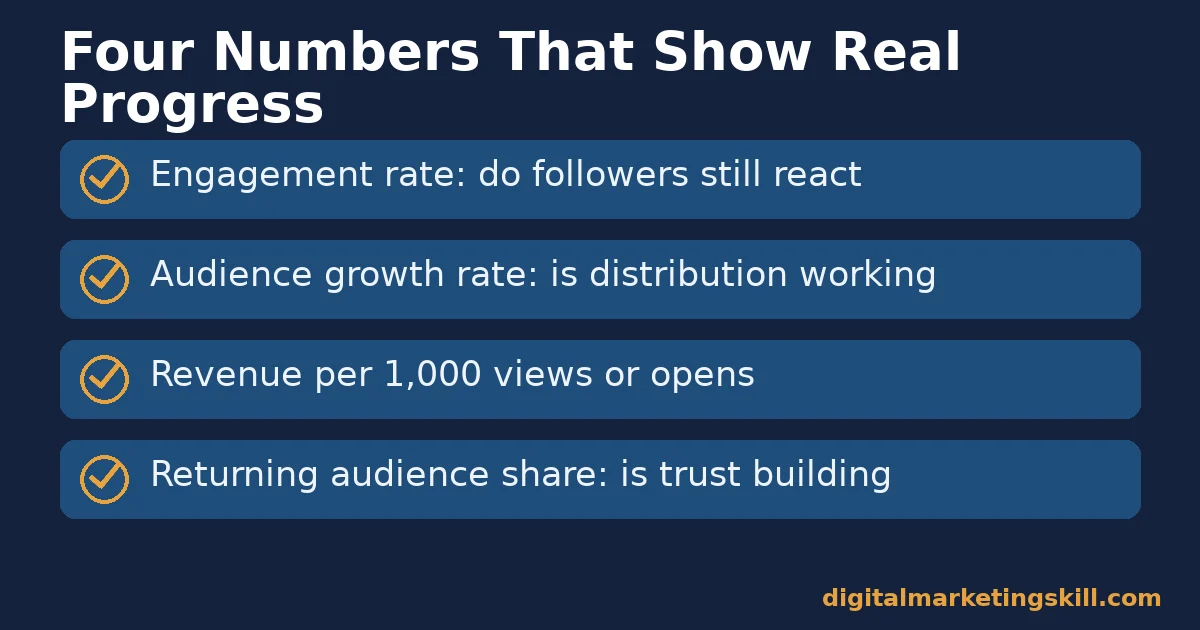
- Engagement rate. The share of your audience that likes, comments, shares, or otherwise reacts to a given post, showing whether the people who already follow you still care.
- Audience growth rate. Net new followers or subscribers over a period, divided by your starting audience, showing whether distribution is working for you right now.
- Revenue per 1,000 views or opens. Total income from a piece of content, divided by its views or email opens and multiplied by 1,000, so you can compare different platforms on one scale.
- Returning audience share. The percentage of your views, listens, or opens that come from people who engaged with you before, showing whether you are building the trust that supports sponsorships later.
How to Read These Numbers Together
Read them in order. If engagement rate falls while audience size grows, the content is reaching people who do not actually want it. Distribution is outrunning fit. If revenue per 1,000 views stays flat despite growing reach, the problem is monetisation, not audience size. The fix is better offers or partnerships, not more content.
Review these numbers monthly, not daily. A single viral post or a single quiet week will distort any of them. A month of data shows a real trend.
The One Decision Rule: Match the Platform to Your Format, Not the Trend
If you take one decision rule from this guide, make it this one. Choose your primary platform based on the content format you can produce consistently, not on which platform is growing fastest right now.
Here is an illustrative example, with invented numbers. Imagine two creators who each spend eight hours a week on content. One is a strong writer who finds filming uncomfortable. The other enjoys the camera but writes slowly.
If the writer forces herself onto short-form video because “that’s where the growth is,” she might produce two rough clips a week. The natural presenter, doing the same on a blog, might publish one thin post a month. Both are fighting their own format.
Swap their platforms and the same eight hours tell a different story. The presenter could produce a strong weekly video, and the writer two well-researched posts a month, each playing to the strength the platform actually rewards. Consistency inside the right format beats occasional effort inside the trending one, every time.
A Real Case: One Creator’s Published Revenue Split
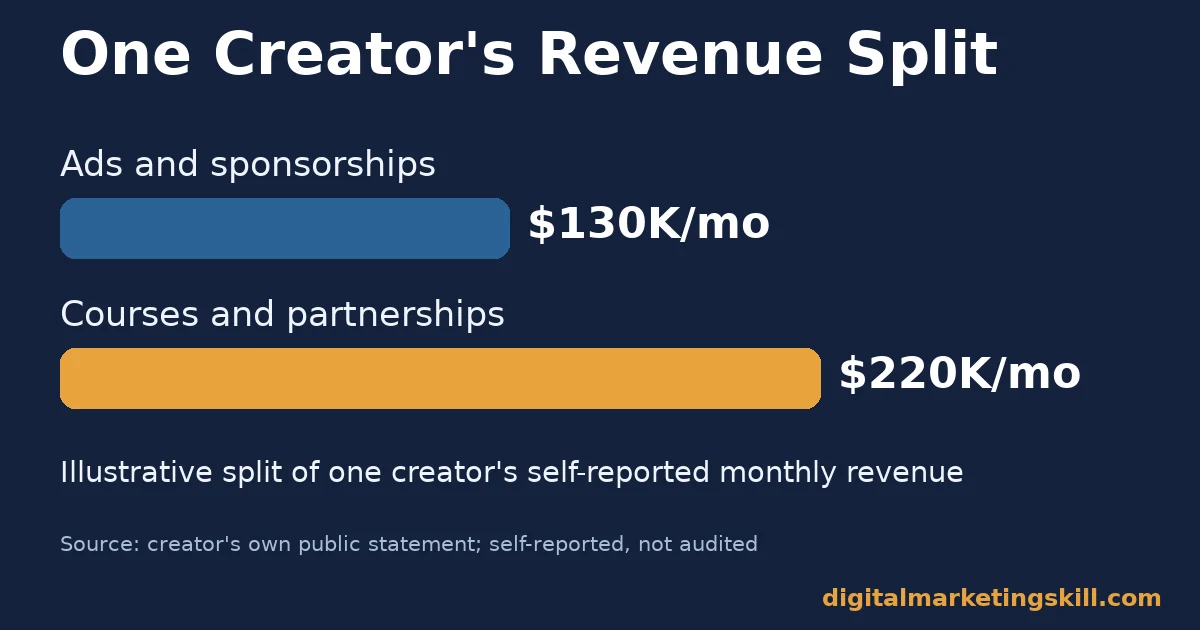
Most creator income figures are private, but a few creators publish their own numbers. Ali Abdaal, a doctor turned educator and YouTuber, stated publicly that his YouTube channel alone earns over $130,000 a month from advertising and sponsorships. His broader business, which adds online courses and affiliate partnerships, earns over $350,000 a month combined.
The detail worth noting is the split, not just the total. YouTube advertising and sponsorship income is only part of the picture. The larger share comes from products built on top of the audience the channel created, not from the platform’s own payouts. That mirrors the data above: a platform builds the audience, but products and partnerships usually carry the income.
Treat this as one creator’s self-reported figures, not an audited or typical result. The earnings data earlier in this guide shows most creators are nowhere near this level. It illustrates the mechanism, not a promise of similar results. For the audience-building side of that mechanism, see our guide on building your personal brand on social media.
Frequently Asked Questions About Content Creators
What does a content creator actually do day to day?
A content creator researches topics, plans and produces content such as video, writing, or audio, and publishes it on one or more platforms. They also engage with the resulting audience through comments and messages. Most of the unseen work is planning and editing, not the final publish.
Do I need expensive equipment to start?
No. A smartphone camera and free editing software cover most formats at the start. Better equipment matters once a format or platform proves it works, not before.
How long does it take to make money as a content creator?
There is no fixed timeline. It depends on platform, format, and consistency. But most creators in surveyed data earn very little in the first year, so treat the first months as audience and skill building, not income.
Which platform is best for a new content creator?
The one that matches a format you can produce consistently. A strong writer usually does better starting with a blog or newsletter than forcing short-form video, and the reverse is also true.
Do I have to disclose brand partnerships?
Yes, in most countries with consumer protection rules, including the United States. The disclosure needs to sit with the endorsement itself, not hidden behind a click or buried in a bio.
Can I be a content creator without showing my face?
Yes. Written blogs, podcasts, voiceover videos, and faceless formats such as screen-recorded tutorials or narrated slideshows all work as content creator paths without appearing on camera.
What skills matter most for getting paid work as a content creator?
Current job-listing data shows analytics and general content creation ability now outrank pure writing skill, alongside growing demand for basic AI tool literacy. Platform-specific production skill still matters, but reading your own performance data is now expected too.
Start by Matching Your Format to the Right Platform
Being a content creator is a real, measurable job once you treat it like one. Pick the platform that fits the format you can sustain. Track engagement and revenue per 1,000 views instead of follower counts, and disclose every paid partnership in the post itself. Give it three months before judging the results, because the data above shows growth compounds slowly at first.
If you want structured practice building this as a career, Digital Marketing Skill Institute teaches these skills hands-on. Its Master Diploma in Digital & AI Marketing includes an AI-Powered Social Media Management and Advertising track, one of four AI-powered tracks totalling ten courses, with a Full Stack option for completing all four.
It comes with unlimited 1-on-1 coaching and mentoring and a U.S. Project Internship that includes a verified U.S. Work Reference Letter. The diploma is dual US and UK accredited and recognised in more than 100 countries.
The programme is 100% online, so you can study and build your content portfolio from anywhere in your country. Browse more guides on the Digital Marketing Skill Institute blog, read real outcomes on the reviews page, and when you are ready, apply for the Master Diploma or start from the Digital Marketing Skill Institute homepage.
Every figure in this guide was checked against its original source before publication. Figures marked as illustrative are invented examples, not real results.
![9 Amazing Digital Marketing Skills to Make Money Online [With Proof]](https://digitalmarketingskill.com/wp-content/uploads/2019/07/9-Amazing-Digital-Marketing-Skills-to-Make-Money-Online-With-Proof-17.png)






