
Hybrid work is a way of working in which employees split their time between working remotely, usually from home, and working on-site at an office or other company location. Instead of being fully office-based or fully remote, people might spend some days at home for focused work and other days in the office for meetings, collaboration and team time. Hybrid arrangements vary widely: some employers set fixed office days, while others let employees choose where to work as long as the work gets done.
Key Takeaways
- Hybrid work combines remote and on-site work, with the split decided by the employer, the team or the individual.
- In a Gallup survey of more than 8,000 US workers, the top advantages of hybrid work were better work-life balance (71%), getting more done in less time (67%) and freedom to choose when and where to work (62%).
- The same Gallup survey found the top challenges were limited access to equipment and resources (35%), a weaker connection to company culture (32%) and less teamwork (30%).
- Envoy lists working where people are most productive, better work-life balance, access to a broader talent pool and more efficient office planning as advantages.
- Successful hybrid work depends on clear expectations, good technology, intentional office time and leaders who manage by outcomes rather than presence.
What Is Hybrid Work?
Hybrid work is a flexible arrangement that mixes remote and in-person work. It became widespread after many organisations moved to remote work during the pandemic and then chose not to return fully to the office. Today, hybrid work is common in office-based roles such as marketing, technology, finance, administration and professional services.
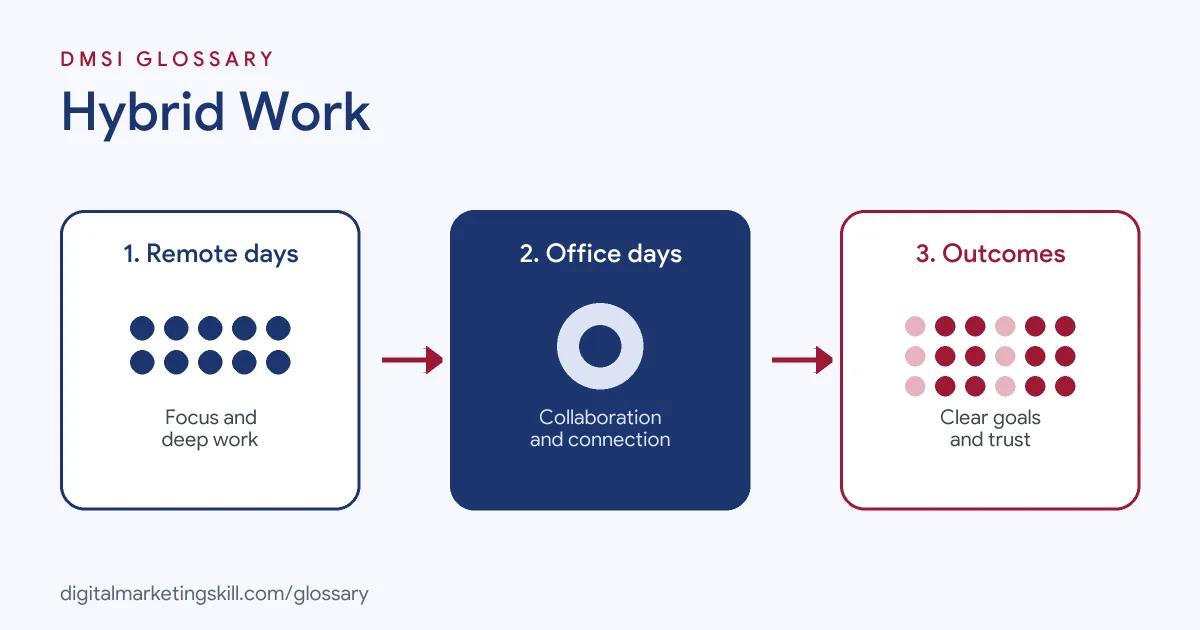
The idea behind hybrid work is to combine the benefits of both settings. Remote days can offer fewer interruptions, no commute and more control over the day. Office days can offer easier collaboration, mentoring, social connection and access to equipment or spaces that are harder to replicate at home.
Hybrid vs Remote vs Office-Based Work
- Office-based work: employees work on-site every working day, with occasional exceptions.
- Hybrid work: employees split their time between remote and on-site work.
- Remote work: employees work away from the office all or almost all of the time, often from home, and may live far from any office. See remote work.
Some organisations also describe themselves as remote-first, meaning remote work is the default and offices are used occasionally, or office-first, meaning the office is the default with some remote flexibility.
Types of Hybrid Work Models
Flexible hybrid
Employees choose when to work remotely and when to come into the office, based on their tasks and preferences. This offers the most autonomy but requires good coordination so people are not in the office on different days from the colleagues they need.
Fixed hybrid
The employer sets specific office days, for example Tuesday to Thursday for everyone, or different days for different teams. This makes collaboration easier to plan but gives employees less choice.
Office-first hybrid
Most work happens in the office, with a limited number of remote days allowed. This suits roles where in-person collaboration or client contact is especially important.
Remote-first hybrid
Most work happens remotely, with occasional office days, team gatherings or offsites for planning and connection.
Envoy notes that many hybrid schedules involve two or three office days a week, but there is no single standard. The right model depends on the work, the team and the organisation’s goals.
Advantages of Hybrid Work
A Gallup survey of more than 8,000 US workers in hybrid roles identified these top advantages:
- Better balance between work and personal life: 71%.
- Getting more done in less time: 67%.
- Freedom to choose when and where to work: 62%.
- Less exhaustion and burnout: 58%.
- Higher output: 51%.
For employers, Envoy highlights additional benefits: employees can work where they are most productive, organisations can hire from a broader talent pool beyond commuting distance and office space can be planned more efficiently. Many organisations also see hybrid flexibility as an important factor in attracting and keeping staff.
Challenges of Hybrid Work
The same Gallup survey found these top challenges:
- Limited access to equipment and resources: 35%.
- Weaker connection to company culture: 32%.
- Less teamwork: 30%.
- Strained relationships with co-workers: 24%.
- Weaker cross-functional communication: 23%.
- Disrupted workflows: 22%.
- Harder coordination of schedules, tasks and timelines: 21%.
Other common challenges include unequal treatment between people who are often in the office and those who are often remote, meeting fatigue when some people join online and others in person, and blurred boundaries between work and home life.
How to Make Hybrid Work Successful
Set clear expectations
Envoy recommends communicating clearly with employees. Explain the hybrid policy, which days or activities require office attendance, core hours for availability and how decisions about flexibility are made.
Use office time intentionally
Office days work best when they are used for activities that benefit from being together, such as planning, workshops, brainstorming, onboarding and team building. Coming into the office only to sit on video calls frustrates people.
Design inclusive meetings
When some people join remotely, make sure everyone can see, hear and contribute equally. Good audio and video equipment, shared documents and a facilitator who invites remote participants all help.
Invest in technology
Hybrid teams need reliable laptops, collaboration tools, video conferencing, shared documents, project management software and secure access to systems from anywhere. Addressing the equipment gap Gallup identified is a practical first step.
Maintain culture across locations
Envoy also highlights maintaining culture across locations. Regular team rituals, recognition, social time and clear communication of goals help people feel connected wherever they work.
Manage by outcomes
Leaders should focus on results, quality and reliability rather than hours seen in the office. Clear goals and regular check-ins help managers support people fairly, whatever their working pattern.
What a Hybrid Work Policy Should Include
A written policy prevents confusion and unfairness. Most good hybrid policies cover who is eligible for hybrid work and why, expected office days or the minimum time on-site, core hours when everyone should be reachable, how to book desks or meeting rooms, which equipment the company provides for home working, expectations for security and data protection when working remotely, how performance is measured, and how requests for different arrangements are handled. Review the policy regularly with feedback from employees and managers, because what works for one team may not suit another.
Tips for Working Well in a Hybrid Role
- Plan your week so that focused tasks fall on remote days and collaborative tasks on office days.
- Keep your calendar and status up to date so colleagues know where and when to find you.
- Over-communicate in writing: share progress updates, decisions and next steps in shared channels.
- Set a clear start and finish to remote days to protect your personal time.
- Make the most of office days by meeting colleagues, asking questions and building relationships.
Hybrid Work in Marketing Teams
Marketing teams often suit hybrid work well. Much of the work, such as writing, analysis, campaign management and design, can be done remotely, while creative workshops, campaign planning, photo and video shoots and client meetings may benefit from being together. Many marketing teams use remote days for focused production work and office days for collaboration, approvals and planning. Shared content calendars, project management tools and clear briefs keep work moving across both settings.
Hybrid Work as a Career Skill
Working well in a hybrid team is a skill in its own right: managing your own time, communicating clearly in writing, using collaboration tools and making the most of in-person time. Employers value people who are productive and visible whether they are at home or in the office. If you are building a marketing career in your country or elsewhere, practising these habits can help you succeed in hybrid, remote and international roles. For practical digital marketing training, you can join our programme.
Common Hybrid Work Mistakes to Avoid
Many hybrid arrangements struggle for avoidable reasons. Leaders sometimes copy another company’s policy without asking what their own teams need, or set office days but fail to give people a good reason to come in. Others judge commitment by visibility, which quietly penalises the people who work remotely more often. Teams also forget to agree where decisions are written down, so remote colleagues miss conversations that happened at a desk. The fix is simple but takes discipline: agree the purpose of office days, record decisions in shared tools and review the arrangement every few months.
Frequently Asked Questions
What does hybrid work mean?
Hybrid work means splitting your working time between remote work, usually from home, and on-site work at an office or other workplace.
How many days a week is hybrid work?
There is no fixed rule. Many hybrid schedules involve two or three office days a week, but some employers require more or fewer.
What is the difference between hybrid and remote work?
Remote workers work away from the office all or almost all of the time; hybrid workers combine remote days with regular on-site days.
What are the benefits of hybrid work?
Common benefits include better work-life balance, less commuting, more focused time, flexibility and, for employers, access to a wider talent pool.
What are the disadvantages of hybrid work?
Challenges include weaker connection to culture, less teamwork, coordination difficulties, unequal treatment between remote and office workers and limited access to equipment.
Is hybrid work here to stay?
Hybrid work remains common in many office-based roles, although policies vary by employer and some organisations have increased required office days.
Sources: Gallup: The advantages and challenges of hybrid work; Envoy: What is hybrid work?; Webex: What is hybrid work?.