
An affiliate marketer earns a commission by recommending other companies’ products through a tracked link. Amazon Associates pays 1% to 10% depending on category. The US Federal Trade Commission requires every paid link to be disclosed clearly. Here is the full, evergreen plan for becoming one.
Key Takeaways
- Commission rates vary by category, not by effort. Amazon’s own rate card pays 1% on some categories and up to 10% on others. Most categories fall in the 3-4% range.
- Disclosure is a legal requirement, not a courtesy. The FTC’s Endorsement Guides require a clear, conspicuous disclosure placed next to the affiliate link. It cannot be buried on an about page.
- Affiliate links already carry real weight in retail. Research cited by Rakuten’s business blog, from Influencer Marketing Hub, credits affiliate marketing with 16% of e-commerce sales in the US and Canada.
- Most brands see it as core revenue, not a side channel. A Digiday and Awin survey, also reported by Rakuten, found 80% of brands call affiliate marketing an important source of revenue.
- The channel keeps growing steadily. Research and Markets projects affiliate marketing spend to grow at a 7.7% compound annual rate over multiple years, per the same Rakuten business blog summary.
In this guide
- What Most “Become an Affiliate Marketer” Guides Skip
- How an Affiliate Marketer Actually Gets Paid
- Three Ways to Build an Affiliate Income
- How to Run Each Path Well
- Five Reasons New Affiliate Marketers Earn Nothing
- How to Measure Whether It Is Working
- The One Rule: Diversify Before You Scale
- A Four-Week Plan to Become an Affiliate Marketer
- A Real Case: Building an Affiliate Business Around One Useful Guide
- Frequently Asked Questions About Becoming an Affiliate Marketer
- Start With One Niche and One Honest Comparison
What Most “Become an Affiliate Marketer” Guides Skip
Most guides repeat the same three steps: pick a niche, join a program, share your link. None of that is wrong. But it skips how commissions are actually calculated, what the law requires you to disclose, and why most beginners earn very little in their first months.
This guide covers that gap. Read the ground rules first. The commission and disclosure rules below come from Amazon’s and the FTC’s own pages, checked at the source. The three-path comparison is our own framework: a way to organise the choice, not a settled ranking. Treat every figure as a snapshot from one source, not a permanent law of affiliate marketing.
How an Affiliate Marketer Actually Gets Paid
An affiliate marketer signs up for a merchant’s affiliate program and gets a unique tracking link. A click on that link stores a tracking cookie in the visitor’s browser. If the visitor buys within a set attribution window, the affiliate earns a percentage of the sale. The merchant pays because the sale would not have happened without the referral.
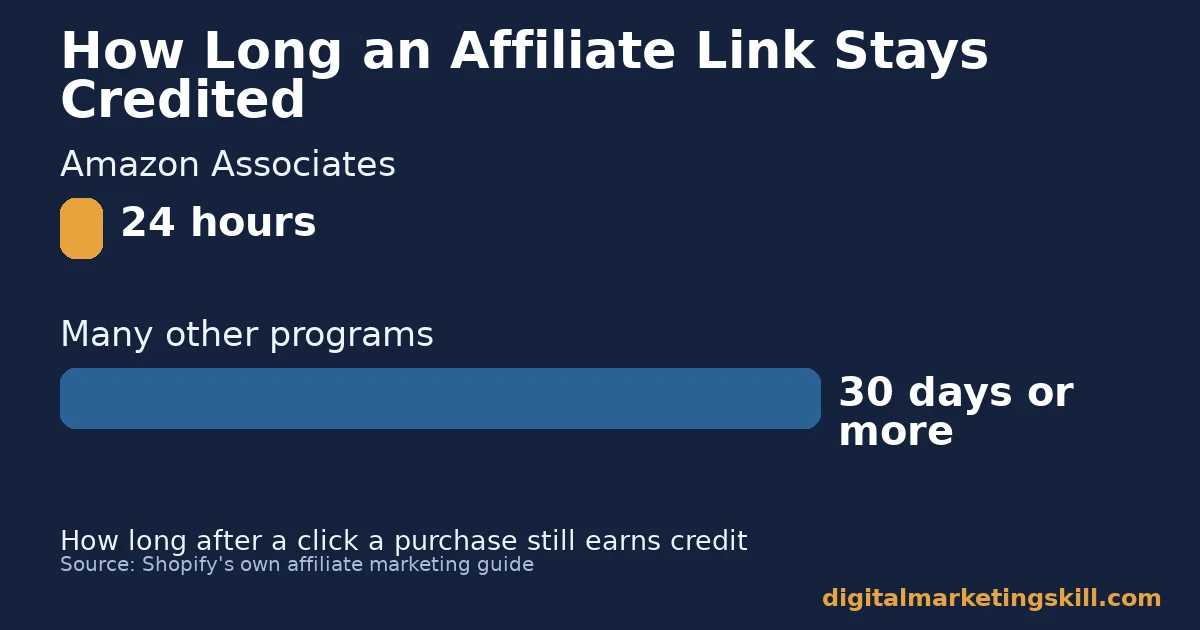
That window varies by program. Shopify’s own guide notes that Amazon Associates typically uses a 24-hour window, while other programs credit a purchase made 30 days or even several months after the click. Checking a program’s own terms matters more than assuming a standard length.
The commission comes out of the merchant’s existing marketing budget, not the customer’s pocket. Amazon’s own rate card lists commission income rates from 1% up to 10%, with “All Other Categories” paying 4%. A beginner promoting a $50 item at 4% earns $2 per sale. Volume and average order value both matter more than any single commission rate.
What Taxes Actually Look Like
Affiliate commissions are taxable income. In the United States, the IRS’s own guidance states that net self-employment earnings of $400 or more are subject to self-employment tax, at a combined rate of 15.3%. Rules differ elsewhere, so confirm your own country’s threshold before treating commissions as spare income.
Why Disclosure Is Not Optional
In the United States, the FTC’s Endorsement Guides require a clear and conspicuous disclosure whenever a link earns the publisher money. The guidance is specific: the disclosure should sit as close to the link as possible, not on a separate page the reader may never visit.
This rule exists everywhere affiliate marketers work, even if the exact wording differs by country. Treat disclosure as part of the product, not an afterthought added at the end. A simple line such as “this post contains affiliate links; I may earn a commission” next to the first link usually meets the standard.
Where This Fits in the Wider Market
Affiliate marketing is not a fringe tactic. Research cited by Rakuten’s business blog credits it with 16% of e-commerce sales in the US and Canada. A separate Digiday and Awin survey found that 80% of brands call it an important revenue source. That scale is also why competition for attention in popular niches is real.
Three Ways to Build an Affiliate Income
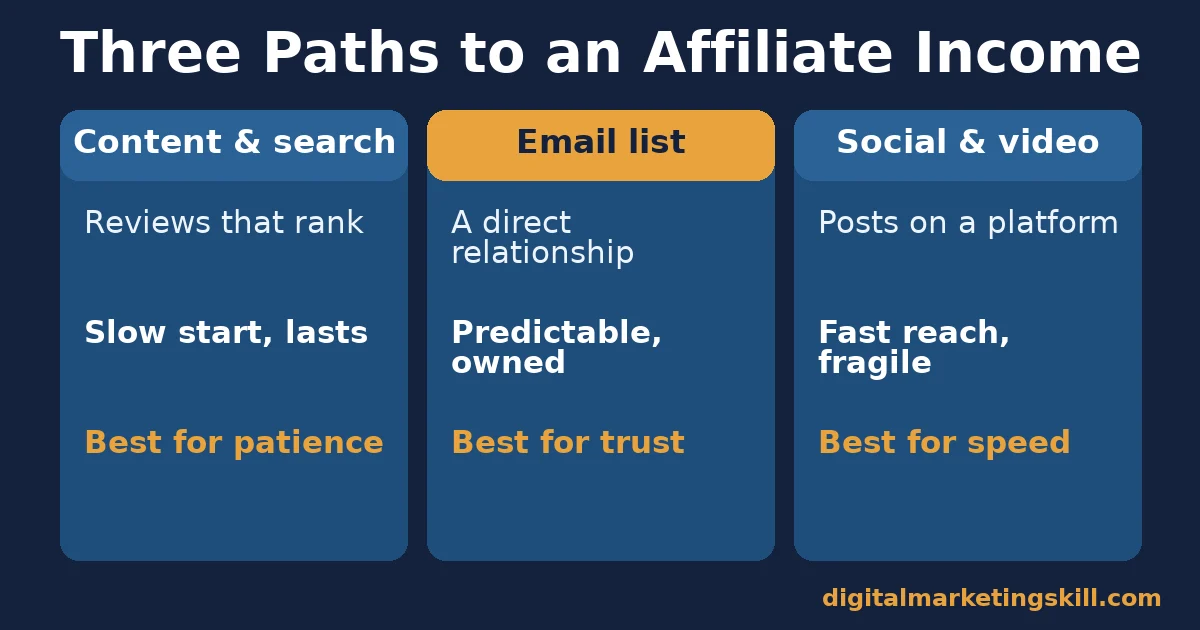
Every affiliate marketer builds their audience through one of three main paths, or a mix of them. Each trades speed against durability in a different way, so the right starting point depends on the skills and time you already have.
Content and Search: Built to Compound Over Time
This path means publishing articles, reviews or comparisons that rank in search engines, with affiliate links placed where a reader is already deciding what to buy. Traffic is slow to start, often taking months to show up, because search engines need time to trust a new site.
The reward is durability. A well-ranked comparison page keeps earning without new work each day, unlike a single social post that fades within hours. This path rewards patience and genuinely useful, specific content over volume.
Email List: Built on a Direct Relationship
This path means building an email list first, then recommending products to subscribers who already trust your advice. Open and click rates on an owned list are usually far more predictable than social reach, since nothing between you and the subscriber can change the rules overnight.
The cost is time spent building the list before any commission arrives. A small, engaged list of real subscribers outperforms a large, inactive one, so the early work is attracting people who actually want the recommendations.
Social and Video: Built for Speed and Reach
This path means recommending products through posts, videos or livestreams on an existing platform’s audience. It is the fastest way to get a link in front of people, since a single post can reach an audience a brand-new blog would take months to build through search.
The trade-off is platform risk. An algorithm change or an account suspension can remove access to that audience overnight, and the relationship belongs to the platform more than to the affiliate marketer. This path works best paired with an email list or a site you fully control.
How to Run Each Path Well
Picking a path is only the first decision. Each one needs a different discipline to avoid the mistake that stalls it most often. The sections below mirror the three paths above.
Content and Search: Lead With One Real Comparison
Write the single most useful comparison in your niche before you write ten average ones. Include real specifics: what you tested, what disappointed you, and who the product is wrong for. Generic praise reads as an ad and converts worse than an honest trade-off.
Disclose at the top of every post, and link to the specific product page, not just the merchant’s homepage. Our guide on choosing effective SEO keywords covers finding comparison topics people actually search for.
Email List: Lead With a Reason to Subscribe
Give people a specific reason to join before you ever mention a commission. A short, genuinely useful guide or checklist converts better than a vague “join my newsletter” box. Then recommend products only where they solve the exact problem that guide addressed.
Send consistently, and track clicks per email, not just opens. Our guide on starting email marketing covers list-building mechanics in more depth.
Social and Video: Lead With Proof You Used It
Show the product in use rather than only describing it. A short demonstration builds more trust than a polished studio shot, because it proves the recommendation is real. Pin the disclosure where viewers see it without scrolling or clicking “more.”
Treat each platform as a funnel into something you own, such as an email list. Our guide on making money on YouTube covers turning video views into a durable income stream.
Five Reasons New Affiliate Marketers Earn Nothing
When a new affiliate marketer earns little after real effort, the cause is usually one of five problems. These problems repeat across niches and platforms, so most beginners hit at least one of them in the first few months. Check each one honestly, because the fix differs for each.
- The niche has no buying intent. Topics people browse for fun rarely convert as well as topics people research before spending money. A comparison of specific products beats a broad lifestyle topic.
- There is no real audience yet. A link with no readers or subscribers behind it cannot earn, no matter how good the product is. Traffic has to exist before conversion can be measured.
- The recommendation is not credible. Promoting every product in a category, rather than the ones actually used or tested, reads as an ad and loses trust fast.
- Disclosure is missing or hidden. Beyond the legal risk, a hidden commission that readers later discover damages trust permanently once found.
- There is no tracking. Without knowing which link, page or email earns money, an affiliate marketer cannot tell effort from waste.
Which Problem to Fix First
Fix in the order your numbers point to. No traffic at all points to the audience-building stage, before conversion is even a relevant question. Traffic with no clicks on affiliate links points to placement and relevance. Clicks with no sales points to the product fit or the landing page itself.
For the traffic side of this funnel specifically, our guide on blog content strategy covers why posts get ignored and how to fix that before adding more affiliate links.
How to Measure Whether It Is Working
Commission totals alone hide whether an affiliate business is actually healthy. Each metric below is defined in one sentence, with a note on how to read it.
Five Metrics That Show Real Progress
- Click-through rate. The share of readers or viewers who click an affiliate link. A low rate usually means the link is poorly placed or the product does not fit the content.
- Earnings per click (EPC). Total commission divided by total clicks on affiliate links. This shows whether traffic quality, not just volume, is improving over time.
- Conversion rate. The share of clicks that turn into a completed sale. A falling rate often points to a landing page or pricing problem on the merchant’s side, not yours.
- Average commission per sale. Total commission divided by number of sales. This shows whether you are promoting higher-value products or just more of them.
- Audience growth rate. How fast your subscribers, readers or followers grow month over month. Since commissions follow audience size with a lag, this is the leading indicator.
How to Read These Numbers Together
Read click-through rate first. If it is low, the problem sits upstream of any product, in placement or relevance. Next, compare conversion rate with EPC. A high click-through rate but low EPC usually means the product itself is a weak fit for the audience.
Finally, watch audience growth rate against commission growth. If audience is growing but commission is flat, the content is attracting the wrong kind of reader, one without buying intent for what you recommend.
The One Rule: Diversify Before You Scale
Take one decision rule from this guide and make it this one. Before investing more time or money into one traffic source or one merchant program, make sure no single one of them could disappear and take your entire income with it.
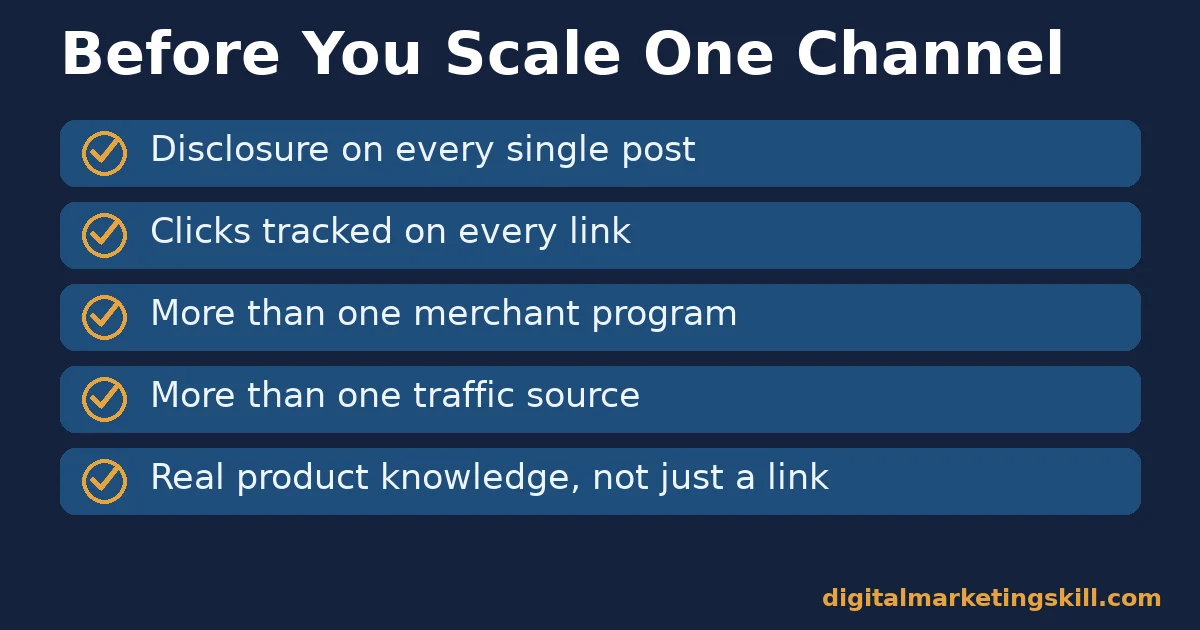
Here is an illustrative example, with invented numbers. An affiliate marketer earns $900 a month, with $850 of it from one merchant’s program on one social platform. The program changes its commission structure overnight, cutting the rate in half. Because nothing else was built, income drops by roughly 40% in a single month with no way to recover it quickly.
The lesson is about control. A second traffic source and a second merchant program would not have doubled the work, but they would have meant one bad decision elsewhere could not cut income in half overnight. The same logic applies to niches: a second, unrelated product category protects income if one market slows down.
A Four-Week Plan to Become an Affiliate Marketer
You do not need months of research to start. This plan takes about a week per step and builds the habits that actually produce commissions.
- Week one: pick a narrow niche with buying intent. Choose a specific type of product people research before purchasing, not a broad lifestyle category.
- Week two: join one or two affiliate programs and write the disclosure. Apply to programs relevant to your niche, and draft the disclosure line you will place next to every link.
- Week three: publish one genuinely useful comparison or guide. Include real specifics and honest trade-offs, with the disclosure at the top and links to specific product pages.
- Week four: set up tracking and a follow-up channel. Confirm click tracking works on every link, and start an email list so traffic is not entirely dependent on one platform.
After the first month, compare click-through rate and EPC with the numbers above before adding more content. Keep what the numbers prove is working, then expand one niche or platform at a time.
Set your expectations honestly from the start. Search-based content often takes months to earn meaningful traffic, because new pages need time to earn a search engine’s trust. An email list or social following can produce a first commission faster, but it still takes consistent, useful posts before an audience trusts a recommendation enough to click it.
A Real Case: Building an Affiliate Business Around One Useful Guide
Pat Flynn built an early affiliate business around Green Exam Academy, a site that helps people study for a professional exam in the design and construction field. The site’s own affiliate disclosure states plainly that it earns a commission on purchases made through its recommended study packages and exam classes. It also states that it does not accept free products in exchange for a listing.
The model is a clean example of the content path described above: a genuinely useful free resource builds an audience with a specific need, and affiliate links for tools and services that audience already wants to buy sit naturally alongside that resource. The disclosure confirms the business runs on transparent commissions, not hidden placement.
Keep the limits in mind. This is one person’s documented business model, not a guarantee, and it grew from deep subject knowledge of a specific exam that most new affiliate marketers will need to build in their own niche first. The pattern still holds as a template: solve a real problem first, then let relevant commissions follow naturally.
Frequently Asked Questions About Becoming an Affiliate Marketer
How do I become an affiliate marketer with no experience?
Pick a specific niche you already know something about, join a relevant affiliate program such as Amazon Associates, and publish one genuinely useful comparison or guide with a clear disclosure. Experience with the product matters more than marketing experience at the start.
How much do affiliate marketers actually earn?
It varies enormously and depends on audience size, niche and commission rates. Amazon’s own rate card shows commissions from 1% to 10% by category, so earnings scale with both traffic and the value of what is recommended, not with effort alone.
Do I have to disclose affiliate links?
In the United States, yes. The FTC’s Endorsement Guides require a clear and conspicuous disclosure placed close to the link, not hidden on a separate page. Similar disclosure expectations exist in most other countries too.
Is affiliate marketing still worth starting?
Research cited by Rakuten’s business blog credits affiliate marketing with 16% of e-commerce sales in the US and Canada, and most brands surveyed by Digiday and Awin call it an important revenue source, so the channel itself is not disappearing. Individual success still depends on niche, audience and consistency.
Which is better: a blog, an email list or social media for affiliate marketing?
Each has a different trade-off. A blog built on search compounds slowly but lasts; an email list builds a direct relationship; social media reaches people fastest but depends on a platform you do not control. Many affiliate marketers combine at least two.
Can I do affiliate marketing without a website?
Yes, through social platforms, video or an email list alone, though a site you control gives you a home base that is not subject to another platform’s rules. Many affiliate marketers start on social media and add a site once they have proof a niche works.
How long does the cookie window stay active after someone clicks my link?
It depends on the program. Shopify’s own guide notes that Amazon Associates typically credits a sale within a 24-hour window, while other programs allow 30 days or longer. Always check a program’s own terms rather than assuming a standard length.
Start With One Niche and One Honest Comparison
Becoming an affiliate marketer works fastest when you pick one specific niche, disclose clearly, and prove one traffic source before adding another. Write the single most useful comparison you can for your audience, track its clicks, and build from what the numbers show is working. Our guide on choosing your niche as a digital marketer covers that first decision in more depth.
If you want guided practice building skills like this, Digital Marketing Skill Institute teaches them hands-on. The Master Diploma in Digital & AI Marketing is a 3-month program built from four AI-powered tracks and ten courses, including lead generation and email automation, and WordPress and SEO.
It comes with unlimited 1-on-1 mentoring and a U.S. Project Internship with a partner company. The diploma is dual US and UK accredited and recognised in more than 100 countries.
The programme is fully online, so you can build these skills from anywhere in your country. You can find more guides on the Digital Marketing Skill Institute blog, and when you are ready, apply for the Master Diploma or start from the Digital Marketing Skill Institute homepage.
Every figure in this guide was checked against its original source before publication. Figures marked as illustrative are invented examples, not real results.
![9 Amazing Digital Marketing Skills to Make Money Online [With Proof]](https://digitalmarketingskill.com/wp-content/uploads/2019/07/9-Amazing-Digital-Marketing-Skills-to-Make-Money-Online-With-Proof-17.png)






