
Appointment setting is the work of contacting potential customers, checking that they are a good fit, and booking a meeting or call between them and a salesperson. It sits between finding leads and closing deals. As a result, it keeps the sales team’s calendar full of the right conversations. It is also one of the most common entry points into remote sales and marketing work.
Key Takeaways
- Appointment setting turns interested leads into booked sales meetings.
- Setters use calls, emails, social messages and booking links to reach people.
- A good setter qualifies each lead before booking, so sales time isn’t wasted.
- A CRM and a calendar tool are the core tools of the job.
- In the UK, live sales calls must follow the TPS and CTPS rules set out by the ICO.
What Is Appointment Setting?
Most businesses don’t want their senior salespeople cold calling all day. Instead, they want them in meetings with buyers who are ready to talk. Appointment setting fills that gap. A setter reaches out, starts the conversation, asks a few questions, and then books a time for the next step.
For example, picture a solar panel company. Its website and ads bring in hundreds of form fills each week. However, not everyone is a homeowner, and not everyone is ready to buy. So an appointment setter calls each lead, checks the basics, and books a home survey with a sales consultant for the ones who qualify.
People who do this job go by many titles. For instance, you will see appointment setter, sales development representative (SDR), business development representative (BDR) and outreach specialist. Still, the tasks are much the same. In short, you find, qualify and book.
Inbound and outbound appointment setting
There are two main types. First, inbound appointment setting follows up with people who already showed interest, for example by filling in a form or downloading a guide. Second, outbound appointment setting contacts people who haven’t heard of the business yet, often through cold calls or a cold email. Inbound leads are usually warmer. By contrast, outbound gives you more control over who you reach.
Why it matters
A sales team can only close the deals it gets to discuss. So if leads sit in a list without a follow-up, they go cold fast. In addition, salespeople who chase every lead themselves have less time to sell. Appointment setting solves both problems. It makes sure good leads get a fast reply, and it frees up closers to do what they do best.
Skills you need
So what makes a good setter? First, you need clear, friendly communication, both on the phone and in writing. Next, you need resilience, because many people will say no or not reply. In addition, you need to be organised, since you juggle many leads at once. Also, basic CRM skills help you keep records tidy. Finally, curiosity matters. The best setters ask good questions and really listen to the answers.
How Appointment Setting Works
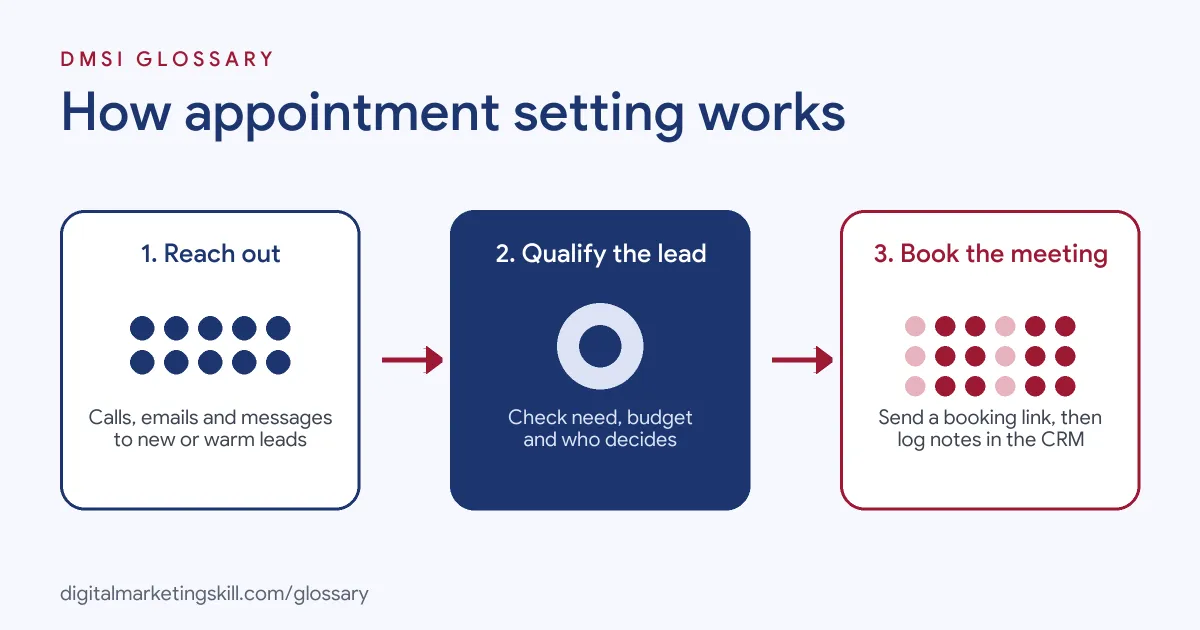
Appointment setting follows a simple loop. You reach out, you qualify, and then you book. After that, you hand over the lead with clear notes. Also, each step has its own skills and tools.
Step 1: Reach out
Setters start with a list of leads. Often, these come from lead generation campaigns, a website form or a bought list. Then they make contact by phone, email, LinkedIn message or text. Usually, it takes several touches before someone replies. So most setters follow a set sequence of calls and messages.
Step 2: Qualify the lead
Next, the setter asks a few short questions. For example, do they have the problem the product solves? Do they have the budget? Are they the person who decides? Many teams turn these answers into a lead score. As a result, only leads that meet the bar move forward.
Step 3: Book the meeting
Once a lead qualifies, the setter books a time. Often, they share a booking link from a calendar tool. For instance, HubSpot says you can create scheduling pages so “contacts can book meetings with you” through a shareable link. Similarly, Google Calendar lets you set up appointment schedules with a booking page. Also, both can send confirmation emails and reminders.
Step 4: Hand over and log
Finally, the setter logs the call notes in the CRM. That way, the salesperson knows the lead’s needs before the meeting starts. Then the setter tracks whether the lead attends. Many teams count “shows”, not just bookings, because a no-show earns nothing.
Examples of Appointment Setting
- A software company selling to small firms. A remote SDR emails and calls operations managers from a target list. When someone shows interest, the SDR checks team size and current tools. Then they book a demo with an account executive.
- A home improvement business. Leads come in from Facebook lead ads. So a setter calls each one within minutes, confirms they own the home, and books a free quote visit.
- A coaching or consulting firm. People sign up for a free webinar. After that, a setter messages attendees, asks about their goals, and books a discovery call for those who fit.
Appointment Setting vs Lead Generation vs Closing
| Point | Lead generation | Appointment setting | Closing |
|---|---|---|---|
| Main goal | Attract interested people | Book qualified meetings | Win the sale |
| Typical output | Contacts and form fills | Meetings on the calendar | Signed deals |
| Common roles | Marketers, ad specialists | Setters, SDRs, BDRs | Account executives, closers |
| Key tools | Ads, landing pages, lead magnets | Phone, email, CRM, booking links | Proposals, demos, contracts |
| Key metric | Cost per lead | Meetings booked and show rate | Close rate and revenue |
How to Do Appointment Setting
- Know your ideal customer. Agree with the sales team on who is a good fit. Then write it down as a short checklist.
- Prepare your lead list. Clean the list and remove duplicates. In the UK, also screen numbers against the TPS and CTPS before live calls.
- Write a simple script. Plan your opening line, three or four qualifying questions and a clear ask for the meeting.
- Set up a booking link. Connect a calendar tool to the salesperson’s diary, so leads see real free slots.
- Follow a contact sequence. Plan several calls, emails and messages over one or two weeks. Also vary the time of day.
- Qualify before you book. Ask your questions first. If the lead doesn’t fit, thank them and log the reason.
- Confirm and remind. Send a confirmation right away. Then send a reminder before the meeting to cut no-shows.
- Log everything in the CRM. Record notes, outcomes and next steps, so the closer walks in prepared.
Best Practices for Appointment Setting
- Reply fast. Call or message inbound leads as soon as you can, while their interest is fresh.
- Listen more than you talk. Good questions build trust and reveal whether the lead is a fit.
- Sell the meeting, not the product. Your job is to show why the call is worth their time.
- Offer two clear times. Giving a simple choice makes it easier to say yes than an open question.
- Track shows, not just bookings. A full calendar of no-shows doesn’t help the sales team.
- Keep learning from the closers. Ask which meetings turned into deals, then adjust your questions.
Common Mistakes to Avoid
- Booking anyone who says yes. Unqualified meetings waste the salesperson’s time and hurt your reputation.
- Giving up after one try. Many people need several touches before they reply.
- Ignoring calling rules. In the UK, the ICO says you must not make unsolicited live calls to numbers on the TPS or CTPS without consent.
- Reading the script like a robot. Use the script as a guide. However, let the call sound like a real conversation.
- Poor notes. If the closer has to ask the same questions again, the lead may lose interest.
- Forgetting time zones. Remote setters often book across countries, so always check the lead’s local time.
Where You’ll Use Appointment Setting at Work
Appointment setting is a full role in its own right, and it also appears inside wider sales and marketing jobs. For example, real remote job listings ask you to:
- “Schedule qualified meetings for the sales team.” (Appointment Setter).
- “Make 80-120 outbound calls per day to business decision-makers using a provided script and CRM.” (Outbound Sales & Appointment Setting Rep).
- “Proven experience in B2B outbound appointment setting.” (Appointment Setter).
Learn It in the Lead Generation and Email Track
You can learn to find, qualify and book leads in the AI-Powered Lead Generation and Email Automation track. Every track includes a U.S. Project Internship from day one, with unlimited 1-on-1 mentoring.
Frequently Asked Questions
What does an appointment setter do?
An appointment setter contacts leads, asks qualifying questions and books meetings for the sales team. They also log notes in the CRM and send reminders.
Is appointment setting the same as telemarketing?
Not quite. Telemarketing often tries to sell on the call. By contrast, appointment setting aims only to book a meeting with a salesperson.
Do I need sales experience to start?
Not always. Some listings say experience is a plus but not required. Still, clear communication and confidence on the phone help a lot.
What tools do appointment setters use?
Most use a CRM, a phone or dialler, email and a booking tool such as HubSpot meetings or Google Calendar appointment schedules.
Can appointment setting be done remotely?
Yes. Many setters work fully remote, calling and messaging leads from home. However, they often need to work hours that match the client’s time zone.
Sources: HubSpot Knowledge Base: Create and edit scheduling pages; Google Calendar Help: Create a booking page with appointment schedules; ICO: Telephone marketing; remote job listings on Himalayas, Himalayas and Himalayas.